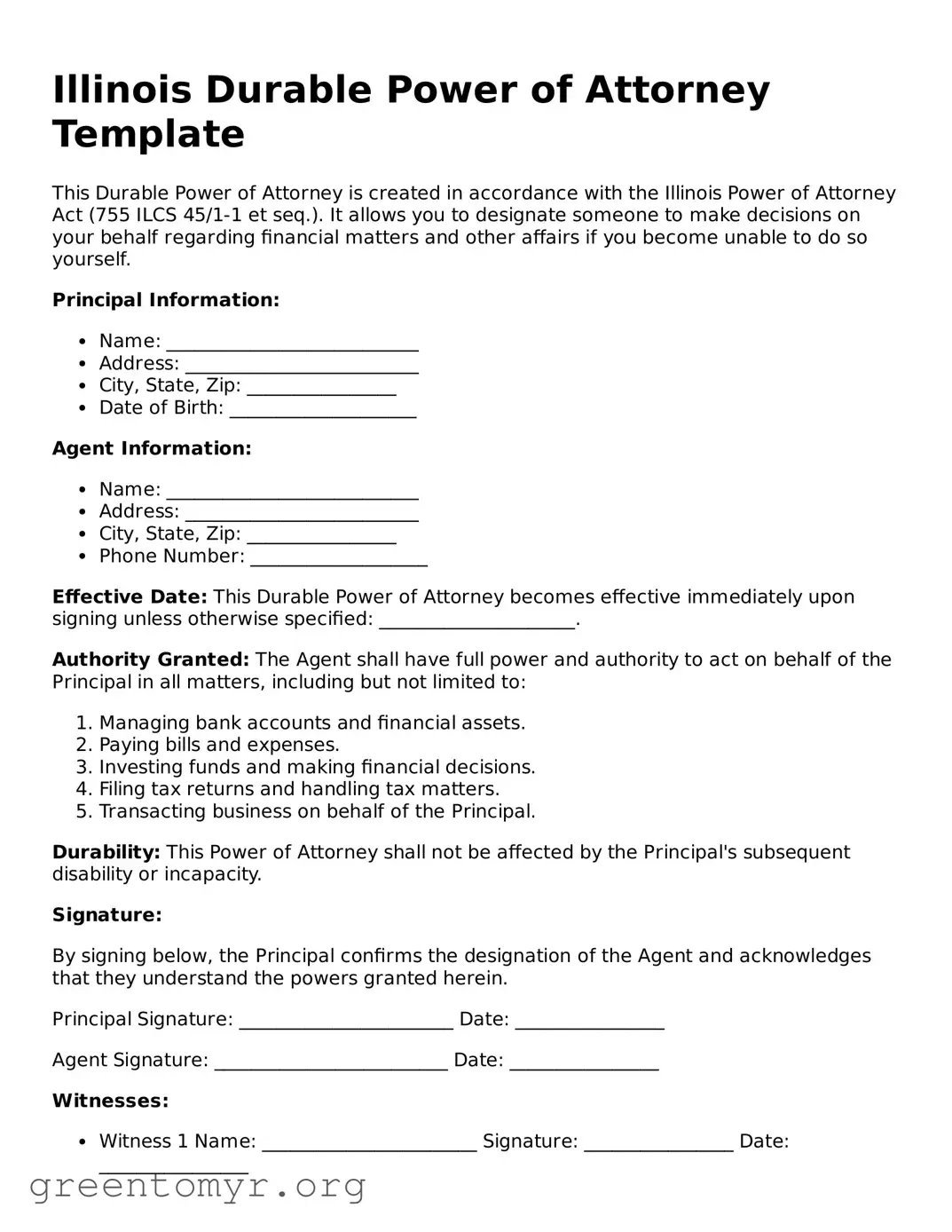
In Illinois, the Durable Power of Attorney form serves as an important legal document that allows individuals to appoint someone they trust to make decisions on their behalf, particularly in situations where they may become incapacitated. This form not only grants authority over financial matters but can also extend to health care decisions, depending on how it is structured. By utilizing this document, individuals can ensure their preferences are honored and their affairs are managed according to their wishes, even if they are unable to communicate those wishes themselves. The process of creating a Durable Power of Attorney involves selecting a reliable agent, clearly outlining the powers granted, and ensuring that the document meets state requirements. It is crucial to understand that this form remains effective even if the principal becomes incapacitated, which distinguishes it from a standard Power of Attorney. Overall, the Illinois Durable Power of Attorney form is a vital tool for planning ahead and securing peace of mind for both the individual and their loved ones.
Illinois Durable Power of Attorney Template
This Durable Power of Attorney is created in accordance with the Illinois Power of Attorney Act (755 ILCS 45/1-1 et seq.). It allows you to designate someone to make decisions on your behalf regarding financial matters and other affairs if you become unable to do so yourself.
Principal Information:
Agent Information:
Effective Date: This Durable Power of Attorney becomes effective immediately upon signing unless otherwise specified: _____________________.
Authority Granted: The Agent shall have full power and authority to act on behalf of the Principal in all matters, including but not limited to:
Durability: This Power of Attorney shall not be affected by the Principal's subsequent disability or incapacity.
Signature:
By signing below, the Principal confirms the designation of the Agent and acknowledges that they understand the powers granted herein.
Principal Signature: _______________________ Date: ________________
Agent Signature: _________________________ Date: ________________
Witnesses:
Notary Public:
State of Illinois, County of ________________
Subscribed and sworn before me on this _____ day of ____________, 20____.
Notary Public Signature: _______________________ My Commission Expires: ________________
| Fact Name | Details |
|---|---|
| Definition | A Durable Power of Attorney allows an individual to appoint someone else to make decisions on their behalf, even if they become incapacitated. |
| Governing Law | The Illinois Durable Power of Attorney is governed by the Illinois Power of Attorney Act (755 ILCS 45/1-1 et seq.). |
| Durability | This form remains effective even if the principal becomes mentally or physically incapacitated, distinguishing it from a standard Power of Attorney. |
| Agent Authority | The agent can be granted broad or limited powers, depending on the principal's wishes outlined in the document. |
| Revocation | The principal can revoke the Durable Power of Attorney at any time, as long as they are competent to do so. |
| Witness Requirement | In Illinois, the form must be signed in the presence of at least one witness or a notary public to be valid. |
| Healthcare Decisions | A separate document, the Power of Attorney for Healthcare, is typically used for medical decisions, although the durable form can include such provisions. |
| Notarization | While not always required, notarizing the Durable Power of Attorney can help prevent disputes regarding its authenticity. |
| Legal Advice | It is advisable to consult with a legal professional when creating a Durable Power of Attorney to ensure it meets all legal requirements and reflects the principal's wishes. |
Filling out the Illinois Durable Power of Attorney form is a straightforward process. Once you complete the form, you will need to sign it in front of a witness or a notary public. This ensures that your document is legally binding and recognized by the state.
A Durable Power of Attorney (DPOA) in Illinois is a legal document that allows an individual, known as the principal, to appoint another person, called the agent or attorney-in-fact, to make decisions on their behalf. This authority remains effective even if the principal becomes incapacitated. The DPOA can cover a variety of decisions, including financial, medical, and legal matters.
To create a Durable Power of Attorney in Illinois, follow these steps:
It is advisable to keep copies of the signed document in a safe place and provide a copy to your agent and any relevant institutions.
In Illinois, you can grant a wide range of powers to your agent, including but not limited to:
You can specify which powers you want to grant, and you can limit or expand these powers as needed.
Yes, you can revoke a Durable Power of Attorney at any time, as long as you are mentally competent. To revoke the DPOA, you should create a written revocation document and notify your agent and any institutions that have a copy of the original DPOA. It is also a good idea to destroy any copies of the original document to prevent confusion.
If you do not have a Durable Power of Attorney and become incapacitated, decisions regarding your finances and healthcare may be made by a court-appointed guardian. This process can be lengthy and may not align with your preferences. Having a DPOA in place ensures that your chosen agent can make decisions on your behalf without court intervention.
While it is not legally required to have a lawyer to create a Durable Power of Attorney in Illinois, consulting with one can provide valuable guidance. A lawyer can help ensure that the document meets all legal requirements and accurately reflects your wishes. If you choose to prepare the DPOA on your own, make sure to follow the state's guidelines closely to avoid any potential issues.
Filling out the Illinois Durable Power of Attorney form can be a straightforward process, but many people make common mistakes that can lead to complications. One frequent error is not clearly identifying the agent. The agent is the person who will make decisions on your behalf. If their name is misspelled or if there are multiple people with the same name, it could create confusion later on.
Another mistake is failing to specify the powers granted to the agent. The form allows you to outline specific powers, such as managing finances or making healthcare decisions. Omitting these details can lead to misunderstandings about what the agent is allowed to do. It is essential to be clear and precise.
Some individuals forget to sign and date the form. A signature is crucial for the document to be valid. Without it, the form may not be recognized by banks or healthcare providers. Also, if the form is not dated, it can lead to questions about its validity over time.
Not having witnesses or a notary present during the signing process is another common oversight. Illinois law requires that the Durable Power of Attorney be signed in the presence of either two witnesses or a notary public. Skipping this step can render the document invalid.
People often overlook the importance of discussing their wishes with their chosen agent before completing the form. It is vital that the agent understands your preferences and is willing to take on this responsibility. Failing to have this conversation can lead to decisions that do not reflect your values.
Another mistake is not reviewing the form for accuracy after filling it out. Simple typos or incorrect information can cause issues later. Always double-check the information to ensure everything is correct before finalizing the document.
Some individuals use outdated forms. Laws can change, and using an old version may not comply with current regulations. Always ensure you are using the most recent version of the Durable Power of Attorney form.
In addition, people sometimes forget to keep copies of the completed form. It is important to provide copies to your agent, family members, and healthcare providers. This ensures that everyone is aware of your wishes and can act accordingly when needed.
Lastly, many people fail to revisit and update their Durable Power of Attorney as their circumstances change. Life events such as marriage, divorce, or the death of an agent can affect your choices. Regularly reviewing and updating the document is essential to ensure it reflects your current wishes.
When creating a Durable Power of Attorney in Illinois, several other forms and documents may also be beneficial to ensure comprehensive planning for future needs. These documents help clarify your wishes and provide guidance to your appointed agent. Below is a list of commonly used forms alongside the Durable Power of Attorney.
These documents work together to create a comprehensive plan for your health and financial decisions. It’s essential to consider each one carefully and consult with a professional if you have questions about your specific situation.
The Durable Power of Attorney form is an important legal document that allows an individual to designate someone to make decisions on their behalf. There are several other documents that share similarities with the Durable Power of Attorney. Here is a list of nine such documents, along with a brief explanation of how they relate:
When filling out the Illinois Durable Power of Attorney form, it is important to follow certain guidelines to ensure the document is valid and effective. Below are some key dos and don'ts to keep in mind:
Understanding the Illinois Durable Power of Attorney (DPOA) form is essential for anyone considering this important legal document. However, several misconceptions often arise, leading to confusion. Here are six common misconceptions:
By understanding these misconceptions, individuals can make informed decisions about creating a Durable Power of Attorney in Illinois. This document can provide peace of mind, knowing that your wishes will be respected and your affairs managed by someone you trust.
Filling out and using the Illinois Durable Power of Attorney form is an important step in planning for your future. Here are some key takeaways to keep in mind:
By following these guidelines, you can ensure that your Durable Power of Attorney serves its intended purpose effectively.