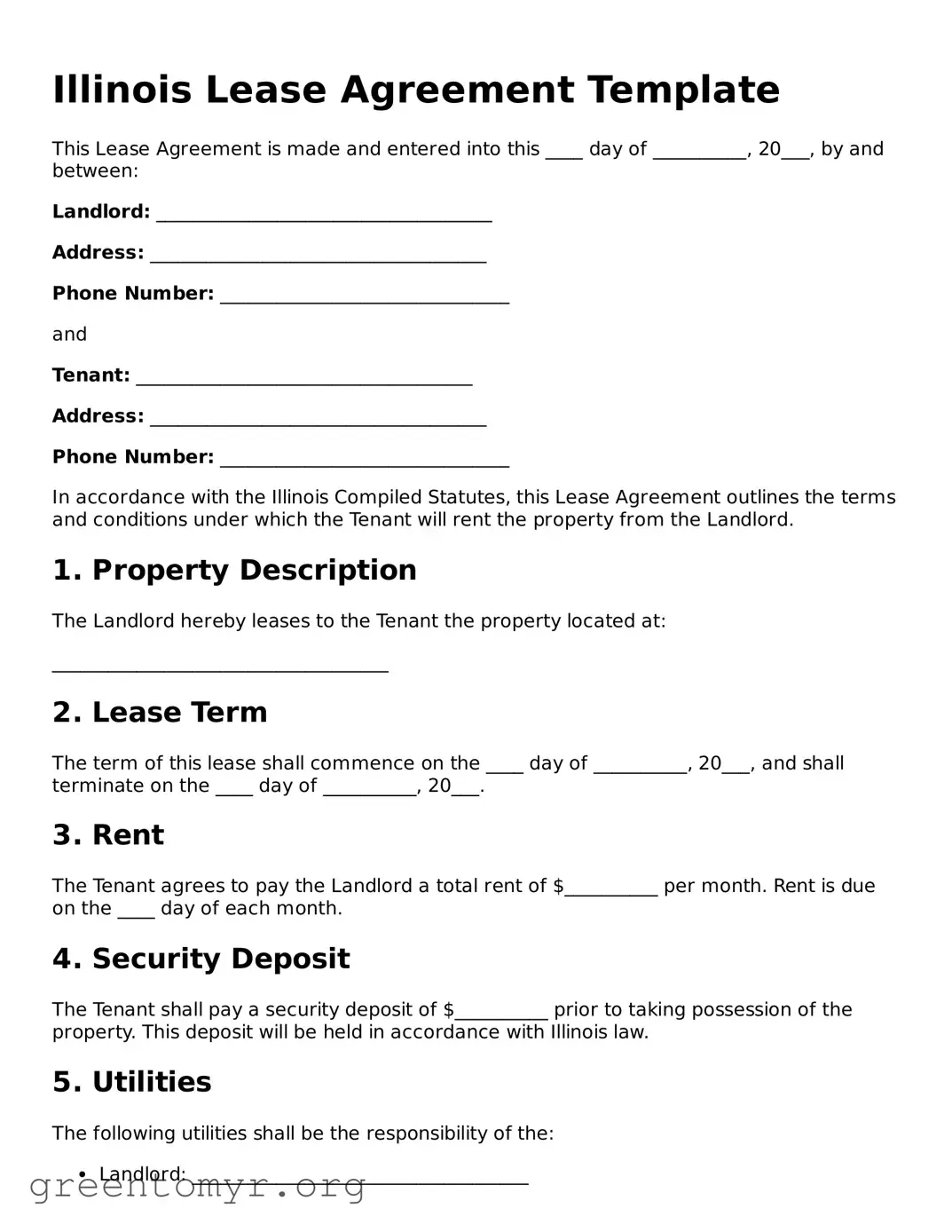
When entering into a rental arrangement in Illinois, understanding the Illinois Lease Agreement form is crucial for both landlords and tenants. This legally binding document outlines the rights and responsibilities of each party, ensuring a clear framework for the rental relationship. Key elements typically included in the lease agreement are the duration of the lease, the rental amount, and payment due dates. Additionally, it covers essential details such as security deposits, maintenance responsibilities, and rules regarding pets or alterations to the property. By establishing these terms upfront, the lease helps to prevent misunderstandings and disputes down the line. Whether you're a first-time renter or an experienced landlord, familiarizing yourself with this form can empower you to navigate the rental landscape with confidence and clarity.
Illinois Lease Agreement Template
This Lease Agreement is made and entered into this ____ day of __________, 20___, by and between:
Landlord: ____________________________________
Address: ____________________________________
Phone Number: _______________________________
and
Tenant: ____________________________________
Address: ____________________________________
Phone Number: _______________________________
In accordance with the Illinois Compiled Statutes, this Lease Agreement outlines the terms and conditions under which the Tenant will rent the property from the Landlord.
1. Property Description
The Landlord hereby leases to the Tenant the property located at:
____________________________________
2. Lease Term
The term of this lease shall commence on the ____ day of __________, 20___, and shall terminate on the ____ day of __________, 20___.
3. Rent
The Tenant agrees to pay the Landlord a total rent of $__________ per month. Rent is due on the ____ day of each month.
4. Security Deposit
The Tenant shall pay a security deposit of $__________ prior to taking possession of the property. This deposit will be held in accordance with Illinois law.
5. Utilities
The following utilities shall be the responsibility of the:
6. Maintenance and Repairs
The Tenant agrees to keep the property in good condition and promptly report any necessary repairs to the Landlord.
7. Termination
Either party may terminate this lease by providing written notice at least ____ days prior to the intended termination date.
8. Governing Law
This Lease Agreement shall be governed by the laws of the State of Illinois.
9. Signatures
By signing below, both parties agree to the terms and conditions outlined in this Lease Agreement.
Landlord Signature: ____________________________ Date: ________________
Tenant Signature: _____________________________ Date: ________________
| Fact Name | Description |
|---|---|
| Governing Law | The Illinois Lease Agreement is governed by the Illinois Compiled Statutes, specifically 765 ILCS 705. |
| Written Agreement | In Illinois, lease agreements for a term longer than one year must be in writing to be enforceable. |
| Security Deposit Regulations | Illinois law requires landlords to return security deposits within 45 days after the tenant vacates the property, along with an itemized list of deductions. |
| Disclosure Requirements | Landlords must provide tenants with certain disclosures, including information about lead-based paint for properties built before 1978. |
| Rent Control | Illinois does not have statewide rent control laws, but some local municipalities may impose their own regulations. |
| Notice Period for Termination | For month-to-month leases, either party must provide a 30-day notice to terminate the agreement. |
| Habitability Standards | Landlords are required to maintain rental properties in a habitable condition, ensuring essential services like heat and water are provided. |
Filling out the Illinois Lease Agreement form requires attention to detail. Each section of the form must be completed accurately to ensure clarity between the landlord and tenant. Follow the steps below to complete the form correctly.
Review the completed form for accuracy before finalizing. Make sure both parties receive a copy of the signed lease agreement for their records.
An Illinois Lease Agreement is a legally binding document that outlines the terms and conditions between a landlord and a tenant regarding the rental of residential or commercial property in Illinois. This agreement details the rights and responsibilities of both parties, ensuring clarity and protection for all involved.
Several key components must be present in an Illinois Lease Agreement to ensure it is comprehensive and enforceable. These include:
The lease agreement must be signed by both the landlord and the tenant. This can be done in person, or electronically if both parties agree to an electronic format. Signatures indicate that both parties understand and accept the terms outlined in the agreement.
Yes, a lease agreement can be modified after it is signed, but both parties must agree to the changes. It is advisable to document any modifications in writing and have both parties sign the amended agreement to avoid future disputes.
If a tenant fails to pay rent, the landlord has the right to initiate eviction proceedings. Before taking legal action, the landlord typically must provide a notice of non-payment, allowing the tenant a specific period to pay the overdue rent. The exact process may vary based on local laws.
Yes, Illinois law imposes certain restrictions on lease terms. For example, a lease cannot contain provisions that violate fair housing laws or require tenants to waive their legal rights. Additionally, the security deposit must be returned within a specified timeframe after the lease ends, barring any legitimate deductions.
If a tenant has a dispute with their landlord, the first step is to communicate directly with the landlord to resolve the issue amicably. If this approach fails, tenants may seek mediation services or legal advice. In some cases, filing a complaint with the appropriate housing authority or pursuing legal action may be necessary.
Filling out the Illinois Lease Agreement form can be straightforward, but many people make common mistakes that can lead to confusion or disputes later on. One frequent error is not providing accurate information about the rental property. This includes the full address, unit number, and any specific details about the property itself. Omitting this information can create issues when trying to enforce the terms of the lease.
Another mistake is failing to include the correct names of all tenants. It’s crucial to list everyone who will be living in the rental unit. If a tenant is not included in the lease, they may not have legal rights under the agreement. This can lead to misunderstandings and potential legal issues down the line.
Many people overlook the importance of specifying the lease term. Whether it’s a month-to-month agreement or a fixed-term lease, clarity is key. Not stating the duration can cause confusion about when the lease begins and ends, leading to potential conflicts regarding rent payments and move-out dates.
Rent payment details are often mishandled. Some individuals forget to specify the amount of rent due and the payment method. This can lead to disputes over how much is owed and when. It’s essential to clearly outline the rent amount, due date, and acceptable payment methods to avoid misunderstandings.
Another common error is neglecting to include information about security deposits. Landlords should specify the amount of the deposit, the conditions for its return, and any deductions that may apply. Failing to address this can create tension when it’s time for tenants to move out and receive their deposit back.
People sometimes forget to include rules and regulations regarding pets. If pets are allowed, the lease should specify any restrictions, such as breed or size limits. Conversely, if pets are not allowed, this should be clearly stated. Not addressing pet policies can lead to disputes between landlords and tenants.
Many individuals also fail to outline maintenance responsibilities. It’s important to clarify who is responsible for repairs and maintenance. This can prevent disagreements about who should handle issues like plumbing or electrical problems during the lease term.
Another mistake is not including a clause about early termination. Life changes can happen, and both landlords and tenants should understand the conditions under which the lease can be terminated early. Not having this information can lead to confusion and potential legal disputes.
Finally, people often forget to read the lease agreement thoroughly before signing. Skimming through the document can lead to missing critical information. Taking the time to review the lease ensures that all parties understand their rights and responsibilities, reducing the likelihood of future issues.
When entering into a rental agreement in Illinois, several additional forms and documents often accompany the lease agreement. These documents serve various purposes, from clarifying terms to ensuring compliance with state regulations. Below is a list of common forms that landlords and tenants may encounter.
Understanding these documents can enhance the leasing experience for both landlords and tenants. Each form plays a vital role in ensuring clear communication and legal compliance throughout the rental process.
A Lease Agreement is a crucial document in the realm of property rental and management. It outlines the terms under which one party agrees to rent property owned by another party. While it serves a specific purpose, several other documents share similarities in function and intent. Below is a list of eight documents that are comparable to a Lease Agreement, along with explanations of their similarities.
Understanding these documents is vital for anyone involved in property rental or management. Each serves a specific purpose but shares foundational elements with the Lease Agreement, emphasizing the importance of clear communication and defined responsibilities.
When filling out the Illinois Lease Agreement form, it's important to be thorough and accurate. Here are some tips to guide you:
Misconception 1: The Illinois Lease Agreement is a one-size-fits-all document.
This is not true. While there are standard templates, each lease should be tailored to fit the specific needs of the landlord and tenant. Custom clauses can address unique circumstances or requirements.
Misconception 2: A verbal agreement is sufficient to establish a lease in Illinois.
In Illinois, a written lease is recommended to protect both parties. A written document provides clear terms and can prevent misunderstandings or disputes in the future.
Misconception 3: All lease agreements must be notarized.
This is incorrect. While notarization can add an extra layer of security, it is not a requirement for lease agreements in Illinois. A simple signature from both parties is typically sufficient.
Misconception 4: Tenants cannot negotiate terms in a lease.
Many tenants believe they have no power to negotiate. In reality, most lease terms can be discussed and modified before signing. Open communication can lead to a more favorable agreement for both parties.
Misconception 5: The lease agreement automatically renews without notice.
This is not always the case. Many leases include specific terms regarding renewal. Tenants and landlords should review these terms carefully to understand their obligations and options at the end of the lease term.
When filling out and using the Illinois Lease Agreement form, keep these key takeaways in mind: