When buying or selling a mobile home in Illinois, having the right documentation is crucial. One of the key documents involved in this process is the Mobile Home Bill of Sale form. This form serves as a legal record of the transaction between the buyer and the seller. It typically includes essential details such as the names and addresses of both parties, a description of the mobile home, and the agreed-upon purchase price. Additionally, it may outline any warranties or conditions related to the sale. Ensuring that this form is completed accurately can protect both parties and provide clarity in case of future disputes. Understanding the significance of this document can make the buying or selling experience smoother and more secure for everyone involved.
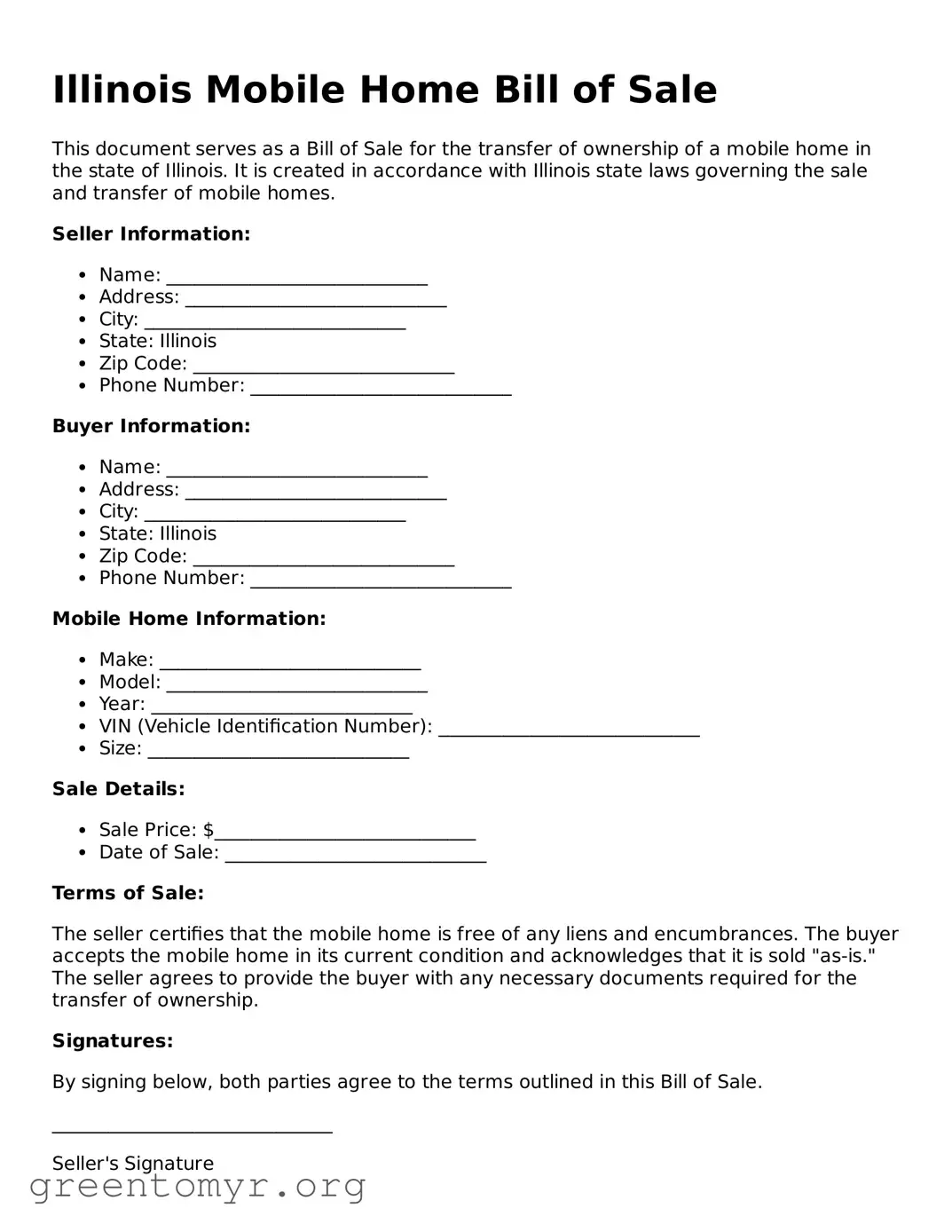
Illinois Mobile Home Bill of Sale
This document serves as a Bill of Sale for the transfer of ownership of a mobile home in the state of Illinois. It is created in accordance with Illinois state laws governing the sale and transfer of mobile homes.
Seller Information:
Buyer Information:
Mobile Home Information:
Sale Details:
Terms of Sale:
The seller certifies that the mobile home is free of any liens and encumbrances. The buyer accepts the mobile home in its current condition and acknowledges that it is sold "as-is." The seller agrees to provide the buyer with any necessary documents required for the transfer of ownership.
Signatures:
By signing below, both parties agree to the terms outlined in this Bill of Sale.
______________________________
Seller's Signature
______________________________
Date
______________________________
Buyer's Signature
______________________________
Date
| Fact Name | Description |
|---|---|
| Purpose | The Illinois Mobile Home Bill of Sale form is used to document the sale of a mobile home between a seller and a buyer. |
| Governing Law | The sale of mobile homes in Illinois is governed by the Illinois Mobile Home Local Governmental Act. |
| Identification | The form requires identification details for both the seller and the buyer, including names and addresses. |
| Mobile Home Details | Specific details about the mobile home must be included, such as the make, model, year, and Vehicle Identification Number (VIN). |
| Sale Price | The agreed sale price must be clearly stated on the form to avoid any misunderstandings. |
| Signatures | Both the seller and the buyer must sign the form to make the transaction legally binding. |
| Notarization | While notarization is not always required, it can provide additional legal protection for both parties. |
| Transfer of Ownership | The form facilitates the transfer of ownership from the seller to the buyer, which is crucial for registration purposes. |
| Record Keeping | It is advisable for both parties to keep a copy of the completed form for their records. |
| Additional Terms | Parties may include additional terms or conditions in the sale, which should be clearly outlined in the document. |
Once you have the Illinois Mobile Home Bill of Sale form, you'll need to fill it out accurately to ensure a smooth transaction. This document serves as proof of the sale and transfer of ownership for a mobile home. Follow these steps to complete the form correctly.
The Illinois Mobile Home Bill of Sale form is a legal document that records the sale of a mobile home. It serves as proof of ownership transfer from the seller to the buyer. This form includes essential details such as the names and addresses of both parties, a description of the mobile home, and the sale price. Completing this form helps protect the rights of both the seller and the buyer.
Having a Mobile Home Bill of Sale is crucial for several reasons:
The Illinois Mobile Home Bill of Sale form requires specific information to be valid. Key details include:
Notarization is not a requirement for the Illinois Mobile Home Bill of Sale form. However, having the document notarized can add an extra layer of security and authenticity to the transaction. It may also help if any disputes arise in the future. Consider discussing this with a legal professional if you have concerns about the validity of the document.
Filling out the Illinois Mobile Home Bill of Sale form can seem straightforward, but there are common mistakes that many people make. One frequent error is not providing accurate information about the mobile home. This includes details such as the make, model, and year. If these details are incorrect, it could lead to complications down the line.
Another mistake involves the omission of the vehicle identification number (VIN). The VIN is crucial for identifying the mobile home. Without it, the transaction may not be recognized by the state, leading to potential legal issues.
People often forget to include the names and addresses of both the buyer and seller. This information is essential for establishing ownership and ensuring that all parties are clear about the transaction. Missing this information can create confusion later.
Additionally, some individuals neglect to date the form. A date is important as it marks when the sale took place. This can affect the timeline for registration and any potential disputes regarding the sale.
Another common error is failing to sign the document. Both parties must sign the Bill of Sale for it to be valid. Without signatures, the form may not hold up if challenged.
Sometimes, people do not provide the sale price or leave it blank. The sale price is necessary for tax purposes and for the buyer’s future registration. Not including this information can lead to unexpected fees or complications.
It is also important to ensure that the form is filled out in ink. Using pencil or other erasable writing can result in issues if changes need to be made. Always use a permanent ink pen to avoid any misunderstandings.
Lastly, many overlook the importance of making copies of the completed form. Keeping a copy for both the buyer and seller can help in case any disputes arise in the future. It serves as proof of the transaction and can provide peace of mind.
When completing a transaction involving a mobile home in Illinois, several forms and documents may be necessary alongside the Mobile Home Bill of Sale. Each of these documents serves a specific purpose and helps ensure a smooth transfer of ownership. Below is a list of commonly used documents in such transactions.
Having these documents prepared and organized can help streamline the sale process and protect the interests of both parties involved. It is always advisable to consult with a professional if there are any questions or uncertainties regarding these forms.
When filling out the Illinois Mobile Home Bill of Sale form, attention to detail is crucial. Here are some essential do's and don'ts to guide you through the process.
Following these guidelines will help ensure a smooth transaction and protect your interests. Properly documenting the sale of a mobile home is essential for both parties involved.
When it comes to the Illinois Mobile Home Bill of Sale form, there are several misconceptions that can lead to confusion. Understanding these can help ensure that the buying or selling process goes smoothly. Here are four common misconceptions:
Many people believe that a Bill of Sale is optional when selling a mobile home. However, this document is essential as it serves as proof of the transaction and can protect both the buyer and the seller.
Some think that the Bill of Sale automatically transfers ownership. While it is an important document, it does not replace the need for a title transfer, which must also be completed to officially change ownership.
It’s a common belief that only the seller’s signature is required. In reality, both the buyer and the seller should sign the Bill of Sale to ensure that both parties acknowledge the terms of the sale.
Some individuals think that a verbal agreement is sufficient. However, a written Bill of Sale is crucial for legal protection and clarity. It provides a record of the transaction that can be referenced if disputes arise.
When dealing with the Illinois Mobile Home Bill of Sale form, it's important to understand a few key points to ensure a smooth transaction. Here are some essential takeaways:
By following these guidelines, you can navigate the process of buying or selling a mobile home in Illinois with confidence.