When purchasing or selling a motorcycle in Illinois, having the right documentation is essential for a smooth transaction. One crucial document is the Motorcycle Bill of Sale form. This form serves as a written record of the sale, detailing important information about both the buyer and the seller. It includes the motorcycle's make, model, year, and Vehicle Identification Number (VIN), which helps to confirm the identity of the vehicle being sold. Additionally, the form captures the sale price and the date of the transaction, providing a clear timeline for both parties. The signatures of both the buyer and seller are required to validate the agreement, ensuring that both individuals acknowledge the terms of the sale. By using this form, buyers can protect themselves from potential disputes, while sellers can provide proof of ownership transfer. Overall, the Motorcycle Bill of Sale form is a vital tool in facilitating legal and transparent motorcycle transactions in Illinois.
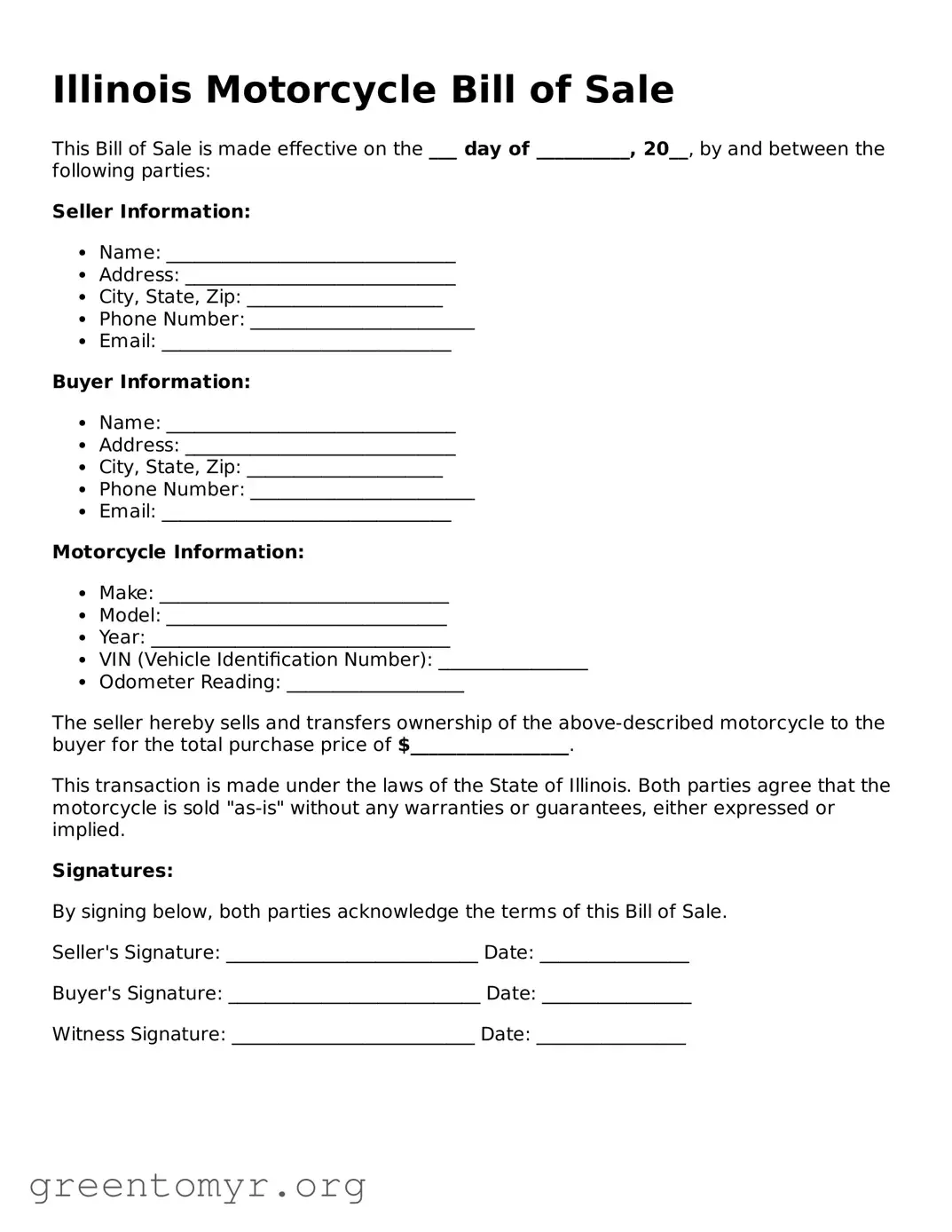
Illinois Motorcycle Bill of Sale
This Bill of Sale is made effective on the ___ day of __________, 20__, by and between the following parties:
Seller Information:
Buyer Information:
Motorcycle Information:
The seller hereby sells and transfers ownership of the above-described motorcycle to the buyer for the total purchase price of $_________________.
This transaction is made under the laws of the State of Illinois. Both parties agree that the motorcycle is sold "as-is" without any warranties or guarantees, either expressed or implied.
Signatures:
By signing below, both parties acknowledge the terms of this Bill of Sale.
Seller's Signature: ___________________________ Date: ________________
Buyer's Signature: ___________________________ Date: ________________
Witness Signature: __________________________ Date: ________________
| Fact Name | Description |
|---|---|
| Purpose | The Illinois Motorcycle Bill of Sale is used to document the sale of a motorcycle between a buyer and a seller. |
| Governing Law | This form is governed by the Illinois Vehicle Code. |
| Required Information | The form must include details such as the motorcycle's make, model, year, VIN, and odometer reading. |
| Signatures | Both the buyer and the seller must sign the bill of sale for it to be valid. |
| Notarization | Notarization is not required, but it can provide additional legal protection. |
| Record Keeping | It is advisable for both parties to keep a copy of the signed bill of sale for their records. |
| Transfer of Ownership | The bill of sale serves as proof of ownership transfer for the motorcycle. |
| Tax Implications | Sales tax may apply based on the sale price of the motorcycle. |
| Availability | The Illinois Motorcycle Bill of Sale form can typically be found online or at local DMV offices. |
Filling out the Illinois Motorcycle Bill of Sale form is a straightforward process. This document serves as proof of the transaction between the buyer and seller, ensuring that both parties have a clear understanding of the sale. Follow these steps carefully to complete the form accurately.
After completing the form, keep a copy for your records. The buyer will need this document to register the motorcycle in their name. It's a good idea to double-check all information for accuracy before finalizing the transaction.
The Illinois Motorcycle Bill of Sale is a document that serves as a receipt for the sale of a motorcycle. It provides important information about the transaction, including the details of the buyer and seller, the motorcycle's description, and the sale price. This form can help protect both parties by documenting the transfer of ownership and can be useful for registration purposes with the Illinois Secretary of State.
A Bill of Sale is essential for several reasons:
The form should include the following details:
Yes, many resources are available online where you can find a template for the Illinois Motorcycle Bill of Sale. Various websites offer free or paid versions that can be customized to fit your needs. It is important to ensure that the form complies with Illinois state requirements.
In Illinois, notarization of the Bill of Sale is not a legal requirement. However, having the document notarized can add an extra layer of security and authenticity, which may be beneficial in case of future disputes.
After completing the sale, both the buyer and seller should keep a copy of the Bill of Sale for their records. The buyer will need it when registering the motorcycle with the Illinois Secretary of State. It is advisable to store the document in a safe place, as it may be needed for future reference.
When purchasing a motorcycle from a dealer, the dealer typically provides a sales contract or invoice, which serves a similar purpose to a Bill of Sale. However, if you prefer, you can still request a Bill of Sale for your records. Always ensure that the document contains all necessary details to confirm the transaction.
If the motorcycle has an outstanding lien, it is crucial to address this before completing the sale. The seller should inform the buyer of the lien status and work with the lienholder to settle the debt. The Bill of Sale should clearly state whether the motorcycle is being sold with or without a lien, as this affects the transfer of ownership.
Filling out the Illinois Motorcycle Bill of Sale form can seem straightforward, but many people make common mistakes that can lead to complications down the line. One prevalent error is neglecting to include the correct vehicle identification number (VIN). The VIN is crucial; it uniquely identifies the motorcycle and ensures that the transaction is properly recorded. Without the correct VIN, the sale could be questioned, or worse, the motorcycle might be linked to previous ownership issues.
Another mistake often made is failing to provide accurate seller and buyer information. This includes names, addresses, and contact details. Incomplete or incorrect information can create confusion and may even lead to legal disputes. Always double-check that the names match official identification and that addresses are current.
Many individuals also overlook the importance of including the sale price. Some may assume it’s obvious or think it’s not necessary, but documenting the sale price is essential for both parties. It establishes the value of the transaction and can be important for tax purposes. Leaving this field blank can raise questions later.
Additionally, people sometimes forget to sign the form. Both the seller and the buyer need to sign to validate the document. A missing signature can render the bill of sale ineffective, leaving both parties without proof of the transaction. It’s a simple step, but one that is easily overlooked.
Another common error is not providing the date of the sale. This date is vital for record-keeping and can affect the transfer of ownership. Without a date, it can be unclear when the transaction took place, which can complicate things if any issues arise later.
Some individuals fail to include any disclosures about the motorcycle's condition. If there are known issues or if the bike is sold "as is," it’s important to note this in the bill of sale. Transparency helps protect both parties and can prevent misunderstandings about the motorcycle’s condition after the sale.
People also sometimes forget to keep a copy of the bill of sale for their records. This document serves as proof of the transaction and can be essential for future reference, especially if questions about ownership or condition arise. Always make sure to retain a copy for personal records.
Another mistake is not checking for any local requirements that may apply. While the Illinois Motorcycle Bill of Sale form is standardized, there may be additional local regulations or requirements that must be met. Researching these beforehand can save time and hassle.
Finally, many people rush through the process. Taking the time to carefully review each section of the form can prevent mistakes. A thorough approach ensures that all necessary information is included and accurately presented, making the transaction smoother for everyone involved.
When purchasing or selling a motorcycle in Illinois, it's essential to have the right documentation in place. The Illinois Motorcycle Bill of Sale form is a critical document, but it is often accompanied by several other forms and documents to ensure a smooth transaction and proper registration. Below is a list of commonly used documents that can help facilitate the sale and ownership transfer of a motorcycle.
Having these documents prepared and completed can significantly streamline the process of buying or selling a motorcycle in Illinois. Ensuring that all paperwork is in order protects both parties and facilitates a legally sound transaction.
When dealing with the purchase or sale of a motorcycle, the Motorcycle Bill of Sale form serves a crucial purpose. However, it shares similarities with several other documents. Here are five documents that are comparable to the Motorcycle Bill of Sale:
Filling out the Illinois Motorcycle Bill of Sale form correctly is crucial for both the buyer and the seller. This document serves as proof of the transaction and can help avoid future disputes. Here are seven important things to keep in mind when completing this form.
By following these guidelines, you can ensure a smooth and successful transaction. Taking the time to complete the form accurately helps protect everyone involved.
Many people have misunderstandings about the Illinois Motorcycle Bill of Sale form. Here are seven common misconceptions:
Understanding these misconceptions can help ensure a smoother transaction when buying or selling a motorcycle in Illinois.
When completing the Illinois Motorcycle Bill of Sale form, keep the following key takeaways in mind: