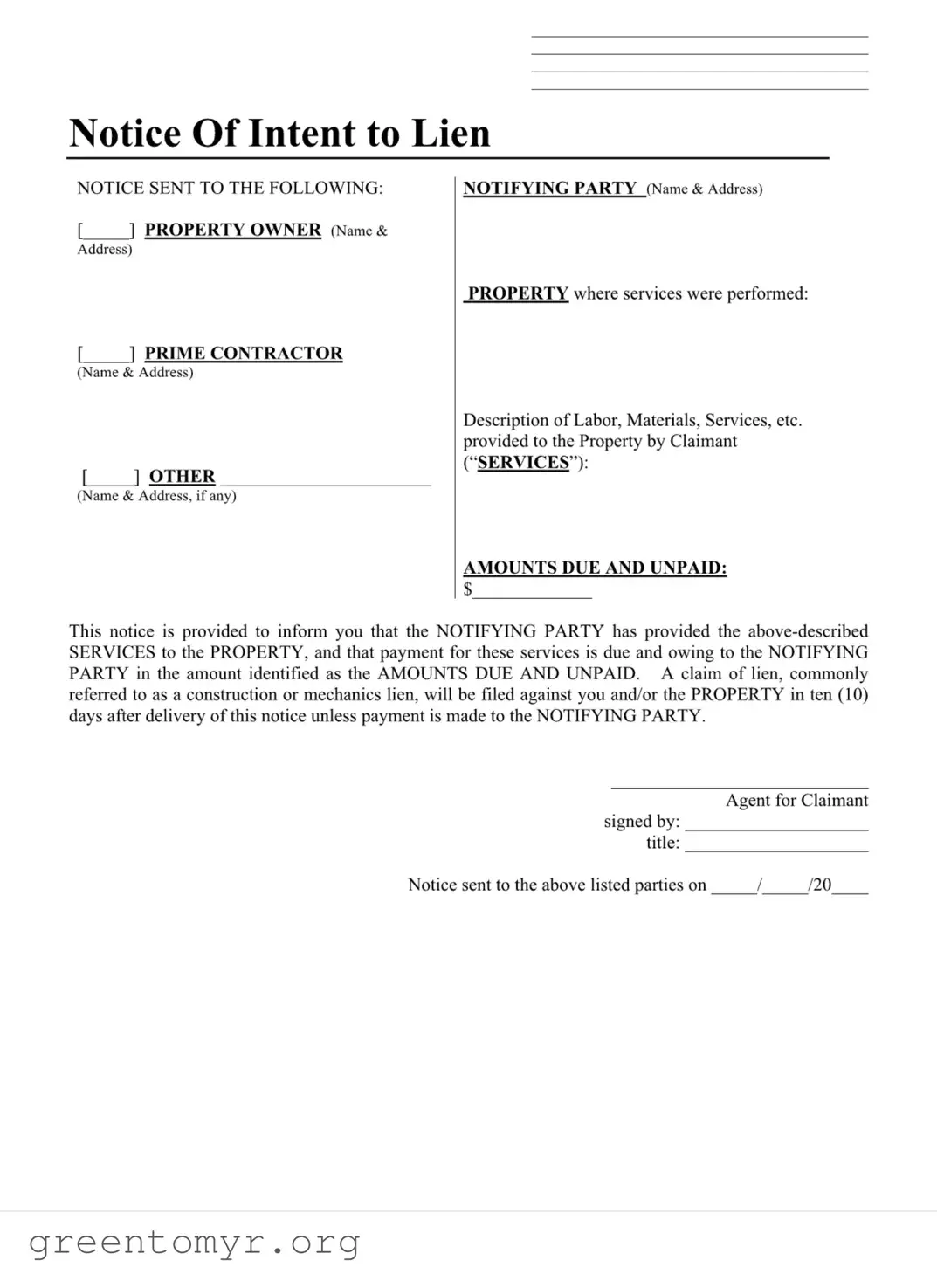
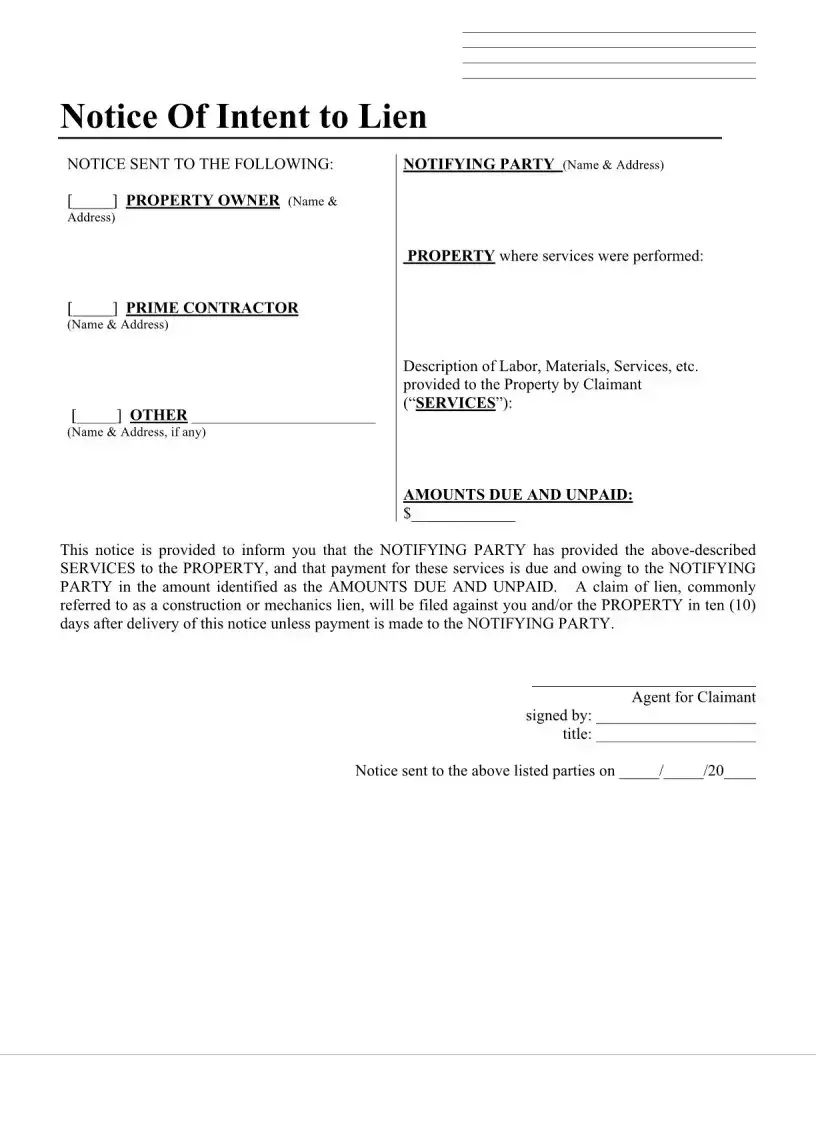
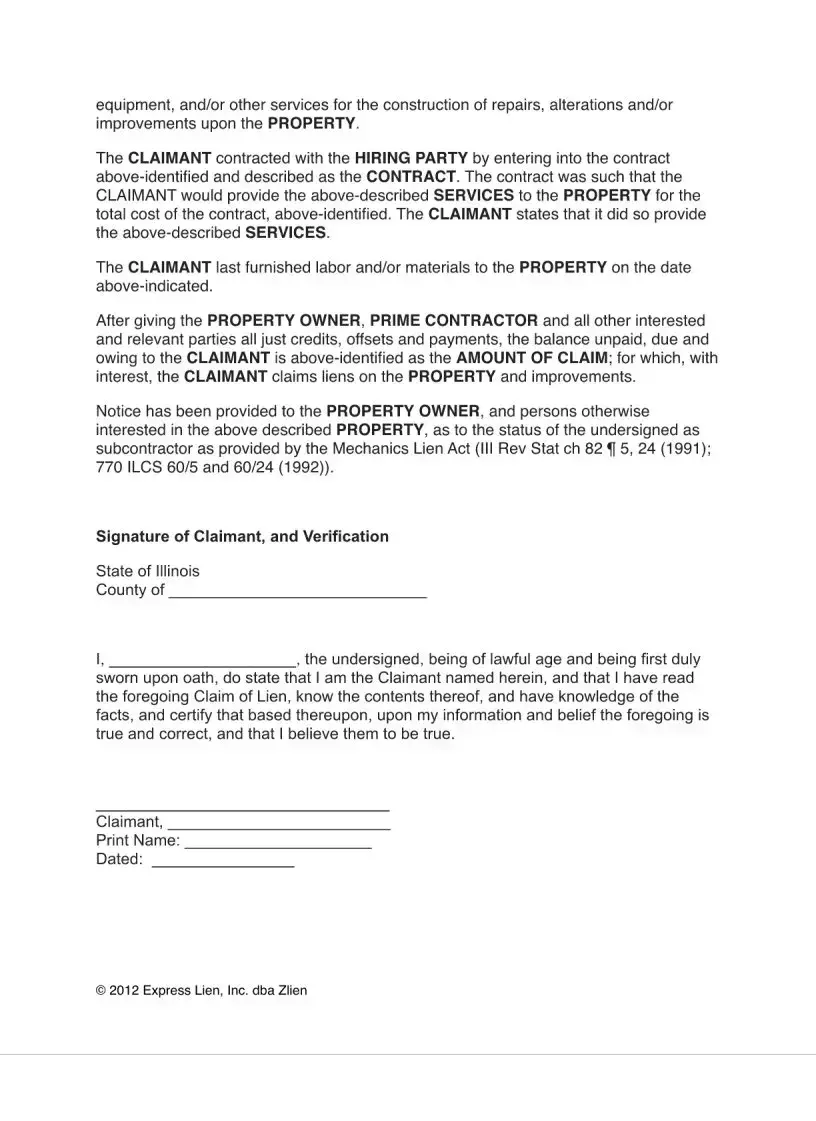
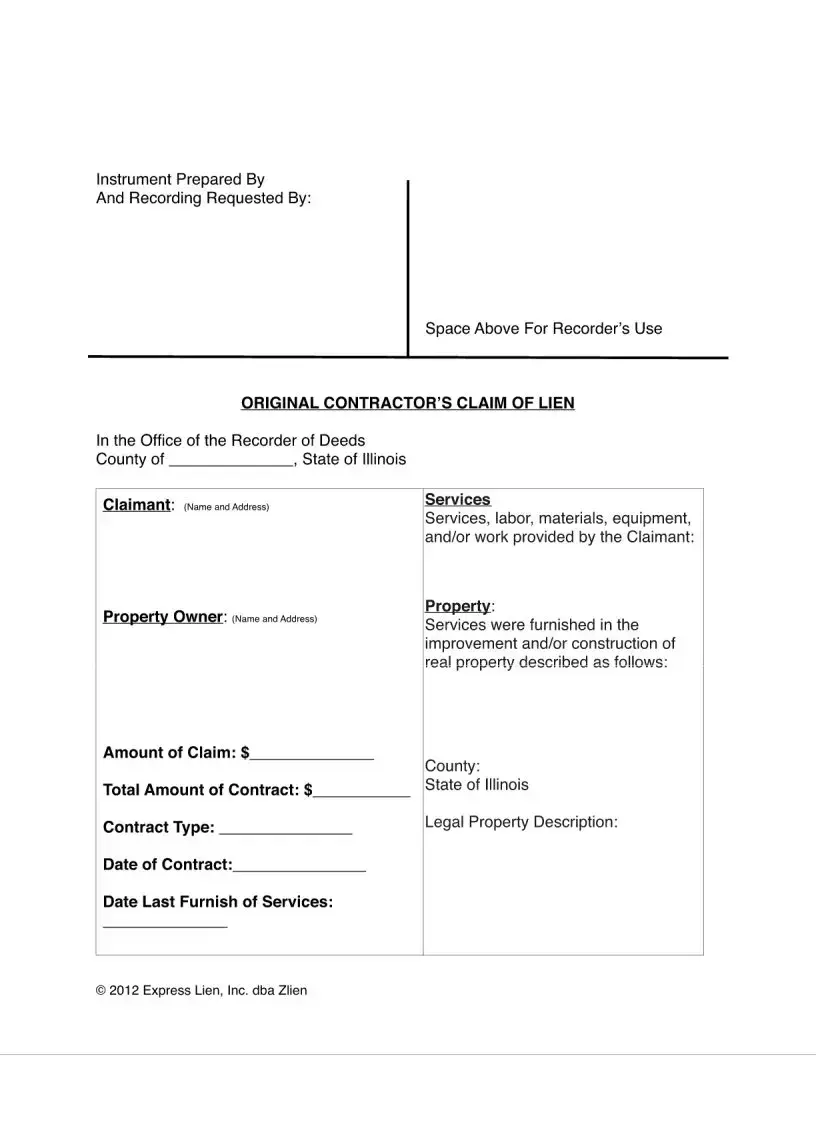
The Illinois Notice Lien form serves as a crucial document in the construction industry, providing a structured way for contractors and subcontractors to assert their right to payment for services rendered. This form includes essential information such as the property owner's name and address, the prime contractor's details, and the specific property where the services were performed. It outlines the nature of the services provided, whether they be labor, materials, or other essential contributions to a construction project. The form clearly states the amount due and unpaid, creating a formal record of the financial obligation. Importantly, it alerts the property owner and other involved parties that a lien will be filed within ten days if payment is not received. The document also requires the claimant to verify the accuracy of the information provided, ensuring accountability and transparency. Overall, the Illinois Notice Lien form is a vital tool for protecting the rights of those who contribute to construction projects, ensuring they have a means to seek payment when necessary.


| Fact Name | Fact Description |
|---|---|
| Purpose of the Form | The Illinois Notice Lien form serves to inform property owners and contractors about unpaid services related to construction or improvements on a property. |
| Governing Law | This form is governed by the Illinois Mechanics Lien Act, specifically under 770 ILCS 60/5 and 60/24. |
| Notification Requirement | The notifying party must send the notice to the property owner and prime contractor to inform them of the unpaid services. |
| Timeframe for Filing | A claim of lien can be filed 10 days after the delivery of this notice if payment is not received. |
| Claimant Information | The form requires the claimant's name and address, along with the description of services provided. |
| Amount Due | The form must specify the total amount due and unpaid for the services rendered. |
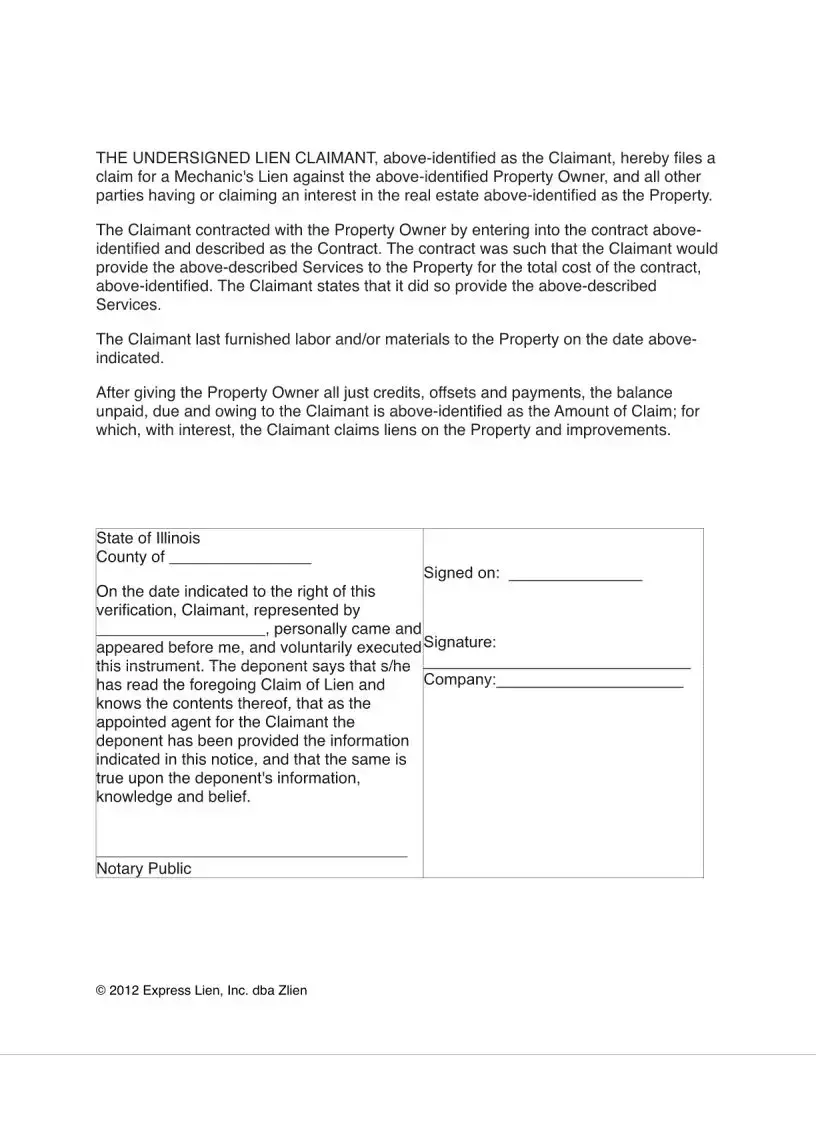
| Signature Requirement | The claimant must sign the form, verifying the accuracy of the information provided. |
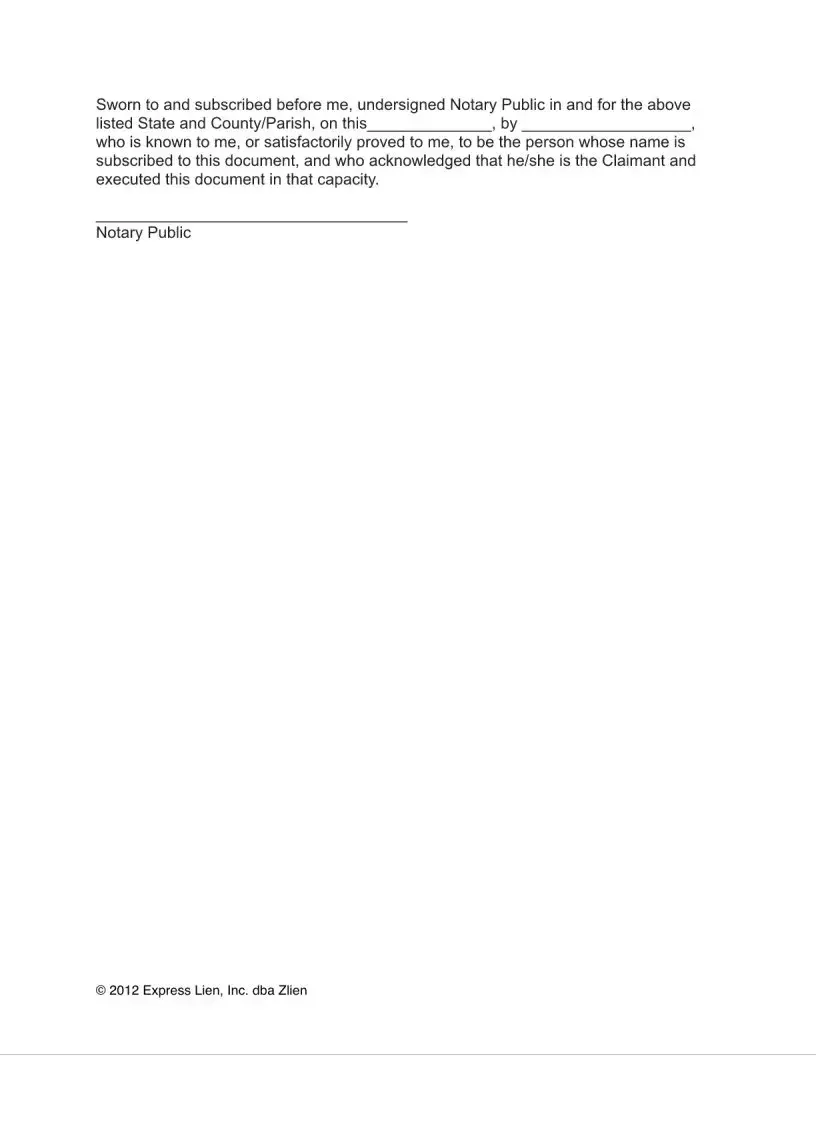
| Notary Public | The signature of the claimant must be notarized to validate the document. |
| Property Description | The form requires a legal description of the property where services were performed. |
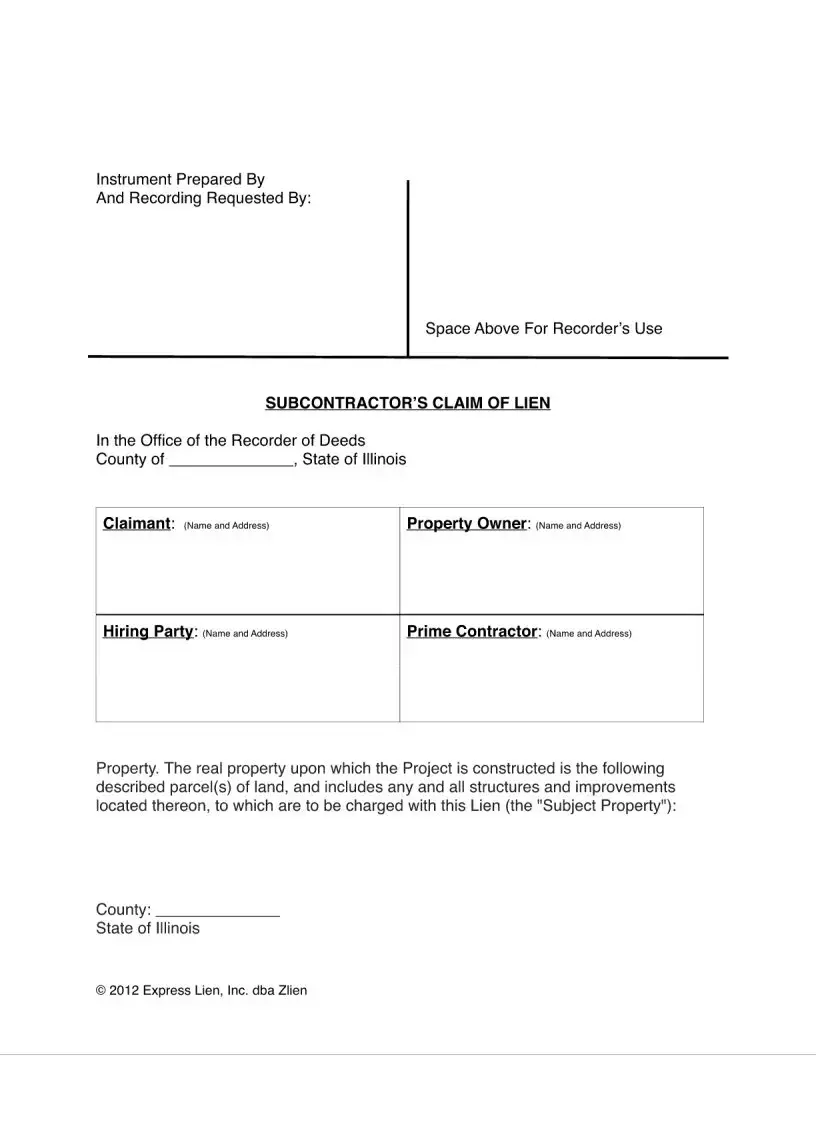
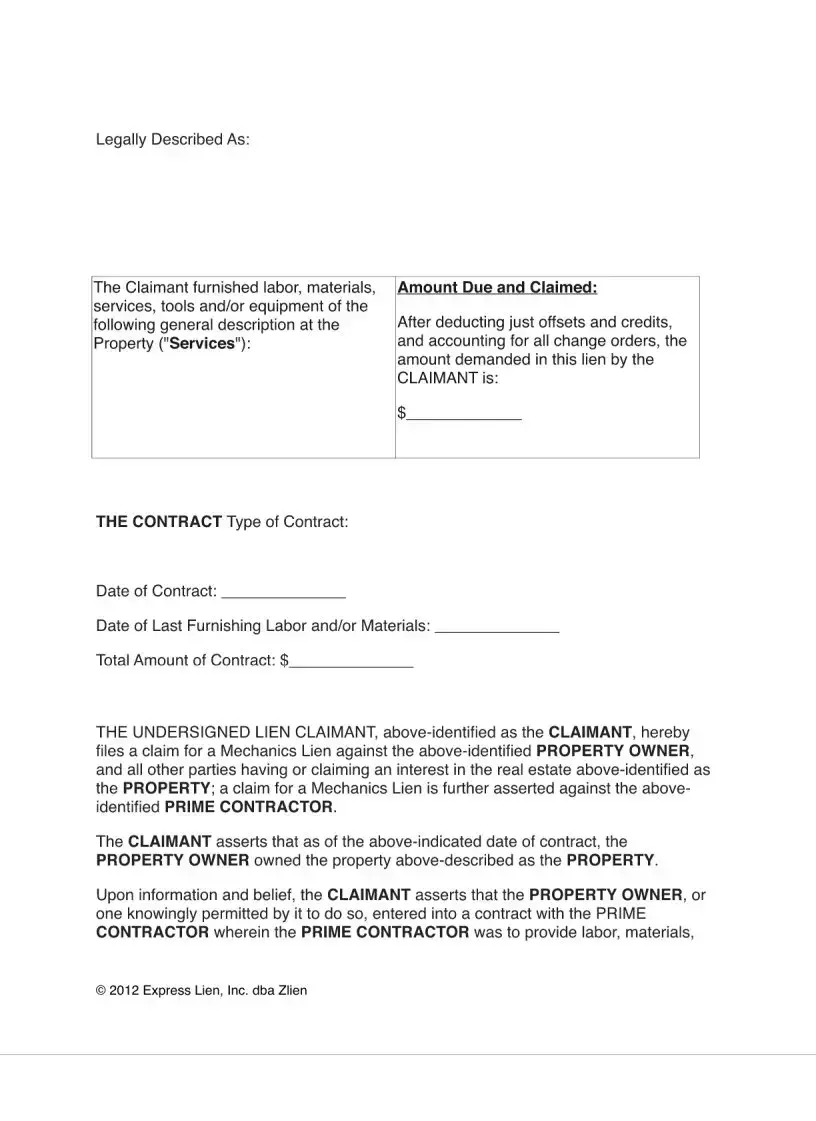
| Subcontractor's Claim | The form can also be used for subcontractors to assert a claim against the property owner and prime contractor. |
After completing the Illinois Notice Lien form, it is essential to deliver it to the appropriate parties. This notice serves as a formal communication regarding the unpaid services and sets the stage for potential legal action if payment is not made. Ensure that all details are accurate and that you retain copies for your records.
The Illinois Notice Lien form is a legal document used by contractors, subcontractors, and suppliers to inform property owners and other relevant parties that they have provided labor, materials, or services to a property and that payment is overdue. This form serves as a formal notice that a lien may be filed against the property if the outstanding amount is not paid within a specified timeframe, typically ten days from the notice's delivery.
Any contractor, subcontractor, or supplier who has provided labor or materials for a construction project in Illinois may need to file a Notice Lien if payment has not been received. This includes both general contractors and those who work under them, such as subcontractors. It is essential to file this notice to protect their right to claim a lien on the property if necessary.
The form requires several key pieces of information, including:
Providing accurate and complete information is crucial, as it ensures that all parties are informed and helps avoid potential disputes.
If payment is not made within ten days of sending the Notice Lien, the notifying party may proceed to file a mechanics lien against the property. This legal claim can affect the property owner's ability to sell or refinance the property until the debt is settled. It is advisable for property owners to address any outstanding payments promptly to avoid complications.
Yes, the Illinois Notice Lien form must meet certain legal requirements. It should be completed accurately, including all necessary information and signatures. The form must also be notarized to validate the claim. After completing the form, it should be filed with the county recorder's office in the county where the property is located. It’s important to keep a copy of the filed notice for your records.
Filling out the Illinois Notice Lien form can be straightforward, but many people make mistakes that can lead to complications. One common error is failing to provide complete and accurate information about the property owner. It's essential to include the correct name and address of the property owner. Omitting or misspelling this information can delay the lien process or render it invalid.
Another frequent mistake involves the description of services provided. Claimants often use vague language or fail to detail the specific labor, materials, or services rendered. A clear and concise description is crucial. It not only helps establish the basis for the lien but also ensures that all parties understand the nature of the claim.
In addition, many individuals neglect to include the amount due and unpaid. This figure should reflect the total owed after accounting for any offsets or credits. A missing or incorrect amount can lead to disputes and may weaken the claim. It’s important to double-check this section for accuracy.
People also sometimes forget to sign the form or provide their title. A signature is a vital part of the document, as it verifies the claim. Without it, the lien may not be legally enforceable. Always ensure that the form is signed by the claimant and that their title is clearly stated.
Lastly, the timing of sending the notice can be a critical factor. Many people fail to track the date of sending the notice properly. The Illinois law requires that a lien be filed within a specific timeframe after services are rendered. Missing this deadline can jeopardize the ability to enforce the lien. Keeping accurate records of dates and ensuring timely delivery of the notice is essential for protecting your rights.
The Illinois Notice Lien form is an important document used in construction and contracting situations to inform property owners and contractors about unpaid services. However, it is often accompanied by other forms and documents that help clarify the legal standing and obligations of all parties involved. Below is a list of seven common documents that are frequently used alongside the Illinois Notice Lien form.
Understanding these documents is essential for anyone involved in construction or contracting in Illinois. Each plays a specific role in ensuring that all parties are informed and protected throughout the process. By using these forms correctly, individuals can help prevent disputes and ensure timely payments for services rendered.
When filling out the Illinois Notice Lien form, attention to detail is crucial. Here are some important dos and don'ts to consider:
Understanding the Illinois Notice Lien form is crucial for anyone involved in construction projects. However, several misconceptions can lead to confusion. Here are eight common misconceptions:
This form is not limited to contractors. Subcontractors and suppliers can also use it to secure their payment rights.
While it serves as a formal notification, it does not guarantee that payment will be made. It simply alerts the property owner of the outstanding debt.
The Notice must be sent within a specific timeframe, typically before filing a lien. It’s important to understand these deadlines to ensure rights are preserved.
Ignoring a Notice Lien can lead to serious consequences, including the filing of a mechanics lien, which can impact property ownership and credit.
The form may vary depending on the specifics of the project and the parties involved. Always ensure you are using the correct version for your situation.
Providing a clear description of the labor, materials, or services is essential. This helps establish the basis for the claim and supports your case.
A signature is necessary to validate the Notice Lien. It confirms that the claimant is officially asserting their right to payment.
Sending the Notice is just the first step. If payment is not received, further legal actions may be required to enforce the lien.
When filling out and using the Illinois Notice Lien form, it is essential to understand the following key points:
Following these guidelines will help ensure that the lien process is executed smoothly and effectively.