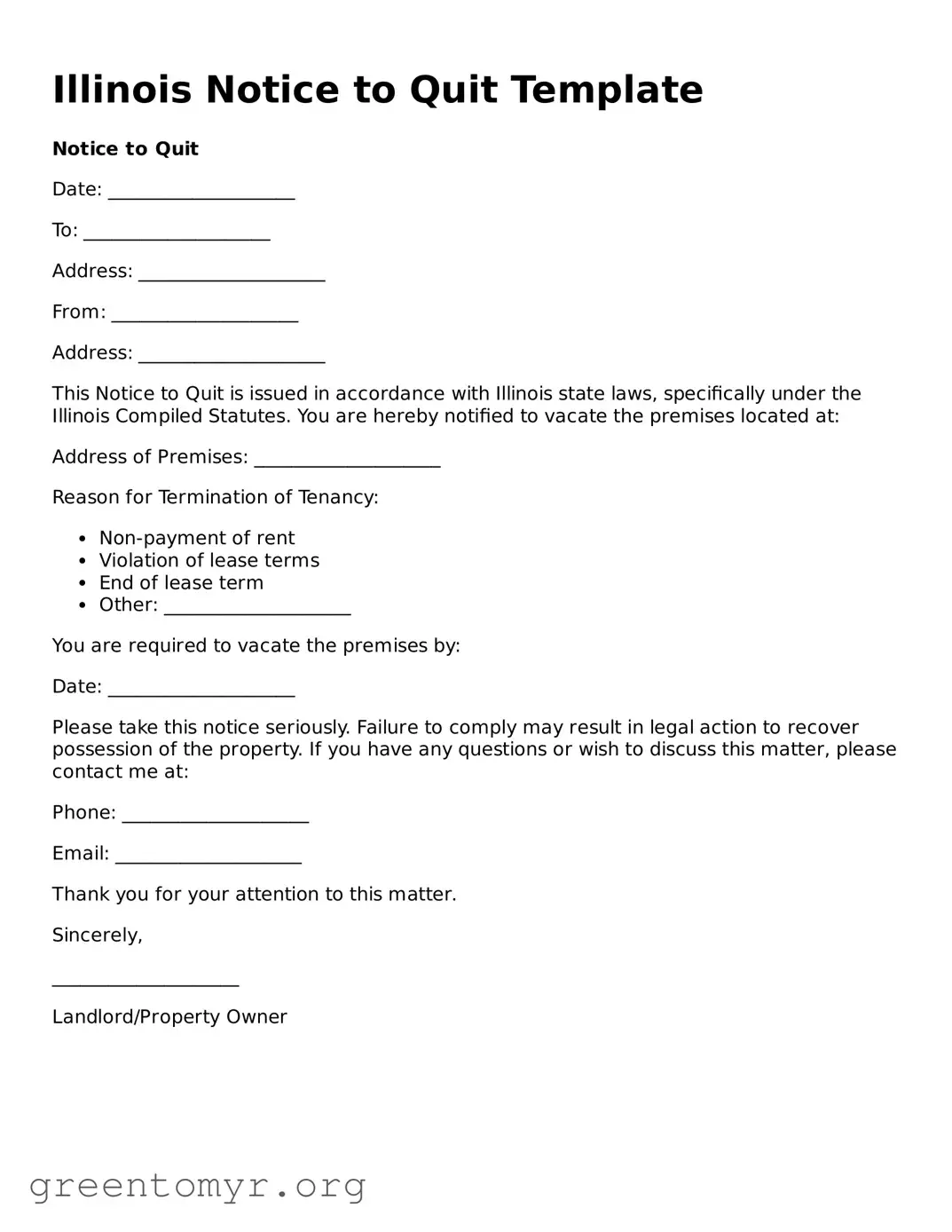
The Illinois Notice to Quit form serves as a crucial document in the landlord-tenant relationship, particularly when a landlord seeks to terminate a lease agreement. This form outlines the intent to evict a tenant and specifies the reasons for doing so, which may include non-payment of rent, lease violations, or the end of a rental period. Understanding the nuances of this form is essential for both landlords and tenants, as it lays the groundwork for the eviction process. Importantly, the Notice to Quit must adhere to specific legal requirements, including the appropriate notice period, which varies depending on the reason for eviction. Moreover, it is vital for landlords to deliver this notice in a manner prescribed by Illinois law, ensuring that tenants are properly informed of their rights and obligations. By grasping the significance and proper use of the Illinois Notice to Quit form, both parties can navigate the complexities of eviction proceedings with greater clarity and confidence.
Illinois Notice to Quit Template
Notice to Quit
Date: ____________________
To: ____________________
Address: ____________________
From: ____________________
Address: ____________________
This Notice to Quit is issued in accordance with Illinois state laws, specifically under the Illinois Compiled Statutes. You are hereby notified to vacate the premises located at:
Address of Premises: ____________________
Reason for Termination of Tenancy:
You are required to vacate the premises by:
Date: ____________________
Please take this notice seriously. Failure to comply may result in legal action to recover possession of the property. If you have any questions or wish to discuss this matter, please contact me at:
Phone: ____________________
Email: ____________________
Thank you for your attention to this matter.
Sincerely,
____________________
Landlord/Property Owner
| Fact Name | Description |
|---|---|
| Purpose | The Illinois Notice to Quit form is used by landlords to notify tenants of the termination of their lease. |
| Governing Law | This form is governed by the Illinois Compiled Statutes, specifically 735 ILCS 5/9-209. |
| Notice Period | Landlords must provide tenants with a minimum notice period, typically 5 days for non-payment of rent. |
| Delivery Method | The notice can be delivered in person, by mail, or by posting it on the tenant's door. |
| Signature Requirement | The landlord must sign the notice to make it valid. |
| Tenant's Rights | Tenants have the right to contest the notice in court if they believe it was issued improperly. |
| Form Availability | The form can be obtained online or through local legal aid organizations. |
After obtaining the Illinois Notice to Quit form, you will need to complete it accurately to ensure the process moves forward smoothly. This form is a critical step in the eviction process, and filling it out correctly is essential.
Once the form is filled out, you will need to deliver it to the tenant. This can be done in person or via certified mail, depending on your preference and local regulations.
The Illinois Notice to Quit form is a legal document that a landlord uses to inform a tenant that they must vacate the rental property. This notice is typically issued when a tenant has violated the lease agreement or has not paid rent. It serves as the first step in the eviction process, providing the tenant with a specific timeframe to leave the property.
A landlord should use the Notice to Quit when a tenant fails to comply with the terms of the lease. Common reasons include:
It’s important to ensure that all local laws and regulations are followed when issuing this notice.
The timeframe for a tenant to respond to a Notice to Quit varies depending on the reason for the notice. Generally, tenants have:
Always check local laws, as they may have specific requirements that differ from state guidelines.
Yes, a tenant can contest a Notice to Quit. If they believe the notice is unjust, they have the right to respond and present their case. This can be done through a formal hearing or in court. It's advisable for tenants to seek legal counsel to understand their rights and options.
If a tenant does not vacate the property within the specified timeframe, the landlord can proceed with eviction proceedings. This typically involves filing a complaint in court. The court will then schedule a hearing where both parties can present their arguments.
No, a Notice to Quit is not the same as an eviction notice. The Notice to Quit is the first step, informing the tenant that they must leave. An eviction notice comes after the Notice to Quit if the tenant fails to vacate. The eviction notice is a formal request to remove the tenant from the property through legal channels.
Yes, landlords must provide a reason when issuing a Notice to Quit. The reason should be clearly stated in the notice, whether it’s for non-payment, lease violations, or other issues. This transparency helps ensure that the process is fair and legally compliant.
Filling out the Illinois Notice to Quit form can be a straightforward process, but many people make common mistakes that can lead to complications. One frequent error is failing to provide accurate tenant information. This includes the full name of the tenant and the correct address of the rental property. If this information is incorrect, it may cause delays or even invalidate the notice.
Another mistake is not specifying the reason for the notice. The Illinois Notice to Quit requires a clear indication of why the notice is being served, such as non-payment of rent or lease violations. Omitting this detail can create confusion and may not fulfill legal requirements.
Some individuals neglect to include the date on which the notice is served. This date is crucial because it establishes the timeline for the tenant's response. Without it, the notice may be considered incomplete, complicating the eviction process.
Additionally, people often forget to sign the Notice to Quit. A signature is necessary to validate the document. Without it, the notice may be dismissed by a court, wasting time and resources for the landlord.
Another common oversight involves not providing the proper notice period. Illinois law requires specific time frames for different types of notices. Failing to adhere to these timelines can result in the notice being deemed ineffective.
Some landlords also mistakenly use outdated forms or templates. Laws and requirements can change, so it’s important to use the most current version of the Notice to Quit form. Using an outdated form may lead to legal challenges.
Lastly, people sometimes overlook the importance of keeping a copy of the notice for their records. Documenting the process is essential for any future legal proceedings. Without a copy, proving that the notice was served can become difficult.
The Illinois Notice to Quit form is a crucial document in the eviction process, signaling a tenant to vacate the premises. Several other forms and documents are commonly used alongside it to ensure compliance with state laws and to facilitate the eviction process. Below is a list of related documents that may be necessary.
Using these documents in conjunction with the Illinois Notice to Quit can help ensure a smoother eviction process while adhering to legal requirements.
When filling out the Illinois Notice to Quit form, it's crucial to approach the task with care. This document serves as an official notice to a tenant, indicating that they must vacate the premises. Here are some essential do's and don'ts to keep in mind:
Following these guidelines can help ensure that the process goes smoothly and that you comply with Illinois law. Clarity and precision are key when dealing with such important documents.
Misconceptions about the Illinois Notice to Quit form can lead to confusion for both landlords and tenants. Here are six common misunderstandings:
Notices can vary depending on the reason for eviction. Different circumstances require different forms and timelines.
Issuing this notice is just the first step in the eviction process. The landlord must still go through the legal process to obtain an eviction order.
While tenants may feel that they can disregard the notice, it is important to respond appropriately. Ignoring it can lead to legal consequences.
There are specific rules about when and how a Notice to Quit can be issued. These rules depend on the reason for eviction and local laws.
While written notices are standard, verbal notices may also be legally recognized in some situations. However, it is always best to have a written record.
Tenants typically have a set period to respond or vacate the property. This timeframe can vary based on the type of notice issued.
When dealing with the Illinois Notice to Quit form, understanding its purpose and proper use is essential for both landlords and tenants. Here are some key takeaways to consider:
Understanding these aspects of the Notice to Quit can help ensure that the process is handled correctly and fairly for all parties involved.