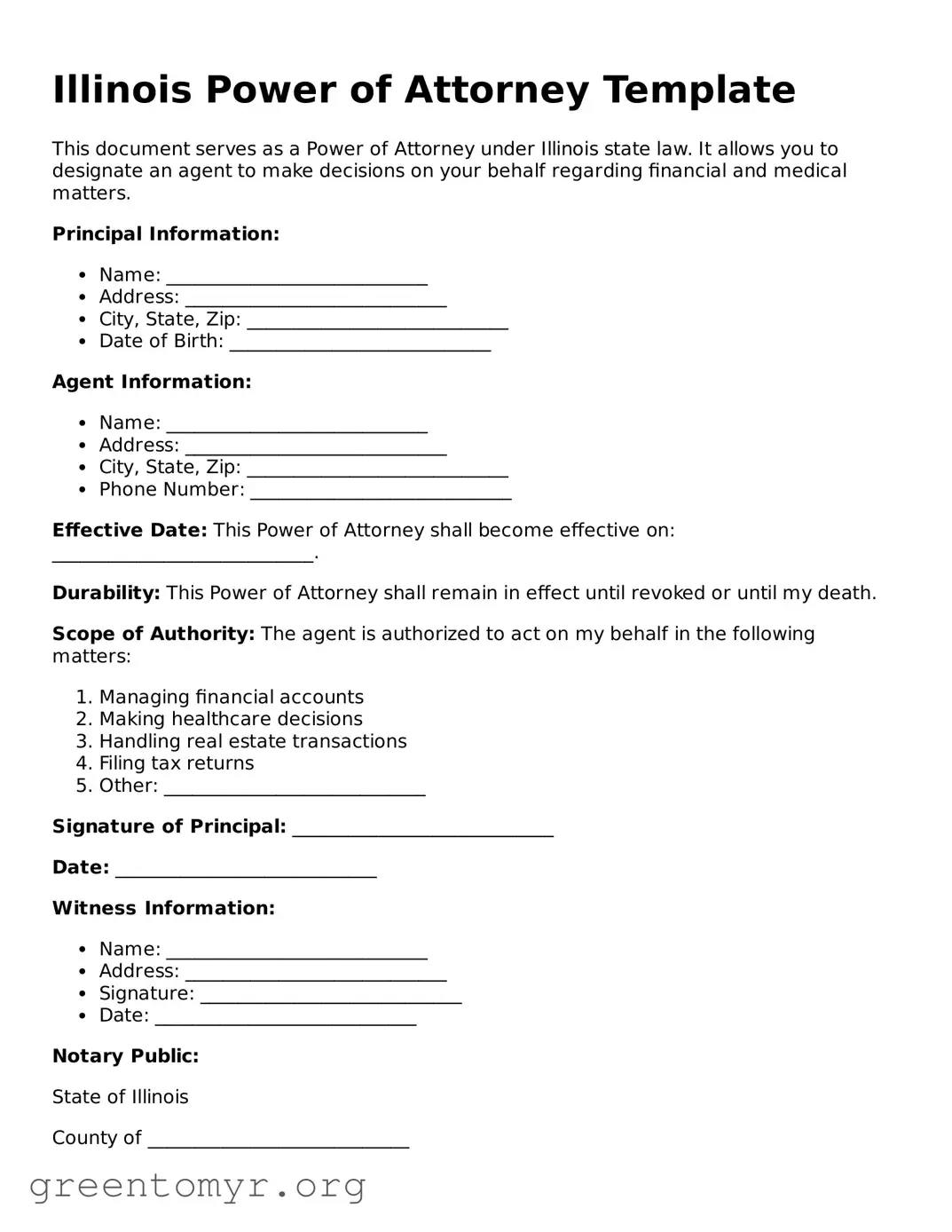
The Illinois Power of Attorney form serves as a crucial legal document that empowers individuals to designate someone else to make decisions on their behalf. This form can cover various aspects of life, including financial matters, healthcare decisions, and other personal affairs. By completing this document, a principal grants authority to an agent, who can act in their best interest when they are unable to do so themselves. It is essential to understand the different types of powers that can be granted, as they can range from broad financial powers to specific healthcare directives. Additionally, the form requires careful consideration regarding the selection of an agent, as this person will hold significant responsibility. The Illinois Power of Attorney also includes provisions for revocation, ensuring that the principal retains control over their decisions, even after the document has been executed. Understanding these elements is vital for anyone looking to create a robust plan for future uncertainties.
Illinois Power of Attorney Template
This document serves as a Power of Attorney under Illinois state law. It allows you to designate an agent to make decisions on your behalf regarding financial and medical matters.
Principal Information:
Agent Information:
Effective Date: This Power of Attorney shall become effective on: ____________________________.
Durability: This Power of Attorney shall remain in effect until revoked or until my death.
Scope of Authority: The agent is authorized to act on my behalf in the following matters:
Signature of Principal: ____________________________
Date: ____________________________
Witness Information:
Notary Public:
State of Illinois
County of ____________________________
Subscribed and sworn before me this _____ day of __________, 20__.
Notary Signature: ____________________________
My Commission Expires: ____________________________
| Fact Name | Details |
|---|---|
| Definition | The Illinois Power of Attorney form allows an individual to appoint someone to make decisions on their behalf. |
| Governing Law | The form is governed by the Illinois Power of Attorney Act, specifically 755 ILCS 45/1-1 et seq. |
| Types | There are two main types: Power of Attorney for Health Care and Power of Attorney for Property. |
| Signature Requirement | The principal must sign the document, and it must be witnessed by two individuals or notarized. |
| Durability | The Power of Attorney can be durable, remaining effective even if the principal becomes incapacitated. |
| Revocation | The principal can revoke the Power of Attorney at any time, provided they are mentally competent. |
| Agent's Authority | The agent’s authority can be limited or broad, depending on the principal's preferences outlined in the form. |
After obtaining the Illinois Power of Attorney form, it's important to fill it out accurately to ensure it meets your needs. Follow these steps carefully to complete the form correctly.
Once you have completed the form, keep a copy for your records. Provide copies to your agent and any relevant institutions or individuals who may need it.
A Power of Attorney (POA) in Illinois is a legal document that allows one person (the agent) to act on behalf of another person (the principal) in financial or medical matters. This document grants the agent authority to make decisions and take actions as specified in the agreement.
Creating a Power of Attorney is essential for several reasons:
Illinois recognizes several types of Power of Attorney, including:
Your agent can be anyone you trust, including family members, friends, or professionals. However, it's essential to choose someone responsible and capable of making decisions in your best interest. They should also be at least 18 years old and mentally competent.
To create a Power of Attorney in Illinois, follow these steps:
While it is not required to have a lawyer to create a Power of Attorney, consulting with one can be beneficial. A lawyer can help ensure that the document meets all legal requirements and accurately reflects your wishes.
Yes, you can revoke a Power of Attorney at any time as long as you are mentally competent. To do so, you must create a written revocation document and notify your agent and any relevant third parties, such as banks or healthcare providers.
If you do not have a Power of Attorney and become incapacitated, a court may appoint a guardian to make decisions on your behalf. This process can be lengthy and costly, and the court may not choose someone you would have preferred.
Generally, a Power of Attorney created in Illinois is valid in other states. However, laws can vary, so it is advisable to check the specific requirements of the state where the document will be used. In some cases, you may need to create a new Power of Attorney that complies with that state's laws.
A Power of Attorney remains in effect until you revoke it, pass away, or, in the case of a non-durable POA, until you become incapacitated. Durable Powers of Attorney continue to be effective even if you become incapacitated.
Filling out the Illinois Power of Attorney form can be a straightforward process, but many individuals make common mistakes that can lead to complications later on. One frequent error is failing to specify the powers granted to the agent. It is crucial to clearly outline what decisions the agent can make on your behalf. Without this clarity, there may be confusion or disputes about the extent of the agent's authority.
Another mistake involves neglecting to sign the form in the presence of a notary public or witnesses, as required by Illinois law. A signature that is not properly notarized can render the document invalid. Therefore, it is important to ensure that all necessary signatures are obtained before submitting the form.
Some individuals also overlook the importance of selecting the right agent. Choosing someone who is not trustworthy or lacks the necessary judgment can lead to serious issues. It is advisable to select an individual who understands your values and wishes, as they will be making significant decisions on your behalf.
Additionally, many people forget to update their Power of Attorney when their circumstances change. Life events such as marriage, divorce, or the death of a chosen agent can affect the validity of the document. Regularly reviewing and updating the Power of Attorney ensures that it reflects your current situation and intentions.
Finally, failing to discuss the Power of Attorney with the chosen agent is a common oversight. The agent should be aware of their responsibilities and your preferences regarding medical and financial decisions. Open communication can prevent misunderstandings and ensure that your wishes are honored when the time comes.
When creating a Power of Attorney in Illinois, several other forms and documents may be useful to ensure comprehensive coverage of your legal and financial needs. Each of these documents serves a specific purpose and can complement the Power of Attorney effectively.
Incorporating these documents into your estate planning can provide clarity and peace of mind. Each serves a unique role in ensuring that your wishes are honored and that your affairs are managed according to your preferences.
When filling out the Illinois Power of Attorney form, it's important to approach the task with care. Here’s a list of things you should and shouldn’t do to ensure the process goes smoothly.
In Illinois, the Power of Attorney form is an important legal document that allows individuals to designate someone to make decisions on their behalf. However, several misconceptions about this form can lead to confusion. Below are four common misconceptions:
This is not true. While many people associate Power of Attorney with aging or health-related issues, anyone can benefit from this document. Young adults, especially those going off to college or starting their careers, should consider establishing a Power of Attorney to ensure their wishes are honored in case of an emergency.
While a Power of Attorney does grant significant authority, it does not mean the agent can do whatever they want. The document can be tailored to limit the agent's powers, specifying what decisions they can make. This allows individuals to maintain control over their finances and health care choices.
This is incorrect. A Power of Attorney can be revoked at any time, as long as the individual is mentally competent. If circumstances change or trust in the agent diminishes, the principal can simply create a new document to replace the old one.
While many people think of Power of Attorney in terms of financial decisions, it can also cover health care decisions. A Health Care Power of Attorney allows an individual to appoint someone to make medical decisions on their behalf if they are unable to do so themselves.
Understanding the Illinois Power of Attorney form is essential for making informed decisions about your health and finances. Here are some key takeaways to keep in mind:
By following these guidelines, you can effectively use the Illinois Power of Attorney form to protect your interests and ensure your wishes are honored.