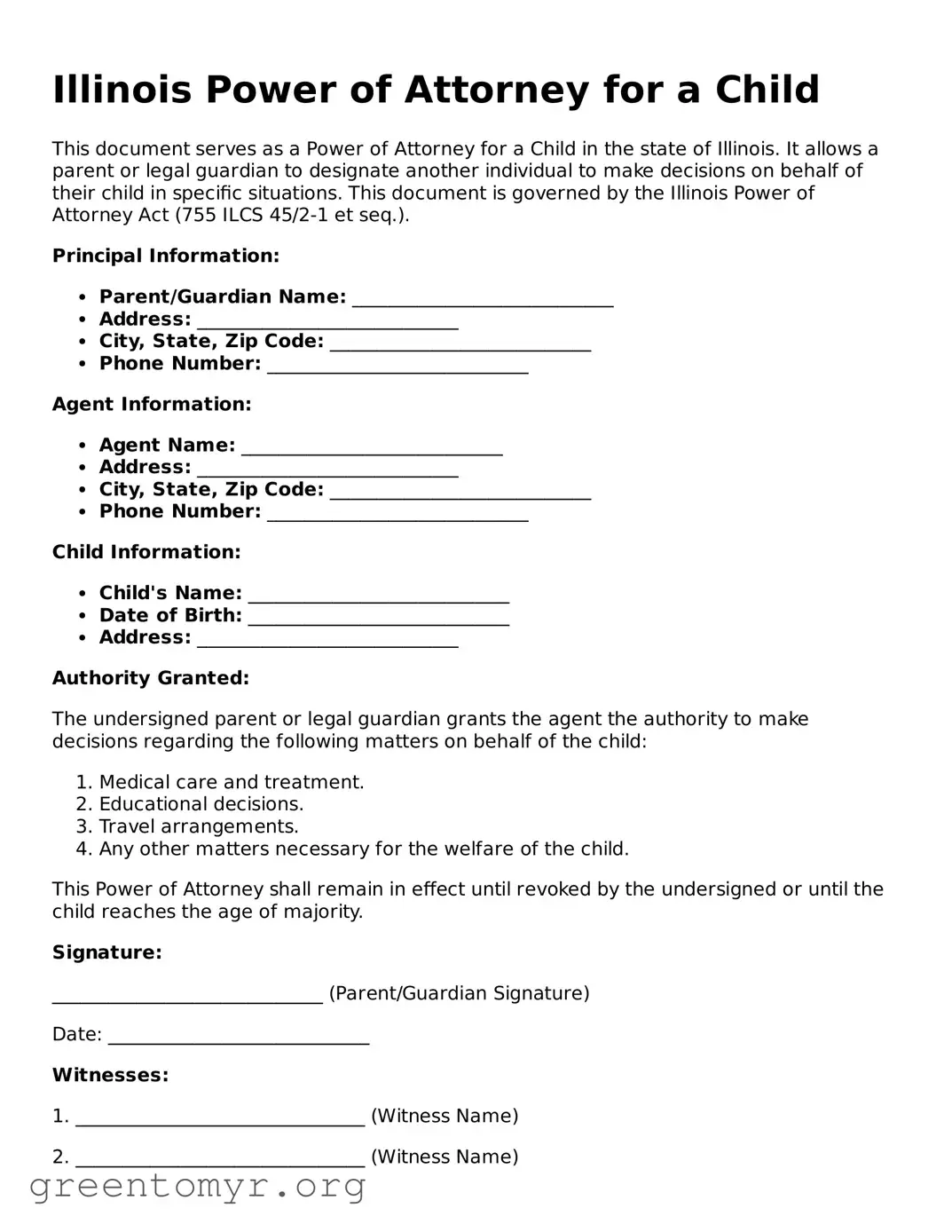
The Illinois Power of Attorney for a Child form serves as a vital legal document that allows parents or guardians to designate another adult to make decisions on behalf of their child when they are unable to do so. This form is particularly useful in situations where parents may be traveling, working long hours, or facing temporary incapacitation. By completing this form, the designated agent gains the authority to make important decisions regarding the child's education, healthcare, and general welfare. It is essential for parents to understand the scope of the authority granted, as well as the duration of this power, which can be specified within the document. Additionally, the form requires signatures from both the parent or guardian and the agent, ensuring that all parties are in agreement. This arrangement not only provides peace of mind for parents but also ensures that the child’s needs are met promptly and effectively in their absence.
Illinois Power of Attorney for a Child
This document serves as a Power of Attorney for a Child in the state of Illinois. It allows a parent or legal guardian to designate another individual to make decisions on behalf of their child in specific situations. This document is governed by the Illinois Power of Attorney Act (755 ILCS 45/2-1 et seq.).
Principal Information:
Agent Information:
Child Information:
Authority Granted:
The undersigned parent or legal guardian grants the agent the authority to make decisions regarding the following matters on behalf of the child:
This Power of Attorney shall remain in effect until revoked by the undersigned or until the child reaches the age of majority.
Signature:
_____________________________ (Parent/Guardian Signature)
Date: ____________________________
Witnesses:
1. _______________________________ (Witness Name)
2. _______________________________ (Witness Name)
Notarization:
State of Illinois
County of ____________________________
Subscribed and sworn before me this _____ day of ____________, 20__.
_____________________________ (Notary Public Signature)
My commission expires: ____________________________
| Fact Name | Details |
|---|---|
| Governing Law | The Illinois Power of Attorney for a Child is governed by the Illinois Power of Attorney Act (755 ILCS 45). |
| Purpose | This form allows a parent or guardian to designate another adult to make decisions regarding the child’s care and welfare. |
| Duration | The authority granted can last until the child turns 18 or until the parent revokes it, whichever comes first. |
| Eligibility | Any adult can be appointed, but the child’s parent or legal guardian must sign the form. |
| Limitations | The form does not grant the agent the power to make medical decisions unless specified in a separate medical power of attorney. |
| Revocation | A parent can revoke the power of attorney at any time by providing written notice to the agent. |
| Notarization | The form must be signed in the presence of a notary public to be legally valid. |
Filling out the Illinois Power of Attorney for a Child form is a straightforward process. Once completed, this document allows you to designate someone to make decisions on behalf of your child when you are unable to do so. Follow these steps carefully to ensure the form is filled out correctly.
A Power of Attorney for a Child in Illinois is a legal document that allows a parent or legal guardian to delegate certain parental responsibilities to another adult. This can be helpful when a parent is temporarily unable to care for their child due to various reasons, such as travel, illness, or other obligations.
The agent, or the person designated to take care of the child, can be a trusted adult such as a relative, friend, or neighbor. It is important to choose someone who is responsible and capable of making decisions in the best interest of the child.
The Power of Attorney for a Child is typically effective for up to 12 months. However, it can be revoked or terminated earlier if the parent or guardian decides to do so. It's essential to communicate any changes to the agent and ensure they understand the current status of the arrangement.
Parents can grant various responsibilities to the agent, including:
It's important to specify which powers are granted to ensure clarity and avoid misunderstandings.
No, you do not necessarily need a lawyer to complete the Power of Attorney for a Child form. However, it can be beneficial to consult with a legal professional to ensure that the document meets all legal requirements and accurately reflects your intentions.
Yes, this document can be particularly useful in emergencies. If a parent is unable to care for their child due to unforeseen circumstances, the agent can step in and make necessary decisions quickly. This can help ensure the child's needs are met without delay.
To revoke a Power of Attorney for a Child, the parent or legal guardian must provide a written notice to the agent, clearly stating the revocation. It is advisable to keep a copy of this notice for your records and inform any relevant parties, such as schools or medical providers, about the change.
The Power of Attorney for a Child form can be obtained from various sources, including:
Make sure to use the most current version of the form to ensure compliance with Illinois law.
When filling out the Illinois Power of Attorney for a Child form, many individuals make common mistakes that can lead to confusion or even legal issues down the road. Understanding these pitfalls can help ensure that the document serves its intended purpose effectively.
One frequent error is failing to specify the duration of the power of attorney. It is crucial to indicate how long the authority will last. Without a clear timeframe, the appointed agent may have uncertain power, which can lead to complications when decisions need to be made regarding the child’s welfare.
Another common mistake involves not including all necessary signatures. Both the parent and the designated agent must sign the form. If any required signature is missing, the document may not be considered valid, potentially leaving the child without the intended support.
People often overlook the importance of clearly identifying the child in the form. This includes providing the child’s full name, date of birth, and other identifying information. Ambiguities can create confusion about who the power of attorney applies to, leading to challenges in emergency situations.
Additionally, some individuals make the mistake of not discussing the arrangement with the chosen agent beforehand. It is essential to ensure that the person designated to act on behalf of the child is willing and prepared to take on this responsibility. A lack of communication can lead to misunderstandings and reluctance when action is needed.
Another mistake is neglecting to update the document when circumstances change. Life events such as relocation, changes in family dynamics, or the child reaching a certain age can all impact the effectiveness of the power of attorney. Regularly reviewing and updating the document is vital to ensure it remains relevant.
Some people also fail to provide clear instructions regarding the powers granted to the agent. It is important to outline what decisions the agent can make, whether related to healthcare, education, or general welfare. Vague language can lead to disagreements and misinterpretations when urgent decisions are needed.
Another error is not keeping a copy of the completed form. After filling out the document, it is essential to retain a copy for personal records and to provide copies to relevant parties, such as schools or healthcare providers. This ensures that everyone is on the same page regarding who has authority over the child.
Lastly, individuals sometimes overlook the importance of notarization. While notarization is not always required, having the document notarized can lend it additional credibility and help prevent disputes. It is wise to consider this step to strengthen the legal standing of the power of attorney.
By being aware of these common mistakes, individuals can better prepare themselves to fill out the Illinois Power of Attorney for a Child form accurately and effectively, ensuring that their child’s needs are met in any situation.
When establishing a Power of Attorney for a Child in Illinois, several other documents may be beneficial to ensure comprehensive care and decision-making for the child. Each of these documents serves a unique purpose and can complement the Power of Attorney effectively.
Utilizing these documents alongside the Illinois Power of Attorney for a Child form can help create a supportive framework for the child's welfare. Each form plays a crucial role in ensuring that the child's needs are met and that their best interests are prioritized.
When filling out the Illinois Power of Attorney for a Child form, it is crucial to follow specific guidelines to ensure the document is completed correctly. Here are some important do's and don'ts:
Completing the form accurately is essential. Take your time and double-check all entries to avoid any issues in the future.
When it comes to the Illinois Power of Attorney for a Child form, there are several misconceptions that can lead to confusion for parents and guardians. Understanding these misconceptions can help clarify the purpose and function of this important document.
This is not true. A Power of Attorney for a Child allows a parent to designate someone else to make decisions for their child temporarily, while guardianship is a more permanent arrangement that involves legal custody of the child.
Many people believe that the Power of Attorney for a Child is only needed for extended periods away from home. In reality, it can be useful for short trips, emergencies, or even when a parent is simply unable to be present for a specific event.
While notarization can add an extra layer of authenticity, it is not a strict requirement for the Power of Attorney for a Child in Illinois. The form can be valid without being notarized, as long as it is completed correctly and signed by the parent or guardian.
This document does have limitations. It typically covers everyday decisions such as education and healthcare, but it does not grant the authority to make decisions about the child’s permanent custody or to consent to adoption.
When considering the Illinois Power of Attorney for a Child form, it’s important to understand its significance and how to properly fill it out. Here are some key takeaways to keep in mind:
Understanding these points can help ensure that the Power of Attorney for a Child is filled out correctly and used effectively, providing peace of mind for both parents and guardians.