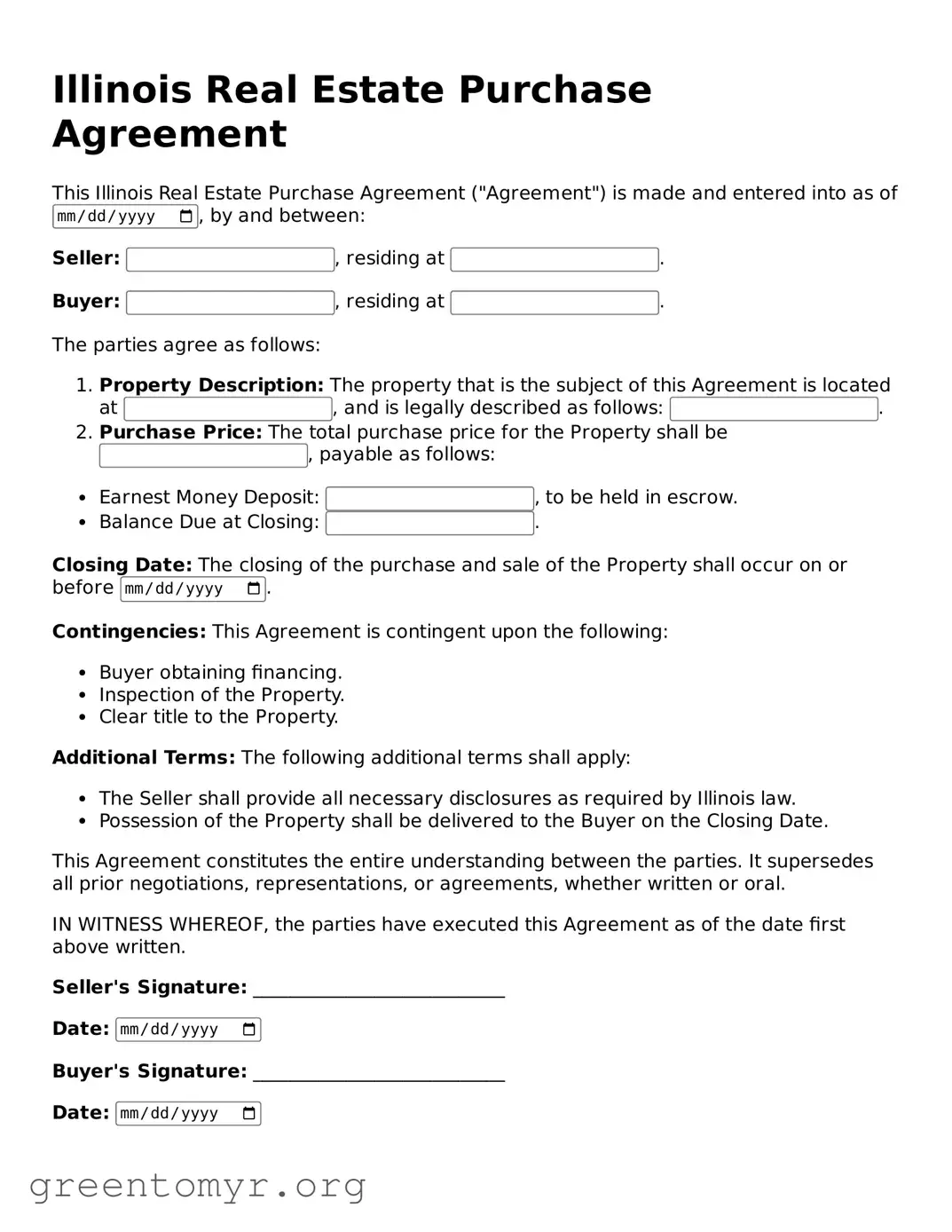
When navigating the complex world of real estate transactions in Illinois, understanding the Illinois Real Estate Purchase Agreement form is essential. This document serves as a critical tool for both buyers and sellers, outlining the terms and conditions under which a property will be sold. Key elements include the purchase price, property description, and the closing date, which all play a significant role in the transaction process. Additionally, the agreement addresses contingencies, such as financing and inspection requirements, ensuring that both parties are protected throughout the deal. It also stipulates the responsibilities of each party, providing clarity on what is expected during the sale. By familiarizing oneself with this form, individuals can approach their real estate transactions with confidence, knowing they have a solid framework to guide them through the process.
Illinois Real Estate Purchase Agreement
This Illinois Real Estate Purchase Agreement ("Agreement") is made and entered into as of , by and between:
Seller: , residing at .
Buyer: , residing at .
The parties agree as follows:
Closing Date: The closing of the purchase and sale of the Property shall occur on or before .
Contingencies: This Agreement is contingent upon the following:
Additional Terms: The following additional terms shall apply:
This Agreement constitutes the entire understanding between the parties. It supersedes all prior negotiations, representations, or agreements, whether written or oral.
IN WITNESS WHEREOF, the parties have executed this Agreement as of the date first above written.
Seller's Signature: ___________________________
Date:
Buyer's Signature: ___________________________
Date:
| Fact Name | Description |
|---|---|
| Governing Law | The Illinois Real Estate Purchase Agreement is governed by the laws of the State of Illinois. |
| Parties Involved | The agreement typically involves a buyer and a seller, who are the primary parties in the transaction. |
| Property Description | The form requires a detailed description of the property being sold, including the address and legal description. |
| Purchase Price | The total purchase price must be clearly stated in the agreement, along with any earnest money deposit. |
| Contingencies | Common contingencies include financing, inspection, and appraisal, which protect the buyer's interests. |
| Closing Date | The agreement specifies a closing date, which is the date on which the transfer of property ownership occurs. |
| Disclosure Requirements | Sellers are required to disclose known defects and issues with the property as mandated by Illinois law. |
| Default Provisions | The agreement outlines what happens in the event of a default by either party, including potential remedies. |
| Signatures | Both parties must sign the agreement for it to be legally binding, indicating their acceptance of the terms. |
After gathering the necessary information, you will be ready to fill out the Illinois Real Estate Purchase Agreement form. This document is crucial for formalizing the terms of a real estate transaction. Careful attention to detail is essential to ensure that all parties understand their obligations and rights.
Once the form is completed, it is advisable to review it for accuracy. Both parties should retain a copy for their records. The next step involves submitting the agreement to the relevant parties, such as real estate agents or attorneys, to facilitate the transaction process.
The Illinois Real Estate Purchase Agreement form is a legal document used when buying or selling property in Illinois. It outlines the terms and conditions of the sale, including the purchase price, closing date, and any contingencies. This form serves as a binding contract between the buyer and seller once both parties sign it.
Several important elements should be included in the Illinois Real Estate Purchase Agreement:
Contingencies are conditions that must be satisfied before the sale can be finalized. They protect both the buyer and the seller. For example, a buyer might include a financing contingency, which allows them to back out if they cannot secure a mortgage. Other common contingencies include home inspections and appraisal requirements. By including contingencies, parties can ensure that certain conditions are met before committing to the sale.
Yes, the Illinois Real Estate Purchase Agreement can be modified after it is signed, but both parties must agree to any changes. Modifications should be documented in writing and signed by both the buyer and seller. Verbal agreements are not typically enforceable, so it’s important to keep everything in writing to avoid misunderstandings.
If a dispute arises from the Illinois Real Estate Purchase Agreement, the first step is to communicate directly with the other party to try to resolve the issue amicably. If that doesn’t work, consider seeking mediation or arbitration, which are less formal methods of resolving disputes. If those options fail, legal action may be necessary. Consulting with a real estate attorney can provide guidance on the best course of action based on the specific situation.
Filling out the Illinois Real Estate Purchase Agreement form can be a complex task. Many individuals make common mistakes that can lead to delays or complications in the transaction process. Understanding these pitfalls can help ensure a smoother experience.
One frequent mistake is failing to provide complete information. Buyers and sellers must ensure that all fields are filled out accurately. Missing details, such as the property address or legal description, can cause confusion and delay the closing process.
Another common error involves incorrect pricing. It’s essential to double-check the purchase price and any earnest money deposits. Errors in these amounts can lead to misunderstandings and may jeopardize the agreement.
Inadequate understanding of contingencies can also pose a problem. Buyers often neglect to include necessary contingencies, such as financing or inspection clauses. These clauses protect the buyer’s interests and should not be overlooked.
Additionally, people sometimes forget to include all required signatures. Every party involved in the transaction must sign the agreement for it to be legally binding. A missing signature can render the agreement invalid.
Misunderstanding the timelines is another mistake. Buyers and sellers need to be aware of the deadlines for inspections, financing, and closing. Missing these timelines can lead to complications or even the loss of the deal.
Finally, neglecting to consult with a real estate professional can lead to significant issues. Real estate transactions can be complicated, and having expert guidance can help avoid common mistakes. It’s always wise to seek assistance when navigating this process.
When engaging in a real estate transaction in Illinois, several forms and documents often accompany the Real Estate Purchase Agreement. These documents help clarify the terms of the sale, protect the interests of both buyers and sellers, and ensure compliance with state laws. Below is a list of commonly used forms that may be relevant in your real estate dealings.
Understanding these documents can help streamline the real estate transaction process. Each plays a crucial role in ensuring that both parties are informed and protected throughout the sale. Being familiar with these forms can lead to a smoother experience as you navigate the complexities of real estate transactions in Illinois.
When filling out the Illinois Real Estate Purchase Agreement form, it’s important to approach the task carefully. Here’s a list of things to keep in mind:
By following these guidelines, you can help ensure that the process goes smoothly and that all necessary details are properly addressed.
Understanding the Illinois Real Estate Purchase Agreement form is crucial for anyone involved in a real estate transaction. However, several misconceptions often cloud this understanding. Here are seven common misconceptions:
This is not true. The Illinois Real Estate Purchase Agreement can be used for both residential and commercial properties. Its flexibility allows it to cater to various types of real estate transactions.
Many people believe that a signed agreement is set in stone. In reality, parties can negotiate and amend the terms before closing, as long as both sides agree to the changes.
While real estate agents are familiar with the form, buyers and sellers can also complete it. Understanding the terms and conditions is essential for all parties involved.
Signing the agreement does not guarantee that the sale will go through. Factors such as financing, inspections, and other contingencies can affect the outcome.
While written offers are standard and recommended, verbal offers can also be made initially. However, they should be documented to protect both parties.
This is a misconception. The Illinois Real Estate Purchase Agreement is designed to protect the interests of both the buyer and the seller, ensuring that terms are clear and agreed upon.
While the form is comprehensive, having legal guidance can be beneficial. A lawyer can help clarify terms and ensure that all legal obligations are met.
By clearing up these misconceptions, buyers and sellers can approach their real estate transactions with confidence and clarity.
When filling out and using the Illinois Real Estate Purchase Agreement form, there are several important points to consider. Understanding these key takeaways can help ensure a smoother transaction process.
By keeping these key points in mind, both buyers and sellers can navigate the Illinois Real Estate Purchase Agreement more effectively.