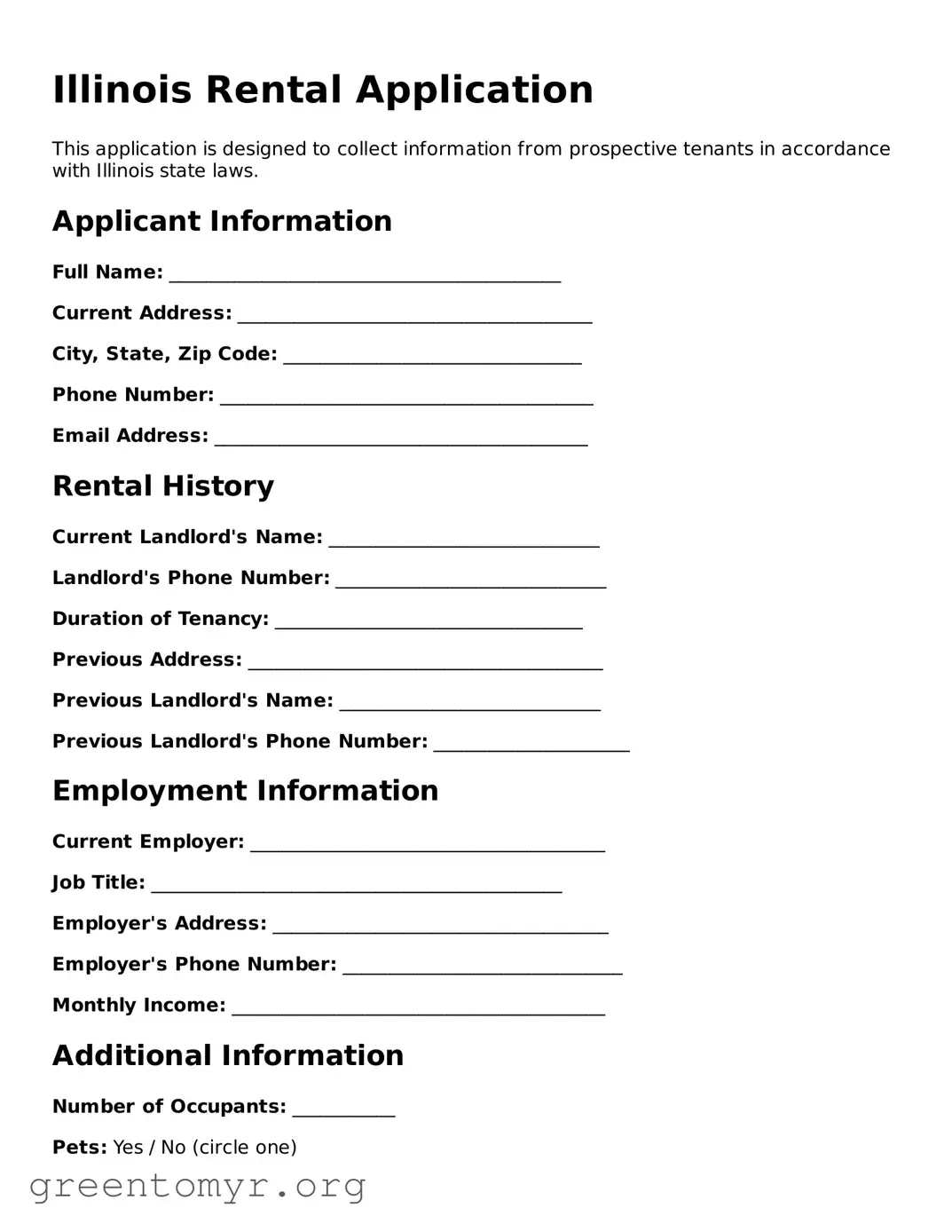
The Illinois Rental Application form is a crucial document for both landlords and prospective tenants, serving as a gateway to the rental process. It typically includes essential information such as the applicant's personal details, rental history, employment status, and financial background. Landlords utilize this information to assess the suitability of applicants, ensuring they can meet rental obligations. Additionally, the form may require consent for background checks, which can include credit history and criminal records. By providing a comprehensive overview of an applicant's qualifications, the form helps streamline the decision-making process for landlords while protecting the rights of tenants. Understanding the nuances of this form is vital for anyone involved in the rental market in Illinois, as it lays the groundwork for a successful landlord-tenant relationship.
Illinois Rental Application
This application is designed to collect information from prospective tenants in accordance with Illinois state laws.
Applicant Information
Full Name: __________________________________________
Current Address: ______________________________________
City, State, Zip Code: ________________________________
Phone Number: ________________________________________
Email Address: ________________________________________
Rental History
Current Landlord's Name: _____________________________
Landlord's Phone Number: _____________________________
Duration of Tenancy: _________________________________
Previous Address: ______________________________________
Previous Landlord's Name: ____________________________
Previous Landlord's Phone Number: _____________________
Employment Information
Current Employer: ______________________________________
Job Title: ____________________________________________
Employer's Address: ____________________________________
Employer's Phone Number: ______________________________
Monthly Income: ________________________________________
Additional Information
Number of Occupants: ___________
Pets: Yes / No (circle one)
Have you ever been evicted? Yes / No (circle one)
References
Consent
By signing below, I authorize the landlord to conduct a background check and verify the information provided in this application.
Applicant Signature: ________________________________
Date: ______________________________________________
This application is subject to the Fair Housing Act and other relevant Illinois laws.
| Fact Name | Description |
|---|---|
| Purpose | The Illinois Rental Application form is used by landlords to screen potential tenants. |
| Required Information | Applicants must provide personal information, rental history, and employment details. |
| Application Fee | Landlords may charge a non-refundable application fee to cover screening costs. |
| Fair Housing Compliance | The application process must comply with the Fair Housing Act to prevent discrimination. |
| Governing Laws | The Illinois Rental Application is governed by the Illinois Compiled Statutes, specifically the Residential Tenant and Landlord Ordinance. |
| Privacy Protection | Landlords must handle personal information in accordance with privacy laws to protect applicants. |
After obtaining the Illinois Rental Application form, you will need to provide various personal and financial details. Completing this form accurately is essential for the landlord to assess your application. Follow the steps below to ensure you fill it out correctly.
Once you have completed the form, review it for accuracy. Submitting the application promptly can help expedite the rental process.
The Illinois Rental Application form is a document used by landlords to collect essential information from potential tenants. This form helps landlords assess the suitability of applicants based on their rental history, financial stability, and personal references. It typically includes sections for personal details, employment history, income verification, and references.
Any individual seeking to rent a property in Illinois will need to complete a rental application. This includes not only the primary tenant but also any co-applicants or individuals who will reside in the rental unit. Landlords may require all adult occupants to submit an application to ensure a thorough screening process.
The rental application usually requires the following information:
Many landlords charge a non-refundable application fee to cover the costs of background checks and processing. This fee can vary widely, typically ranging from $20 to $75. It’s important to ask the landlord about any fees before submitting your application.
Landlords use the information provided in the rental application to evaluate the applicant’s eligibility. This evaluation may involve checking credit reports, contacting previous landlords for references, and verifying employment. The goal is to ensure that the applicant can meet the financial obligations of the lease and maintain a positive rental history.
Yes, landlords have the right to deny an application based on various factors. Common reasons for denial include:
Landlords must follow fair housing laws and cannot discriminate based on race, gender, religion, or other protected categories.
If you are denied rental, the landlord is required to provide you with a notice explaining the reasons for the denial. You can request a copy of your credit report if that was a factor. If you believe the denial was unjust or discriminatory, you may want to seek legal advice or file a complaint with the appropriate housing authority.
To make your application more appealing, consider the following tips:
Presenting a complete and well-prepared application can significantly improve your chances of securing the rental you desire.
Completing a rental application in Illinois is an essential step for prospective tenants. However, many individuals make common mistakes that can hinder their chances of securing a rental property. Understanding these pitfalls can help applicants present themselves more favorably to landlords.
One frequent error is providing incomplete information. Applicants often overlook sections of the form, such as employment history or references. Landlords rely on this information to assess an applicant's reliability. Omitting details can lead to delays or even rejection of the application.
Another mistake is failing to disclose rental history. Some applicants may neglect to include previous addresses or landlords. This omission can raise red flags for landlords, who may view it as an attempt to hide problematic rental experiences. It is crucial to be transparent about past tenancies to build trust.
Inaccurate information is also a significant issue. Applicants sometimes misstate their income or employment details. Providing false information can have serious consequences, including denial of the application or legal repercussions. It is always best to be honest and accurate to avoid complications down the line.
Moreover, many people forget to review the application for errors before submission. Simple typos or mistakes in contact information can cause confusion and hinder communication. Taking the time to double-check the application can prevent unnecessary setbacks.
Another common oversight is not providing sufficient documentation. Landlords often require proof of income, identification, or credit history. Failing to include these documents can lead to delays in processing the application. Ensuring that all necessary paperwork is attached is essential for a smooth application process.
Lastly, applicants sometimes neglect to follow up after submitting their application. Following up shows interest and can help clarify any questions the landlord may have. A simple email or phone call can demonstrate professionalism and eagerness, which may positively influence the landlord’s decision.
When applying for a rental property in Illinois, several forms and documents may accompany the Illinois Rental Application. These documents help landlords assess potential tenants and streamline the rental process. Here’s a list of commonly used forms that you might need.
Having these documents ready can facilitate a smoother rental process. Ensure that you understand each form's purpose and requirements to protect your interests as a tenant or landlord.
When filling out the Illinois Rental Application form, it’s essential to approach the process with care. Here’s a list of what you should and shouldn’t do to ensure a smooth application experience.
By following these guidelines, you can enhance your chances of securing the rental you desire. Good luck!
Many people have misunderstandings about the Illinois Rental Application form. Here are four common misconceptions, along with clarifications.
Misconception 1: The application is only for new tenants.
This is not true. Current tenants may also need to fill out a rental application if they are renewing their lease or changing their rental terms.
Misconception 2: Landlords cannot charge an application fee.
In Illinois, landlords can charge a reasonable application fee. This fee helps cover the cost of background checks and other screening processes.
Misconception 3: The application guarantees approval.
Submitting an application does not guarantee that a tenant will be approved. Landlords have the right to deny applications based on various criteria.
Misconception 4: All personal information is kept confidential.
While landlords are required to handle personal information responsibly, there are circumstances where they may be required to disclose certain information, such as during legal proceedings.
When completing the Illinois Rental Application form, several important considerations can help ensure a smooth process for both tenants and landlords.