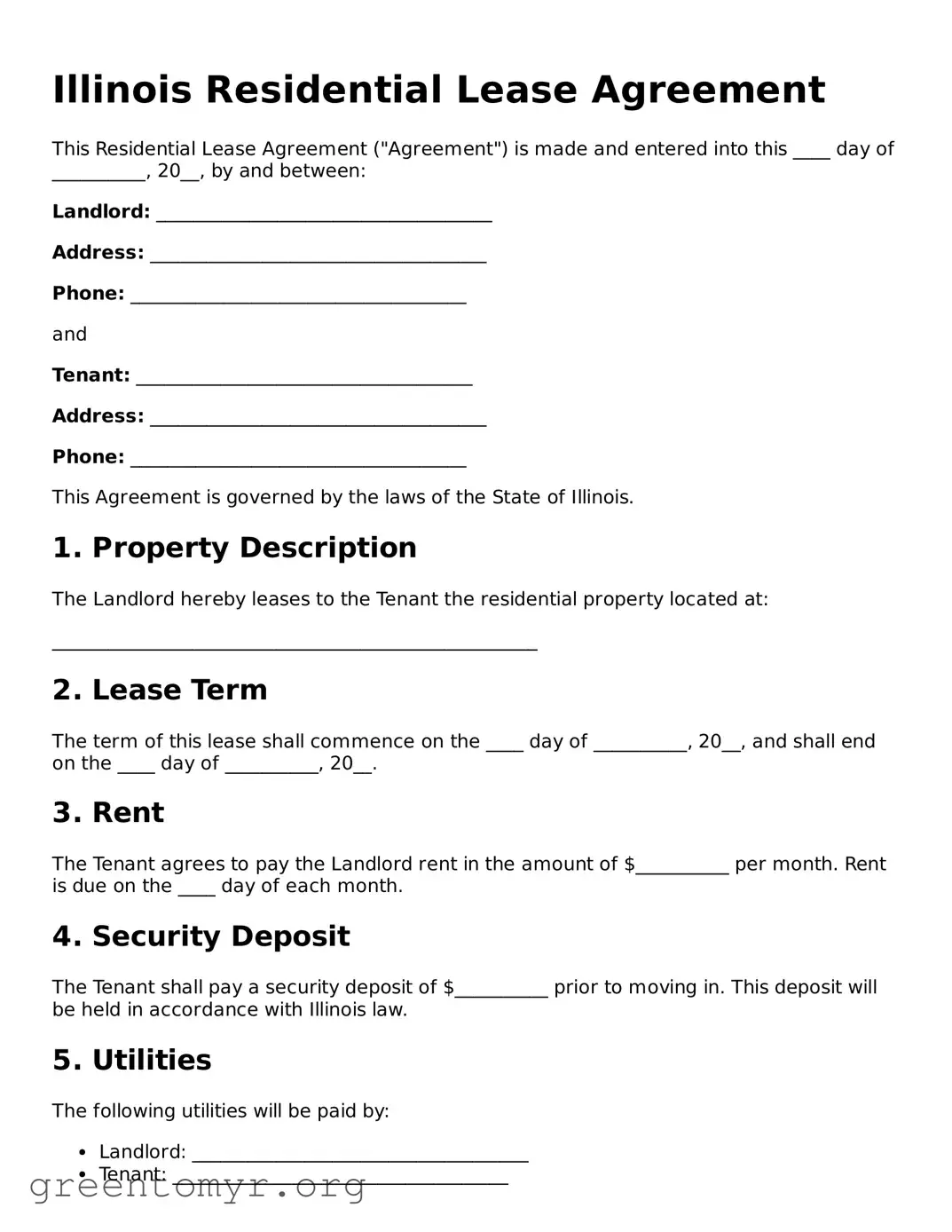
The Illinois Residential Lease Agreement form serves as a crucial document in the landlord-tenant relationship, outlining the terms and conditions under which a rental property is leased. This form typically includes essential details such as the names of the parties involved, the address of the rental property, and the duration of the lease. Rent amount, payment methods, and due dates are also clearly specified to ensure both parties understand their financial obligations. Additionally, the agreement addresses security deposits, maintenance responsibilities, and rules regarding pets and guests, which help to prevent disputes. It may also include clauses on lease termination, renewal options, and the consequences of breach of contract. By providing a comprehensive framework, the Illinois Residential Lease Agreement promotes transparency and accountability, fostering a more harmonious living arrangement for tenants and landlords alike.
Illinois Residential Lease Agreement
This Residential Lease Agreement ("Agreement") is made and entered into this ____ day of __________, 20__, by and between:
Landlord: ____________________________________
Address: ____________________________________
Phone: ____________________________________
and
Tenant: ____________________________________
Address: ____________________________________
Phone: ____________________________________
This Agreement is governed by the laws of the State of Illinois.
1. Property Description
The Landlord hereby leases to the Tenant the residential property located at:
____________________________________________________
2. Lease Term
The term of this lease shall commence on the ____ day of __________, 20__, and shall end on the ____ day of __________, 20__.
3. Rent
The Tenant agrees to pay the Landlord rent in the amount of $__________ per month. Rent is due on the ____ day of each month.
4. Security Deposit
The Tenant shall pay a security deposit of $__________ prior to moving in. This deposit will be held in accordance with Illinois law.
5. Utilities
The following utilities will be paid by:
6. Maintenance and Repairs
The Tenant shall keep the premises in a clean and sanitary condition. The Landlord is responsible for major repairs unless caused by Tenant negligence.
7. Termination
Either party may terminate this Agreement by providing written notice at least ____ days prior to the intended termination date.
8. Governing Law
This Agreement shall be governed by the laws of the State of Illinois.
9. Signatures
By signing below, both parties agree to the terms of this Agreement.
Landlord Signature: ___________________________
Date: ________________
Tenant Signature: ____________________________
Date: ________________
| Fact Name | Details |
|---|---|
| Governing Law | The Illinois Residential Lease Agreement is governed by the Illinois Compiled Statutes, specifically 765 ILCS 705/1. |
| Form Purpose | This form outlines the terms and conditions of a rental agreement between a landlord and tenant in Illinois. |
| Required Information | Both parties must provide their names, addresses, and contact information in the lease. |
| Lease Duration | The agreement can specify a fixed term (e.g., one year) or be a month-to-month arrangement. |
| Security Deposit | Illinois law limits security deposits to one and a half times the monthly rent for residential leases. |
| Disclosure Requirements | Landlords must disclose certain information, such as the presence of lead-based paint in properties built before 1978. |
| Termination Notice | For month-to-month leases, either party must provide a written notice of at least 30 days to terminate the lease. |
| Tenant Rights | Tenants have rights under the Illinois Residential Tenants' Right to Privacy Act, which protects them from unlawful entry by landlords. |
Completing the Illinois Residential Lease Agreement form is an important step in establishing a rental relationship. This form serves as a binding contract between the landlord and tenant, outlining the terms and conditions of the lease. Careful attention to detail is essential to ensure that all necessary information is accurately provided.
An Illinois Residential Lease Agreement is a legal document that outlines the terms and conditions under which a landlord rents out a residential property to a tenant. This agreement typically covers important details such as the rental amount, duration of the lease, security deposits, and the responsibilities of both parties.
This agreement is essential for both landlords and tenants. Landlords need it to protect their property and ensure that tenants understand their obligations. Tenants should use it to clarify their rights and responsibilities, as well as to have a formal record of the rental terms.
Several important elements should be included in an Illinois Residential Lease Agreement:
Lease terms can vary widely. Common durations include:
Shorter leases, like month-to-month agreements, offer flexibility, while longer leases provide stability for both parties.
Breaking a lease early can have consequences, such as losing the security deposit or facing legal action. However, tenants may have valid reasons to terminate the lease, such as:
It's crucial for tenants to communicate with their landlord and review the lease terms for any early termination clauses.
If a landlord does not address necessary repairs, tenants have options. They can:
Documenting all communications and repairs is essential for future reference.
Yes, lease agreements can be modified, but both parties must agree to the changes. Any modifications should be documented in writing and signed by both the landlord and tenant to ensure clarity and legality. Verbal agreements may not hold up in disputes.
Filling out the Illinois Residential Lease Agreement form can be a daunting task, and mistakes are common. One of the most frequent errors is failing to include all required information. Every section of the lease should be carefully completed. Omitting details such as the tenant's full name or the rental property's address can lead to confusion and potential legal issues.
Another mistake often made is not specifying the lease term clearly. The duration of the lease should be explicitly stated, whether it’s for a fixed term or month-to-month. If this is left vague, misunderstandings may arise later, causing disputes between landlords and tenants.
Many individuals also overlook the importance of including the security deposit amount. This amount should be clearly indicated in the lease agreement. Not doing so can lead to complications when the lease ends and the tenant expects the return of their deposit.
Additionally, tenants sometimes fail to read the entire agreement before signing. This can result in agreeing to terms that may not be favorable. It’s essential for both parties to understand all clauses, including those related to maintenance responsibilities and late fees.
Another common oversight is neglecting to include the names of all authorized occupants. If additional individuals reside in the rental unit but are not listed in the lease, it may lead to issues regarding lease violations or eviction processes.
Some people also make the mistake of not including provisions for property maintenance and repairs. Clear guidelines on who is responsible for what can prevent disputes later on. This aspect is crucial for maintaining a good landlord-tenant relationship.
It is also important to note that failing to initial or sign every page of the lease can create problems. Each page should be acknowledged by both parties to ensure that all terms are agreed upon and to prevent any claims of missing agreements.
In addition, not providing a method for delivering notices can lead to misunderstandings. The lease should specify how notices will be communicated, whether by mail, email, or personal delivery. This clarity can save both parties from future disputes.
Another critical error is not understanding the local laws regarding lease agreements. Illinois has specific regulations that govern residential leases. Ignoring these can result in an unenforceable lease or legal penalties.
Lastly, one of the most significant mistakes is failing to keep a copy of the signed lease. Both the landlord and tenant should retain a copy for their records. This document serves as a vital reference point throughout the duration of the lease and can be crucial if any disputes arise.
When entering into a rental agreement in Illinois, several additional forms and documents may be utilized alongside the Residential Lease Agreement. Each of these documents serves a specific purpose and helps clarify the terms of the rental arrangement, ensuring that both landlords and tenants understand their rights and responsibilities.
These documents, when used in conjunction with the Illinois Residential Lease Agreement, help create a clear and comprehensive rental experience for both landlords and tenants. Understanding each form's purpose can lead to a smoother leasing process and foster positive relationships between all parties involved.
When filling out the Illinois Residential Lease Agreement form, follow these guidelines to ensure accuracy and compliance.
Following these steps will help ensure a smooth leasing process.
When it comes to the Illinois Residential Lease Agreement form, several misconceptions often arise. Understanding the truth behind these beliefs can help both landlords and tenants navigate their rights and responsibilities more effectively. Below are five common misconceptions:
By dispelling these misconceptions, both landlords and tenants can foster a more harmonious rental relationship, ensuring that everyone understands their rights and obligations under the Illinois Residential Lease Agreement.
When filling out and using the Illinois Residential Lease Agreement form, several important points should be considered: