In Illinois, property owners have the option to use a Transfer-on-Death Deed (TODD) to facilitate the transfer of real estate upon their death without the need for probate. This legal tool allows individuals to designate beneficiaries who will automatically receive the property title, streamlining the process and providing peace of mind. The form must be properly executed and recorded to ensure its effectiveness, and it can be revoked or modified at any time before the owner's death. Importantly, the TODD does not affect the owner's rights to the property during their lifetime, allowing them to sell, mortgage, or otherwise manage the property as they see fit. Understanding the nuances of this form can help individuals make informed decisions about their estate planning and ensure that their wishes are honored after they pass away.
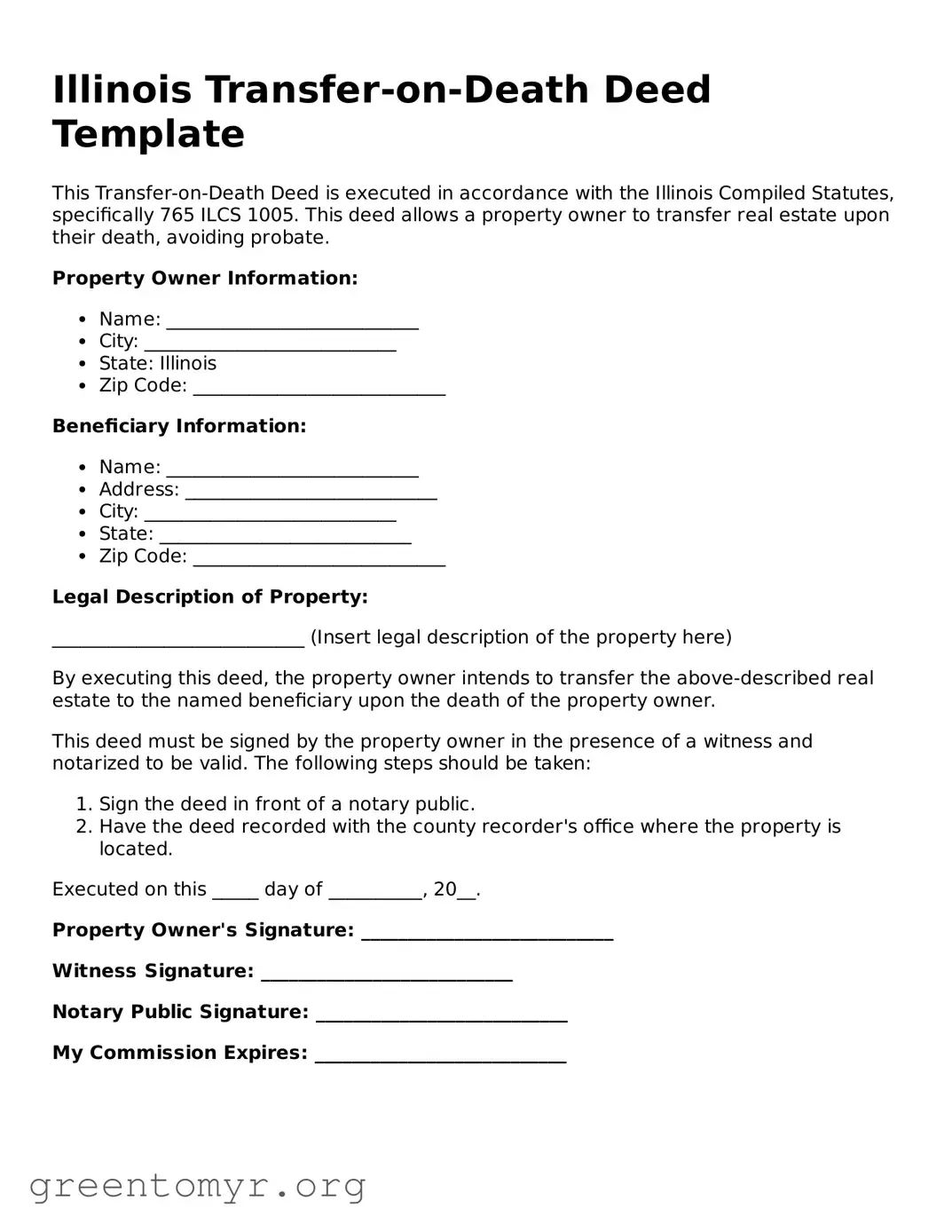
Illinois Transfer-on-Death Deed Template
This Transfer-on-Death Deed is executed in accordance with the Illinois Compiled Statutes, specifically 765 ILCS 1005. This deed allows a property owner to transfer real estate upon their death, avoiding probate.
Property Owner Information:
Beneficiary Information:
Legal Description of Property:
___________________________ (Insert legal description of the property here)
By executing this deed, the property owner intends to transfer the above-described real estate to the named beneficiary upon the death of the property owner.
This deed must be signed by the property owner in the presence of a witness and notarized to be valid. The following steps should be taken:
Executed on this _____ day of __________, 20__.
Property Owner's Signature: ___________________________
Witness Signature: ___________________________
Notary Public Signature: ___________________________
My Commission Expires: ___________________________
| Fact Name | Details |
|---|---|
| Definition | The Illinois Transfer-on-Death Deed allows property owners to transfer real estate to beneficiaries upon their death without going through probate. |
| Governing Law | This deed is governed by the Illinois Probate Act, specifically 755 ILCS 27. |
| Eligibility | Any individual who owns real estate in Illinois can create a Transfer-on-Death Deed. |
| Beneficiary Designation | Property owners can name one or more beneficiaries, and they can also specify alternate beneficiaries in case the primary ones do not survive. |
| Revocation | The deed can be revoked at any time by the property owner, provided they follow the proper procedures outlined in the law. |
| Filing Requirements | To be effective, the deed must be recorded with the county recorder's office where the property is located. |
| Tax Implications | Transfer-on-Death Deeds do not trigger gift tax or inheritance tax during the property owner's lifetime. |
| Limitations | This deed cannot be used for transferring property that is held in a trust or for properties subject to certain liens. |
After obtaining the Illinois Transfer-on-Death Deed form, it is crucial to complete it accurately to ensure your property is transferred as intended upon your passing. Follow these steps carefully to fill out the form correctly.
A Transfer-on-Death Deed (TOD Deed) is a legal document that allows property owners in Illinois to transfer their real estate to a designated beneficiary upon their death. This deed enables the property to pass outside of probate, simplifying the process for the heirs. The owner retains full control of the property during their lifetime, and they can revoke or change the deed at any time before their passing.
In Illinois, any individual who is at least 18 years old and legally competent can create a Transfer-on-Death Deed. The property must be owned solely by the individual or jointly with rights of survivorship. It’s important to ensure that the property is eligible for transfer using this method.
Completing a Transfer-on-Death Deed involves several steps:
It’s advisable to consult with a legal professional to ensure everything is completed correctly.
Yes, you can change or revoke a Transfer-on-Death Deed at any time before your death. To do this, you must create a new deed that explicitly revokes the previous one or file a revocation document with the county recorder's office. Make sure to follow the same formalities as when you created the original deed.
If the designated beneficiary passes away before you, the Transfer-on-Death Deed will not automatically transfer the property to that person’s heirs. Instead, the deed becomes void, and the property will be handled according to your will or, if there is no will, according to Illinois intestacy laws. To avoid complications, consider naming alternate beneficiaries in your deed.
Generally, a Transfer-on-Death Deed does not trigger any immediate tax consequences for the property owner. The property will receive a step-up in basis upon your death, which may reduce capital gains taxes for the beneficiary when they sell the property. However, it is wise to consult with a tax professional to understand any potential implications specific to your situation.
Filling out the Illinois Transfer-on-Death Deed form can seem straightforward, but many people make common mistakes that can lead to complications later on. One frequent error is failing to include all required information. The form asks for specific details about the property and the beneficiaries. Omitting even a small piece of information can render the deed invalid.
Another mistake involves incorrect property descriptions. It's crucial to provide an accurate legal description of the property, not just the address. Many people assume that the address alone suffices, but this can lead to confusion and potential disputes in the future.
People also often forget to sign the deed. A signature is essential for the document to be valid. Additionally, the deed must be signed in the presence of a witness or a notary. Neglecting this step can invalidate the entire transfer process.
Some individuals fail to record the deed with the appropriate county office. Even if the deed is filled out correctly, it must be filed to take effect. Without this step, the transfer will not be recognized by the state, leaving the property in limbo.
Not updating the deed after major life changes is another common oversight. Changes such as marriage, divorce, or the death of a beneficiary can affect the validity of the deed. Keeping the document current is essential to ensure that it reflects your wishes.
Confusion about the rights of beneficiaries can also lead to mistakes. Some people mistakenly believe that beneficiaries have immediate rights to the property upon signing the deed. In reality, they only gain rights upon the death of the property owner, which should be clearly understood.
Another mistake involves not consulting with a legal expert. While it may seem easy to fill out the form, having professional guidance can help avoid pitfalls. Legal experts can provide valuable insights and ensure that everything is completed correctly.
Finally, individuals sometimes overlook the importance of understanding the implications of a Transfer-on-Death Deed. This deed allows for a smooth transfer of property but does not eliminate other estate planning needs. It’s essential to consider how this deed fits into your overall estate plan.
When considering the Illinois Transfer-on-Death Deed, it's important to understand that several other forms and documents may be necessary to ensure a smooth transfer of property upon death. Each of these documents serves a specific purpose and can help clarify intentions, protect rights, or facilitate the transfer process. Below is a list of commonly used documents alongside the Transfer-on-Death Deed.
Understanding these additional documents is crucial for effective estate planning. Each one plays a role in ensuring that your wishes are honored and that your loved ones are taken care of after your passing.
When filling out the Illinois Transfer-on-Death Deed form, it is crucial to adhere to specific guidelines to ensure the document is valid and meets your intentions. Below is a list of dos and don'ts to consider.
Understanding the Illinois Transfer-on-Death Deed can be challenging. Here are seven common misconceptions that people often have about this important legal document:
By clearing up these misconceptions, individuals can make more informed decisions about their estate planning and the use of the Transfer-on-Death Deed in Illinois.
The Illinois Transfer-on-Death Deed (TOD) is a useful estate planning tool that allows property owners to transfer their real estate to beneficiaries without the need for probate. Here are some key takeaways regarding the use of this form:
By understanding these key points, property owners in Illinois can make informed decisions about their estate planning and the transfer of their real estate assets.