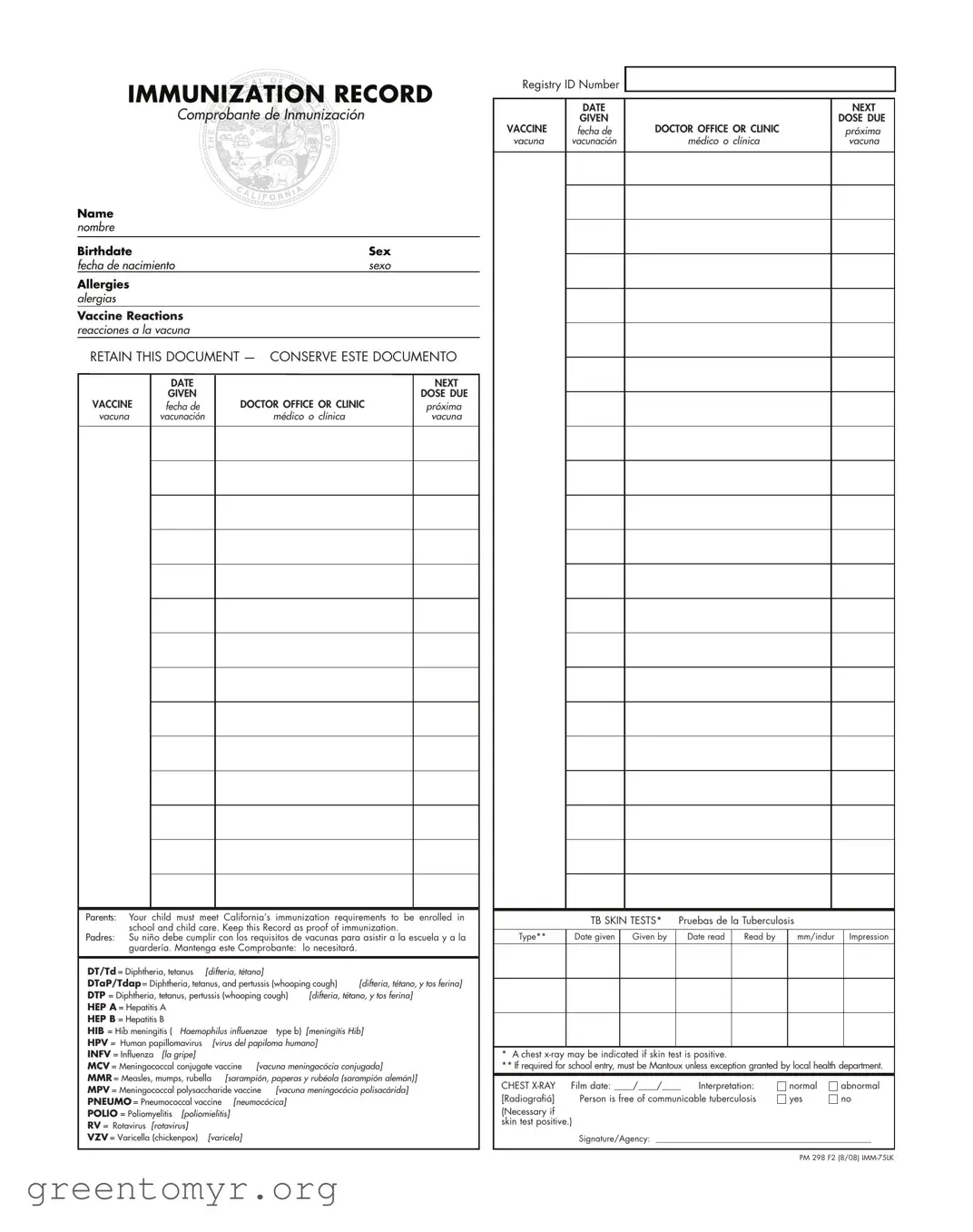
The Immunization Record form serves as an essential document for parents and guardians to track their child's vaccinations. It includes vital information such as the child's name, birthdate, and sex, along with any allergies or vaccine reactions that may be relevant. This record is particularly important in California, where children must meet specific immunization requirements to enroll in school and childcare. Parents are advised to keep this document safe, as it acts as proof of immunization. The form details various vaccines, including DTaP, MMR, and HPV, among others, along with their corresponding dates and the names of the healthcare providers administering them. Additionally, it includes sections for tuberculosis skin tests and chest X-ray results, which may be necessary under certain circumstances. By maintaining this comprehensive record, families can ensure that their children remain up-to-date with their vaccinations and comply with local health regulations.
IMMUNIZATION RECORD
Comprobante de Inmunización
Name nombre
Birthdate |
|
|
Sex |
||
fecha de nacimiento |
|
sexo |
|||
Allergies |
|
|
|
|
|
alergias |
|
|
|
|
|
Vaccine Reactions |
|
|
|
|
|
reacciones a la vacuna |
|
|
|
|
|
RETAIN THIS DOCUMENT — CONSERVE ESTE DOCUMENTO |
|||||
|
DATE |
|
|
NEXT |
|
|
|
|
|||
|
GIVEN |
|
|
DOSE DUE |
|
VACCINE |
fecha de |
DOCTOR OFFICE OR CLINIC |
|
próxima |
|
vacuna |
vacunación |
médico o clínica |
|
vacuna |
|
|
|
|
|
|
|
|
|
|
|
|
|
|
|
|
|
|
|
|
|
|
|
|
|
|
|
|
|
|
|
|
|
|
|
|
|
|
|
|
|
|
|
|
|
|
|
|
|
|
|
|
|
|
|
|
|
|
|
|
|
|
|
|
|
|
|
|
|
|
|
|
|
|
|
|
|
|
|
|
|
|
|
|
|
|
|
|
|
|
|
Parents: Your child must meet California’s immunization requirements to be enrolled in school and child care. Keep this Record as proof of immunization.
Padres: Su niño debe cumplir con los requisitos de vacunas para asistir a la escuela y a la guardería. Mantenga este Comprobante: lo necesitará.
DT/Td = Diphtheria, tetanus |
[difteria, tétano] |
|
|
|
|
DTaP/Tdap = Diphtheria, tetanus, and pertussis (whooping cough) |
[difteria, tétano, y tos ferina] |
||||
DTP = Diphtheria, tetanus, pertussis (whooping cough) |
[difteria, tétano, y tos ferina] |
||||
HEP A = Hepatitis A |
|
|
|
|
|
HEP B = Hepatitis B |
|
|
|
|
|
HIB = Hib meningitis ( |
Haemophilus influenzae |
type b) |
[meningitis Hib] |
||
HPV = Human papillomavirus |
[virus del papiloma humano] |
|
|||
INFV = Influenza [la gripe] |
|
|
|
|
|
MCV = Meningococcal conjugate vaccine [vacuna meningocócia conjugada] |
|||||
MMR = Measles, mumps, rubella [sarampión, paperas y rubéola (sarampión alemán)] |
|||||
MPV = Meningococcal polysaccharide vaccine |
[vacuna meningocócia polisacárida] |
||||
PNEUMO = Pneumococcal vaccine [neumocócica] |
|
|
|||
POLIO = Poliomyelitis |
[poliomielitis] |
|
|
|
|
RV = Rotavirus [rotavirus] |
|
|
|
|
|
VZV = Varicella (chickenpox) |
[varicela] |
|
|
|
|
Registry ID Number
|
DATE |
|
NEXT |
|
GIVEN |
|
DOSE DUE |
VACCINE |
fecha de |
DOCTOR OFFICE OR CLINIC |
próxima |
vacuna |
vacunación |
médico o clínica |
vacuna |
|
TB SKIN TESTS* |
Pruebas de la Tuberculosis |
|
|
|||
|
|
|
|
|
|
|
|
Type** |
Date given |
Given by |
Date read |
Read by |
|
mm/indur |
Impression |
|
|
|
|
|
|
|
|
|
|
|
|
|
|
|
|
|
|
|
|
|
|
|
|
* A chest
** If required for school entry, must be Mantoux unless exception granted by local health department.
CHEST |
Film date: ____/____/____ |
Interpretation: |
|
normal |
|
abnormal |
|
[Radiografiá] |
Person is free of communicable tuberculosis |
|
yes |
|
|
no |
|
|
|
|
|||||
(Necessary if skin test positive.)
Signature/Agency: __________________________________________________
PM 298 F2 (8/08)
| Fact Name | Details |
|---|---|
| Purpose | The Immunization Record form serves as proof of a child's vaccinations, which is required for enrollment in schools and child care facilities in California. |
| Governing Law | California Health and Safety Code Section 120325 mandates immunization requirements for school entry. |
| Required Information | The form must include the child's name, birthdate, sex, allergies, and vaccine reactions, along with details of administered vaccines. |
| Vaccine Types | The form lists various vaccines, including DTaP, MMR, and Hepatitis B, among others, necessary for a child's health and compliance. |
| Retention | Parents are advised to retain the Immunization Record as it is essential for school enrollment and future medical reference. |
| TB Skin Tests | The form includes a section for TB skin tests, which may be required for school entry, with specific guidelines on administration and interpretation. |
Completing the Immunization Record form is essential for ensuring your child's compliance with California's immunization requirements for school and child care enrollment. Follow these steps carefully to fill out the form accurately.
Once you have completed the form, keep it in a safe place as proof of your child's immunizations. This document is crucial for school enrollment and may be requested by child care facilities.
The Immunization Record form serves as an essential document that tracks a child's vaccination history. It is crucial for parents and guardians to keep this record safe, as it provides proof of immunization. This proof is necessary for enrolling children in school and child care facilities in California, ensuring that they meet the state's immunization requirements.
The form includes several key pieces of information:
This comprehensive information helps ensure that all necessary vaccinations are recorded and tracked effectively.
Retaining the Immunization Record is vital for several reasons:
By keeping this document, parents can ensure their child’s health and compliance with state requirements.
If your child has known allergies or has experienced vaccine reactions in the past, it's crucial to note this information on the Immunization Record form. This information helps healthcare providers make informed decisions regarding future vaccinations. Always consult with your child's doctor about any concerns or specific instructions related to allergies or previous reactions.
The Immunization Record includes a variety of vaccines that are important for children. Some of the common vaccines listed are:
Each vaccine plays a critical role in protecting your child from various diseases, and keeping an accurate record helps ensure they receive all necessary immunizations on schedule.
In the event that the Immunization Record is lost, it's important to act quickly. You can contact your child's healthcare provider or the clinic where the vaccinations were administered. They can provide you with a replacement record or a copy of your child's immunization history. Additionally, some states maintain immunization registries, which can also be a resource for obtaining this information.
When filling out the Immunization Record form, many individuals make common mistakes that can lead to complications later. One of the most frequent errors is failing to provide accurate personal information. This includes the child's name, birthdate, and sex. Missing or incorrect details can create confusion and may delay school enrollment or other important processes.
Another common mistake involves neglecting to list any allergies. If a child has known allergies, especially to vaccines, it's crucial to document them on the form. Omitting this information can lead to serious health risks during vaccination.
People often overlook the section regarding vaccine reactions. It’s important to note any adverse reactions the child may have experienced after receiving previous vaccinations. This information helps healthcare providers make informed decisions about future immunizations.
Additionally, some individuals forget to include the Registry ID Number. This unique identifier is essential for tracking immunization records. Without it, accessing a child's vaccination history may become difficult, especially in emergencies.
Many parents also fail to keep track of the dates for the next doses of vaccines. The form requires specific information about when the next vaccination is due. Missing this can result in delays in getting the child fully vaccinated, which is critical for their health and compliance with school requirements.
Another mistake is not retaining the document as instructed. The form explicitly states to "retain this document." Losing it can lead to challenges in proving that the child has met immunization requirements, potentially impacting school enrollment.
Lastly, some individuals may not fully understand the different types of vaccines listed on the form. Each vaccine serves a specific purpose, and knowing which ones are required can help ensure that the child receives all necessary immunizations. Taking the time to familiarize oneself with these details can prevent future issues.
The Immunization Record form is an important document for tracking vaccinations. However, there are several other forms and documents that are often used alongside it to ensure a complete health record. Below are some of the key documents that may be required or helpful in conjunction with the Immunization Record.
Having these documents organized and accessible can simplify the process of meeting health requirements for school and childcare. Keeping track of all health-related paperwork is essential for ensuring a child's well-being.
The Immunization Record form serves as an important document that tracks a person's vaccinations. Several other documents share similar purposes and functions. Below are five documents that are comparable to the Immunization Record form:
When filling out the Immunization Record form, it's important to be thorough and accurate. Here are ten guidelines to help you complete the form correctly:
Following these guidelines will help ensure that your Immunization Record form is filled out properly, making the process smoother for school enrollment and childcare requirements.
Misconceptions about the Immunization Record form can lead to confusion and misunderstanding regarding its importance and usage. Here are ten common misconceptions explained:
Understanding these misconceptions can help parents and guardians navigate the requirements and importance of the Immunization Record form more effectively.
When filling out and using the Immunization Record form, it’s important to keep several key points in mind. Here are some essential takeaways:
By following these takeaways, you can effectively manage your child’s immunization records and ensure compliance with health regulations.