The Indiana Affidavit of Correction form serves as a vital tool for individuals seeking to rectify errors in public records. This form allows a person to formally declare and correct inaccuracies that may exist in documents such as deeds, mortgages, or other legal filings. By utilizing this affidavit, individuals can ensure that their records reflect accurate information, which is essential for maintaining the integrity of legal documents. The process typically requires the individual to provide specific details about the error, including the nature of the mistake and the correct information that should replace it. Additionally, the affidavit must be signed in the presence of a notary public, thereby providing a layer of authenticity and legal recognition to the correction being made. This form not only aids in personal record accuracy but also contributes to the overall reliability of public records within the state. Understanding the importance of this form can empower individuals to take control of their legal documentation and promote transparency in their dealings.
Indiana Affidavit of Correction Template
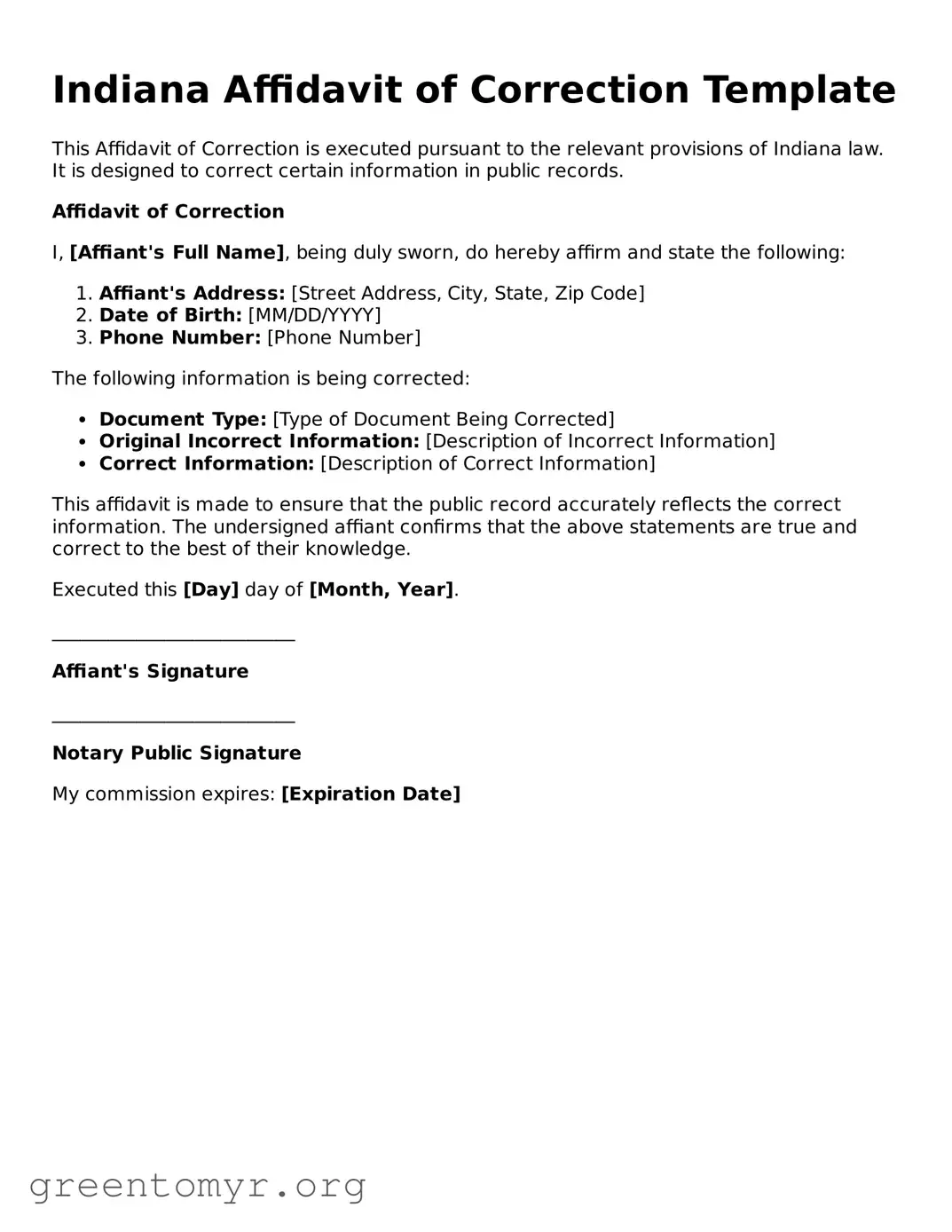
This Affidavit of Correction is executed pursuant to the relevant provisions of Indiana law. It is designed to correct certain information in public records.
Affidavit of Correction
I, [Affiant's Full Name], being duly sworn, do hereby affirm and state the following:
The following information is being corrected:
This affidavit is made to ensure that the public record accurately reflects the correct information. The undersigned affiant confirms that the above statements are true and correct to the best of their knowledge.
Executed this [Day] day of [Month, Year].
__________________________
Affiant's Signature
__________________________
Notary Public Signature
My commission expires: [Expiration Date]
| Fact Name | Description |
|---|---|
| Purpose | The Indiana Affidavit of Correction is used to correct errors in public records, such as deeds or mortgages. |
| Governing Law | This form is governed by Indiana Code § 32-21-1-1, which outlines the procedures for correcting errors in recorded documents. |
| Eligibility | Any individual or entity that has a vested interest in the document can file an affidavit of correction. |
| Common Errors | Common errors that can be corrected include typographical mistakes, incorrect names, or incorrect legal descriptions. |
| Filing Process | The affidavit must be signed in front of a notary public before it is filed with the appropriate county recorder. |
| Required Information | Essential information includes the original document's details, the specific corrections, and the reason for the correction. |
| Cost | Filing fees vary by county, and individuals should check with their local recorder’s office for specific amounts. |
| Impact on Title | Correcting errors can help clarify property titles and prevent future disputes regarding ownership. |
| Timeframe | Once filed, the affidavit becomes part of the public record, and the correction is effective immediately. |
| Limitations | The affidavit cannot be used to change the substantive rights of the parties involved; it is strictly for correcting clerical errors. |
After obtaining the Indiana Affidavit of Correction form, it is important to ensure that all required information is filled out accurately. This will help in making the necessary corrections efficiently. Following these steps will guide you through the process of completing the form correctly.
Once the form is submitted, it will be reviewed by the relevant authorities. You may receive confirmation of the correction, or additional information may be requested if necessary. Stay alert for any communication regarding your submission.
The Indiana Affidavit of Correction is a legal document used to correct clerical errors or inaccuracies in official records. This form helps ensure that public records accurately reflect the intended information, which can include errors in names, dates, or other critical details.
Any individual or entity that identifies an error in a public record can file an Affidavit of Correction. This may include property owners, business owners, or any party affected by the inaccuracies in the record.
The affidavit can be used to correct various types of clerical errors, such as:
To complete the affidavit, follow these steps:
The completed affidavit should be filed with the same office that maintains the original record. This may include county recorder’s offices or other relevant government agencies, depending on the nature of the record being corrected.
Yes, there may be a filing fee associated with submitting the Affidavit of Correction. The fee varies by county and the type of record being corrected. It is advisable to check with the local office for the specific amount.
The processing time for an Affidavit of Correction can vary. Typically, it may take a few days to several weeks, depending on the office’s workload and procedures. It is recommended to follow up with the office where the affidavit was filed for updates.
If your Affidavit of Correction is denied, you may have the option to appeal the decision. The appeal process can differ based on the specific office and the nature of the correction. It is important to inquire about the procedures for appealing a denial directly with the relevant office.
While legal assistance is not required to file an Affidavit of Correction, it may be beneficial in certain situations, especially if the errors are complex or if there are disputes regarding the corrections. Consulting with a legal professional can provide clarity and guidance.
Filling out the Indiana Affidavit of Correction form can be straightforward, but many people make common mistakes that can delay the process. One frequent error is failing to provide accurate information. When individuals do not double-check their details, such as names, addresses, or dates, it can lead to significant complications. Always ensure that the information matches official documents.
Another mistake often seen is neglecting to sign the affidavit. A signature is crucial for the document to be valid. Without it, the form cannot be processed, and this oversight can cause frustration and additional delays. Be sure to sign where indicated before submitting the form.
People sometimes forget to include the required supporting documents. The affidavit might need attachments that prove the correction is necessary. If these documents are missing, the form may be rejected. Gather all necessary paperwork before you start filling out the form to avoid this pitfall.
Additionally, some individuals do not read the instructions thoroughly. Each section of the form has specific requirements. Skipping over instructions can lead to incomplete or incorrect submissions. Take the time to read through everything carefully to ensure compliance with the guidelines.
Another common issue is using the wrong format for dates or other entries. Indiana may have specific formatting rules that must be followed. For example, dates should typically be entered in a particular style. Inconsistent formatting can create confusion and may result in rejection of the form.
Lastly, many people underestimate the importance of reviewing the completed form before submission. Errors can be easily overlooked in the rush to finalize paperwork. A final review can catch mistakes that could otherwise delay the correction process. Always take a moment to go over the entire document to ensure accuracy.
The Indiana Affidavit of Correction form is often used to amend or clarify information in official documents. When filing this affidavit, several other forms and documents may also be necessary to ensure proper legal compliance and record-keeping. Below are four commonly associated documents that individuals might encounter.
Understanding these associated forms can facilitate a smoother correction process and help ensure that all necessary legal steps are followed. Proper documentation is key to maintaining accurate records and upholding legal standards.
The Affidavit of Correction is a valuable document used to rectify errors in official records. Several other documents serve similar purposes in various contexts. Here’s a look at five documents that share similarities with the Affidavit of Correction:
Filling out the Indiana Affidavit of Correction form requires attention to detail and accuracy. Here’s a handy list of what to do and what to avoid to ensure your form is completed correctly.
By following these guidelines, you can help ensure that your Indiana Affidavit of Correction form is filled out correctly and processed without unnecessary delays.
The Indiana Affidavit of Correction form is often misunderstood. Here are four common misconceptions about this document:
When dealing with the Indiana Affidavit of Correction form, it's important to understand its purpose and how to fill it out correctly. Here are some key takeaways:
Understanding these key points will help ensure a smooth correction process and maintain accurate public records.