When starting a business in Indiana, one of the first steps is to file the Articles of Incorporation. This essential document serves as the foundation for your corporation, outlining its basic structure and purpose. The form typically includes key information such as the corporation's name, the duration of its existence, and the address of its principal office. Additionally, it requires details about the registered agent, who will serve as the official point of contact for legal matters. You’ll also need to specify the number of shares the corporation is authorized to issue, as well as the names and addresses of the initial directors. Completing this form accurately is crucial, as it ensures your corporation is recognized legally and can operate within the state. Understanding the components of the Articles of Incorporation can help streamline the process and set your business on the path to success.
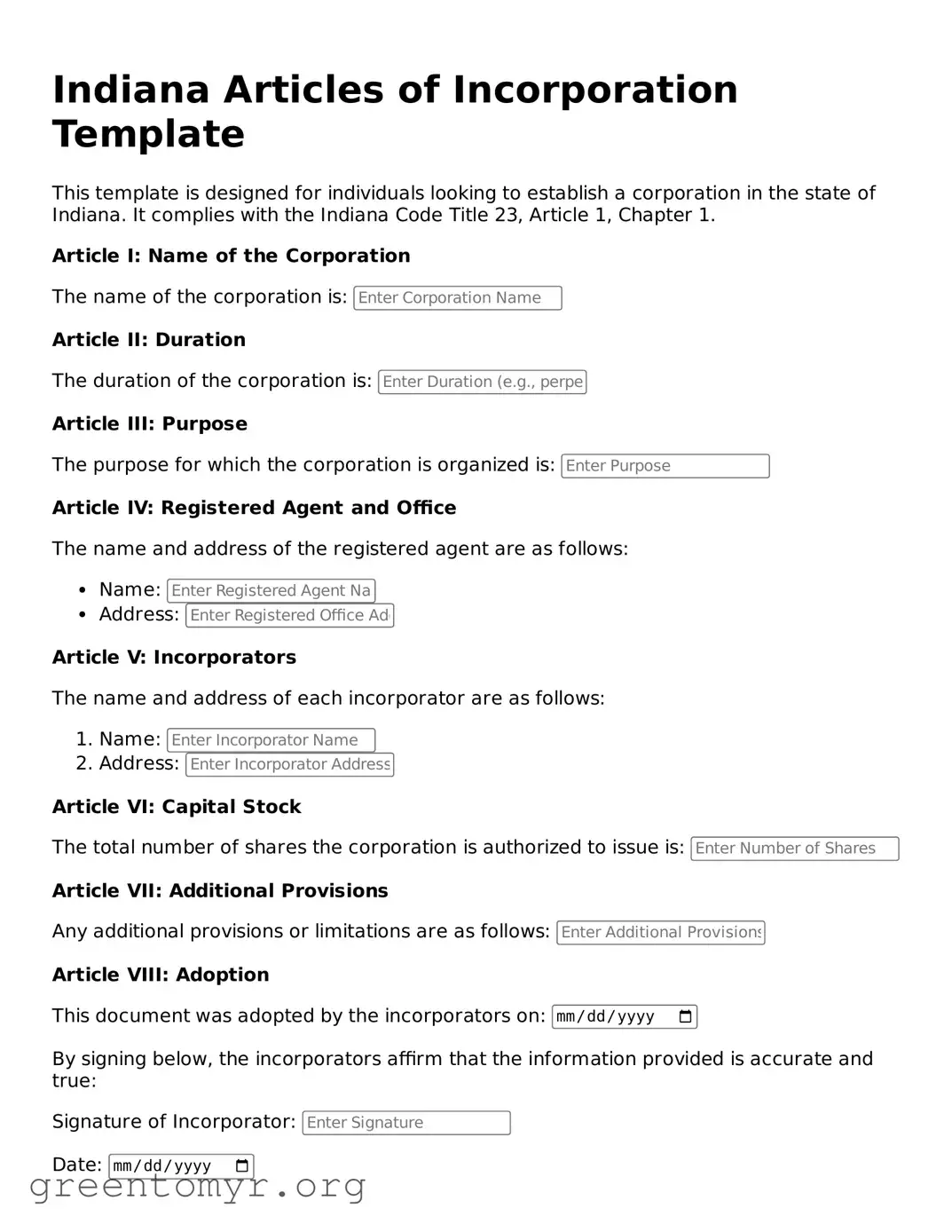
Indiana Articles of Incorporation Template
This template is designed for individuals looking to establish a corporation in the state of Indiana. It complies with the Indiana Code Title 23, Article 1, Chapter 1.
Article I: Name of the Corporation
The name of the corporation is:
Article II: Duration
The duration of the corporation is:
Article III: Purpose
The purpose for which the corporation is organized is:
Article IV: Registered Agent and Office
The name and address of the registered agent are as follows:
Article V: Incorporators
The name and address of each incorporator are as follows:
Article VI: Capital Stock
The total number of shares the corporation is authorized to issue is:
Article VII: Additional Provisions
Any additional provisions or limitations are as follows:
Article VIII: Adoption
This document was adopted by the incorporators on:
By signing below, the incorporators affirm that the information provided is accurate and true:
Signature of Incorporator:
Date:
For further assistance, it is advisable to consult with a legal professional to ensure compliance with all applicable laws and regulations.
| Fact Name | Details |
|---|---|
| Purpose | The Indiana Articles of Incorporation form is used to legally establish a corporation in the state of Indiana. |
| Governing Law | The form is governed by the Indiana Business Corporation Law, specifically Title 23, Article 1 of the Indiana Code. |
| Required Information | Essential information includes the corporation's name, duration, registered agent, and the number of shares authorized. |
| Filing Fee | A filing fee is required when submitting the Articles of Incorporation, which varies based on the type of corporation. |
| Submission Method | The form can be submitted online, by mail, or in person at the Indiana Secretary of State's office. |
| Processing Time | Typically, processing takes about 5 to 10 business days, but expedited options may be available for quicker service. |
Filling out the Indiana Articles of Incorporation form is an essential step in establishing your business as a legal entity. Once you have completed the form, you will be ready to submit it to the appropriate state authorities, paving the way for your business to operate under the protections and privileges afforded to corporations.
The Indiana Articles of Incorporation is a legal document that establishes a corporation in the state of Indiana. This document outlines the basic information about the corporation, including its name, purpose, registered agent, and the number of shares it is authorized to issue. Filing this document is a crucial step in forming a corporation and gaining legal recognition.
Any individual or group looking to create a corporation in Indiana must file the Articles of Incorporation. This includes businesses of all sizes, from small startups to large enterprises. Nonprofit organizations also need to file this document to obtain corporate status.
The Articles of Incorporation must include several key pieces of information:
To file the Articles of Incorporation in Indiana, you can complete the form online through the Indiana Secretary of State's website or submit a paper form by mail. If filing online, you will need to create an account. Be prepared to pay a filing fee, which varies depending on the type of corporation you are forming.
The filing fee for the Articles of Incorporation in Indiana typically ranges from $90 to $100, depending on the type of corporation. Additional fees may apply if you choose expedited processing. It is important to check the Indiana Secretary of State's website for the most current fee schedule.
Processing times can vary. Generally, if you file online, you can expect a quicker turnaround, often within a few business days. Paper filings may take longer, sometimes up to several weeks. For expedited processing, additional fees may reduce the waiting time.
Yes, you can amend the Articles of Incorporation after they have been filed. This may be necessary if there are changes in the corporation's structure, such as a change in the registered agent or an increase in authorized shares. To amend, you must file a specific amendment form with the Indiana Secretary of State and pay any associated fees.
If you do not file the Articles of Incorporation, your business will not be recognized as a legal entity in Indiana. This means you will not have the benefits of limited liability protection, and you may face personal liability for business debts and obligations. Additionally, operating without proper incorporation can lead to legal complications and penalties.
While it is not legally required to hire a lawyer to file the Articles of Incorporation, consulting with one can be beneficial. A lawyer can help ensure that all necessary information is included and that the document complies with state laws. This can save time and prevent potential issues down the line.
Filing the Indiana Articles of Incorporation is a crucial step for anyone looking to start a corporation in the state. However, many people make common mistakes that can delay the process or lead to complications down the line. Understanding these pitfalls can help ensure a smoother filing experience.
One frequent mistake is providing inaccurate information about the corporation's name. The name must be unique and not already in use by another business in Indiana. Failing to check the availability of the desired name can result in rejection of the application. Before submitting the form, it’s wise to conduct a thorough search in the Indiana Secretary of State’s business database.
Another common error involves the designation of the registered agent. The registered agent is responsible for receiving legal documents on behalf of the corporation. Some people mistakenly list themselves as the registered agent without considering the implications. If the agent is unavailable or cannot be reached, important documents may go unnoticed, leading to potential legal issues.
Many individuals also overlook the importance of including the correct business address. The Articles of Incorporation require a physical address where the corporation will conduct business. Providing a P.O. Box instead of a physical address can lead to delays. Ensure that the address is accurate and reflects where the business will operate.
Additionally, failing to specify the purpose of the corporation can be a significant oversight. While some may think a general statement is sufficient, Indiana requires a clear and specific purpose for the business. This clarity helps in defining the corporation’s activities and can prevent future legal complications.
Another mistake is neglecting to sign the form. It may seem simple, but forgetting to sign can halt the entire process. The form must be signed by the incorporator, and without this signature, the application will be considered incomplete. Double-checking for signatures before submission can save time and frustration.
Finally, not including the correct filing fee is a common error. Each corporation has a specific fee that must be paid when submitting the Articles of Incorporation. If the fee is incorrect or omitted, the application will be returned. It’s essential to verify the current fee schedule and include the correct amount to avoid delays.
When forming a corporation in Indiana, the Articles of Incorporation is just the beginning. Several other forms and documents are often required to ensure compliance with state laws and to facilitate smooth business operations. Here’s a list of commonly used documents that accompany the Articles of Incorporation.
Understanding these additional forms and documents is essential for anyone looking to establish a corporation in Indiana. Each plays a critical role in ensuring that the business operates smoothly and in compliance with legal requirements. Proper preparation can save time and prevent potential issues down the line.
The Articles of Incorporation is a crucial document for businesses looking to establish themselves as a corporation. It shares similarities with several other important documents in the realm of business formation and governance. Here are four documents that are similar to the Articles of Incorporation:
When filling out the Indiana Articles of Incorporation form, it's important to follow certain guidelines to ensure your submission is accurate and complete. Here’s a list of things you should and shouldn't do:
By following these guidelines, you can help ensure a smoother incorporation process in Indiana.
There are several misconceptions about the Indiana Articles of Incorporation form that can lead to confusion. Here are seven common misunderstandings:
Understanding these misconceptions can help business owners navigate the incorporation process more effectively.
When filling out and using the Indiana Articles of Incorporation form, keep these key takeaways in mind: