In Indiana, when purchasing or selling an all-terrain vehicle (ATV), a Bill of Sale serves as a critical document to ensure a smooth transaction. This form includes essential details such as the names and addresses of both the buyer and seller, along with the ATV's make, model, year, and Vehicle Identification Number (VIN). It also outlines the purchase price and any terms of the sale, helping to clarify the agreement between the parties involved. By providing a written record, the Bill of Sale protects both the buyer and seller, establishing proof of ownership and safeguarding against potential disputes. Additionally, this document may be required for registration purposes with the Indiana Bureau of Motor Vehicles (BMV), making it an important step in the ATV transfer process. Understanding the components of the Indiana ATV Bill of Sale form can facilitate a more efficient transaction, ensuring that both parties are informed and secure in their agreement.
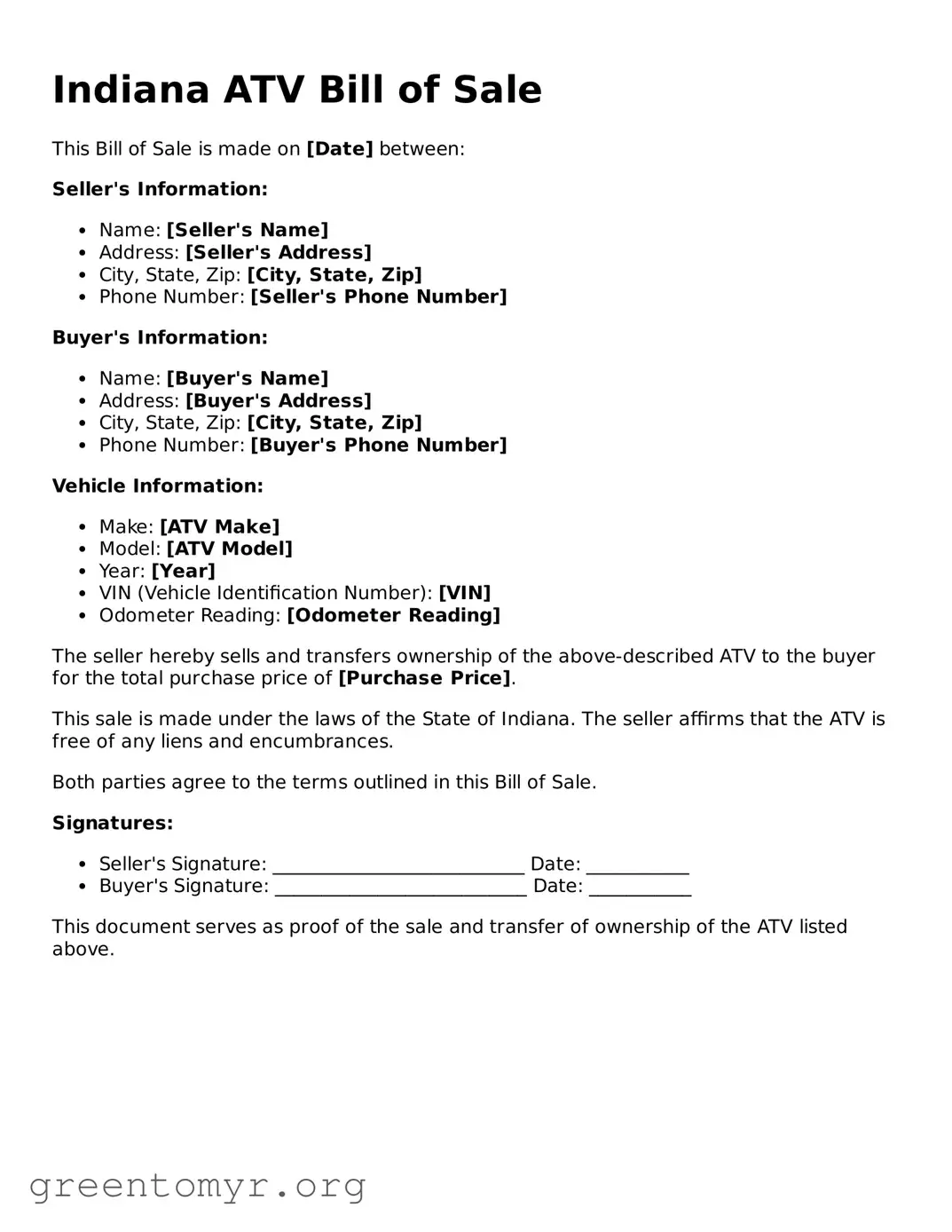
Indiana ATV Bill of Sale
This Bill of Sale is made on [Date] between:
Seller's Information:
Buyer's Information:
Vehicle Information:
The seller hereby sells and transfers ownership of the above-described ATV to the buyer for the total purchase price of [Purchase Price].
This sale is made under the laws of the State of Indiana. The seller affirms that the ATV is free of any liens and encumbrances.
Both parties agree to the terms outlined in this Bill of Sale.
Signatures:
This document serves as proof of the sale and transfer of ownership of the ATV listed above.
| Fact Name | Description |
|---|---|
| Purpose | The Indiana ATV Bill of Sale form is used to document the sale and transfer of ownership of an all-terrain vehicle in Indiana. |
| Governing Law | This form is governed by Indiana Code Title 9, Article 27, which pertains to off-road vehicles. |
| Required Information | The form typically requires details such as the seller's and buyer's names, addresses, and the ATV's make, model, and VIN. |
| Signature Requirement | Both the seller and buyer must sign the Bill of Sale to make the transfer of ownership legally binding. |
| Record Keeping | It is advisable for both parties to keep a copy of the signed Bill of Sale for their records. |
| Notarization | While notarization is not required, having the document notarized can add an extra layer of authenticity. |
Completing the Indiana ATV Bill of Sale form is an important step in the process of transferring ownership of an all-terrain vehicle. This document will serve as a record of the transaction and should be filled out carefully to ensure that all necessary information is included. Once the form is completed, both the seller and the buyer should retain a copy for their records.
An ATV Bill of Sale is a legal document that records the transfer of ownership of an all-terrain vehicle (ATV) from one party to another in Indiana. This document serves as proof of the transaction and includes important details about the vehicle and the parties involved.
The ATV Bill of Sale is essential for several reasons:
The ATV Bill of Sale typically includes the following information:
While not legally required for every transaction, having an ATV Bill of Sale is highly recommended. It can help avoid disputes and provides proof of ownership. Additionally, the Indiana BMV may require it for registration purposes.
Yes, you can create your own ATV Bill of Sale. It’s important to ensure that all necessary information is included to make the document valid. Templates are available online, but be sure to customize it to fit your specific transaction.
Notarization is not required for an ATV Bill of Sale in Indiana. However, having it notarized can add an extra layer of security and authenticity, which may be beneficial in case of future disputes.
If you lose the ATV Bill of Sale, it can be challenging to prove ownership. In such cases, you may need to obtain a duplicate from the seller or create a new Bill of Sale if the seller agrees. Always keep a copy for your records after the transaction.
While an ATV Bill of Sale from another state may be accepted, it is advisable to use an Indiana-specific form to ensure compliance with local laws. Each state has its own requirements, and using the correct form can simplify the registration process.
After completing the ATV Bill of Sale, both the buyer and seller should keep a signed copy for their records. The buyer should then take the document to the Indiana BMV to register the ATV in their name, which may involve paying fees and providing additional documentation.
Not having an ATV Bill of Sale can lead to complications, such as difficulty proving ownership, challenges in registering the vehicle, and potential legal disputes. To avoid these issues, it is wise to have a Bill of Sale for every transaction involving an ATV.
When filling out the Indiana ATV Bill of Sale form, it's crucial to pay attention to detail. One common mistake people make is leaving out the seller's information. This includes the seller's full name, address, and contact details. Without this information, it may become challenging to verify ownership or reach out for any future inquiries.
Another frequent error is failing to include the buyer’s information. Just like the seller, the buyer's full name, address, and contact number are essential. Omitting this information can lead to complications in the transfer of ownership.
People often neglect to provide the ATV's identification number, also known as the VIN (Vehicle Identification Number). This unique number is crucial for identifying the specific vehicle being sold. Without it, the sale may not be legally recognized.
Incorrectly stating the purchase price is another mistake that can occur. Buyers and sellers should ensure that the price reflects the actual amount agreed upon. An inaccurate figure can lead to tax issues or complications during registration.
Some individuals forget to sign the document. Both the seller and the buyer must sign the Bill of Sale for it to be valid. A missing signature can render the form useless and create problems down the line.
In addition, people sometimes skip the date of sale. This date is important for record-keeping and legal purposes. Without it, there may be confusion regarding when the transaction occurred.
Another mistake is not providing a clear description of the ATV. This includes details such as the make, model, year, and color. A vague description can lead to disputes over what was actually sold.
Lastly, failing to make copies of the completed Bill of Sale is a common oversight. Both parties should keep a copy for their records. This document serves as proof of the transaction and can be important for future reference.
When completing a transaction involving an all-terrain vehicle (ATV) in Indiana, several forms and documents may accompany the Indiana ATV Bill of Sale. These documents help ensure a smooth transfer of ownership and compliance with state regulations. Below is a list of commonly used forms that you might consider.
Using these forms in conjunction with the Indiana ATV Bill of Sale can help ensure that all legal requirements are met and that both parties are protected during the transaction. Always check with local authorities or legal experts if you have specific questions or need further assistance.
The ATV Bill of Sale form shares similarities with several other documents. Each of these documents serves a specific purpose in the transfer of ownership or proof of transaction. Here’s a list of ten documents that are similar:
When filling out the Indiana ATV Bill of Sale form, it’s important to ensure accuracy and clarity. Here’s a list of things you should and shouldn’t do:
By following these guidelines, you can ensure a smooth transaction when buying or selling an ATV in Indiana.
Understanding the Indiana ATV Bill of Sale form is crucial for anyone involved in buying or selling an ATV. However, several misconceptions can lead to confusion. Here are five common misconceptions:
Being informed about these misconceptions can help ensure a smooth buying or selling experience. Always consult with a knowledgeable source if you have questions about the process.
When filling out and using the Indiana ATV Bill of Sale form, several important points should be considered to ensure the process is smooth and compliant with state regulations.