When it comes to transferring property ownership in Indiana, understanding the Indiana Deed form is essential. This legal document serves as the official record of the transfer, ensuring that the new owner has clear title to the property. The form includes crucial details such as the names of the grantor (the person selling or giving away the property) and the grantee (the person receiving it), along with a description of the property itself. Additionally, the Indiana Deed form may specify any conditions or restrictions related to the property, which can be important for both parties involved. Properly filling out and filing this form is vital to protect one’s rights and interests in real estate transactions. By adhering to the guidelines set forth by Indiana law, individuals can navigate the process more smoothly and avoid potential disputes in the future.
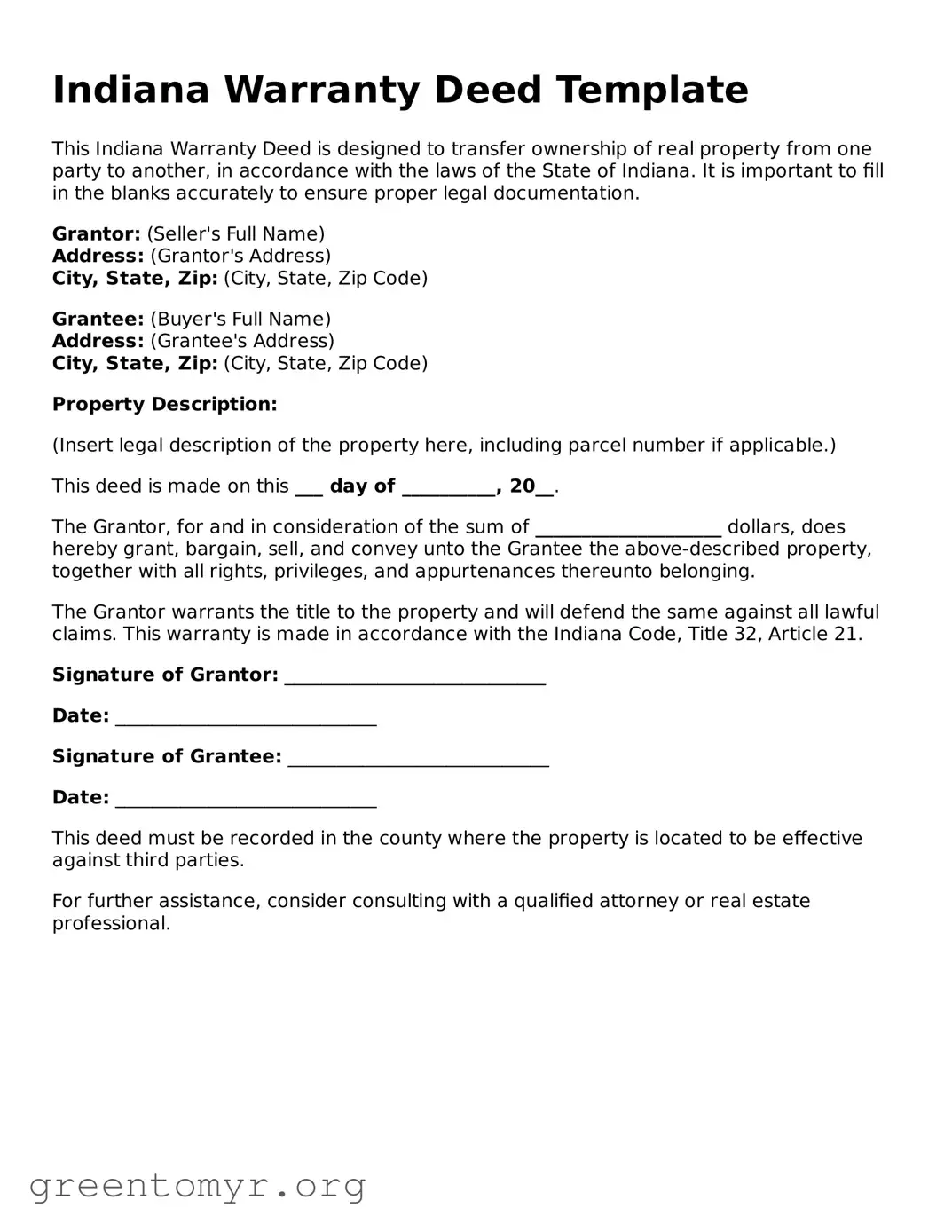
Indiana Warranty Deed Template
This Indiana Warranty Deed is designed to transfer ownership of real property from one party to another, in accordance with the laws of the State of Indiana. It is important to fill in the blanks accurately to ensure proper legal documentation.
Grantor: (Seller's Full Name)
Address: (Grantor's Address)
City, State, Zip: (City, State, Zip Code)
Grantee: (Buyer's Full Name)
Address: (Grantee's Address)
City, State, Zip: (City, State, Zip Code)
Property Description:
(Insert legal description of the property here, including parcel number if applicable.)
This deed is made on this ___ day of __________, 20__.
The Grantor, for and in consideration of the sum of ____________________ dollars, does hereby grant, bargain, sell, and convey unto the Grantee the above-described property, together with all rights, privileges, and appurtenances thereunto belonging.
The Grantor warrants the title to the property and will defend the same against all lawful claims. This warranty is made in accordance with the Indiana Code, Title 32, Article 21.
Signature of Grantor: ____________________________
Date: ____________________________
Signature of Grantee: ____________________________
Date: ____________________________
This deed must be recorded in the county where the property is located to be effective against third parties.
For further assistance, consider consulting with a qualified attorney or real estate professional.
| Fact Name | Details |
|---|---|
| Governing Law | The Indiana Deed form is governed by Indiana Code Title 32, Article 21. |
| Types of Deeds | Common types include Warranty Deed, Quitclaim Deed, and Special Warranty Deed. |
| Notarization Requirement | All Indiana Deeds must be notarized to be valid. |
| Recording | Deeds must be recorded in the county where the property is located. |
| Legal Description | A complete legal description of the property must be included. |
| Consideration | The deed must state the consideration (payment) for the property. |
| Grantor and Grantee | Full names and addresses of both the grantor and grantee are required. |
| Execution | The grantor must sign the deed for it to be effective. |
| Tax Implications | Transfer taxes may apply when recording the deed in Indiana. |
Once you have the Indiana Deed form in front of you, it’s time to begin the process of filling it out. Each section is designed to capture essential information about the property and the parties involved. Careful attention to detail will help ensure that the deed is completed accurately and effectively.
After completing these steps, the deed is ready for submission. Ensure that all information is accurate and legible, as this will help facilitate a smooth recording process with the county office.
An Indiana Deed form is a legal document used to transfer ownership of real property from one party to another in the state of Indiana. This form serves as proof of the transaction and outlines the specifics of the property being transferred, including its legal description, the names of the parties involved, and any conditions of the transfer.
Indiana recognizes several types of deeds, each serving different purposes. The most common types include:
Completing an Indiana Deed form involves several steps:
Yes, after completing and signing the deed, it must be filed with the county recorder's office in the county where the property is located. This step is crucial as it officially records the transfer of ownership and protects the rights of the new owner.
Yes, there are typically fees for filing a deed in Indiana. These fees can vary by county, so it's essential to check with your local county recorder's office for the exact amount. Additionally, there may be transfer taxes applicable based on the property's sale price.
Using a template for an Indiana Deed form can be helpful, especially for those unfamiliar with legal documents. However, it's vital to ensure that the template complies with Indiana state laws and includes all necessary information. Consulting with a legal professional can provide additional peace of mind and ensure accuracy.
When completing the Indiana Deed form, individuals often encounter several common mistakes that can lead to complications in property transfers. One frequent error is failing to provide accurate information about the property. This includes not specifying the correct legal description, which is essential for identifying the property being conveyed. A vague or incorrect description can create confusion and may result in legal disputes.
Another mistake is neglecting to include all necessary signatures. In Indiana, a deed must be signed by the grantor, who is the person transferring the property. If there are multiple owners, all must sign the deed. Omitting a signature can invalidate the document, making it impossible to complete the transfer.
People sometimes overlook the importance of notarization. In Indiana, a deed must be notarized to be legally binding. Failing to have the deed notarized can lead to issues when trying to record the deed with the county. Without proper notarization, the document may not be accepted by the local recording office.
Additionally, individuals may forget to include the date of the transfer. This date is crucial as it establishes when the ownership change occurs. Leaving the date blank can create uncertainty and may complicate future transactions related to the property.
Another common error involves the use of incorrect terminology. The deed form requires specific language to ensure clarity in the transfer of property rights. Using vague or incorrect terms can lead to misunderstandings about what rights are being conveyed, potentially resulting in disputes between parties.
Many people also fail to check for any outstanding liens or encumbrances on the property before completing the deed. If a property has liens, these must be addressed prior to the transfer. Ignoring this step can lead to financial complications for the new owner.
Finally, some individuals do not take the time to review the completed deed for accuracy. Simple typos or mistakes in the names of the parties involved can lead to significant issues later on. It is always advisable to carefully proofread the document before submission to ensure that all information is correct and complete.
When transferring property in Indiana, the deed form is just one piece of the puzzle. Several other documents often accompany the deed to ensure a smooth transaction. Below is a list of common forms and documents used in conjunction with the Indiana Deed form.
Each of these documents plays a crucial role in the property transfer process. They help protect the interests of both buyers and sellers, ensuring that all legal requirements are met and that the transaction proceeds smoothly.
The Deed form is an important legal document used in various transactions, particularly in the transfer of property. However, it shares similarities with several other documents that serve different purposes within the realm of law and property transactions. Here are five documents that are similar to the Deed form:
When filling out the Indiana Deed form, it is essential to approach the process with care. Here are some important dos and don'ts to keep in mind:
By following these guidelines, you can help ensure that your Indiana Deed form is filled out correctly and efficiently.
Here are ten common misconceptions about the Indiana Deed form, along with explanations to clarify each point:
In Indiana, there are different types of deeds, such as warranty deeds and quitclaim deeds, each serving a specific purpose.
While notarization is important for many transactions, some deeds can be valid without it, depending on the circumstances.
Every Indiana deed must include a legal description of the property to clearly identify it.
In Indiana, filing a deed with the county recorder is essential for it to be enforceable against third parties.
While it is advisable to seek legal assistance, individuals can prepare their own deeds if they follow the proper guidelines.
Deeds can be amended or revoked, but the process must follow specific legal procedures.
While it's best to record a deed as soon as possible, there is no strict time limit for doing so in Indiana.
Deeds can also be used for other purposes, such as creating life estates or transferring property for tax reasons.
Filing a deed in Indiana typically incurs fees, which vary by county.
Even recorded deeds can be challenged in court under certain circumstances, such as fraud or error.
When filling out and using the Indiana Deed form, there are several important points to keep in mind. Understanding these can help ensure that the process goes smoothly.
By keeping these key takeaways in mind, you can navigate the Indiana Deed form with greater confidence and clarity.