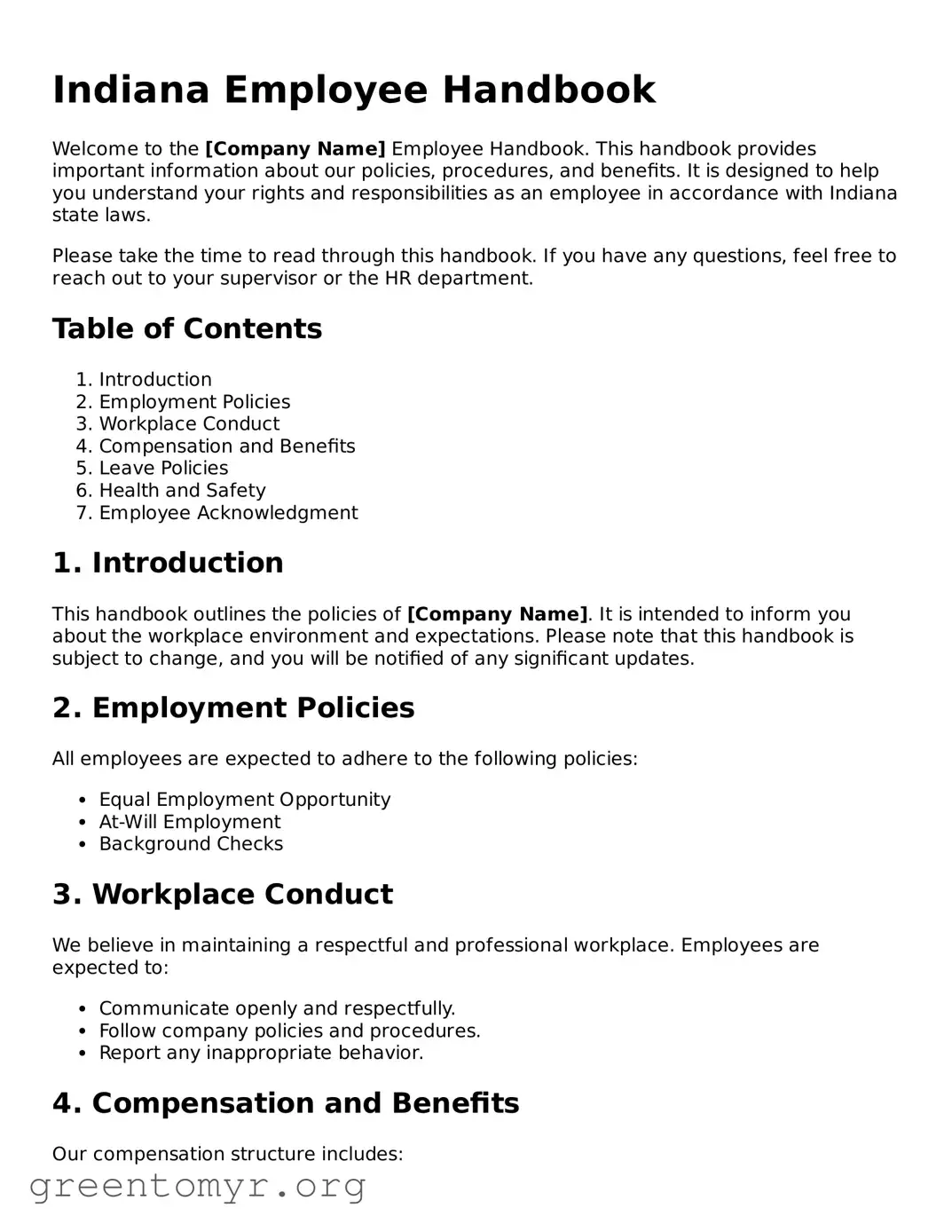
Creating a comprehensive employee handbook is essential for any organization in Indiana, as it serves as a foundational document that outlines workplace policies, expectations, and employee rights. The Indiana Employee Handbook form encompasses critical aspects such as workplace conduct, attendance policies, and disciplinary procedures, ensuring that employees understand their responsibilities and the standards to which they will be held. Additionally, the form addresses important topics like anti-discrimination policies, workplace safety, and employee benefits, fostering a culture of transparency and respect. By clearly delineating the rights and obligations of both employers and employees, this handbook serves not only as a guide for day-to-day operations but also as a legal safeguard against potential disputes. Employers must ensure that the handbook is tailored to their specific organizational needs while remaining compliant with state and federal laws, making it a vital tool for effective human resource management.
Indiana Employee Handbook
Welcome to the [Company Name] Employee Handbook. This handbook provides important information about our policies, procedures, and benefits. It is designed to help you understand your rights and responsibilities as an employee in accordance with Indiana state laws.
Please take the time to read through this handbook. If you have any questions, feel free to reach out to your supervisor or the HR department.
Table of Contents
1. Introduction
This handbook outlines the policies of [Company Name]. It is intended to inform you about the workplace environment and expectations. Please note that this handbook is subject to change, and you will be notified of any significant updates.
2. Employment Policies
All employees are expected to adhere to the following policies:
3. Workplace Conduct
We believe in maintaining a respectful and professional workplace. Employees are expected to:
4. Compensation and Benefits
Our compensation structure includes:
5. Leave Policies
Employees are entitled to various types of leave, including:
6. Health and Safety
Your safety is our priority. Please follow all safety guidelines and report any hazards to your supervisor immediately.
7. Employee Acknowledgment
By signing below, you acknowledge that you have received and read the [Company Name] Employee Handbook.
Employee Name: ____________________
Date: ____________________
| Fact Name | Description |
|---|---|
| Purpose | The Indiana Employee Handbook serves as a guide for employees, outlining company policies, procedures, and expectations. |
| Compliance | It helps employers comply with state and federal labor laws, ensuring that employees are informed of their rights. |
| Content Requirements | The handbook should include sections on workplace conduct, anti-discrimination policies, and safety procedures. |
| At-Will Employment | Indiana is an at-will employment state, meaning that employment can be terminated by either party at any time, barring any contractual obligations. |
| Governing Laws | Relevant laws include the Indiana Code Title 22, which addresses labor and employment regulations. |
| Updates | Employers are encouraged to regularly update the handbook to reflect changes in laws or company policies. |
| Distribution | Employees should receive a copy of the handbook upon hire and be required to acknowledge its receipt. |
| Legal Protection | A well-crafted handbook can provide legal protection for employers by clearly stating policies and procedures. |
| Training | Employers should provide training on the handbook's contents to ensure that all employees understand their rights and responsibilities. |
Filling out the Indiana Employee Handbook form is a straightforward process that ensures you have all necessary information documented. By completing this form accurately, you help create a clear understanding of workplace policies and expectations. Follow the steps below to ensure you fill out the form correctly.
After completing the form, make sure to submit it to your supervisor or the human resources department as directed. They will review it and retain it in your employee file for future reference.
The Indiana Employee Handbook form is a document that outlines the policies, procedures, and expectations for employees working in Indiana. It serves as a guide for both employers and employees, ensuring that everyone understands their rights and responsibilities in the workplace.
An Employee Handbook is crucial for several reasons:
All employees should receive a copy of the Employee Handbook. This includes full-time, part-time, and temporary employees. It is important that everyone has access to the same information to ensure consistency in understanding company policies.
The Employee Handbook should be reviewed and updated regularly. At a minimum, it should be revisited annually or whenever there are significant changes in laws, regulations, or company policies. Keeping the handbook current helps ensure that employees are informed about the latest practices and legal requirements.
An effective Employee Handbook should include, but is not limited to:
Yes, it is highly recommended that employees sign an acknowledgment form after receiving the Employee Handbook. This signature serves as proof that they have received, read, and understood the policies outlined in the handbook. It can be beneficial in case of disputes or misunderstandings in the future.
If an employee violates a policy outlined in the Employee Handbook, the employer should follow the disciplinary procedures specified in the handbook. This may include verbal warnings, written warnings, or other disciplinary actions, depending on the severity of the violation. Consistency in enforcing policies is essential to maintain fairness and uphold the integrity of the handbook.
Filling out the Indiana Employee Handbook form can seem straightforward, but many individuals make common mistakes that can lead to confusion or delays. One frequent error is not reading the instructions thoroughly. Each section of the form may have specific requirements, and overlooking these can result in incomplete submissions.
Another common mistake is providing inaccurate personal information. It is crucial to double-check details such as your name, address, and contact information. Errors in these areas can lead to issues with communication and may even affect your employment status.
Some individuals forget to sign and date the form. A signature is often required to validate the information provided. Without it, the form may be considered incomplete, which could delay your onboarding process.
Additionally, failing to update the form when there are changes in personal circumstances is a significant oversight. Life events such as marriage, divorce, or a change of address should be reflected in the handbook form promptly. Keeping this information current ensures that your employer has the most accurate records.
People also tend to skip over the policy acknowledgment section. This part is essential as it confirms that you have read and understood the company policies outlined in the handbook. Ignoring this section can lead to misunderstandings about workplace expectations.
Another mistake is not asking questions when unsure about certain sections. If any part of the form is unclear, reaching out for clarification is vital. This proactive approach can prevent errors and ensure that you are completing the form correctly.
Moreover, some individuals may neglect to keep a copy of the completed form for their records. Having a copy can be beneficial for future reference, especially if questions arise regarding your employment or company policies.
Finally, submitting the form late is a mistake that can have consequences. Timeliness is critical in the employment process. Ensure you adhere to any deadlines provided to avoid complications with your hiring or onboarding.
The Indiana Employee Handbook is an essential document for any organization, outlining policies and procedures for employees. Alongside this handbook, several other forms and documents help ensure clarity and compliance in the workplace. Below is a list of related forms that can support both employers and employees.
Utilizing these forms alongside the Indiana Employee Handbook can create a more structured and transparent work environment. Each document plays a vital role in ensuring that both employees and employers understand their rights and responsibilities.
Company Policies Manual: Similar to the Employee Handbook, this document outlines the company's policies and procedures, ensuring employees understand expectations and compliance requirements.
Code of Conduct: This document sets forth the standards of behavior expected from employees, emphasizing ethical practices and professional interactions, much like the guidelines found in the Employee Handbook.
Onboarding Guide: This guide provides new hires with essential information about the company culture, job expectations, and training processes, paralleling the introductory information in the Employee Handbook.
Benefits Overview: This document details employee benefits, including health insurance, retirement plans, and leave policies, similar to the sections in the Employee Handbook that cover employee entitlements.
Safety Manual: Focused on workplace safety protocols, this manual complements the Employee Handbook by providing specific safety procedures and emergency response plans.
Performance Evaluation Guidelines: These guidelines explain the performance review process and criteria, akin to the performance expectations outlined in the Employee Handbook.
Leave of Absence Policy: This document details the procedures and eligibility for taking leave, similar to the leave policies found in the Employee Handbook.
Employee Rights and Responsibilities: This document outlines the rights of employees and their responsibilities, paralleling the information provided in the Employee Handbook regarding workplace rights.
Disciplinary Procedures: This document explains the process for addressing employee misconduct, which aligns with the disciplinary policies mentioned in the Employee Handbook.
When filling out the Indiana Employee Handbook form, follow these guidelines to ensure accuracy and compliance.
Understanding the Indiana Employee Handbook form is essential for both employers and employees. However, several misconceptions can lead to confusion. Below is a list of ten common misconceptions regarding this form.
Addressing these misconceptions can lead to better understanding and implementation of the Indiana Employee Handbook form, benefiting both employers and employees alike.
When filling out and using the Indiana Employee Handbook form, consider the following key takeaways:
Following these guidelines will help ensure a smooth process when utilizing the Indiana Employee Handbook form.