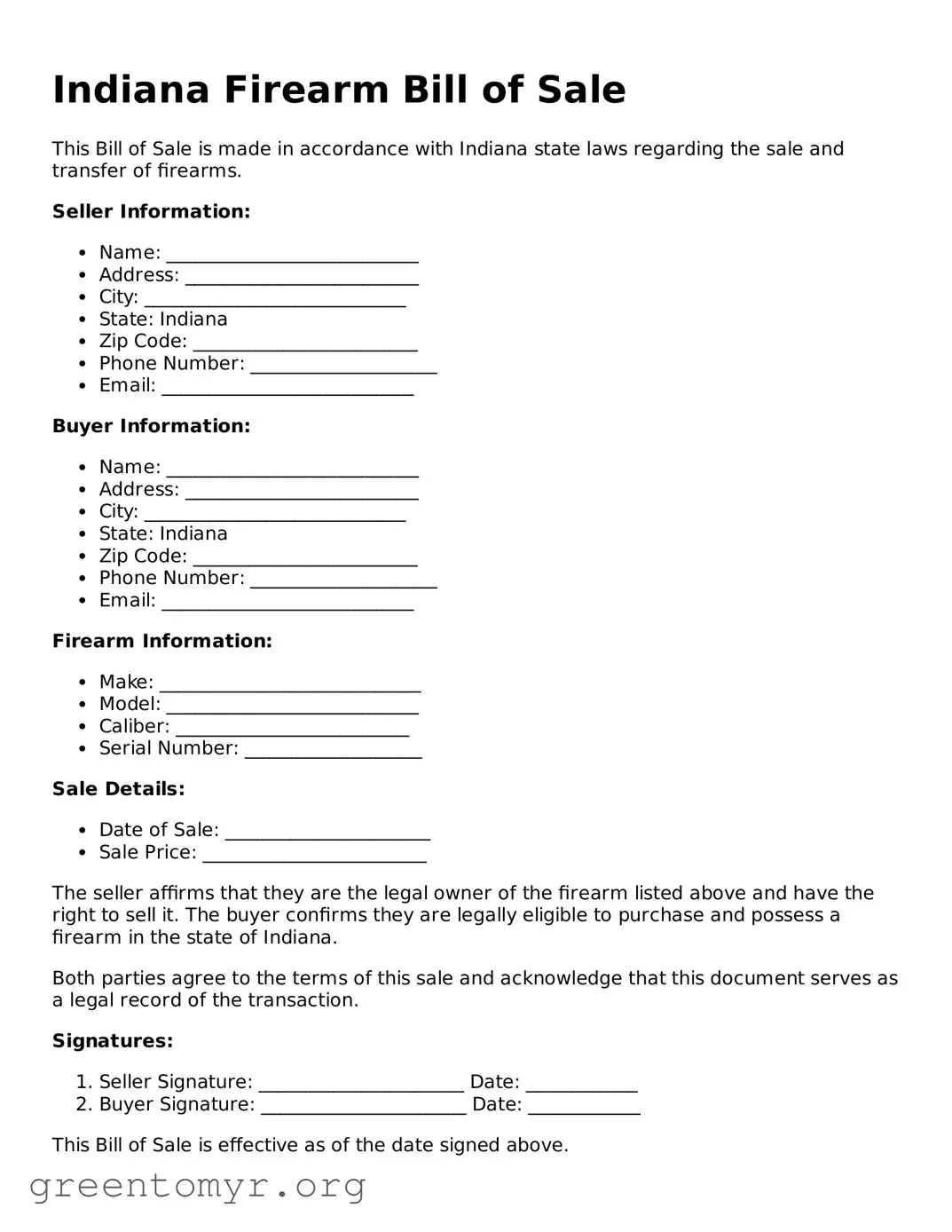
In Indiana, the process of buying or selling a firearm involves important documentation to ensure that the transaction is both legal and transparent. One of the key elements in this process is the Firearm Bill of Sale form. This document serves as a written record of the sale, detailing essential information such as the buyer's and seller's names, addresses, and contact information. It also includes specifics about the firearm being sold, including its make, model, and serial number. By completing this form, both parties can protect themselves by establishing proof of ownership and the terms of the sale. Furthermore, while Indiana does not require a background check for private sales, having a Bill of Sale can provide an added layer of security and accountability for both the buyer and seller. Understanding the importance of this form not only helps in complying with state laws but also fosters responsible firearm ownership and transfers.
Indiana Firearm Bill of Sale
This Bill of Sale is made in accordance with Indiana state laws regarding the sale and transfer of firearms.
Seller Information:
Buyer Information:
Firearm Information:
Sale Details:
The seller affirms that they are the legal owner of the firearm listed above and have the right to sell it. The buyer confirms they are legally eligible to purchase and possess a firearm in the state of Indiana.
Both parties agree to the terms of this sale and acknowledge that this document serves as a legal record of the transaction.
Signatures:
This Bill of Sale is effective as of the date signed above.
| Fact Name | Description |
|---|---|
| Purpose | The Indiana Firearm Bill of Sale form is used to document the sale of a firearm between private parties. |
| Governing Law | The sale of firearms in Indiana is governed by Indiana Code Title 35, Article 47. |
| Buyer Information | The form requires the buyer's name, address, and date of birth to verify eligibility. |
| Seller Information | The seller must provide their name, address, and identification details. |
| Firearm Details | Specific details about the firearm, such as make, model, and serial number, must be included. |
| Signatures | Both the buyer and seller must sign the form to validate the transaction. |
| Record Keeping | It is advisable for both parties to keep a copy of the completed form for their records. |
When you decide to sell or buy a firearm in Indiana, completing the Firearm Bill of Sale form is an important step in the process. This form serves as a record of the transaction and helps ensure that both parties are clear about the details of the sale. Following the steps below will guide you through filling out the form correctly.
A Firearm Bill of Sale is a legal document that records the transfer of ownership of a firearm from one person to another in Indiana. This form includes important details such as the names and addresses of both the buyer and seller, a description of the firearm, and the date of the transaction. Although not legally required in Indiana, having a Bill of Sale is highly recommended as it provides proof of ownership and can protect both parties in case of future disputes.
No, Indiana does not require a Bill of Sale for private firearm transactions. However, having this document can be beneficial. It serves as a record that can help establish ownership and clarify the terms of the sale. In the event of a legal issue, such as a firearm being used in a crime, a Bill of Sale can demonstrate that the seller no longer owns the firearm.
When creating a Firearm Bill of Sale, it’s important to include the following information:
Including this information helps to ensure that the document is comprehensive and legally sound.
Yes, you can create your own Firearm Bill of Sale. There are many templates available online that you can customize to fit your needs. Just make sure to include all the necessary information mentioned earlier. It's also wise to keep a copy for your records, as both the buyer and seller should retain a signed version of the document.
If you lose your Firearm Bill of Sale, it’s advisable to try and recreate the document as accurately as possible. Gather any details you can remember about the transaction, including the date, firearm description, and the parties involved. If possible, contact the other party to see if they have a copy. While a lost Bill of Sale may complicate matters, having a record of the transaction can still help clarify ownership.
Completing the Indiana Firearm Bill of Sale form requires attention to detail. One common mistake individuals make is failing to provide complete information about the firearm. Each section of the form is essential, and omitting details such as the make, model, and serial number can lead to complications. Ensuring that all fields are filled out accurately helps to avoid potential legal issues in the future.
Another frequent error is neglecting to include the buyer's and seller's information. The form requires full names, addresses, and contact details for both parties involved in the transaction. Incomplete or incorrect information can create confusion and may even invalidate the sale. It is crucial to double-check that all personal details are accurate and legible.
Some individuals mistakenly think that a signature is unnecessary on the form. However, both the buyer and seller must sign the document to validate the transaction. A missing signature can render the entire bill of sale ineffective. Taking the time to ensure that both parties have signed the form is a vital step in the process.
Additionally, people often overlook the importance of dating the bill of sale. A date provides a clear record of when the transaction took place. Without this information, it may be difficult to establish the timeline of ownership, which can be important for legal purposes. Always include the date to maintain an accurate record.
Failing to retain a copy of the completed bill of sale is another mistake that can lead to issues down the line. Both the buyer and seller should keep a copy for their records. This documentation serves as proof of the transaction and can be invaluable if questions arise in the future. Keeping a copy ensures that both parties have access to the same information.
Lastly, individuals sometimes rush through the form without reading the instructions carefully. Each section is designed to gather specific information, and misunderstanding these requirements can lead to errors. Taking the time to read through the instructions thoroughly can prevent mistakes and ensure that the form is filled out correctly. A careful approach will facilitate a smoother transaction and help protect the interests of both parties.
When transferring ownership of a firearm in Indiana, several important documents may accompany the Firearm Bill of Sale form. These documents help ensure a smooth transaction and provide necessary information for both parties involved. Here’s a brief overview of some commonly used forms.
Having these documents on hand can streamline the sale process and ensure compliance with state laws. Always remember to keep copies of all forms for your records, as they can be valuable in the future.
The Firearm Bill of Sale form serves as a crucial document in the transfer of ownership for firearms. It shares similarities with several other types of documents that facilitate the exchange of property or assets. Here are four documents that are comparable to the Firearm Bill of Sale:
Each of these documents plays a vital role in ensuring that transactions are clear and legally binding, providing protection for both buyers and sellers.
When filling out the Indiana Firearm Bill of Sale form, it’s important to follow certain guidelines to ensure the process goes smoothly. Here are some dos and don’ts to keep in mind:
Many people have misunderstandings about the Indiana Firearm Bill of Sale form. Clearing up these misconceptions can help ensure that individuals understand their rights and responsibilities when buying or selling firearms in Indiana. Here are six common misconceptions:
Understanding these misconceptions can help individuals navigate the process of buying and selling firearms more effectively. It is always best to stay informed and consult with legal experts when necessary.
When dealing with the Indiana Firearm Bill of Sale form, it's important to keep several key points in mind. Here are some essential takeaways:
By following these guidelines, you can ensure a smoother and legally sound firearm transaction in Indiana.