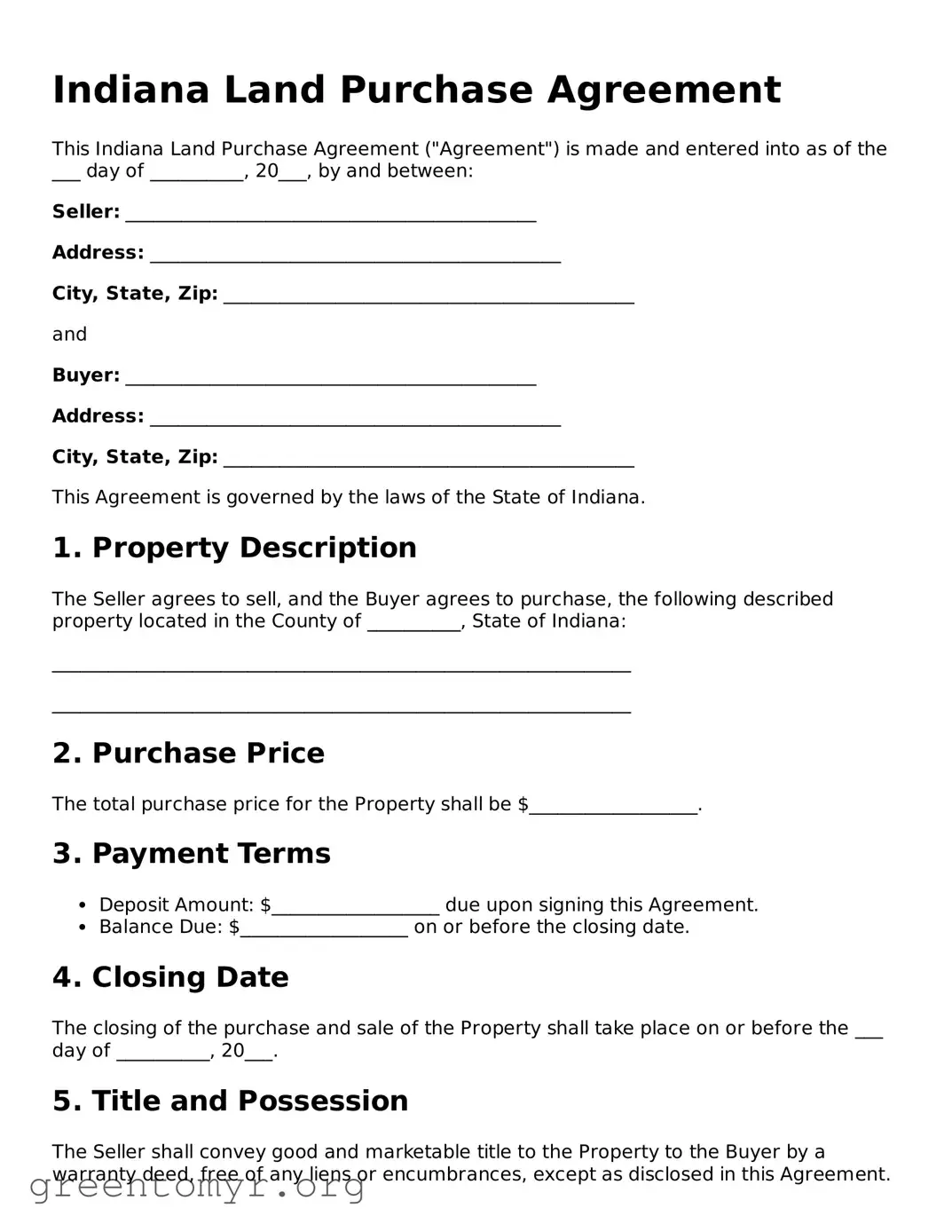
The Indiana Land Purchase Agreement form serves as a crucial document in real estate transactions, facilitating the transfer of property ownership between buyers and sellers. This agreement outlines essential details, including the purchase price, payment terms, and the legal description of the property in question. It also addresses important contingencies that may affect the sale, such as financing, inspections, and title issues. By clearly defining the responsibilities and rights of both parties, the form helps to prevent misunderstandings and disputes down the line. Additionally, it includes provisions for closing costs and the timeline for the transaction, ensuring that both parties are on the same page throughout the process. Understanding the components of this agreement is vital for anyone involved in real estate dealings in Indiana, as it lays the groundwork for a smooth and legally binding transfer of property ownership.
Indiana Land Purchase Agreement
This Indiana Land Purchase Agreement ("Agreement") is made and entered into as of the ___ day of __________, 20___, by and between:
Seller: ____________________________________________
Address: ____________________________________________
City, State, Zip: ____________________________________________
and
Buyer: ____________________________________________
Address: ____________________________________________
City, State, Zip: ____________________________________________
This Agreement is governed by the laws of the State of Indiana.
1. Property Description
The Seller agrees to sell, and the Buyer agrees to purchase, the following described property located in the County of __________, State of Indiana:
______________________________________________________________
______________________________________________________________
2. Purchase Price
The total purchase price for the Property shall be $__________________.
3. Payment Terms
4. Closing Date
The closing of the purchase and sale of the Property shall take place on or before the ___ day of __________, 20___.
5. Title and Possession
The Seller shall convey good and marketable title to the Property to the Buyer by a warranty deed, free of any liens or encumbrances, except as disclosed in this Agreement.
Possession of the Property shall be delivered to the Buyer on the closing date.
6. Contingencies
7. Governing Law
This Agreement shall be governed by and construed in accordance with the laws of the State of Indiana.
8. Signatures
In witness whereof, the parties hereto have executed this Agreement as of the date first above written.
Seller's Signature: ________________________________
Date: ____________________________________________
Buyer's Signature: ________________________________
Date: ____________________________________________
| Fact Name | Details |
|---|---|
| Purpose | The Indiana Land Purchase Agreement form is used to outline the terms and conditions of a real estate transaction in Indiana. |
| Governing Law | This agreement is governed by Indiana state law, specifically the Indiana Code Title 32, which covers property law. |
| Parties Involved | The form typically includes the buyer and seller, both of whom must provide their legal names and contact information. |
| Property Description | A detailed description of the property being sold is included, ensuring clarity about the transaction. |
| Purchase Price | The agreement specifies the total purchase price and outlines the payment terms, including any deposit required. |
| Contingencies | Common contingencies, such as financing and inspections, are often included to protect both parties. |
| Signatures | The agreement must be signed by both the buyer and seller to be legally binding, along with the date of signing. |
After obtaining the Indiana Land Purchase Agreement form, the next step involves accurately completing it to ensure a smooth transaction. This form is crucial for documenting the details of the land sale and protecting the interests of both the buyer and seller. Follow the steps below to fill out the form correctly.
The Indiana Land Purchase Agreement form is a legal document used to outline the terms and conditions under which a buyer agrees to purchase real estate from a seller in Indiana. This agreement serves as a binding contract that details the rights and obligations of both parties involved in the transaction.
A Land Purchase Agreement is crucial for several reasons:
When drafting an Indiana Land Purchase Agreement, it is essential to include the following elements:
Yes, the Indiana Land Purchase Agreement can be modified after it is signed, but both parties must agree to any changes. It is advisable to document any modifications in writing and have both parties sign the amended agreement to ensure clarity and legal enforceability.
If one party breaches the agreement, the other party may have several options, including:
While it is not legally required to have a lawyer review the Indiana Land Purchase Agreement, it is highly advisable. A legal professional can help ensure that the agreement complies with state laws and adequately protects your interests. They can also clarify any legal terminology and assist with negotiations.
Common contingencies in a Land Purchase Agreement may include:
The closing process involves several steps:
If you have questions about the Indiana Land Purchase Agreement, it is best to consult with a qualified real estate attorney or a licensed real estate professional. They can provide guidance tailored to your specific situation and help clarify any uncertainties you may have.
Completing the Indiana Land Purchase Agreement form requires careful attention to detail. One common mistake is failing to include accurate property descriptions. The property’s legal description must be precise to avoid confusion. Omitting this information can lead to disputes over boundaries and ownership.
Another frequent error involves incorrect identification of the parties involved. It is essential to list the full names of both the buyer and the seller as they appear on legal documents. Any discrepancies can complicate the transaction and may delay the closing process.
Many individuals overlook the importance of specifying the purchase price. This amount should be clearly stated in the agreement. Without it, the contract may be considered incomplete, which can jeopardize the sale.
Failure to include contingencies is also a mistake that can have significant consequences. Contingencies protect the buyer and seller by outlining conditions that must be met for the sale to proceed. Neglecting to address these can lead to misunderstandings and potential legal issues.
Additionally, some people neglect to sign the document. Signatures are crucial for the validity of the agreement. Without the proper signatures, the contract may not be enforceable, leaving both parties vulnerable.
Misunderstanding the implications of the closing date can also cause problems. The closing date should be clearly stated and agreed upon by both parties. If this detail is ambiguous, it can lead to disputes and delays in the transfer of ownership.
Finally, failing to seek legal advice before submitting the agreement is a common oversight. While it may seem unnecessary, consulting with a legal professional can provide clarity and ensure that all terms are understood. This step can prevent future complications and protect the interests of both parties.
When engaging in a real estate transaction in Indiana, several forms and documents may accompany the Land Purchase Agreement. These documents help clarify the terms of the sale and protect the interests of both the buyer and the seller. Below is a list of commonly used documents in conjunction with the Indiana Land Purchase Agreement.
These documents play a crucial role in the real estate transaction process. Each serves a specific purpose and contributes to a smoother closing experience for both parties involved.
Real Estate Purchase Agreement: This document outlines the terms and conditions for the sale of real property, similar to the Land Purchase Agreement. It includes details such as purchase price, financing arrangements, and contingencies.
Lease Agreement: A lease agreement establishes the terms under which one party can rent property from another. Like the Land Purchase Agreement, it specifies the duration of the agreement, payment terms, and responsibilities of both parties.
Option to Purchase Agreement: This document grants a potential buyer the right to purchase property at a later date. It shares similarities with the Land Purchase Agreement by outlining price and terms but focuses on the option rather than an immediate purchase.
Joint Venture Agreement: In real estate, a joint venture agreement may be created between parties to develop or purchase property together. It contains similar elements regarding responsibilities, profit sharing, and decision-making processes, akin to those found in a Land Purchase Agreement.
Deed of Trust: This document secures a loan by transferring property to a trustee until the loan is repaid. While it serves a different purpose, it also includes key details about the property and the parties involved, paralleling aspects of the Land Purchase Agreement.
When filling out the Indiana Land Purchase Agreement form, it's important to be thorough and careful. Here’s a list of things to do and avoid:
The Indiana Land Purchase Agreement form is often misunderstood. Here are eight common misconceptions:
Understanding these misconceptions can help individuals make informed decisions when engaging in land transactions in Indiana.
When engaging in real estate transactions in Indiana, the Land Purchase Agreement form serves as a critical document. Here are key takeaways regarding its completion and use:
Using the Indiana Land Purchase Agreement form correctly can facilitate a smoother transaction process. Proper attention to detail is essential for protecting the interests of both the buyer and the seller.