When renting a property in Indiana, understanding the lease agreement is crucial for both landlords and tenants. This legally binding document outlines the terms and conditions under which a rental property is leased. Key aspects of the Indiana Lease Agreement include the duration of the lease, the amount of rent due, and the responsibilities of both parties regarding maintenance and repairs. Additionally, it addresses security deposits, pet policies, and the process for terminating the lease. By clearly defining these elements, the lease agreement helps to prevent misunderstandings and disputes, creating a smoother rental experience for everyone involved. Whether you’re a first-time renter or an experienced landlord, familiarizing yourself with this important document can pave the way for a successful rental relationship.
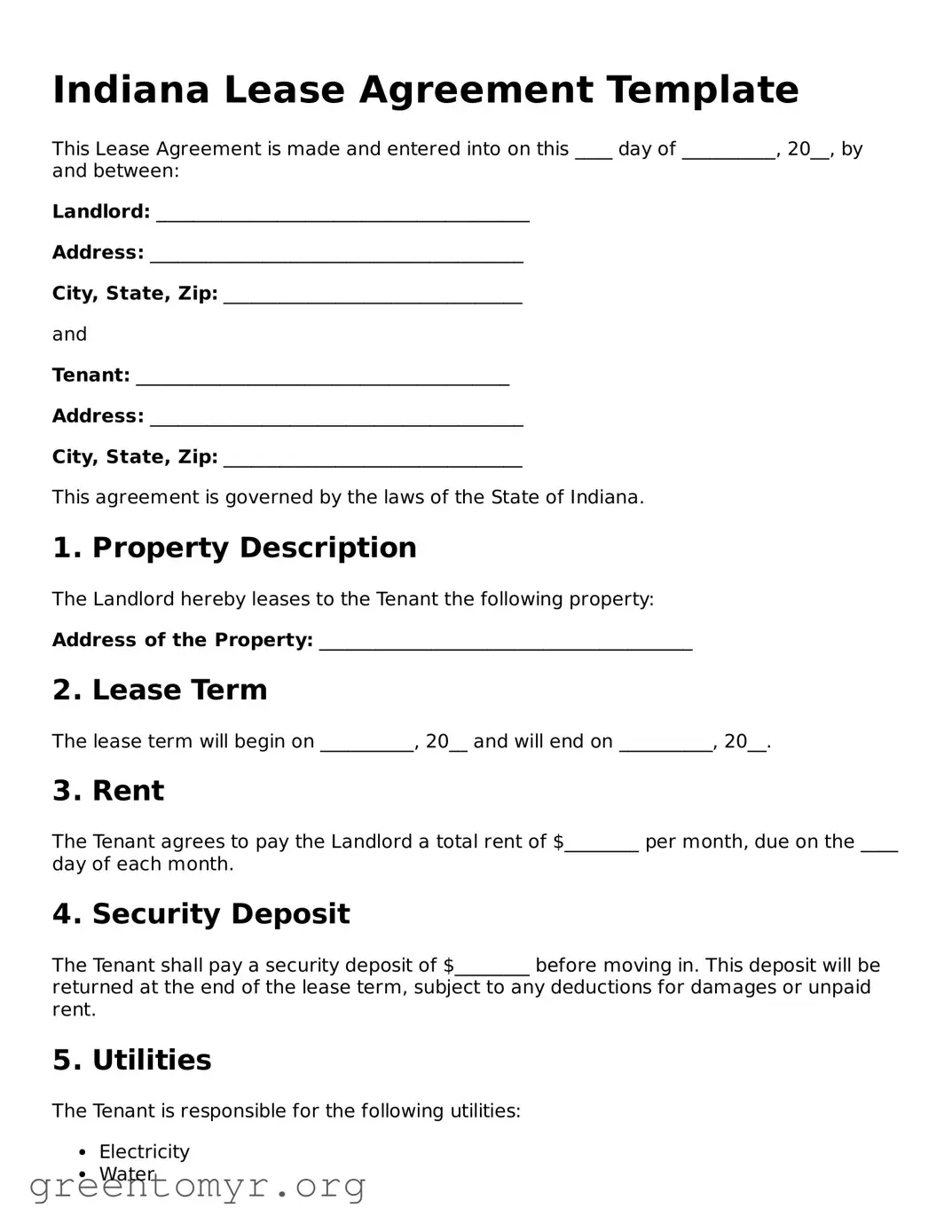
Indiana Lease Agreement Template
This Lease Agreement is made and entered into on this ____ day of __________, 20__, by and between:
Landlord: ________________________________________
Address: ________________________________________
City, State, Zip: ________________________________
and
Tenant: ________________________________________
Address: ________________________________________
City, State, Zip: ________________________________
This agreement is governed by the laws of the State of Indiana.
1. Property Description
The Landlord hereby leases to the Tenant the following property:
Address of the Property: ________________________________________
2. Lease Term
The lease term will begin on __________, 20__ and will end on __________, 20__.
3. Rent
The Tenant agrees to pay the Landlord a total rent of $________ per month, due on the ____ day of each month.
4. Security Deposit
The Tenant shall pay a security deposit of $________ before moving in. This deposit will be returned at the end of the lease term, subject to any deductions for damages or unpaid rent.
5. Utilities
The Tenant is responsible for the following utilities:
6. Maintenance and Repairs
The Landlord shall be responsible for:
The Tenant shall be responsible for:
7. Termination
Either party may terminate this agreement by providing a written notice of ____ days before the desired termination date.
8. Governing Law
This Lease Agreement shall be governed by the laws of the State of Indiana.
9. Signatures
By signing below, both parties agree to the terms of this Lease Agreement.
Landlord Signature: _____________________________ Date: ____________
Tenant Signature: ______________________________ Date: ____________
| Fact Name | Description |
|---|---|
| Governing Law | The Indiana Lease Agreement is governed by Indiana state law, specifically the Indiana Code Title 32, Article 31. |
| Duration | Lease agreements can be established for a fixed term or on a month-to-month basis, depending on the preferences of both the landlord and tenant. |
| Security Deposit | Landlords in Indiana may require a security deposit, which cannot exceed the equivalent of one month's rent, and must be returned within 45 days after the lease ends. |
| Notice Requirements | Both landlords and tenants must provide written notice to terminate a lease, with specific time frames depending on the duration of the lease. |
When preparing to fill out the Indiana Lease Agreement form, it’s important to gather all necessary information beforehand. This form will require specific details about the rental property, the landlord, and the tenant. Follow the steps below to ensure that you complete the form accurately.
An Indiana Lease Agreement form is a legal document that outlines the terms and conditions between a landlord and a tenant regarding the rental of residential or commercial property in Indiana. This agreement details important aspects such as the duration of the lease, rent amount, security deposit, and responsibilities of both parties. Having a well-drafted lease helps protect the rights of both landlords and tenants.
When drafting an Indiana Lease Agreement, it's essential to include the following key elements:
The validity of an Indiana Lease Agreement depends on the terms set within the document. Typically, leases can be established for various durations, including:
It’s crucial to review the lease terms to understand the duration and any renewal clauses.
In Indiana, landlords cannot increase the rent during the lease term unless the lease agreement specifically allows for it. If the lease is a month-to-month agreement, landlords may increase rent by providing proper notice, usually 30 days in advance. Always check the lease terms and state laws to ensure compliance.
If a tenant breaks the lease, they may be held liable for the remaining rent due until the property is re-rented. Indiana law allows landlords to take reasonable steps to mitigate damages by attempting to re-rent the property. Tenants should review their lease for any specific penalties or terms related to early termination.
While verbal agreements can be legally binding, having a written Indiana Lease Agreement is highly recommended. A written lease provides clarity and serves as a reference for both parties in case of disputes. It also helps ensure that all terms are agreed upon and understood, reducing the likelihood of misunderstandings.
Filling out the Indiana Lease Agreement form can be a straightforward process, but many people make common mistakes that can lead to complications later on. One frequent error is failing to include all necessary details about the rental property. It’s essential to provide the complete address, including unit numbers if applicable. Omitting this information can create confusion and may affect the validity of the lease.
Another mistake often made is neglecting to specify the lease term. Whether it’s a month-to-month agreement or a fixed-term lease, clarity is crucial. If this section is left blank or filled out incorrectly, it can lead to misunderstandings regarding when the lease begins and ends. Both landlords and tenants should be clear about the duration to avoid potential disputes.
Many individuals also overlook the importance of listing all parties involved in the lease. This includes not just the landlord but also all tenants who will be residing in the property. If a tenant's name is missing, it can complicate matters if issues arise, such as payment disputes or damage claims. Ensure that every adult who will be living in the rental unit is named on the lease.
Another common error is failing to read and understand the terms and conditions outlined in the lease. It’s easy to skim through the document, but each clause carries significance. Ignoring specific rules regarding pets, maintenance responsibilities, or late fees can lead to unexpected consequences. Take the time to understand what you are agreeing to before signing.
Lastly, not keeping a copy of the signed lease is a mistake that can have serious implications. After the lease is completed and signed by all parties, ensure that everyone involved receives a copy. This document serves as a legal record of the agreement and can be crucial for reference in the future. Without it, you may find yourself in a difficult position if disputes arise.
When entering into a lease agreement in Indiana, it's important to have all the necessary documents in place. These additional forms can help clarify terms, protect rights, and ensure a smooth rental experience. Here’s a list of commonly used documents that often accompany the Indiana Lease Agreement.
Having these documents ready can streamline the leasing process and provide clarity for both landlords and tenants. Each form plays a crucial role in ensuring that everyone involved understands their rights and responsibilities.
A Lease Agreement is an important document for both landlords and tenants. It establishes the terms of rental and outlines the rights and responsibilities of each party. Here are four other documents that are similar to a Lease Agreement:
When filling out the Indiana Lease Agreement form, it's important to be thorough and accurate. Here are some key things to keep in mind:
By following these guidelines, you can help ensure that your lease agreement is completed properly and protects both parties involved.
Misconception 1: The Indiana Lease Agreement is a one-size-fits-all document.
This is not true. While there are standard elements that most lease agreements share, the Indiana Lease Agreement can be tailored to fit the specific needs of both landlords and tenants. Customization is essential to address unique circumstances, such as pets, maintenance responsibilities, or payment schedules.
Misconception 2: A verbal agreement is just as binding as a written lease.
Many people believe that a verbal agreement holds the same weight as a written one. However, in Indiana, having a written lease is crucial for clarity and legal protection. A written document outlines the terms and conditions, making it easier to resolve disputes if they arise.
Misconception 3: All lease agreements are the same in Indiana.
Not all lease agreements are created equal. Different landlords may have different terms, and local laws can affect lease agreements. It’s important for tenants to read the lease thoroughly and understand its specific provisions before signing.
Misconception 4: Once signed, a lease cannot be changed.
This is a common misunderstanding. While a lease is a binding contract, amendments can be made if both parties agree. Changes should be documented in writing and signed by both the landlord and tenant to ensure that they are enforceable.
Misconception 5: A lease automatically renews at the end of the term.
Some tenants assume that their lease will automatically renew. In Indiana, this is not always the case. It depends on the specific terms outlined in the lease. Tenants should be aware of the renewal terms and any required notice period for non-renewal.
When it comes to filling out and using the Indiana Lease Agreement form, there are several important points to keep in mind. Understanding these can help both landlords and tenants navigate their responsibilities and rights more effectively.
By keeping these key takeaways in mind, you can ensure that the Indiana Lease Agreement form is filled out correctly and used effectively, promoting a positive rental experience for everyone involved.