In Indiana, a Marital Separation Agreement serves as a crucial document for couples who choose to live apart while addressing various aspects of their relationship. This form outlines the rights and responsibilities of each spouse during the separation period, covering essential topics such as property division, spousal support, and child custody arrangements. By clearly detailing how assets and debts will be managed, the agreement aims to minimize conflict and provide clarity for both parties. Additionally, it may address issues related to child support and visitation, ensuring that the best interests of any children involved are prioritized. The Marital Separation Agreement is not only a practical tool for navigating the complexities of separation but also serves as a formal record that can be referenced in the future, should any disputes arise. Understanding its components and implications can help individuals make informed decisions during a challenging time.
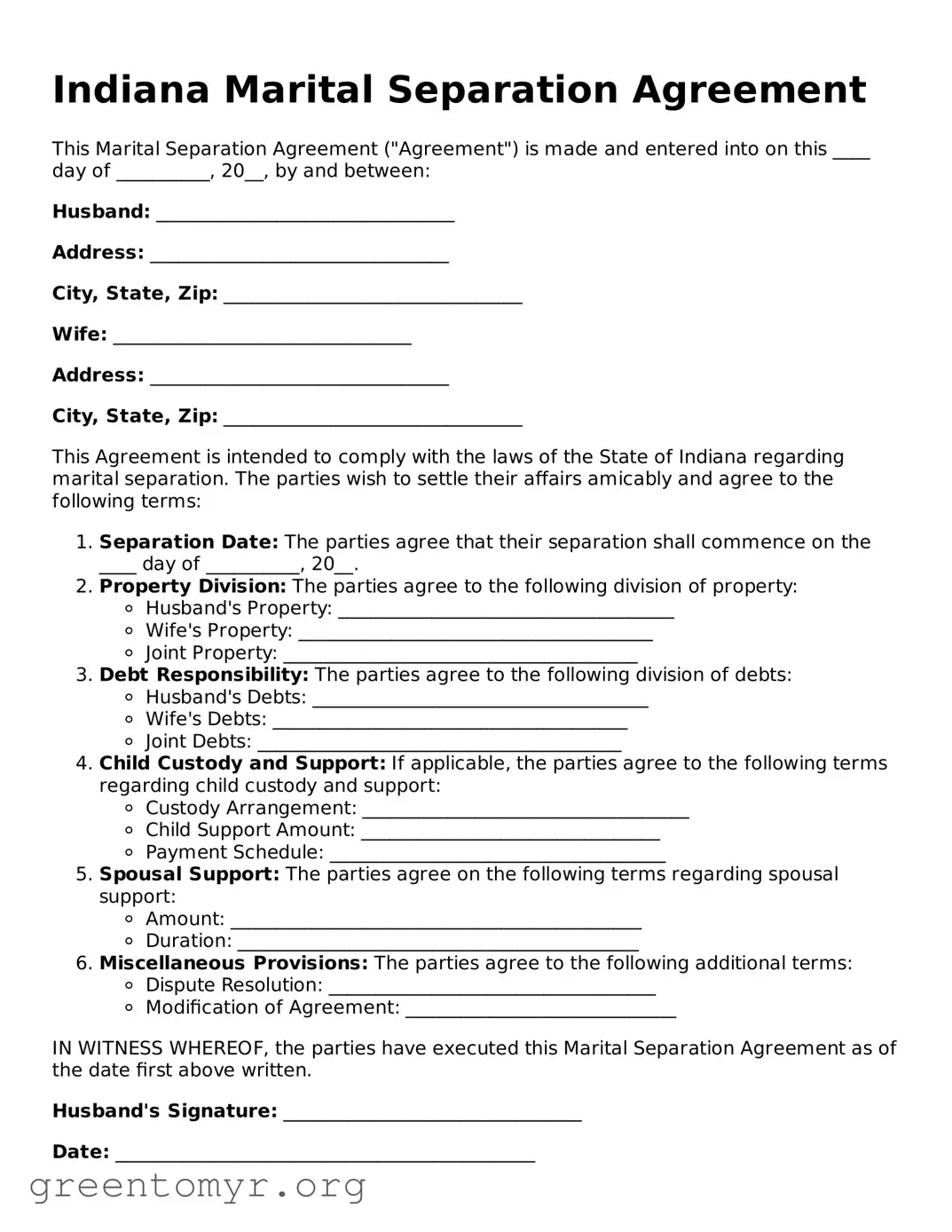
Indiana Marital Separation Agreement
This Marital Separation Agreement ("Agreement") is made and entered into on this ____ day of __________, 20__, by and between:
Husband: ________________________________
Address: ________________________________
City, State, Zip: ________________________________
Wife: ________________________________
Address: ________________________________
City, State, Zip: ________________________________
This Agreement is intended to comply with the laws of the State of Indiana regarding marital separation. The parties wish to settle their affairs amicably and agree to the following terms:
IN WITNESS WHEREOF, the parties have executed this Marital Separation Agreement as of the date first above written.
Husband's Signature: ________________________________
Date: _____________________________________________
Wife's Signature: ________________________________
Date: _____________________________________________
| Fact Name | Description |
|---|---|
| Purpose | The Indiana Marital Separation Agreement form is used to outline the terms of separation between spouses, addressing issues like property division, child custody, and support obligations. |
| Governing Law | This form is governed by Indiana state laws regarding divorce and separation, specifically under Indiana Code Title 31, Article 15. |
| Mutual Agreement | Both parties must voluntarily agree to the terms outlined in the agreement. This ensures that both spouses have a clear understanding and acceptance of their responsibilities. |
| Legal Standing | Once signed and notarized, the agreement can be submitted to the court, providing a legally binding framework for the separation process. |
After obtaining the Indiana Marital Separation Agreement form, it is important to fill it out accurately. This document will help clarify the terms of your separation. Follow the steps below to complete the form properly.
Once the form is filled out and signed, you will need to file it with the appropriate court. Be sure to keep copies for your records.
A Marital Separation Agreement is a legal document that outlines the terms of separation between spouses. It covers various aspects such as property division, debt responsibilities, child custody, and support obligations. This agreement helps both parties understand their rights and responsibilities during the separation period.
Creating a Marital Separation Agreement provides clarity and structure during a difficult time. It helps prevent misunderstandings and disputes by clearly outlining the terms agreed upon by both parties. Having a written agreement can also be beneficial if the couple decides to proceed with divorce later on.
Yes, a Marital Separation Agreement is legally binding in Indiana, provided it meets certain requirements. Both parties must voluntarily agree to the terms, and the agreement should be signed and dated by both spouses. It is advisable to have the document notarized to strengthen its legal standing.
A comprehensive Marital Separation Agreement typically includes:
Including these elements can help ensure that both parties are on the same page regarding their separation.
Yes, modifications can be made to a Marital Separation Agreement if both parties agree to the changes. It is essential to document any modifications in writing and have both parties sign the revised agreement. This helps maintain clarity and legal standing.
To file a Marital Separation Agreement, you must submit the document to the appropriate county court. Ensure that you keep copies for your records. While filing is not always required, it can be beneficial if you want to enforce the agreement in the future.
While it is not legally required to have a lawyer, consulting with one is highly recommended. An attorney can provide valuable guidance, ensure that your rights are protected, and help draft a comprehensive agreement that meets legal standards.
If one spouse fails to comply with the terms of the Marital Separation Agreement, the other spouse can seek legal recourse. This may involve filing a motion in court to enforce the agreement. Courts generally take such agreements seriously, especially if they were properly executed and documented.
A Marital Separation Agreement remains in effect until both parties agree to modify or terminate it, or until a divorce decree is finalized. If a divorce occurs, the terms of the separation agreement may be incorporated into the final divorce settlement.
Completing the Indiana Marital Separation Agreement form can be a complex task. Many individuals make common mistakes that can lead to complications in the separation process. Understanding these pitfalls can help ensure that the agreement is valid and enforceable.
One frequent mistake is failing to provide complete information about both parties. It is essential to include full names, addresses, and other identifying details. Omitting this information can create confusion and may delay the processing of the agreement.
Another common error is neglecting to specify the terms of asset division clearly. Couples often assume that verbal agreements will suffice. However, the form requires detailed descriptions of how property, debts, and other assets will be divided. Vague language can lead to disputes later on.
People sometimes overlook the importance of including child custody arrangements. If children are involved, the agreement must outline custody, visitation, and support terms. Failing to address these issues can lead to misunderstandings and legal complications.
Additionally, some individuals forget to consider tax implications when dividing assets. Certain assets may have tax consequences that should be addressed in the agreement. Ignoring these factors can result in unexpected financial burdens in the future.
Another mistake involves not having the agreement reviewed by a legal professional. While it may seem straightforward, legal nuances can affect the enforceability of the agreement. Seeking legal advice can help ensure that the document meets all necessary requirements.
Moreover, people often forget to sign and date the agreement. Both parties must provide their signatures for the document to be valid. Failing to do so can render the agreement unenforceable, leading to further complications.
Lastly, individuals sometimes do not keep copies of the finalized agreement. It is crucial to retain a signed copy for personal records. This can serve as a reference in case disputes arise in the future.
When navigating a marital separation in Indiana, several forms and documents may be necessary to ensure a smooth process. Each document serves a specific purpose and can help clarify the terms of the separation. Below is a list of commonly used documents that often accompany the Indiana Marital Separation Agreement form.
Understanding these documents can help individuals navigate the complexities of marital separation in Indiana. Each form plays a crucial role in ensuring that the rights and responsibilities of both parties are clearly defined and legally recognized.
The Marital Separation Agreement form shares similarities with several other legal documents. Below is a list of four documents that are comparable, along with their specific similarities:
When filling out the Indiana Marital Separation Agreement form, it’s essential to approach the process with care and attention to detail. Below are ten important guidelines to follow, including both actions to take and common pitfalls to avoid.
Following these guidelines can help ensure that your Marital Separation Agreement is completed correctly and effectively. Taking the time to do it right will benefit all parties involved.
When it comes to the Indiana Marital Separation Agreement form, many people hold misconceptions that can lead to confusion or missteps. Here are seven common misunderstandings:
A marital separation agreement is not a divorce decree. While both documents address the division of assets and responsibilities, a separation agreement allows couples to live apart while remaining legally married.
This is not true. Couples can modify their separation agreement if both parties agree to the changes. It’s essential to document any modifications in writing.
Signing a separation agreement does not automatically lead to divorce. Couples can choose to reconcile or remain separated for an extended period without filing for divorce.
Many believe that separation agreements are only necessary for couples with children. However, these agreements can benefit any couple looking to outline financial responsibilities and asset division.
While it is true that some informal agreements may not hold up in court, a properly drafted and signed marital separation agreement is legally binding and enforceable.
Although it’s possible to create a separation agreement without legal help, consulting an attorney is advisable. They can ensure that the agreement is fair, comprehensive, and compliant with Indiana laws.
In reality, these agreements can serve as a foundation for divorce proceedings. They can outline terms that both parties can reference during the divorce process, making it smoother.
Understanding these misconceptions can help couples navigate the complexities of separation and ensure that they make informed decisions about their future.
When filling out and using the Indiana Marital Separation Agreement form, it’s important to keep several key points in mind. Here are five takeaways to consider:
By keeping these points in mind, individuals can navigate the process of creating a Marital Separation Agreement more effectively.