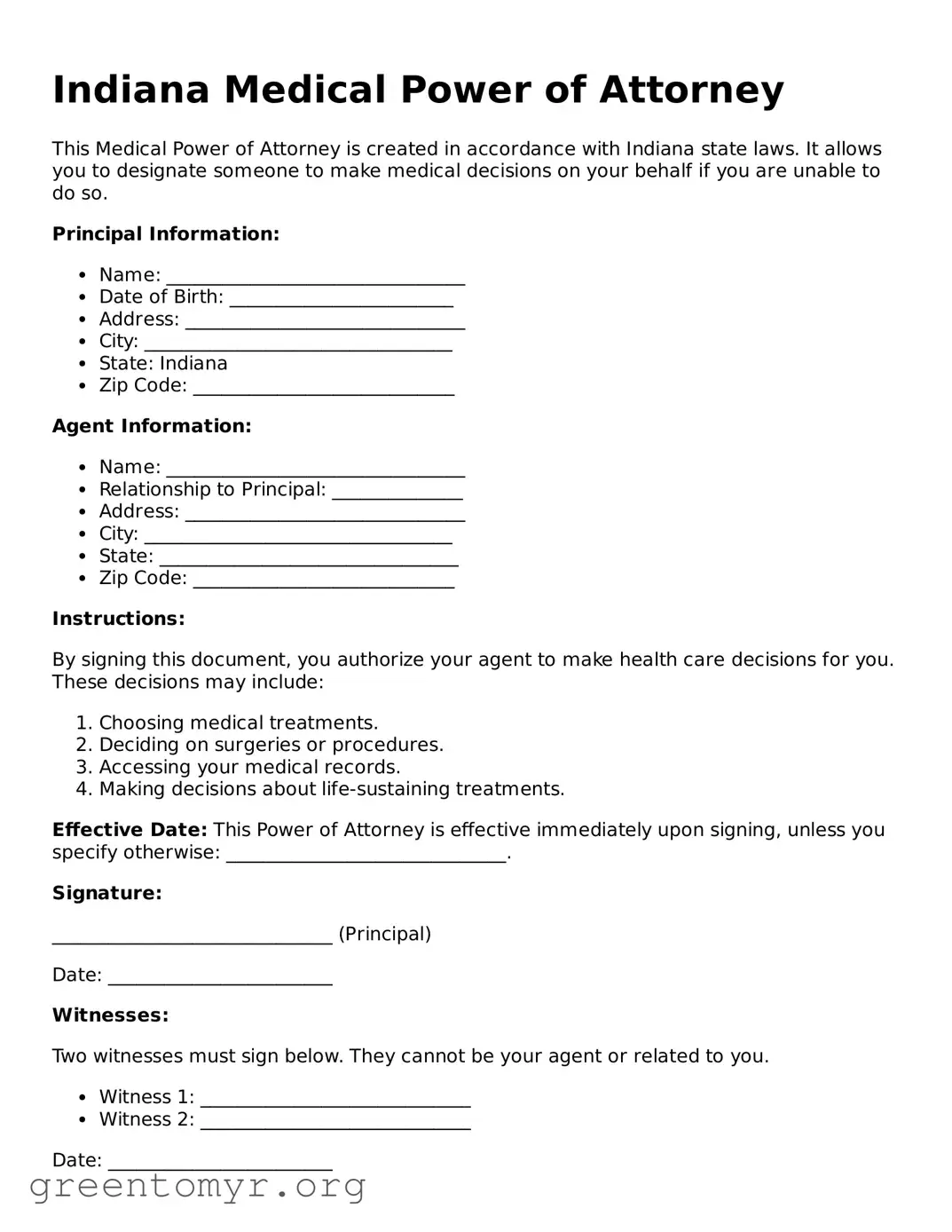
The Indiana Medical Power of Attorney form is an essential legal document that allows individuals to designate a trusted person to make healthcare decisions on their behalf in the event they become unable to communicate their wishes. This form is particularly important for ensuring that medical care aligns with one's personal values and preferences. It outlines the authority granted to the appointed agent, who is often a family member or close friend, to make decisions regarding medical treatment, surgical procedures, and other health-related matters. Additionally, the form can specify particular wishes regarding life-sustaining treatments, organ donation, and end-of-life care, providing clarity and direction to healthcare providers and loved ones during challenging times. By completing this document, individuals can have peace of mind knowing that their healthcare choices will be respected, even when they cannot voice them. Understanding the requirements and implications of the Indiana Medical Power of Attorney form is crucial for anyone looking to ensure their medical preferences are honored.
Indiana Medical Power of Attorney
This Medical Power of Attorney is created in accordance with Indiana state laws. It allows you to designate someone to make medical decisions on your behalf if you are unable to do so.
Principal Information:
Agent Information:
Instructions:
By signing this document, you authorize your agent to make health care decisions for you. These decisions may include:
Effective Date: This Power of Attorney is effective immediately upon signing, unless you specify otherwise: ______________________________.
Signature:
______________________________ (Principal)
Date: ________________________
Witnesses:
Two witnesses must sign below. They cannot be your agent or related to you.
Date: ________________________
Notary Public:
State of Indiana
County of ____________________________
Subscribed and sworn to before me this _____ day of __________, 20__.
______________________________ (Notary Public)
My Commission Expires: ___________________
| Fact Name | Details |
|---|---|
| Definition | The Indiana Medical Power of Attorney form allows an individual to designate someone to make healthcare decisions on their behalf if they become incapacitated. |
| Governing Law | This form is governed by Indiana Code Title 30, Article 5, Chapter 1, which outlines the legal framework for healthcare decision-making. |
| Principal | The individual who creates the Medical Power of Attorney is known as the principal. This person retains the right to make decisions until they are unable to do so. |
| Agent | The agent is the person designated by the principal to make medical decisions. This individual must be at least 18 years old and can be a family member or a trusted friend. |
| Signature Requirement | The form must be signed by the principal in the presence of at least two witnesses or a notary public to be considered valid. |
| Revocation | The principal can revoke the Medical Power of Attorney at any time, as long as they are competent to do so. This can be done verbally or in writing. |
| Health Care Providers | Healthcare providers must honor the decisions made by the agent, as long as the Medical Power of Attorney is valid and the agent acts within the scope of authority granted. |
| Durability | The Indiana Medical Power of Attorney is durable, meaning it remains effective even if the principal becomes incapacitated. |
| Limitations | The form does not grant the agent authority to make decisions regarding the principal's mental health treatment unless explicitly stated. |
Filling out the Indiana Medical Power of Attorney form is an important step in making your healthcare wishes known. By completing this form, you designate someone you trust to make medical decisions on your behalf if you are unable to do so. Follow these steps carefully to ensure the form is completed correctly.
A Medical Power of Attorney (MPOA) in Indiana is a legal document that allows an individual, known as the principal, to designate another person, referred to as the agent, to make healthcare decisions on their behalf if they become unable to do so. This document is essential for ensuring that your medical preferences are respected when you cannot communicate them yourself.
Creating a Medical Power of Attorney is important for several reasons:
In Indiana, you can choose anyone to be your agent, as long as they are at least 18 years old and capable of making healthcare decisions. Common choices include family members, close friends, or trusted advisors. It’s crucial to select someone who understands your values and wishes regarding medical care.
To complete the Medical Power of Attorney form in Indiana, follow these steps:
In Indiana, while notarization is not strictly required, having your Medical Power of Attorney notarized can add an extra layer of validity. It is advisable to have at least one witness present during the signing of the document, and notarization can help ensure that your wishes are recognized and respected by healthcare providers.
Yes, you can revoke your Medical Power of Attorney at any time, as long as you are mentally competent. To do this, you should create a written statement indicating your intent to revoke the MPOA and inform your agent and healthcare providers of the change. It’s also a good idea to destroy any copies of the previous MPOA to avoid confusion.
If you do not have a Medical Power of Attorney and become unable to make healthcare decisions, medical professionals will typically consult your closest relatives or follow state laws regarding decision-making hierarchy. This can lead to disagreements among family members and may not reflect your personal wishes.
Yes, you can include specific medical treatment preferences in your Medical Power of Attorney. While the agent will have the authority to make decisions on your behalf, detailing your wishes regarding certain treatments, life support, or end-of-life care can guide them in making choices that align with your values.
Filling out the Indiana Medical Power of Attorney form can be a crucial step in ensuring that your healthcare wishes are respected when you are unable to communicate them yourself. However, many individuals make common mistakes that can lead to confusion or even invalidate the document. Understanding these pitfalls can help you create a more effective and legally sound power of attorney.
One frequent mistake is failing to choose the right agent. The individual you appoint should be someone you trust implicitly to make decisions on your behalf. Sometimes, people select a family member out of obligation rather than considering their ability to handle medical decisions. This can lead to conflicts or decisions that do not align with your wishes.
Another common error is not discussing your wishes with the appointed agent before completing the form. Open communication is essential. Your agent should understand your values, preferences, and specific instructions regarding medical treatment. Without this conversation, they may be left guessing what you would want in critical situations.
Some individuals overlook the importance of signing and dating the document properly. In Indiana, your Medical Power of Attorney must be signed by you, the principal, and dated to be valid. Additionally, it should be witnessed by two individuals or notarized. Failing to meet these requirements can render the document ineffective.
Another mistake involves not updating the document when circumstances change. Life events such as divorce, the death of a designated agent, or a change in your health status can all necessitate revisions to your power of attorney. Keeping the document current ensures that your preferences are always accurately reflected.
People often neglect to provide copies of the signed document to relevant parties. After completing the form, it’s important to share it with your healthcare providers, family members, and the appointed agent. Without access to the document, your wishes may not be honored when it matters most.
Many individuals also misunderstand the scope of authority granted in the form. The Indiana Medical Power of Attorney allows you to specify the extent of your agent's decision-making powers. Failing to clarify these powers can lead to confusion about what decisions your agent can make on your behalf.
Lastly, not reviewing the form periodically is a mistake that can have serious implications. Your preferences and circumstances may change over time. Regularly reviewing and, if necessary, updating your Medical Power of Attorney ensures that it reflects your current wishes and remains effective.
When preparing a Medical Power of Attorney in Indiana, there are several other documents that may be useful to consider. Each of these forms serves a specific purpose in ensuring that your healthcare preferences are known and respected. Below is a list of commonly used forms that often accompany a Medical Power of Attorney.
These documents work together to provide a comprehensive approach to managing your healthcare and financial decisions. It's important to ensure that all relevant forms are completed and shared with your healthcare providers and loved ones to facilitate your wishes effectively.
When filling out the Indiana Medical Power of Attorney form, it is crucial to follow specific guidelines to ensure the document is valid and meets your needs. Here are ten things you should and shouldn't do:
When considering the Indiana Medical Power of Attorney form, several misconceptions can arise. Understanding these can help ensure that individuals make informed decisions regarding their healthcare preferences.
This is not true. While both documents deal with healthcare decisions, a Medical Power of Attorney appoints someone to make decisions on your behalf if you are unable to do so. In contrast, a Living Will outlines your specific wishes regarding medical treatment and end-of-life care.
This is incorrect. While it is common to appoint one individual, you can designate multiple agents. However, it is essential to clarify how decisions will be made if there are disagreements among them.
This is a misconception. Anyone, regardless of age, can face unexpected health issues. Therefore, having a Medical Power of Attorney is a prudent step for adults of all ages to ensure their healthcare preferences are respected.
This is false. You can revoke or modify your Medical Power of Attorney at any time as long as you are mentally competent. It’s advisable to communicate any changes to your healthcare provider and your appointed agent.
This is not entirely accurate. While medical professionals are generally required to honor the directives outlined in a Medical Power of Attorney, they must also comply with state laws and hospital policies. It is important to ensure that your agent is well-informed about your wishes and able to advocate for you effectively.
When considering the Indiana Medical Power of Attorney form, it’s essential to understand its purpose and how to use it effectively. Here are some key takeaways to keep in mind:
By following these guidelines, you can create a robust Medical Power of Attorney that reflects your preferences and provides peace of mind for you and your loved ones.