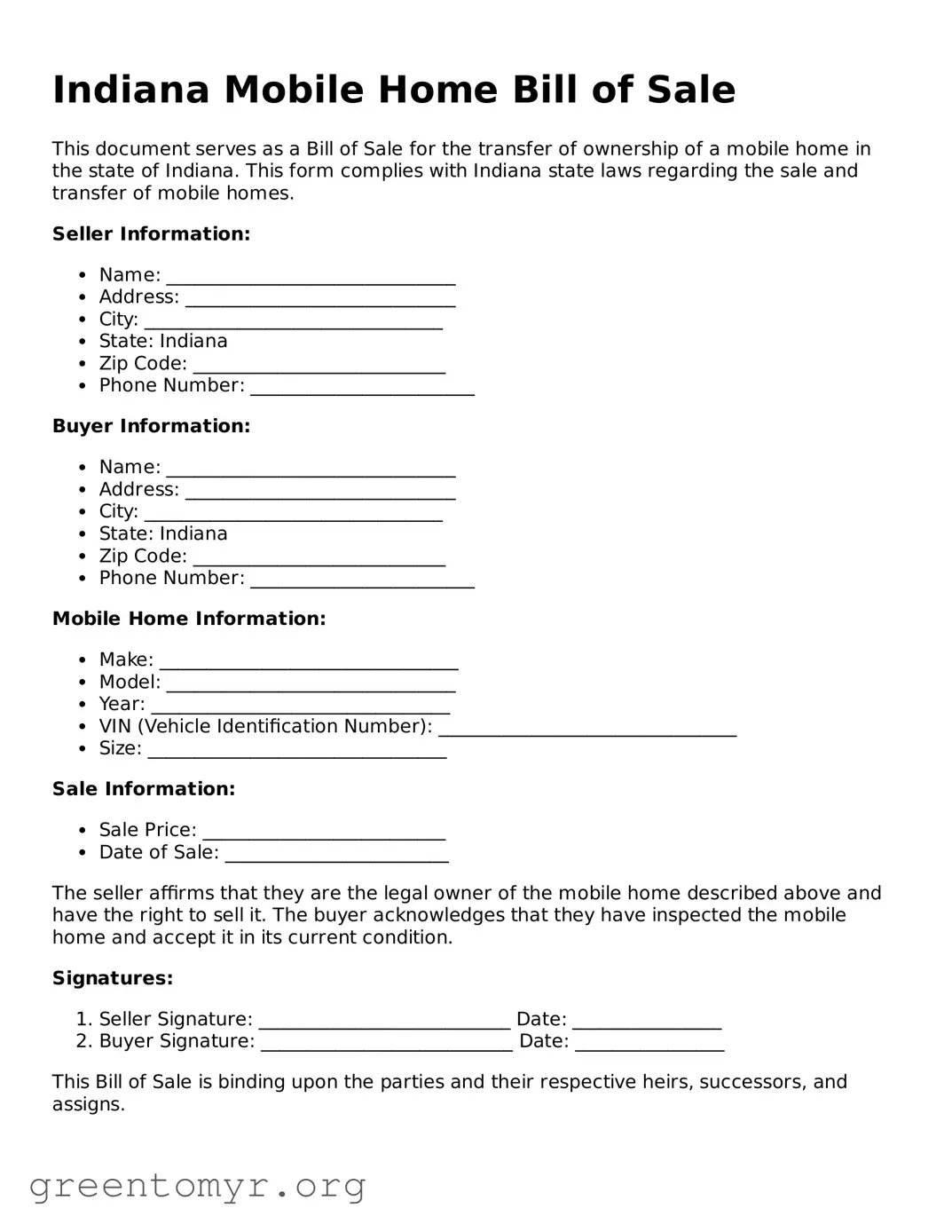
The Indiana Mobile Home Bill of Sale form serves as a crucial document in the transaction of mobile homes within the state. This form facilitates the transfer of ownership from the seller to the buyer, ensuring that both parties have a clear understanding of the terms involved in the sale. Key elements of the form include the identification details of the mobile home, such as its make, model, year, and vehicle identification number (VIN). Additionally, it outlines the sale price and any conditions of the sale, providing a transparent record of the agreement. Both the seller and buyer must sign the document to validate the transaction, making it an essential step in the process of buying or selling a mobile home in Indiana. Furthermore, this bill of sale helps in the registration process with local authorities, ensuring compliance with state regulations. Understanding the importance of this form can streamline the buying and selling experience, safeguarding the interests of both parties involved.
Indiana Mobile Home Bill of Sale
This document serves as a Bill of Sale for the transfer of ownership of a mobile home in the state of Indiana. This form complies with Indiana state laws regarding the sale and transfer of mobile homes.
Seller Information:
Buyer Information:
Mobile Home Information:
Sale Information:
The seller affirms that they are the legal owner of the mobile home described above and have the right to sell it. The buyer acknowledges that they have inspected the mobile home and accept it in its current condition.
Signatures:
This Bill of Sale is binding upon the parties and their respective heirs, successors, and assigns.
| Fact Name | Description |
|---|---|
| Purpose | The Indiana Mobile Home Bill of Sale form is used to document the sale of a mobile home between a seller and a buyer. |
| Governing Law | This form is governed by Indiana Code Title 32, Article 6, which pertains to the sale of personal property. |
| Parties Involved | The form requires the names and addresses of both the seller and the buyer to ensure clarity in the transaction. |
| Mobile Home Description | A detailed description of the mobile home, including its make, model, year, and VIN, must be included in the form. |
| Sale Price | The agreed-upon sale price must be clearly stated to avoid future disputes regarding the transaction. |
| Signatures | Both the seller and buyer are required to sign the form to validate the transaction and confirm their agreement. |
| Date of Sale | The date on which the sale occurs must be recorded, marking the official transfer of ownership. |
| Notarization | While notarization is not mandatory, it is recommended to add an extra layer of authenticity to the document. |
| Record Keeping | Both parties should keep a copy of the completed Bill of Sale for their records, as it serves as proof of the transaction. |
Filling out the Indiana Mobile Home Bill of Sale form is a straightforward process that ensures a smooth transfer of ownership. After completing the form, both the seller and buyer will have a clear record of the transaction, which is essential for future reference.
Once the form is completed and signed, keep a copy for your records. This will serve as proof of the sale and ownership transfer. If notarization is required, make sure to finalize that step before submitting the form to the appropriate authorities.
The Indiana Mobile Home Bill of Sale form is a legal document used to transfer ownership of a mobile home from one party to another. This form serves as proof of the sale and includes important details about the mobile home, the buyer, and the seller.
This form is typically used by individuals or businesses that are buying or selling a mobile home in Indiana. Both the seller and the buyer should complete the form to ensure a clear record of the transaction.
The form generally requires the following information:
Yes, once both parties sign the Indiana Mobile Home Bill of Sale, it becomes a legally binding document. This means that both the buyer and seller are obligated to fulfill the terms outlined in the agreement.
While notarization is not always required, it is highly recommended. Having the document notarized adds an extra layer of authenticity and can help prevent disputes in the future.
Using a generic Bill of Sale form is possible, but it may not include all the specific details required for a mobile home sale in Indiana. It's best to use the Indiana Mobile Home Bill of Sale form to ensure compliance with state laws.
After the sale is completed, the buyer should keep a copy of the signed Bill of Sale for their records. The seller should also retain a copy. Additionally, the buyer may need to register the mobile home with the appropriate local authorities.
The form can typically be obtained from various sources, including:
If you have additional questions, consider reaching out to a legal professional or your local county clerk's office. They can provide guidance specific to your situation and help ensure that you complete the process correctly.
Filling out the Indiana Mobile Home Bill of Sale form can seem straightforward, but several common mistakes can lead to complications down the line. One frequent error is neglecting to include all necessary information about the mobile home. Buyers and sellers should ensure that details like the make, model, year, and Vehicle Identification Number (VIN) are accurately recorded. Missing or incorrect information can create confusion and may even affect ownership transfer.
Another mistake often made is failing to properly identify the parties involved in the transaction. It’s essential to provide full names, addresses, and contact information for both the seller and the buyer. Incomplete or incorrect details can lead to disputes later, especially if either party needs to be contacted regarding the sale.
Many individuals overlook the importance of signing the form. Both the seller and the buyer must sign the Bill of Sale to validate the transaction. Without these signatures, the document may not hold up in legal situations. Additionally, forgetting to date the form can also be problematic, as it provides a clear timeline of the transaction.
Some people make the mistake of not keeping a copy of the completed Bill of Sale. After the transaction, it’s wise to retain a copy for personal records. This document serves as proof of sale and can be vital if any issues arise in the future.
Another common oversight is not reviewing the form for errors before submission. Simple typos or misprints can lead to significant issues, especially when it comes to transferring ownership. Taking a moment to double-check the information can save time and stress later.
Moreover, failing to check local regulations can lead to unexpected complications. Each county may have specific requirements regarding the sale of mobile homes. Understanding these local laws can help ensure that all necessary steps are taken, preventing any legal issues from arising.
Lastly, some individuals may underestimate the importance of providing a fair purchase price. While this may seem trivial, the price should reflect the mobile home’s market value. An inaccurately stated price can raise red flags during inspections or audits, leading to further scrutiny.
When completing a transaction involving a mobile home in Indiana, several forms and documents may accompany the Mobile Home Bill of Sale. Each of these documents serves a specific purpose in ensuring a smooth transfer of ownership and compliance with state regulations.
Utilizing these forms and documents helps facilitate a clear and legally binding transaction. Buyers and sellers should ensure that all necessary paperwork is completed accurately to avoid complications in the future.
When filling out the Indiana Mobile Home Bill of Sale form, attention to detail is crucial. Here are some important dos and don'ts to keep in mind:
Understanding the Indiana Mobile Home Bill of Sale form is essential for anyone involved in the buying or selling of mobile homes. However, several misconceptions often arise regarding this document. Below are eight common misunderstandings, clarified for better comprehension.
Many people believe that a Bill of Sale is merely a receipt. In reality, it serves as a legal record of the transaction, outlining the agreement between the buyer and seller.
While notarization can add an extra layer of authenticity, it is not a requirement for the Bill of Sale to be valid in Indiana.
This is a misconception. The Bill of Sale applies to both new and used mobile homes, making it versatile for various transactions.
Omitting the VIN can lead to confusion and potential legal issues. Including it helps clearly identify the mobile home being sold.
While it is an important document, buyers should also ensure they complete any necessary registration processes with the state to finalize ownership.
Filling out the Bill of Sale after the transaction can create complications. It is best to complete it at the time of sale to ensure accuracy and clarity.
Using a standard format is recommended. Indiana has specific requirements, and using the correct form helps avoid legal pitfalls.
While it is best to get it right the first time, if errors are found, both parties can agree to amend the document. Just ensure that any changes are clearly noted and initialed by both parties.
By dispelling these misconceptions, individuals can navigate the process of buying or selling a mobile home in Indiana with greater confidence and clarity.
When dealing with the Indiana Mobile Home Bill of Sale form, it's important to understand the key aspects that will ensure a smooth transaction. Here are some essential takeaways:
By following these key points, both buyers and sellers can navigate the process of transferring ownership of a mobile home in Indiana with confidence.