The Indiana Real Estate Purchase Agreement is a crucial document in the home buying process, serving as a binding contract between buyers and sellers. This form outlines the terms and conditions under which a property is to be sold, ensuring that both parties understand their rights and responsibilities. Key components include the purchase price, the legal description of the property, and the closing date. Additionally, it addresses contingencies such as financing and inspections, which can protect buyers from unforeseen issues. The agreement also specifies earnest money deposits, which demonstrate the buyer's commitment to the transaction. By detailing the obligations of both parties, this form helps to facilitate a smoother transaction and minimizes the potential for disputes. Understanding the nuances of the Indiana Real Estate Purchase Agreement is essential for anyone involved in a real estate transaction in the state.
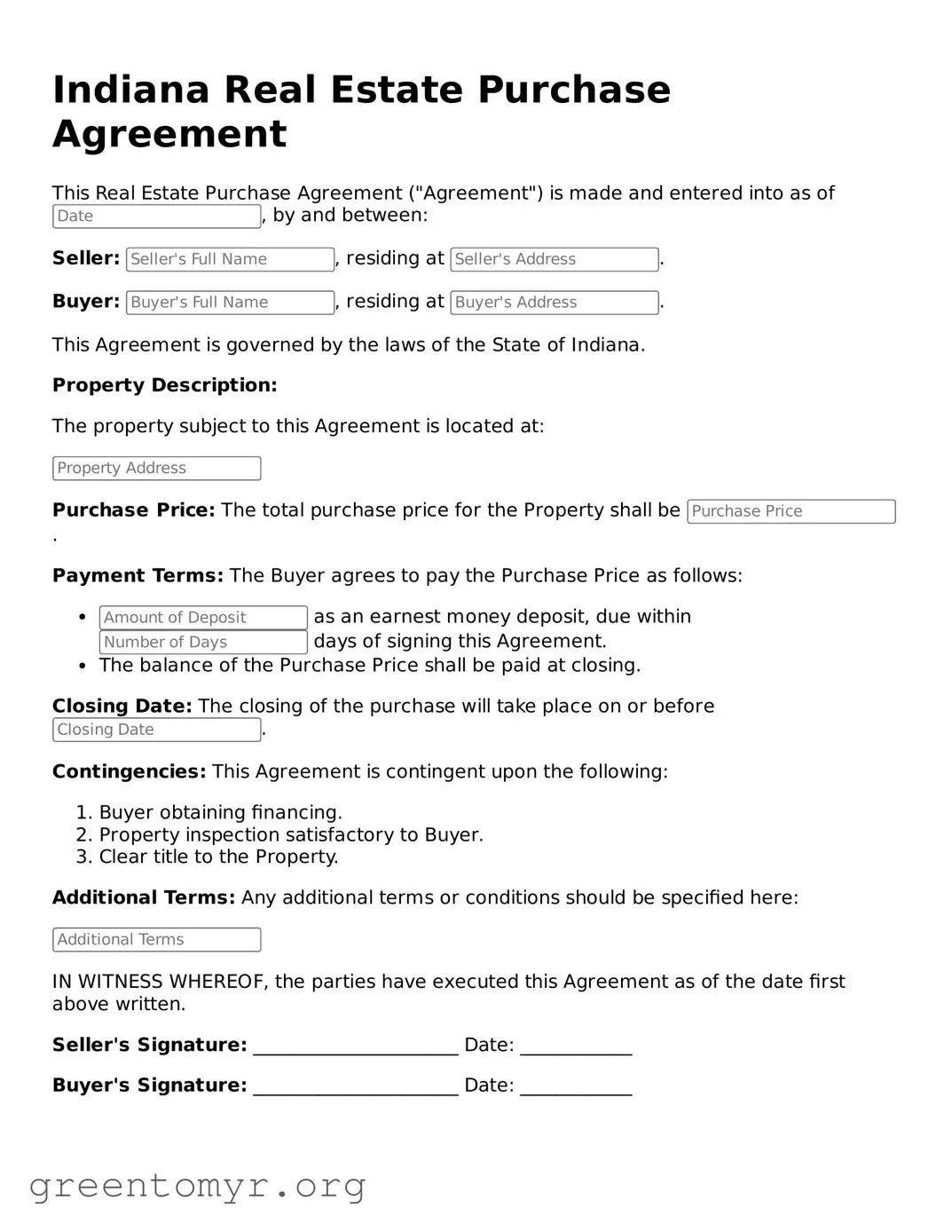
Indiana Real Estate Purchase Agreement
This Real Estate Purchase Agreement ("Agreement") is made and entered into as of , by and between:
Seller: , residing at .
Buyer: , residing at .
This Agreement is governed by the laws of the State of Indiana.
Property Description:
The property subject to this Agreement is located at:
Purchase Price: The total purchase price for the Property shall be .
Payment Terms: The Buyer agrees to pay the Purchase Price as follows:
Closing Date: The closing of the purchase will take place on or before .
Contingencies: This Agreement is contingent upon the following:
Additional Terms: Any additional terms or conditions should be specified here:
IN WITNESS WHEREOF, the parties have executed this Agreement as of the date first above written.
Seller's Signature: ______________________ Date: ____________
Buyer's Signature: ______________________ Date: ____________
| Fact Name | Description |
|---|---|
| Governing Law | The Indiana Real Estate Purchase Agreement is governed by Indiana state law, specifically under the Indiana Code Title 32, Article 21. |
| Purpose | This form serves as a legally binding contract between a buyer and seller for the purchase of real estate in Indiana. |
| Essential Components | Key components include the purchase price, property description, closing date, and contingencies. |
| Contingencies | Common contingencies may involve financing, inspections, and the sale of the buyer's current home. |
| Disclosure Requirements | Indiana law mandates that sellers provide certain disclosures about the property, including lead-based paint information for homes built before 1978. |
| Signatures | Both parties must sign the agreement for it to be enforceable, indicating their acceptance of the terms outlined. |
| Modification | Any modifications to the agreement must be made in writing and signed by both parties to be valid. |
Once you have the Indiana Real Estate Purchase Agreement form in front of you, it’s time to start filling it out. This document is essential for formalizing the terms of a real estate transaction between a buyer and a seller. Accuracy is key, so take your time to ensure all information is correct.
After completing the form, review it carefully to ensure all information is accurate and complete. It may also be beneficial to consult with a real estate professional or legal expert before finalizing the agreement.
The Indiana Real Estate Purchase Agreement is a legal document that outlines the terms and conditions under which a buyer agrees to purchase a property from a seller. This agreement serves as a binding contract, detailing essential aspects such as the purchase price, closing date, and any contingencies that may apply. It is crucial for both parties to understand and agree to these terms before proceeding with the sale.
Several important elements are typically included in the Indiana Real Estate Purchase Agreement:
Both buyers and sellers involved in a real estate transaction in Indiana can utilize this agreement. Real estate agents often facilitate the process, but individuals can also use the form directly. It is advisable for all parties to consult with a legal professional to ensure that their interests are adequately protected and that the agreement complies with state laws.
To execute the Indiana Real Estate Purchase Agreement, both the buyer and seller must sign the document. This signifies their acceptance of the terms outlined within. It is common practice for the agreement to be dated at the time of signing. Once signed, the document becomes legally binding, and both parties are expected to adhere to its terms.
Yes, the Indiana Real Estate Purchase Agreement can be modified after signing, but any changes must be agreed upon by both parties. This is typically done through an amendment, which should be documented in writing and signed by both the buyer and seller. It’s important to keep a record of any modifications to ensure clarity and avoid potential disputes later on.
If one party breaches the Indiana Real Estate Purchase Agreement, the other party may have several options. Common remedies include:
It is advisable to consult with a legal professional to explore the best course of action in the event of a breach.
A copy of the Indiana Real Estate Purchase Agreement can typically be obtained through various sources. Real estate agents often have access to standard forms, and local real estate boards may provide them as well. Additionally, online legal resources and document services may offer templates. However, it is essential to ensure that any form used is up-to-date and compliant with current Indiana laws.
Filling out the Indiana Real Estate Purchase Agreement form requires attention to detail. One common mistake is failing to provide accurate property descriptions. This includes not specifying the correct address or omitting important details about the property boundaries. A vague description can lead to disputes later, so clarity is essential.
Another frequent error is neglecting to include all necessary parties in the agreement. This means ensuring that all buyers and sellers are listed with their full legal names. Missing a party can complicate the transaction and may even render the agreement unenforceable.
People often overlook the importance of including earnest money details. Not specifying the amount or how it will be held can create confusion. It’s crucial to outline whether the earnest money will be placed in an escrow account and what conditions apply to its return.
Misunderstanding the terms of financing is another mistake. Buyers sometimes fail to indicate how they plan to finance the purchase. Whether it’s through a mortgage, cash, or other means, this information should be clearly stated to avoid misunderstandings.
Many individuals also forget to include contingencies. A contingency allows buyers to back out of the agreement under certain conditions, such as failing a home inspection or securing financing. Not including these can leave buyers vulnerable.
Another error is neglecting to specify the closing date. A vague or unspecified closing date can lead to delays and frustration for both parties. Clearly stating the date helps ensure a smooth transaction.
People sometimes skip over the section for seller disclosures. Sellers are required to disclose known issues with the property. Failing to do so can result in legal repercussions and affect the sale.
Additionally, many individuals do not review the entire agreement before signing. It’s essential to read through the entire document to ensure all information is correct and complete. Signing without thorough review can lead to unintended commitments.
Another common mistake is not considering the inclusion of personal property. Buyers should clarify what items are included in the sale, such as appliances or fixtures. This avoids disputes over what is and isn’t part of the purchase.
Finally, people often forget to consult with a real estate professional or attorney. Navigating a purchase agreement can be complex. Seeking guidance can help prevent costly mistakes and ensure a successful transaction.
When entering into a real estate transaction in Indiana, several important documents accompany the Real Estate Purchase Agreement. These documents help clarify the terms of the sale, protect the interests of both parties, and ensure a smooth transaction process. Below is a list of commonly used forms and documents that often accompany the purchase agreement.
These documents play a crucial role in the real estate transaction process. They provide essential information, protect the rights of both parties, and help ensure that the sale proceeds smoothly. Understanding each document's purpose can empower buyers and sellers alike to navigate the complexities of real estate transactions with confidence.
The Real Estate Purchase Agreement (REPA) is a crucial document in real estate transactions. Several other documents share similarities with the REPA, often serving related purposes in property dealings. Here’s a list of seven documents that are similar to the REPA:
When filling out the Indiana Real Estate Purchase Agreement form, attention to detail is crucial. Here’s a list of things you should and shouldn't do to ensure a smooth process.
By following these guidelines, you can help ensure that your Indiana Real Estate Purchase Agreement is completed correctly and efficiently.
When dealing with the Indiana Real Estate Purchase Agreement form, several misconceptions often arise. Understanding these can help buyers and sellers navigate the process more effectively. Here are four common misconceptions:
Being aware of these misconceptions can help buyers and sellers make informed decisions and navigate the real estate process with confidence.
The Indiana Real Estate Purchase Agreement form is a crucial document in the process of buying or selling property in Indiana. Here are some key takeaways regarding its use: