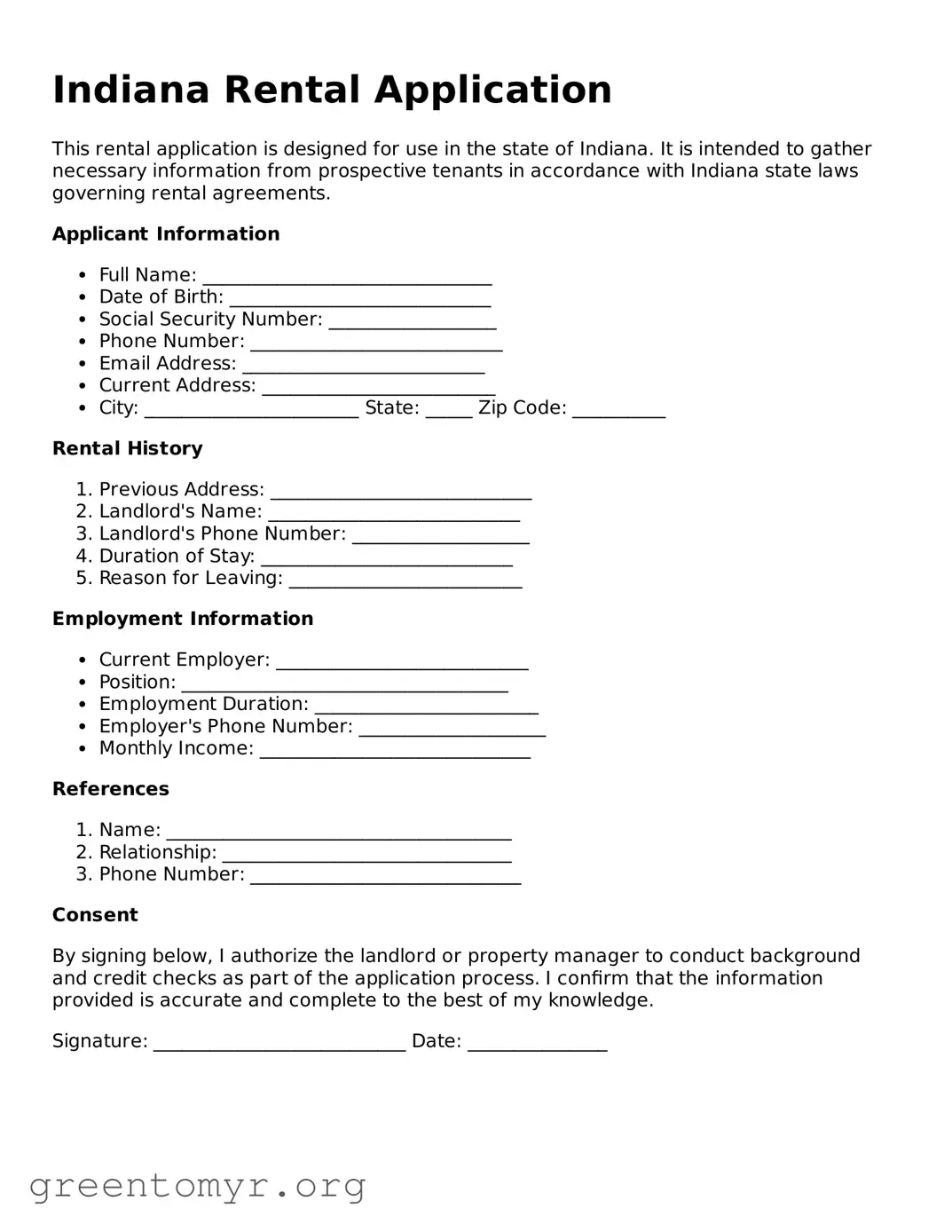
When searching for a new rental home in Indiana, prospective tenants will encounter the Indiana Rental Application form, a crucial step in the leasing process. This form serves as a comprehensive tool for landlords to evaluate potential renters, ensuring that they find responsible tenants for their properties. It typically requests essential information such as the applicant's personal details, employment history, income verification, and rental history. Additionally, applicants may be asked to provide references and consent to background checks, which help landlords assess the reliability and financial stability of a potential tenant. Understanding the components of this form can empower renters to present themselves effectively, increasing their chances of securing the desired rental property. In this article, we will delve into the key sections of the Indiana Rental Application form, offering insights into how to fill it out accurately and what landlords are looking for in a successful application.
Indiana Rental Application
This rental application is designed for use in the state of Indiana. It is intended to gather necessary information from prospective tenants in accordance with Indiana state laws governing rental agreements.
Applicant Information
Rental History
Employment Information
References
Consent
By signing below, I authorize the landlord or property manager to conduct background and credit checks as part of the application process. I confirm that the information provided is accurate and complete to the best of my knowledge.
Signature: ___________________________ Date: _______________
| Fact Name | Details |
|---|---|
| Purpose | The Indiana Rental Application form is used by landlords to screen potential tenants. |
| Information Required | Applicants typically provide personal information, rental history, employment details, and references. |
| Governing Laws | The Indiana Rental Application is governed by Indiana Code Title 32, Article 31, which outlines tenant and landlord rights. |
| Application Fee | Landlords may charge an application fee, but it must be reasonable and disclosed upfront. |
| Fair Housing Compliance | All rental applications must comply with federal and state fair housing laws, ensuring no discrimination based on protected classes. |
Completing the Indiana Rental Application form is a crucial step in securing a rental property. This form collects essential information that landlords need to assess potential tenants. By accurately filling out the application, you can present yourself as a responsible and reliable candidate for tenancy.
The Indiana Rental Application form is a document that prospective tenants fill out to apply for a rental property. It collects important information about the applicant, such as their employment history, rental history, and personal references. Landlords use this form to assess the suitability of applicants and make informed decisions about who to rent to.
When completing the Indiana Rental Application, you will typically need to provide the following information:
Landlords use the information provided in the rental application to evaluate your suitability as a tenant. This evaluation may include checking your credit history, verifying your employment, and contacting your previous landlords. The goal is to ensure that you have a reliable income, a good rental history, and the ability to meet your financial obligations. Your personal information is typically kept confidential and used solely for the purpose of assessing your application.
If your rental application is denied, the landlord is required to provide you with a reason for the denial. Common reasons include poor credit history, insufficient income, or negative references from previous landlords. You have the right to ask for this information, and it can be beneficial to address any issues before reapplying or seeking other rental opportunities. Remember, being denied does not mean you cannot find a rental; it may just require a bit more effort or a different approach.
Yes, you can appeal a rental application denial. If you believe the decision was made in error or if there are extenuating circumstances that were not considered, it is within your rights to discuss this with the landlord. Prepare to provide additional information or documentation that may support your case. While there is no formal process for appeals, open communication can sometimes lead to a reconsideration of your application.
Filling out the Indiana Rental Application form can seem straightforward, but many applicants make common mistakes that can hinder their chances of securing a rental. One frequent error is leaving sections of the form blank. Each part of the application serves a purpose, and landlords often look for complete information to make informed decisions. Omitting details can raise red flags and suggest a lack of attention to detail.
Another common mistake is providing inaccurate or outdated information. Applicants may forget to update their employment status or fail to include a recent address. This can lead to confusion and may even result in the application being rejected. It is essential to double-check all entries for accuracy before submitting the form.
Some applicants fail to include necessary documentation. A rental application typically requires proof of income, references, and identification. Not attaching these documents can delay the process or lead to outright denial. Always ensure that all required paperwork accompanies the application.
Inconsistent information is another pitfall. If an applicant lists one job on the application but provides a different one as a reference, it can create suspicion. Landlords seek consistency to verify the applicant's reliability. Therefore, it is crucial to ensure that all provided information aligns.
Additionally, neglecting to read the application thoroughly can lead to misunderstandings. Some applicants may overlook specific requirements or conditions that could impact their rental agreement. Taking the time to read the entire form carefully can prevent these issues.
Another mistake is failing to communicate effectively. Many applicants do not follow up after submitting their application. A simple call or email to confirm receipt can show interest and professionalism. This step can also clarify any questions the landlord may have about the application.
Finally, rushing through the application process can lead to errors. Some individuals may feel pressured to submit their application quickly, especially in a competitive market. However, taking the time to complete the form accurately can make a significant difference in the outcome. Patience and thoroughness are key to a successful application.
When applying for a rental property in Indiana, the rental application form is just one piece of the puzzle. To ensure a smooth rental process, several other documents often accompany the application. Each of these documents serves a specific purpose, helping landlords make informed decisions while protecting both parties involved.
By preparing these documents alongside the Indiana Rental Application, both landlords and tenants can facilitate a transparent and efficient rental process. Being organized and thorough can lead to a positive renting experience for everyone involved.
Lease Agreement: Like a rental application, a lease agreement outlines the terms and conditions of renting a property. It includes details such as the rental amount, duration of the lease, and responsibilities of both the tenant and landlord.
Employment Verification Form: This document verifies a tenant’s employment status and income, similar to how a rental application assesses financial stability and ability to pay rent.
Credit Report Authorization: Just as a rental application may require a credit check, this authorization allows landlords to review a tenant’s credit history, helping them gauge financial responsibility.
Background Check Consent Form: This form seeks permission to conduct a background check, akin to the information gathered in a rental application to ensure the tenant has a suitable history.
Rental History Verification: Similar to a rental application, this document requests information about a tenant’s previous rental experiences, providing insight into their reliability as a renter.
Guarantor Agreement: If a tenant lacks sufficient income or credit history, a guarantor agreement may be required. It serves a similar purpose to a rental application by assessing the financial backing of the tenant.
Tenant Reference Letter: This letter provides references from previous landlords or employers, much like a rental application that seeks character and reliability information about the applicant.
Move-In Checklist: While this document is used after a rental application is approved, it ensures that the property condition is documented, similar to how a rental application outlines expectations for both parties.
Pet Application Form: If pets are allowed, this form assesses the suitability of a tenant’s pet, similar to how a rental application evaluates the overall suitability of the tenant.
Security Deposit Agreement: This document details the terms for the security deposit, similar to the financial obligations outlined in a rental application.
When filling out the Indiana Rental Application form, it is important to follow specific guidelines to ensure a smooth process. Here are some dos and don'ts to keep in mind:
When it comes to renting a property in Indiana, many people have misconceptions about the rental application process. Understanding the facts can help applicants navigate this important step with confidence. Here are seven common misconceptions:
By understanding these misconceptions, applicants can better prepare themselves for the rental application process in Indiana.
Filling out the Indiana Rental Application form is a crucial step in securing a rental property. Here are key takeaways to keep in mind:
By keeping these points in mind, you can enhance your chances of successfully filling out the Indiana Rental Application form and securing your desired rental property.