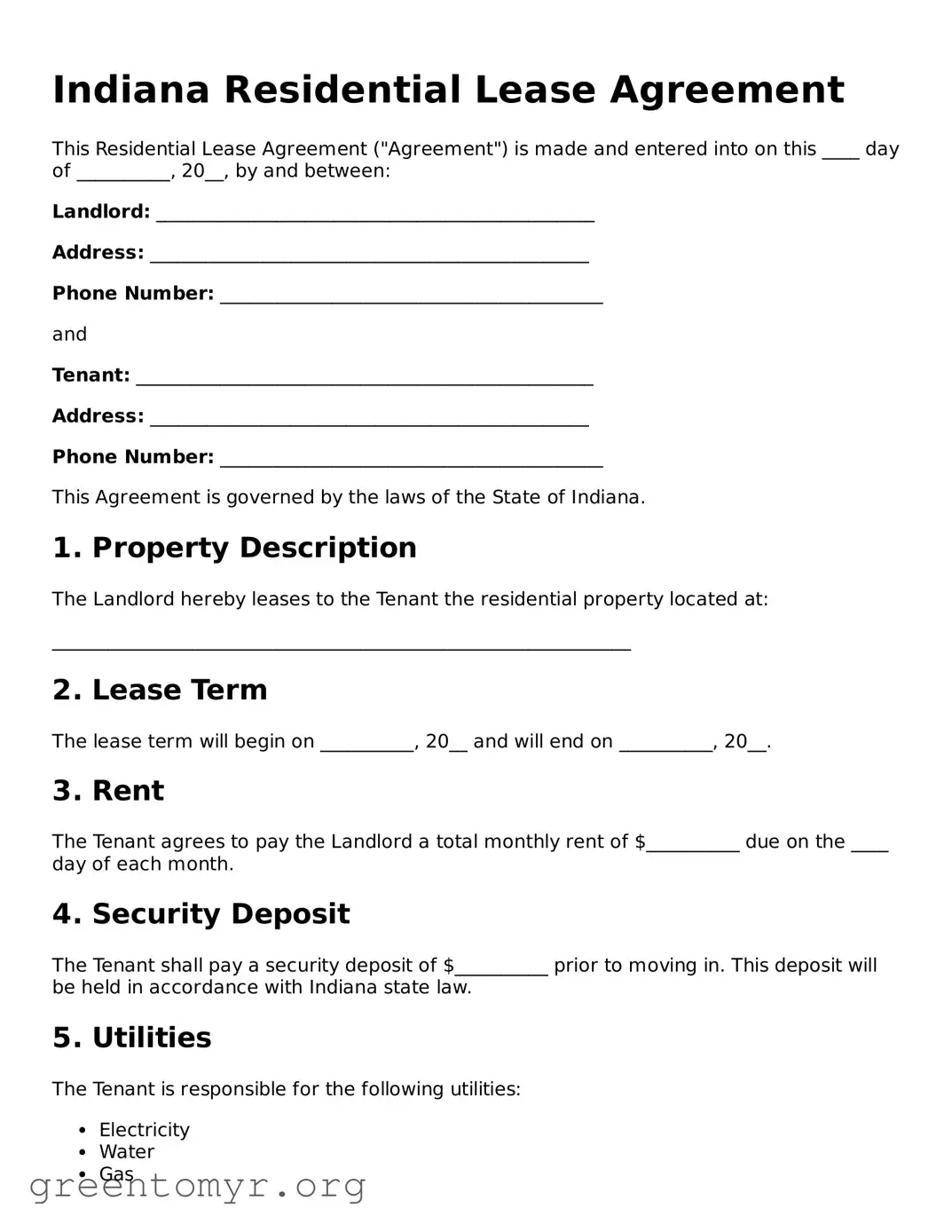
In Indiana, the Residential Lease Agreement serves as a crucial document for both landlords and tenants, outlining the terms and conditions of a rental arrangement. This form typically includes essential details such as the names of the parties involved, the rental property address, and the duration of the lease. Additionally, it specifies the amount of rent due, the due date, and the accepted methods of payment. Security deposits are also addressed, detailing the amount required and the conditions for its return. The agreement further covers maintenance responsibilities, rules regarding pets, and procedures for terminating the lease. By clearly laying out these important elements, the Indiana Residential Lease Agreement helps to prevent misunderstandings and disputes, ensuring a smoother rental experience for both parties. Understanding this document is vital for anyone involved in renting property in the state, as it provides a legal framework that governs the landlord-tenant relationship.
Indiana Residential Lease Agreement
This Residential Lease Agreement ("Agreement") is made and entered into on this ____ day of __________, 20__, by and between:
Landlord: _______________________________________________
Address: _______________________________________________
Phone Number: _________________________________________
and
Tenant: _________________________________________________
Address: _______________________________________________
Phone Number: _________________________________________
This Agreement is governed by the laws of the State of Indiana.
1. Property Description
The Landlord hereby leases to the Tenant the residential property located at:
______________________________________________________________
2. Lease Term
The lease term will begin on __________, 20__ and will end on __________, 20__.
3. Rent
The Tenant agrees to pay the Landlord a total monthly rent of $__________ due on the ____ day of each month.
4. Security Deposit
The Tenant shall pay a security deposit of $__________ prior to moving in. This deposit will be held in accordance with Indiana state law.
5. Utilities
The Tenant is responsible for the following utilities:
6. Maintenance and Repairs
The Tenant agrees to maintain the property in good condition. Any necessary repairs should be reported to the Landlord immediately.
7. Pets
Pets are allowed / not allowed (circle one). If allowed, the Tenant must pay a non-refundable pet deposit of $__________.
8. Termination
Either party may terminate this Agreement by providing a written notice of ____ days prior to the desired termination date.
9. Governing Law
This Agreement shall be governed by and construed in accordance with the laws of the State of Indiana.
10. Signatures
By signing below, both parties agree to the terms outlined in this Agreement.
Landlord Signature: ___________________________ Date: __________
Tenant Signature: ____________________________ Date: __________
| Fact Name | Details |
|---|---|
| Governing Law | The Indiana Residential Lease Agreement is governed by Indiana Code Title 32, Article 31. |
| Lease Duration | The lease can be for a fixed term or month-to-month, depending on the agreement between the landlord and tenant. |
| Security Deposit | Indiana law allows landlords to charge a security deposit, typically not exceeding one month's rent. |
| Notice Requirements | Landlords must provide tenants with a written notice of any lease violations, allowing time for correction. |
| Habitability Standards | Landlords are required to maintain rental properties in a habitable condition, ensuring basic living standards. |
| Termination Notice | For month-to-month leases, either party must give at least 30 days' notice to terminate the agreement. |
Filling out the Indiana Residential Lease Agreement form is an important step in establishing a clear understanding between landlords and tenants. This process ensures that both parties are aware of their rights and responsibilities. To complete the form accurately, follow the steps outlined below.
Once the form is completed, both the landlord and tenant should retain a copy for their records. This will help prevent misunderstandings and provide a reference point throughout the lease term.
The Indiana Residential Lease Agreement form is a legal document used between landlords and tenants to outline the terms and conditions of renting a residential property. This agreement specifies the rights and responsibilities of both parties, including rent payment details, lease duration, maintenance obligations, and rules regarding the property. It is essential for establishing clear expectations and protecting the interests of both landlords and tenants.
A comprehensive Indiana Residential Lease Agreement should include the following key components:
Changes to the Indiana Residential Lease Agreement can be made through mutual consent of both parties. It is advisable to document any modifications in writing and have both the landlord and tenant sign the updated agreement. This ensures clarity and helps prevent disputes in the future. Verbal agreements may not hold up in legal situations, so written documentation is crucial.
If a tenant violates the lease agreement, the landlord has several options. Common violations include late rent payments, unauthorized pets, or property damage. The landlord may choose to:
It is important for landlords to follow the legal process for eviction to avoid potential disputes or claims of wrongful eviction.
Filling out the Indiana Residential Lease Agreement form can be a straightforward process, but several common mistakes can lead to confusion or complications down the line. Understanding these pitfalls can help ensure that both landlords and tenants have a smooth leasing experience.
One frequent error is the omission of essential tenant and landlord information. Both parties must provide their full names, addresses, and contact details. Missing this information can lead to disputes over responsibilities or communication issues. It’s crucial to double-check that all names are spelled correctly and that contact information is up to date.
Another common mistake involves failing to specify the lease term clearly. The agreement should outline the start and end dates of the lease. If this information is vague or missing, it can create uncertainty regarding the duration of the tenancy. Clarity in the lease term helps both parties understand their commitments and rights.
People often overlook the importance of detailing the rental amount and payment terms. The lease should clearly state the monthly rent, the due date, and acceptable payment methods. Without this information, misunderstandings about payment schedules may arise, potentially leading to late fees or eviction notices.
Additionally, many individuals neglect to read through the entire lease before signing. This oversight can result in agreeing to terms that may not be fully understood. Tenants should take the time to review all clauses, including those related to maintenance responsibilities, security deposits, and rules regarding pets or guests. Understanding these terms can prevent future conflicts.
Lastly, failing to document any agreed-upon modifications or repairs can create issues later. If there are changes to the property or the agreement that both parties have discussed, these should be noted in writing. This documentation serves as a reference point and can protect both parties if disagreements arise about the condition of the property or the terms of the lease.
When entering into a rental agreement in Indiana, several additional forms and documents may be required to ensure clarity and legal compliance. These documents provide essential details and protections for both landlords and tenants. Below is a list of commonly used forms that accompany the Indiana Residential Lease Agreement.
Using these documents in conjunction with the Indiana Residential Lease Agreement can facilitate a smoother rental experience. They help clarify expectations and protect the interests of both landlords and tenants, fostering a better rental relationship.
When filling out the Indiana Residential Lease Agreement form, it’s important to approach the task with care. Here are some helpful tips on what to do and what to avoid:
Many people have misunderstandings about the Indiana Residential Lease Agreement form. Here are five common misconceptions:
Each lease agreement is unique and tailored to the specific rental property and the terms agreed upon by the landlord and tenant. The Indiana Residential Lease Agreement includes specific provisions that may not be found in other agreements.
While verbal agreements can be made, they are not legally binding. A written lease agreement provides clear documentation of the terms and protects both parties in case of disputes.
In Indiana, landlords often require a security deposit. This deposit serves to cover any potential damages or unpaid rent, and its amount must be clearly stated in the lease.
Breaking a lease can result in financial penalties and legal repercussions. Tenants should understand the terms of the lease and any potential consequences before making such a decision.
Landlords must provide proper notice before entering a tenant's property, except in emergencies. The lease agreement should outline the rules regarding property access.
When filling out and using the Indiana Residential Lease Agreement form, there are several important aspects to consider. Here are key takeaways to ensure a smooth process:
By paying attention to these key points, both landlords and tenants can create a clear and effective lease agreement that protects their rights and responsibilities.