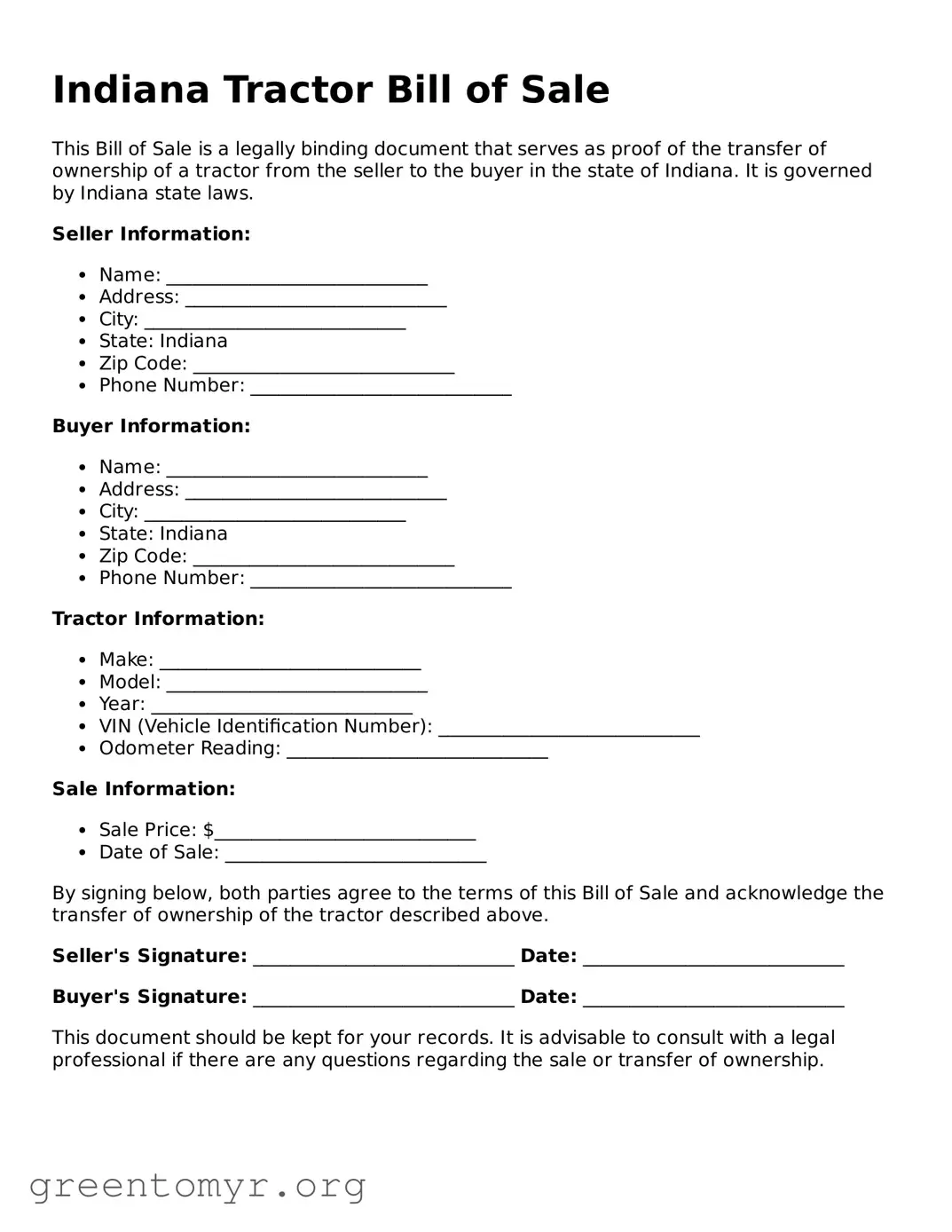
When buying or selling a tractor in Indiana, having a properly completed Tractor Bill of Sale form is essential. This document serves as proof of the transaction and outlines critical details such as the buyer's and seller's information, the tractor's make, model, year, and Vehicle Identification Number (VIN). It also specifies the sale price and any terms of the sale, ensuring both parties are clear about their obligations. Including the date of the transaction is vital for record-keeping purposes. This form not only protects the interests of both the buyer and the seller but also facilitates the transfer of ownership, making it a crucial step in the process. Without this documentation, disputes may arise, potentially complicating future transactions or ownership claims.
Indiana Tractor Bill of Sale
This Bill of Sale is a legally binding document that serves as proof of the transfer of ownership of a tractor from the seller to the buyer in the state of Indiana. It is governed by Indiana state laws.
Seller Information:
Buyer Information:
Tractor Information:
Sale Information:
By signing below, both parties agree to the terms of this Bill of Sale and acknowledge the transfer of ownership of the tractor described above.
Seller's Signature: ____________________________ Date: ____________________________
Buyer's Signature: ____________________________ Date: ____________________________
This document should be kept for your records. It is advisable to consult with a legal professional if there are any questions regarding the sale or transfer of ownership.
| Fact Name | Description |
|---|---|
| Purpose | The Indiana Tractor Bill of Sale form is used to document the sale of a tractor between a buyer and a seller. |
| Governing Law | This form is governed by Indiana state law regarding the sale of personal property. |
| Identification | The form requires identification details of both the buyer and the seller, including names and addresses. |
| Tractor Details | It includes specific information about the tractor, such as make, model, year, and Vehicle Identification Number (VIN). |
| Purchase Price | The agreed purchase price must be clearly stated in the form. |
| Signatures | Both parties must sign the form to make the sale official. |
| Date of Sale | The date of the transaction is also required on the form. |
| Notarization | While notarization is not always required, it can add an extra layer of legitimacy to the sale. |
| Record Keeping | It is important for both parties to keep a copy of the completed bill of sale for their records. |
| Transfer of Ownership | The form serves as proof of the transfer of ownership from the seller to the buyer. |
After obtaining the Indiana Tractor Bill of Sale form, you will need to complete it accurately to ensure a smooth transfer of ownership. This document serves as proof of the sale and includes essential details about the tractor and the parties involved. Follow the steps below to fill out the form correctly.
Once the form is filled out, both parties should keep a copy for their records. This document will be essential for any future transactions or registrations related to the tractor.
The Indiana Tractor Bill of Sale form is a legal document used to record the sale and transfer of ownership of a tractor in the state of Indiana. This form provides important details about the transaction, including information about the buyer, seller, and the tractor being sold.
A Bill of Sale serves several important purposes. It protects both the buyer and seller by documenting the terms of the sale. This form can also serve as proof of ownership for the buyer and may be required for registration purposes. Additionally, it can help resolve any disputes that may arise after the sale.
The Indiana Tractor Bill of Sale typically requires the following information:
While notarization is not strictly required for the Bill of Sale in Indiana, it is highly recommended. Having the document notarized adds an extra layer of authenticity and can help protect against potential disputes in the future.
Yes, you can use a generic Bill of Sale form, but it is advisable to use the specific Indiana Tractor Bill of Sale form. This ensures that all necessary information is included and complies with state laws regarding the sale of agricultural equipment.
After completing the Bill of Sale, both the buyer and seller should keep a copy for their records. The buyer may need to present the Bill of Sale when registering the tractor with the Indiana Bureau of Motor Vehicles (BMV) or when applying for title transfer.
There are typically no fees associated with creating a Bill of Sale itself. However, the buyer may incur fees when registering the tractor or transferring the title at the BMV. It's important to check with the BMV for any applicable fees related to these processes.
If the tractor has a lien, it is crucial to address this before completing the sale. The seller should ensure that the lien is paid off and released prior to transferring ownership. The Bill of Sale should indicate whether the tractor is sold free of any liens or encumbrances.
Once the Bill of Sale is signed by both parties, it generally represents a binding agreement. However, if both parties agree to cancel the sale, they can do so. It's best to document this agreement in writing to avoid any misunderstandings in the future.
The Indiana Tractor Bill of Sale form can often be obtained from various sources, including online legal document providers, local agricultural agencies, or through the Indiana Bureau of Motor Vehicles. Ensure that you are using the most current version of the form to comply with state requirements.
Filling out the Indiana Tractor Bill of Sale form can be straightforward, but many people make common mistakes that can lead to complications later. One frequent error is failing to include all necessary information. Buyers and sellers must provide details such as the tractor's make, model, year, and Vehicle Identification Number (VIN). Omitting even one piece of information can render the document incomplete.
Another mistake is not accurately stating the sale price. It's crucial to list the correct amount for the transaction. Misrepresenting the price can lead to issues with taxes or future disputes. Always double-check the figures to ensure they reflect the actual agreement.
Many individuals overlook the importance of signatures. Both the buyer and the seller must sign the form for it to be valid. Without these signatures, the document may not hold up in legal situations. Additionally, some people forget to include the date of the transaction, which is essential for record-keeping and legal purposes.
Another common oversight is neglecting to provide contact information. Including phone numbers and addresses for both parties helps facilitate communication if any issues arise after the sale. This information is vital for both parties to have a reliable way to reach each other.
Some individuals use outdated forms or templates. Always ensure that you are using the most current version of the Indiana Tractor Bill of Sale. Using an outdated form can lead to complications or rejection by the Indiana Bureau of Motor Vehicles (BMV).
People sometimes fail to check for errors after completing the form. Simple typos or incorrect information can cause delays or problems down the line. Taking a moment to review the document can save a lot of time and hassle later.
Another mistake is not understanding the implications of the bill of sale. This document serves as a legal record of the transaction. If the terms of the sale are not clear, it can lead to disputes. Make sure all terms are clearly stated and understood by both parties.
Some individuals forget to make copies of the completed form. Keeping a copy for personal records is essential. This ensures that both parties have proof of the transaction and can refer back to it if necessary.
Lastly, people may not be aware of the local laws regarding the sale of agricultural equipment. Each state has its own regulations, and understanding these can prevent future legal issues. Researching state-specific requirements can provide peace of mind during the transaction.
When buying or selling a tractor in Indiana, several forms and documents can accompany the Tractor Bill of Sale. These documents help ensure that the transaction is clear and legally binding. Below is a list of commonly used forms that may be necessary.
Using these forms alongside the Indiana Tractor Bill of Sale can help facilitate a smooth transaction. Always ensure that each document is completed accurately to avoid any future complications.
The Tractor Bill of Sale form is an important document that serves as proof of the sale and transfer of ownership of a tractor. Several other documents share similar functions, providing legal confirmation of transactions and ownership transfers. Here are ten documents that are similar to the Tractor Bill of Sale:
Each of these documents serves a critical role in ensuring that ownership is legally recognized and that both parties are protected during the transaction process.
When filling out the Indiana Tractor Bill of Sale form, attention to detail is crucial. Here are five essential do's and don'ts to guide you through the process.
When it comes to the Indiana Tractor Bill of Sale form, misunderstandings can lead to confusion. Here are six common misconceptions that people often have about this important document:
Understanding these misconceptions can help ensure that you approach the process of buying or selling a tractor in Indiana with confidence and clarity. A well-prepared bill of sale is not just a formality; it is a vital part of the transaction that protects both parties involved.
When filling out and using the Indiana Tractor Bill of Sale form, several important points should be considered to ensure a smooth transaction. Below are key takeaways:
By following these guidelines, individuals can ensure that their use of the Indiana Tractor Bill of Sale form is effective and legally sound.