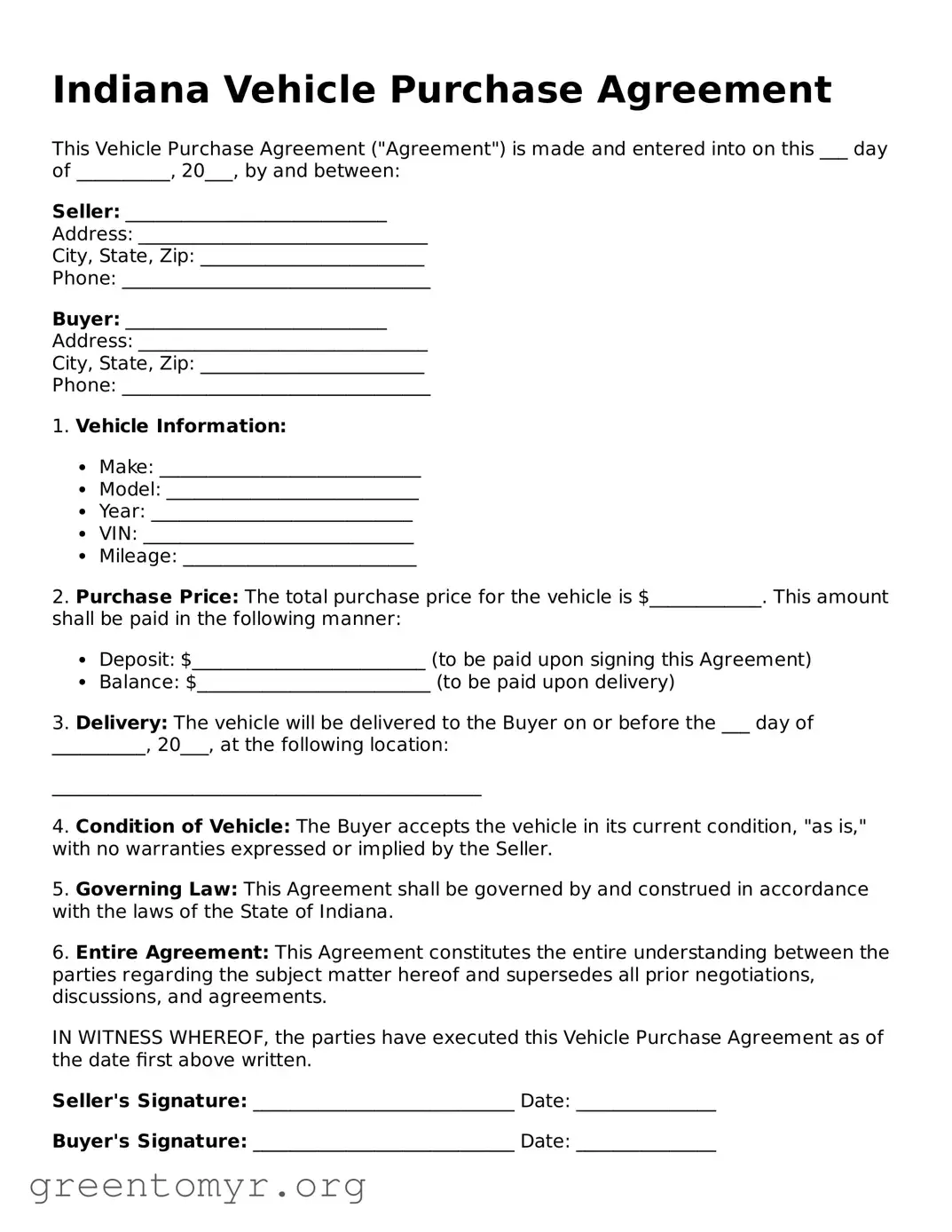
When purchasing a vehicle in Indiana, understanding the Vehicle Purchase Agreement form is crucial for both buyers and sellers. This document serves as a binding contract that outlines the essential details of the transaction, ensuring that both parties are on the same page. Key components of the form include the buyer's and seller's information, a detailed description of the vehicle, including make, model, year, and Vehicle Identification Number (VIN), as well as the agreed-upon purchase price. Additionally, the form addresses payment terms, whether the buyer will be paying in full or financing the purchase. It also includes sections for any warranties or guarantees provided by the seller, as well as disclosures regarding the vehicle’s condition and history. By carefully reviewing and completing the Vehicle Purchase Agreement, both parties can protect their interests and facilitate a smooth transfer of ownership.
Indiana Vehicle Purchase Agreement
This Vehicle Purchase Agreement ("Agreement") is made and entered into on this ___ day of __________, 20___, by and between:
Seller: ____________________________
Address: _______________________________
City, State, Zip: ________________________
Phone: _________________________________
Buyer: ____________________________
Address: _______________________________
City, State, Zip: ________________________
Phone: _________________________________
1. Vehicle Information:
2. Purchase Price: The total purchase price for the vehicle is $____________. This amount shall be paid in the following manner:
3. Delivery: The vehicle will be delivered to the Buyer on or before the ___ day of __________, 20___, at the following location:
______________________________________________
4. Condition of Vehicle: The Buyer accepts the vehicle in its current condition, "as is," with no warranties expressed or implied by the Seller.
5. Governing Law: This Agreement shall be governed by and construed in accordance with the laws of the State of Indiana.
6. Entire Agreement: This Agreement constitutes the entire understanding between the parties regarding the subject matter hereof and supersedes all prior negotiations, discussions, and agreements.
IN WITNESS WHEREOF, the parties have executed this Vehicle Purchase Agreement as of the date first above written.
Seller's Signature: ____________________________ Date: _______________
Buyer's Signature: ____________________________ Date: _______________
| Fact Name | Description |
|---|---|
| Purpose | The Indiana Vehicle Purchase Agreement form documents the sale of a vehicle between a buyer and a seller. |
| Governing Law | This agreement is governed by Indiana state law, specifically Indiana Code Title 26, Article 2. |
| Parties Involved | The agreement includes information about both the buyer and the seller, including names and addresses. |
| Vehicle Information | Details such as make, model, year, and Vehicle Identification Number (VIN) must be included. |
| Purchase Price | The total purchase price must be clearly stated in the agreement. |
| Payment Terms | The form should specify the payment method and any payment schedule if applicable. |
| Condition of Vehicle | The agreement may include a section on the condition of the vehicle, noting if it is sold "as-is." |
| Signatures | Both parties must sign the agreement for it to be legally binding. |
| Notarization | While notarization is not required, it can add an extra layer of authenticity to the agreement. |
| Record Keeping | Both the buyer and seller should keep a copy of the signed agreement for their records. |
After obtaining the Indiana Vehicle Purchase Agreement form, it is important to fill it out accurately to ensure a smooth transaction. This form will require specific information about both the buyer and the seller, as well as details about the vehicle being purchased. Follow the steps below to complete the form correctly.
Once the form is completed, ensure that both parties retain a copy for their records. This document serves as a formal record of the transaction and may be necessary for future reference, including vehicle registration and title transfer.
The Indiana Vehicle Purchase Agreement form is a legal document that outlines the terms and conditions of a vehicle sale between a buyer and a seller in Indiana. This form includes essential details such as the vehicle's identification number (VIN), make, model, year, purchase price, and any warranties or conditions agreed upon by both parties. It serves to protect the interests of both the buyer and the seller by providing a clear record of the transaction.
Both the buyer and the seller should complete the Vehicle Purchase Agreement. It is crucial for anyone involved in the sale or purchase of a vehicle in Indiana to have this document. This includes private sellers, dealerships, and individuals purchasing from family or friends. Having a signed agreement helps ensure that both parties understand their obligations and rights regarding the transaction.
When filling out the Vehicle Purchase Agreement, include the following key information:
Including these details helps prevent misunderstandings and provides a clear reference for both parties.
While the Vehicle Purchase Agreement is not legally required for all vehicle sales in Indiana, it is highly recommended. Having a written agreement can provide legal protection in case of disputes. It also helps establish proof of ownership and the terms of the sale. For transactions involving dealerships, a purchase agreement is typically part of the sales process. For private sales, while not mandatory, it is a wise step to take.
Completing the Indiana Vehicle Purchase Agreement form can be straightforward, but several common mistakes often arise. One frequent error is failing to provide accurate information about the vehicle. This includes the Vehicle Identification Number (VIN), make, model, and year. Inaccuracies can lead to complications during the registration process and may delay ownership transfer.
Another common mistake involves the buyer’s and seller’s signatures. Both parties must sign the agreement for it to be valid. Omitting one of the signatures can render the document ineffective, causing potential disputes later. It’s essential to ensure that all required signatures are present before submitting the form.
People often overlook the importance of filling in the purchase price correctly. Misstating the amount can lead to issues with taxes and registration fees. It is crucial to double-check that the price matches the agreed-upon amount between the buyer and seller. This ensures that all financial obligations are clear and documented.
Additionally, failing to include the date of the transaction is a mistake that can complicate matters. The date is vital for establishing when the sale occurred, which can affect warranty claims and insurance coverage. Always remember to date the agreement accurately.
Buyers sometimes neglect to review the terms of the sale. Understanding the conditions, such as whether the vehicle is being sold "as-is" or if there are any warranties, is crucial. Ignoring these details can lead to misunderstandings or unexpected expenses down the line.
Lastly, individuals may forget to keep a copy of the completed agreement for their records. Retaining a copy is essential for both parties, as it serves as proof of the transaction. Without a copy, resolving any future disputes can become significantly more challenging.
When purchasing a vehicle in Indiana, several important documents accompany the Vehicle Purchase Agreement. Each of these forms serves a specific purpose in the transaction, ensuring that both the buyer and seller are protected and informed. Here are five key documents often used in conjunction with the Vehicle Purchase Agreement:
Understanding these documents can help facilitate a smoother vehicle purchase process in Indiana. Each form plays a vital role in ensuring compliance with state laws and protecting the rights of both the buyer and the seller.
Sales Contract: Like a Vehicle Purchase Agreement, a sales contract outlines the terms of a sale between a buyer and a seller. It includes details such as price, payment terms, and delivery conditions.
Lease Agreement: This document is similar in that it defines the terms under which a vehicle can be used. It specifies the duration of the lease, monthly payments, and responsibilities for maintenance.
Bill of Sale: A bill of sale serves as proof of the transaction. It includes information about the vehicle, the buyer, and the seller, confirming that the sale has occurred.
Financing Agreement: This document details the terms of a loan taken to purchase a vehicle. It covers the loan amount, interest rate, repayment schedule, and consequences of default.
Title Transfer Document: Similar to a Vehicle Purchase Agreement, this document is necessary to officially transfer ownership of the vehicle from the seller to the buyer.
Warranty Agreement: A warranty agreement provides coverage for repairs or replacements of parts. It outlines what is covered and for how long, similar to how a Vehicle Purchase Agreement specifies the condition of the vehicle.
Service Agreement: This document outlines the terms for vehicle maintenance services. It may include details on costs, frequency of service, and responsibilities, much like the obligations in a purchase agreement.
Insurance Policy: An insurance policy is similar in that it provides protection for the vehicle. It outlines coverage details, premiums, and terms, ensuring the buyer is aware of their responsibilities.
Disclosure Statement: This document informs the buyer of any issues with the vehicle, such as past accidents or repairs. It is similar to the transparency required in a Vehicle Purchase Agreement.
Trade-In Agreement: If a buyer is trading in a vehicle, this document outlines the terms of the trade, including the value of the trade-in and how it affects the purchase price of the new vehicle.
When filling out the Indiana Vehicle Purchase Agreement form, it's important to follow certain guidelines to ensure accuracy and compliance. Here are ten do's and don'ts to keep in mind:
Understanding the Indiana Vehicle Purchase Agreement form is crucial for anyone involved in buying or selling a vehicle in the state. However, several misconceptions often arise regarding this document. Below are five common misconceptions, along with clarifications for each.
By addressing these misconceptions, individuals can better navigate the vehicle buying and selling process in Indiana, ensuring a smoother transaction for all parties involved.
When dealing with the Indiana Vehicle Purchase Agreement form, there are several important points to keep in mind. These takeaways can help ensure a smooth transaction when buying or selling a vehicle.
By following these key takeaways, both buyers and sellers can navigate the Indiana Vehicle Purchase Agreement form with confidence.