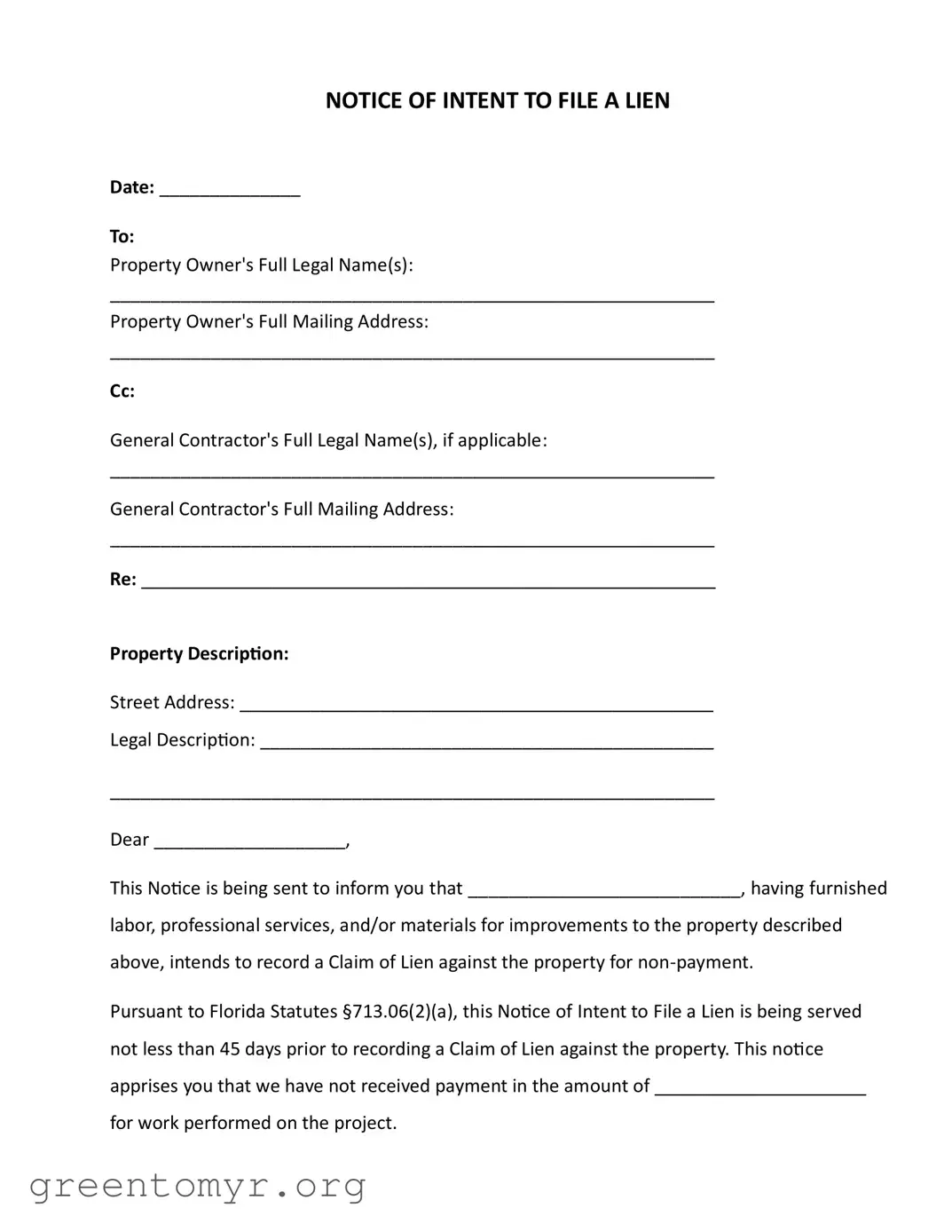
The Intent to Lien Florida form serves as a crucial document for contractors, subcontractors, and suppliers who have not received payment for their services or materials provided for property improvements. This form is a formal notice indicating the sender's intention to file a lien against the property due to non-payment. It includes essential details such as the date of the notice, the names and addresses of the property owner and general contractor, if applicable, as well as a description of the property involved. The sender must specify the amount owed for the work completed, which is critical for establishing the basis of the lien claim. Under Florida law, this notice must be served at least 45 days before filing a Claim of Lien, providing the property owner with an opportunity to respond. If the property owner fails to make payment or provide a satisfactory response within 30 days, the sender may proceed to record the lien. This action could lead to foreclosure proceedings, making the property subject to legal claims and potentially resulting in additional costs for the owner. The form also includes a certificate of service section, which confirms that the notice was delivered to the appropriate parties. Overall, the Intent to Lien Florida form is an essential tool for ensuring that those who contribute to property improvements are compensated for their work.
NOTICE OF INTENT TO FILE A LIEN
Date: ______________
To:
Property Owner's Full Legal Name(s):
____________________________________________________________
Property Owner's Full Mailing Address:
____________________________________________________________
Cc:
General Contractor's Full Legal Name(s), if applicable:
____________________________________________________________
General Contractor's Full Mailing Address:
____________________________________________________________
Re: _________________________________________________________
Property Description:
Street Address: _______________________________________________
Legal Description: _____________________________________________
____________________________________________________________
Dear ___________________,
This Notice is being sent to inform you that ___________________________, having furnished
labor, professional services, and/or materials for improvements to the property described above, intends to record a Claim of Lien against the property for
Pursuant to Florida Statutes §713.06(2)(a), this Notice of Intent to File a Lien is being served not less than 45 days prior to recording a Claim of Lien against the property. This notice apprises you that we have not received payment in the amount of _____________________
for work performed on the project.

As per Florida Statutes §713.06(2)(b), failure to make payment in full or provide a satisfactory response within 30 days may result in the recording of a lien on your property. If the lien is recorded, your property could be subject to foreclosure proceedings, and you could be responsible for attorney fees, court costs, and other expenses.
No waivers or releases of lien have been received that would affect the validity of this lien claim.
We would prefer to avoid this action and request your immediate attention to this matter. Please contact us at your earliest convenience to arrange payment and avoid further action.
Thank you for your prompt attention to this matter.
Sincerely,
_________________________ [Your Name]
_________________________ [Your Title]
_________________________ [Your Phone Number]
_________________________ [Your Email Address]
CERTIFICATE OF SERVICE
I certify that a true and correct copy of the Notice of Intent to File a Lien was served on
______________ to ____________________________ at
__________________________________________ by:
□Certified Mail, Return Receipt Requested
□Registered Mail
□Hand Delivery
□Delivery by a Process Server
□Publication
____________________________ |
____________________________ |
Name |
Signature |
| Fact Name | Details |
|---|---|
| Purpose | The Intent to Lien form notifies property owners of a contractor's intention to file a lien for unpaid work. |
| Governing Law | This form is governed by Florida Statutes §713.06. |
| Notice Period | It must be served at least 45 days before recording a Claim of Lien. |
| Response Time | Property owners have 30 days to respond before a lien may be recorded. |
| Consequences of Non-Payment | Failure to pay may lead to foreclosure proceedings and additional costs. |
| Required Information | The form requires details such as the property owner's name, address, and the amount owed. |
| Delivery Methods | Notice can be served via certified mail, registered mail, hand delivery, or other specified methods. |
| Certificate of Service | A certification section confirms that the notice was properly served to the property owner. |
Completing the Intent to Lien form in Florida is a critical step if you have not received payment for your services or materials provided. This form serves as a formal notice to the property owner, alerting them of your intention to file a lien. Following these steps carefully will help ensure that your notice is completed correctly and submitted in a timely manner.
After filling out the form, ensure that it is sent to the property owner and any relevant parties as specified. Keeping a copy for your records is advisable. Timely action is essential to protect your rights and interests in this matter.
The Intent To Lien Florida form is a legal notice that informs property owners of an intention to file a lien against their property due to non-payment for services or materials provided. It serves as a warning and gives the property owner a chance to settle the payment before further action is taken.
This form is typically used by contractors, subcontractors, or suppliers who have not received payment for work completed or materials supplied. If you have provided services or materials for property improvements and have not been paid, this form is relevant for you.
The form requires several pieces of information, including:
According to Florida law, a Notice of Intent to File a Lien must be served at least 45 days before recording the actual lien. This notice gives the property owner time to respond and settle the payment issue.
If the property owner fails to respond within 30 days of receiving the notice, the lien can be recorded. This could lead to foreclosure proceedings on the property, and the owner may also be responsible for additional costs like attorney fees and court expenses.
Yes, the lien can be avoided if the property owner makes the payment or provides a satisfactory response within the specified time frames. It’s always best to address the matter promptly to prevent further legal action.
The notice can be sent via various methods, including certified mail, registered mail, hand delivery, or through a process server. It's important to keep a record of how the notice was served.
If you receive this notice, it’s crucial to take it seriously. Review the details, confirm if the claim is valid, and respond promptly. Contact the sender to discuss payment options and avoid any potential lien on your property.
A lien can significantly impact your property. It may prevent you from selling or refinancing your property until the debt is settled. Additionally, if the lien is enforced, it could lead to foreclosure, meaning the property may be sold to satisfy the debt.
Filling out the Intent to Lien form in Florida requires careful attention to detail. One common mistake is failing to provide the property owner's full legal name. This information is crucial, as inaccuracies can lead to complications in the lien process. Always ensure that the name matches the official records.
Another frequent error involves the mailing address. Omitting or incorrectly entering the property owner's mailing address can result in the notice not reaching the intended recipient. This can delay the process and may even invalidate the lien. Double-checking the address is essential.
People often neglect to include the amount owed for the work performed. This figure should be clearly stated in the notice. Without it, the property owner may not understand the reason for the lien, which could lead to confusion and disputes. Clarity in communication is key.
Additionally, many individuals forget to include the date on the form. The date is significant as it marks the beginning of the required notice period. Without it, the timeline for potential actions becomes unclear, which can complicate matters down the line.
Some individuals also overlook the need to certify the service of the notice. This certification proves that the property owner received the notice, which is a critical step in the lien process. Failing to complete this section can lead to challenges in enforcing the lien.
Lastly, individuals sometimes forget to sign the document. A signature is necessary to validate the notice. Without it, the form may be considered incomplete, which could jeopardize the entire lien process. Ensuring all sections are properly filled out and signed is crucial for a successful filing.
The Intent to Lien form is an important document in Florida that serves as a notice to property owners about an impending lien due to non-payment for services rendered. Alongside this form, several other documents are commonly used to ensure that all parties are aware of their rights and obligations. Here are a few key forms that often accompany the Intent to Lien:
Understanding these related forms can help property owners and contractors navigate the complexities of payment disputes and lien processes. Proper documentation ensures that all parties are protected and informed throughout the project lifecycle.
When filling out the Intent To Lien Florida form, it’s important to take care and ensure accuracy. Here’s a list of things you should and shouldn’t do:
Following these guidelines can help ensure that your notice is valid and effective. Take the time to review your form before submission to avoid any potential issues.
Here are six common misconceptions about the Intent to Lien Florida form:
When dealing with the Intent To Lien Florida form, it is essential to understand its purpose and the steps involved. Here are some key takeaways to consider: