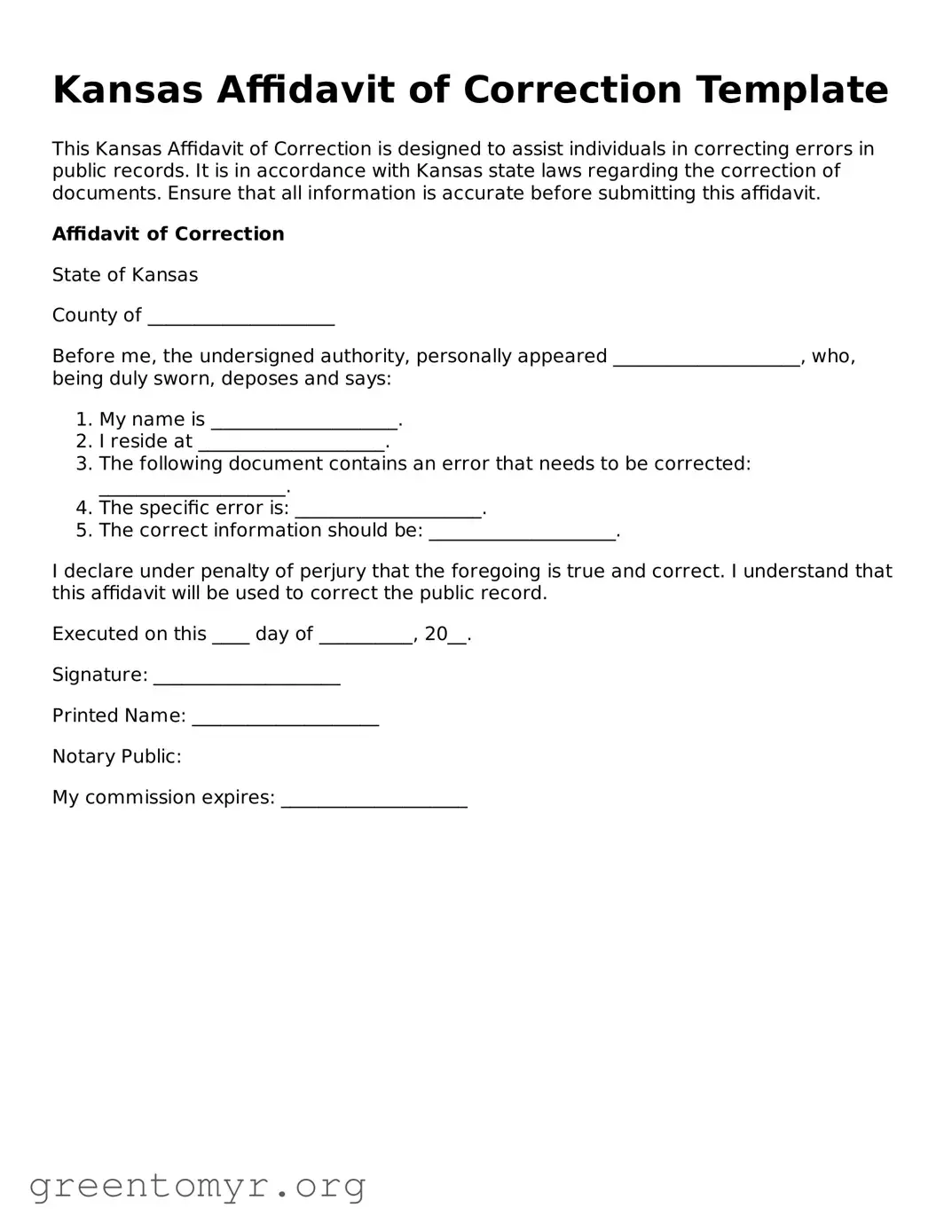
The Kansas Affidavit of Correction form serves as a crucial tool for individuals seeking to rectify errors in official documents. This form is particularly useful when discrepancies arise in vital records, such as birth certificates, marriage licenses, or property deeds. By providing a structured way to address and amend inaccuracies, the Affidavit of Correction ensures that the information reflects the true circumstances. It requires specific details about the original document, including the nature of the error and the correct information that should replace it. Once completed, this affidavit must be signed in the presence of a notary public, underscoring the importance of authenticity and verification in the correction process. Understanding how to properly fill out and submit this form can save time and prevent future complications related to misrepresented information.
Kansas Affidavit of Correction Template
This Kansas Affidavit of Correction is designed to assist individuals in correcting errors in public records. It is in accordance with Kansas state laws regarding the correction of documents. Ensure that all information is accurate before submitting this affidavit.
Affidavit of Correction
State of Kansas
County of ____________________
Before me, the undersigned authority, personally appeared ____________________, who, being duly sworn, deposes and says:
I declare under penalty of perjury that the foregoing is true and correct. I understand that this affidavit will be used to correct the public record.
Executed on this ____ day of __________, 20__.
Signature: ____________________
Printed Name: ____________________
Notary Public:
My commission expires: ____________________
| Fact Name | Description |
|---|---|
| Purpose | The Kansas Affidavit of Correction is used to correct errors in recorded documents, such as deeds or mortgages. |
| Governing Law | This form is governed by Kansas Statutes Annotated (K.S.A.) 58-2220. |
| Eligibility | Any party involved in the original document can file an affidavit of correction. |
| Required Information | The form must include details of the original document, the specific errors, and the correct information. |
| Signature Requirement | The affidavit must be signed by the person making the correction, often in the presence of a notary public. |
| Filing Process | Once completed, the affidavit must be filed with the county register of deeds where the original document was recorded. |
| Effectiveness | The correction takes effect upon filing and is intended to clarify the record for future reference. |
| Impact on Original Document | The original document remains in effect; the affidavit serves only to correct specific errors. |
| Cost | Filing fees may apply, and these can vary by county. |
| Public Access | Once filed, the affidavit becomes part of the public record and can be accessed by anyone. |
After you have gathered the necessary information, you are ready to fill out the Kansas Affidavit of Correction form. This document will help you correct any errors in your official records. Make sure to complete each section carefully to ensure accuracy.
Once you have completed the form, review it to ensure all information is accurate. After that, you will need to submit the affidavit to the appropriate office for processing.
The Kansas Affidavit of Correction form is a legal document used to correct errors in public records. This may include mistakes in property deeds, marriage licenses, or other official documents. It serves to clarify the original intent and ensure that public records are accurate.
Any individual or entity that identifies an error in a public record can file an Affidavit of Correction. This includes property owners, spouses, or representatives of organizations. It's essential that the person filing has a legitimate interest in the document being corrected.
The Affidavit of Correction can address various types of errors, such as:
To complete the Kansas Affidavit of Correction form, follow these steps:
The completed Affidavit of Correction should be submitted to the office that maintains the original public record. This is typically the county clerk or register of deeds office. Make sure to keep a copy for your records.
Yes, there may be a filing fee associated with submitting the Affidavit of Correction. Fees can vary by county, so it's best to check with the local office for the exact amount. Payment methods may also differ, so confirm those details as well.
The processing time can vary depending on the county and the volume of submissions. Generally, it may take anywhere from a few days to a couple of weeks. It's advisable to follow up with the office if you do not receive confirmation within a reasonable timeframe.
If your Affidavit of Correction is denied, you will typically receive a notice explaining the reasons. You may have the option to appeal the decision or correct any issues in your submission. Consulting with a legal professional may be beneficial in this situation.
Filling out the Kansas Affidavit of Correction form can be a straightforward process, but many individuals make common mistakes that can lead to delays or complications. Understanding these mistakes can help ensure that the form is completed accurately and efficiently.
One frequent error is failing to provide complete information. Each section of the form requires specific details, and omitting any part can render the affidavit invalid. It is essential to review the form thoroughly before submission to ensure that all required fields are filled out.
Another common mistake is using incorrect or outdated information. When correcting a document, it is crucial to ensure that the information being provided reflects the most current and accurate data. Double-checking names, dates, and other pertinent details can prevent issues later on.
People often neglect to sign the affidavit. A signature is a critical component of the document, as it signifies that the individual is affirming the correctness of the information provided. Without a signature, the affidavit cannot be processed.
In addition, individuals sometimes fail to have the affidavit notarized. Notarization is a requirement for many legal documents, including the Affidavit of Correction. Skipping this step can lead to rejection of the form.
Another mistake is not providing a clear explanation of the correction. The form typically requires a detailed description of what needs to be corrected and why. Vague or ambiguous explanations can create confusion and may lead to further inquiries from the reviewing authority.
Some individuals also submit the affidavit without the necessary supporting documents. Depending on the nature of the correction, additional documentation may be required to substantiate the claims made in the affidavit. Failing to include these documents can delay the processing time.
People may also overlook the importance of checking for typographical errors. Simple mistakes, such as misspellings or incorrect punctuation, can undermine the professionalism of the document. Taking the time to proofread can make a significant difference.
Another common issue arises from misunderstanding the filing process. Individuals may not be aware of where to submit the affidavit or what fees might be associated with the filing. Researching the correct procedures beforehand can prevent unnecessary complications.
Lastly, some individuals rush through the process without fully understanding the implications of the corrections being made. It is vital to consider the potential consequences of the changes and ensure that they align with legal requirements and personal intentions.
By being aware of these common mistakes, individuals can approach the Kansas Affidavit of Correction form with greater confidence and clarity, ultimately leading to a smoother and more efficient filing process.
The Kansas Affidavit of Correction form serves as a crucial document for individuals seeking to amend specific details in public records. However, it often works in conjunction with several other forms and documents that facilitate the correction process. Understanding these related documents can streamline your efforts and ensure compliance with state regulations.
By familiarizing yourself with these documents, you can navigate the correction process more effectively. Each form plays a vital role in ensuring that your amendments are recognized and processed appropriately, thereby maintaining the integrity of public records in Kansas.
The Affidavit of Correction form serves a specific purpose in the legal landscape, primarily to rectify errors in official documents. However, it shares similarities with various other documents that also aim to clarify or correct information. Here’s a breakdown of nine documents that are akin to the Affidavit of Correction:
Understanding these documents can empower individuals to take action when faced with inaccuracies in legal or official records. Each serves a unique purpose but ultimately aims to ensure clarity and correctness in important matters.
When filling out the Kansas Affidavit of Correction form, it is important to follow specific guidelines to ensure accuracy and compliance. Here are five things you should and shouldn't do:
The Kansas Affidavit of Correction form is often misunderstood. Here are ten common misconceptions about this form, along with clarifications for each.
Many people believe that the Affidavit of Correction can address any mistake. However, this form is specifically designed for correcting clerical errors in documents, not substantive changes.
Some think that only legal professionals are allowed to submit this form. In reality, individuals can file it themselves, provided they follow the correct procedures.
There is a misconception that filing this affidavit necessitates appearing in court. In most cases, it can be submitted directly to the appropriate office without a court hearing.
While it is a useful tool, the Affidavit of Correction is limited to certain types of documents, such as deeds or other public records. It cannot be used for all legal documents.
Some believe that once the affidavit is filed, it is final and cannot be challenged. However, if there are valid grounds, parties may contest the correction.
People often assume that filing the affidavit will automatically update all related records. In fact, it may require additional steps to ensure that all records reflect the correction.
While many associate the affidavit with property documents, it can also be used for various public records, such as marriage licenses or business filings.
Some individuals think that submitting the Affidavit of Correction is free. However, there may be filing fees involved, depending on the specific office and type of document.
A common belief is that the affidavit can correct errors made by third parties. However, it is intended for errors made by the individual filing the affidavit.
Many feel intimidated by the process of filing an Affidavit of Correction. In reality, it is often straightforward and can be completed with clear instructions and the right information.
Understanding these misconceptions can help individuals navigate the process more effectively and ensure that they use the Kansas Affidavit of Correction form appropriately.
Filling out and using the Kansas Affidavit of Correction form can be straightforward if you keep a few key points in mind. Here are some essential takeaways:
By following these tips, you can effectively navigate the process of correcting public records in Kansas.