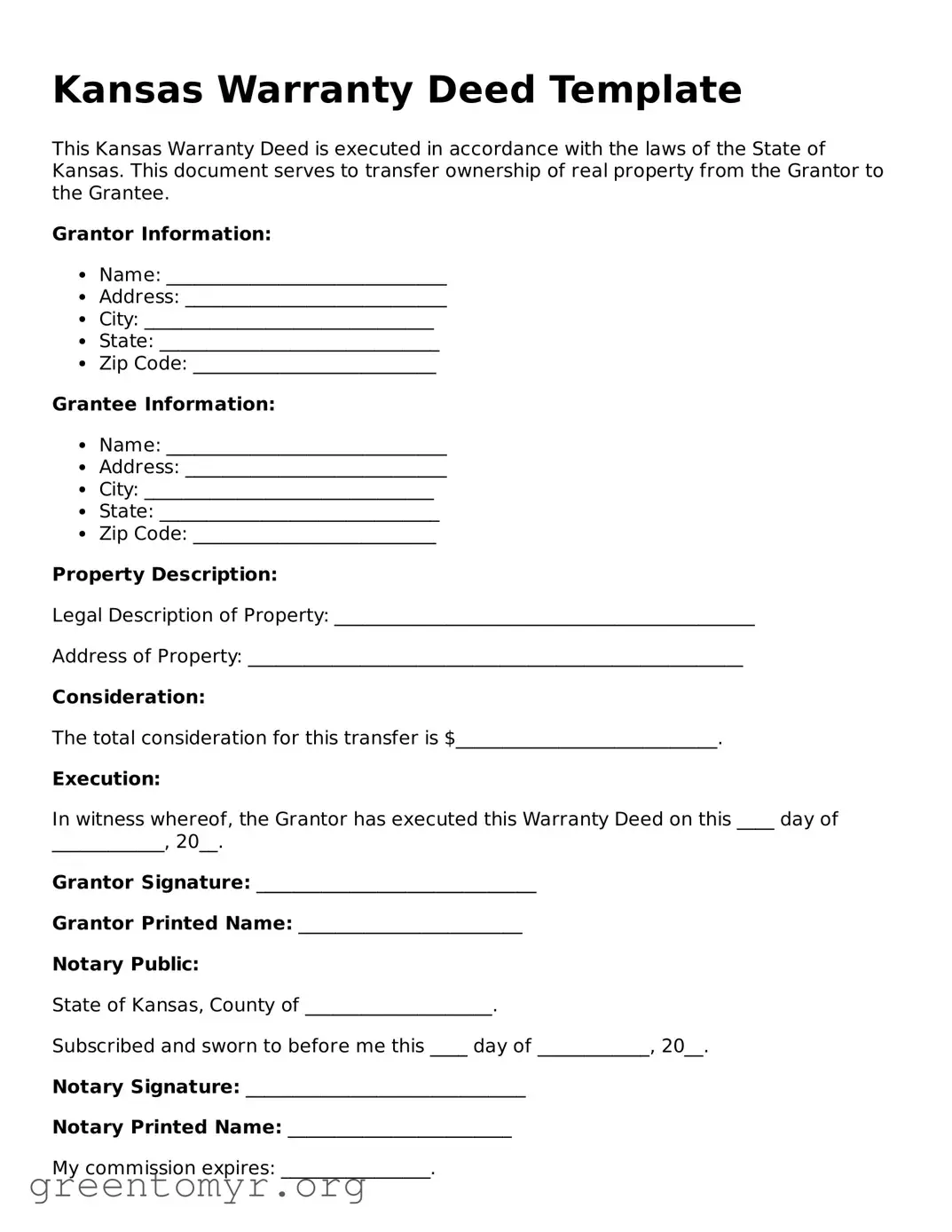
The Kansas Deed form plays a crucial role in real estate transactions within the state, serving as a legal document that facilitates the transfer of property ownership. This form outlines essential details such as the names of the grantor (the seller) and the grantee (the buyer), a clear description of the property being transferred, and the terms of the conveyance. It is vital for ensuring that the transfer is executed in accordance with state laws, thereby protecting the rights of both parties involved. Additionally, the form may include information about any liens or encumbrances on the property, which is important for the buyer to understand prior to completing the transaction. Proper execution of the Kansas Deed form typically requires notarization, ensuring that the identities of the parties are verified and that the document is legally binding. Understanding the components and requirements of this deed is essential for anyone engaged in property transactions in Kansas, as it lays the groundwork for a smooth and legally sound transfer of ownership.
Kansas Warranty Deed Template
This Kansas Warranty Deed is executed in accordance with the laws of the State of Kansas. This document serves to transfer ownership of real property from the Grantor to the Grantee.
Grantor Information:
Grantee Information:
Property Description:
Legal Description of Property: _____________________________________________
Address of Property: _____________________________________________________
Consideration:
The total consideration for this transfer is $____________________________.
Execution:
In witness whereof, the Grantor has executed this Warranty Deed on this ____ day of ____________, 20__.
Grantor Signature: ______________________________
Grantor Printed Name: ________________________
Notary Public:
State of Kansas, County of ____________________.
Subscribed and sworn to before me this ____ day of ____________, 20__.
Notary Signature: ______________________________
Notary Printed Name: ________________________
My commission expires: ________________.
| Fact Name | Details |
|---|---|
| Governing Law | The Kansas Deed form is governed by Kansas state law. |
| Types of Deeds | Common types include warranty deeds, quitclaim deeds, and special warranty deeds. |
| Purpose | A deed is used to transfer ownership of real property from one party to another. |
| Grantor and Grantee | The grantor is the person transferring the property, while the grantee is the person receiving it. |
| Signature Requirement | The grantor must sign the deed for it to be valid. |
| Witnesses | In Kansas, a deed does not require witnesses to be valid. |
| Notarization | Notarization is recommended but not mandatory for the deed to be effective. |
| Recording | To protect the grantee's rights, the deed should be recorded with the county clerk. |
| Legal Description | A legal description of the property must be included in the deed. |
| Tax Implications | Property transfer may have tax implications, and it is advisable to consult a tax professional. |
Once you have the Kansas Deed form ready, you will need to complete it with accurate information. This ensures that the transfer of property is legally recognized and properly recorded. Follow these steps to fill out the form correctly.
A Kansas Deed form is a legal document used to transfer ownership of real property from one party to another within the state of Kansas. This form serves as an official record of the transaction and outlines the rights and responsibilities of both the grantor (the seller) and the grantee (the buyer). Various types of deeds exist, including warranty deeds, quitclaim deeds, and special warranty deeds, each serving different purposes and providing varying levels of protection for the parties involved.
To complete a Kansas Deed form, several key pieces of information must be included:
It is essential to ensure that all information is accurate and complete to avoid potential legal issues in the future.
Execution of a Kansas Deed form involves several steps. First, the grantor must sign the deed in the presence of a notary public. This signature validates the authenticity of the document. After the deed is signed and notarized, it should be filed with the appropriate county office, typically the Register of Deeds. Filing the deed ensures that the transfer of ownership is officially recorded and becomes part of the public record.
Yes, there are typically fees associated with filing a Kansas Deed form. These fees can vary by county and may include:
It is advisable to check with the local Register of Deeds office for the specific fee structure and any additional costs that may apply.
The primary difference between a warranty deed and a quitclaim deed lies in the level of protection they offer to the grantee. A warranty deed provides a guarantee that the grantor holds clear title to the property and has the right to transfer it. It also protects the grantee against any future claims on the property. In contrast, a quitclaim deed transfers whatever interest the grantor has in the property without any warranties or guarantees. This means that the grantee may receive no title at all, making it a riskier option.
Once a Kansas Deed form has been executed and filed, it cannot be revoked or changed unilaterally. However, the parties involved can create a new deed to reverse or modify the transfer. For instance, if the grantor wishes to reclaim ownership, they may execute a new deed transferring the property back to themselves. It is important to note that any new deed must also be properly executed and recorded to be legally effective.
Filling out a Kansas Deed form can be a straightforward process, but mistakes can lead to delays or complications. One common error is not including the correct legal description of the property. This description must be precise and detailed, specifying the boundaries and location. Without this information, the deed may be deemed invalid, causing issues down the line.
Another frequent mistake is failing to properly identify the grantor and grantee. The grantor is the person transferring the property, while the grantee is the person receiving it. It's essential to include full legal names and any necessary identifying information. Omitting or misspelling names can create confusion and legal challenges later.
People often overlook the importance of signatures. A deed must be signed by the grantor, and in some cases, the grantee as well. Additionally, the signature should be notarized to verify its authenticity. If these steps are neglected, the deed may not be recognized by the county clerk’s office, leading to further complications.
Finally, many individuals forget to record the deed after it has been completed. Recording the deed is a crucial step that protects ownership rights and ensures that the transaction is officially recognized. Without recording, there is a risk that the property could be claimed by someone else. Taking the time to follow through with this step is vital for safeguarding property rights.
When completing a property transaction in Kansas, it’s essential to have the right forms and documents ready. The Kansas Deed form is a key component, but it often works in conjunction with other important documents to ensure a smooth transfer of ownership. Here are four commonly used forms that you may need alongside the Kansas Deed.
Having these documents prepared and understood can significantly ease the process of transferring property in Kansas. Always ensure that you have the necessary paperwork in order to protect your interests and facilitate a successful transaction.
The Deed form shares similarities with several other documents in real estate and legal contexts. Here are four documents that are comparable:
When filling out the Kansas Deed form, it is essential to follow specific guidelines to ensure accuracy and compliance. Here is a list of dos and don'ts to help you through the process.
By adhering to these guidelines, you can help ensure a smooth and successful filing process for your Kansas Deed form.
Understanding the Kansas Deed form is crucial for anyone involved in property transactions. However, there are several misconceptions that can lead to confusion. Here’s a list of common misunderstandings:
Clarifying these misconceptions can help you navigate property transactions more confidently. Always consider seeking professional advice when dealing with legal documents.
When dealing with the Kansas Deed form, it is essential to understand the nuances involved in its completion and usage. Here are some key takeaways to keep in mind:
By keeping these points in mind, individuals can navigate the process of filling out and using the Kansas Deed form more effectively.