When navigating the complexities of divorce in Kansas, a Divorce Settlement Agreement form plays a crucial role in outlining the terms of the separation. This document serves as a comprehensive record of the agreements reached between both parties regarding important matters such as property division, child custody, child support, and alimony. It ensures that both individuals have a clear understanding of their rights and responsibilities following the divorce. By detailing how assets and debts will be divided, the form helps to prevent future disputes and provides a framework for co-parenting arrangements if children are involved. Additionally, the agreement must comply with state laws, making it essential for both parties to carefully review and consider the terms before signing. With the right information and guidance, completing this form can lead to a smoother transition into post-divorce life.
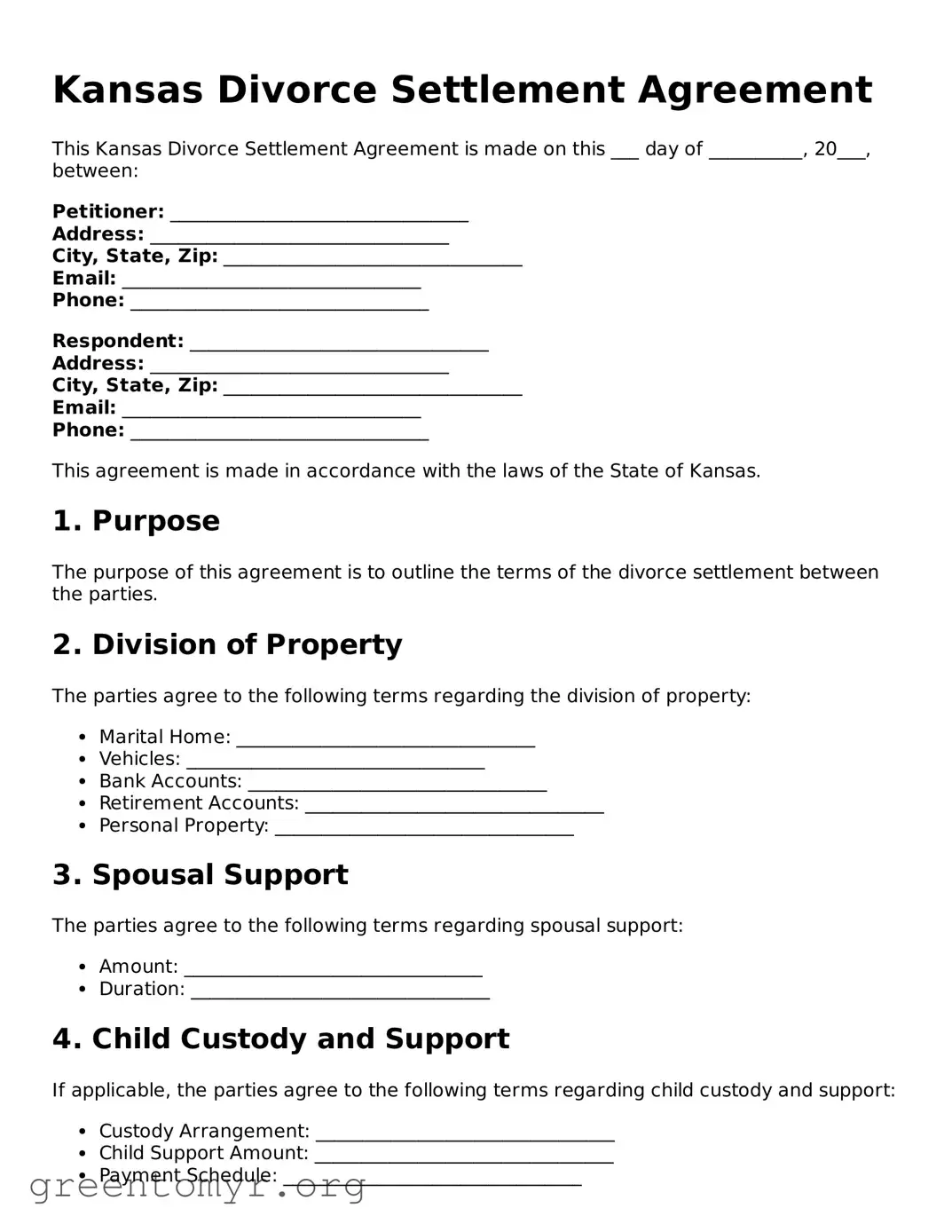
Kansas Divorce Settlement Agreement
This Kansas Divorce Settlement Agreement is made on this ___ day of __________, 20___, between:
Petitioner: ________________________________
Address: ________________________________
City, State, Zip: ________________________________
Email: ________________________________
Phone: ________________________________
Respondent: ________________________________
Address: ________________________________
City, State, Zip: ________________________________
Email: ________________________________
Phone: ________________________________
This agreement is made in accordance with the laws of the State of Kansas.
1. Purpose
The purpose of this agreement is to outline the terms of the divorce settlement between the parties.
2. Division of Property
The parties agree to the following terms regarding the division of property:
3. Spousal Support
The parties agree to the following terms regarding spousal support:
4. Child Custody and Support
If applicable, the parties agree to the following terms regarding child custody and support:
5. Miscellaneous Provisions
The parties agree to the following additional terms:
6. Signatures
By signing below, both parties agree to the terms outlined in this Kansas Divorce Settlement Agreement.
Petitioner Signature: ________________________________ Date: ____________
Respondent Signature: ________________________________ Date: ____________
This document serves as a binding agreement between the parties and should be filed with the appropriate court.
| Fact Name | Details |
|---|---|
| Governing Law | The Kansas Divorce Settlement Agreement form is governed by Kansas Statutes Annotated, Chapter 60, which outlines the laws related to divorce and family law in the state. |
| Purpose | This form serves to document the agreements made between spouses regarding the division of property, debts, and other matters during a divorce. |
| Filing Requirement | In Kansas, the completed Divorce Settlement Agreement must be filed with the court as part of the divorce proceedings. |
| Mutual Agreement | Both parties must mutually agree to the terms outlined in the settlement agreement for it to be valid. |
| Review Process | The court reviews the agreement to ensure it is fair and reasonable before granting the divorce. |
| Modification | Once finalized, the terms of the Divorce Settlement Agreement can only be modified by mutual consent of both parties or by a court order. |
Once you have your Kansas Divorce Settlement Agreement form in hand, it's time to begin filling it out. This form is essential for outlining the terms of your divorce, including asset division, child custody, and support arrangements. Completing it accurately will help ensure a smoother process as you move forward.
After completing the form, you will need to file it with the appropriate court. Make sure to keep copies for your records and be prepared for any follow-up actions that may be required.
A Kansas Divorce Settlement Agreement is a legal document that outlines the terms and conditions agreed upon by both parties during a divorce. This agreement typically covers issues such as property division, spousal support, child custody, and child support. It serves to ensure that both parties understand their rights and responsibilities post-divorce.
This agreement is crucial because it provides a clear framework for how assets and responsibilities will be divided. It helps to prevent future disputes and misunderstandings, offering both parties peace of mind. Additionally, having a formal agreement can expedite the divorce process and may be required by the court.
Both spouses should collaborate to create the Divorce Settlement Agreement. While it is possible to draft the agreement without legal assistance, consulting with a family law attorney is highly recommended. An attorney can ensure that the agreement complies with state laws and adequately protects each party’s interests.
The agreement should cover several key areas, including:
Each section should be detailed to avoid ambiguity and ensure clarity for both parties.
Yes, the Divorce Settlement Agreement can be modified after it is signed, but both parties must agree to the changes. If circumstances change significantly, such as a change in income or living situation, it may be necessary to revisit the agreement. Formal modifications should be documented in writing and, ideally, filed with the court.
Once both parties have signed the Divorce Settlement Agreement, it should be submitted to the court as part of the divorce proceedings. This typically occurs during the final hearing or trial. The court will review the agreement to ensure it is fair and in compliance with state laws before granting the divorce.
If one party fails to comply with the terms of the Divorce Settlement Agreement, the other party can seek enforcement through the court. This may involve filing a motion to compel compliance or seeking a modification of the agreement. Courts take these matters seriously, as they are designed to uphold the agreements made between parties.
Yes, once the Divorce Settlement Agreement is signed by both parties and approved by the court, it becomes a legally binding document. This means that both parties are obligated to adhere to its terms. Failing to do so can result in legal consequences.
While using a template can provide a helpful starting point, it is important to customize the agreement to reflect the specific circumstances of your divorce. Each situation is unique, and a one-size-fits-all approach may not adequately address all necessary details. Consulting with a legal professional can ensure that your agreement meets all legal requirements.
The Kansas Divorce Settlement Agreement form can typically be obtained from the Kansas Judicial Branch website or your local courthouse. It is advisable to check for the most current version and any specific instructions related to your county. Additionally, many legal aid organizations can provide guidance and resources.
Filling out the Kansas Divorce Settlement Agreement form can be a daunting task for many individuals. One common mistake occurs when parties fail to provide complete information. Incomplete forms can lead to delays in the divorce process and may require additional hearings to resolve outstanding issues. It is essential to ensure that all sections of the form are filled out accurately and thoroughly, as this will facilitate a smoother transition for everyone involved.
Another frequent error is the misunderstanding of asset division. Many individuals may not fully grasp how to categorize their assets and debts. This can result in an inequitable distribution, which may lead to further conflict between the parties. It is crucial to take the time to list all marital assets and debts clearly, ensuring that both parties have a fair understanding of what is being divided. Seeking guidance from a financial advisor or legal professional can be beneficial in this regard.
Additionally, parties often overlook the importance of addressing child custody and support arrangements. Failing to provide a comprehensive plan for the care and financial support of children can create significant challenges. Courts prioritize the best interests of the child, and any ambiguities in the agreement can lead to complications down the line. Therefore, it is vital to detail custody arrangements, visitation schedules, and child support obligations explicitly.
Finally, individuals sometimes neglect to review the completed form before submission. This oversight can lead to errors that may be difficult to rectify later. A careful review allows for the identification of mistakes or unclear language, which can save time and frustration. Seeking a second pair of eyes—whether from a trusted friend or a legal professional—can provide valuable insights and help ensure that the document is accurate and complete.
When navigating a divorce in Kansas, several key documents accompany the Divorce Settlement Agreement. Each document serves a specific purpose and helps ensure that all aspects of the divorce are addressed. Below is a list of commonly used forms that may be required during the process.
Understanding these forms and their purposes can significantly ease the divorce process. Properly completing and submitting them can lead to a smoother transition for all parties involved.
When filling out the Kansas Divorce Settlement Agreement form, there are important guidelines to follow. Below is a list of things to do and not to do during this process.
Understanding the Kansas Divorce Settlement Agreement form is crucial for anyone going through a divorce in Kansas. However, several misconceptions can lead to confusion and complications. Here are eight common misconceptions explained:
By dispelling these misconceptions, individuals can approach the Kansas Divorce Settlement Agreement with a clearer understanding, ultimately leading to a smoother divorce process.
When navigating the Kansas Divorce Settlement Agreement form, it is essential to understand several key aspects to ensure a smooth process. Below are some important takeaways to consider:
By carefully considering these points, individuals can approach the Kansas Divorce Settlement Agreement with clarity and confidence.