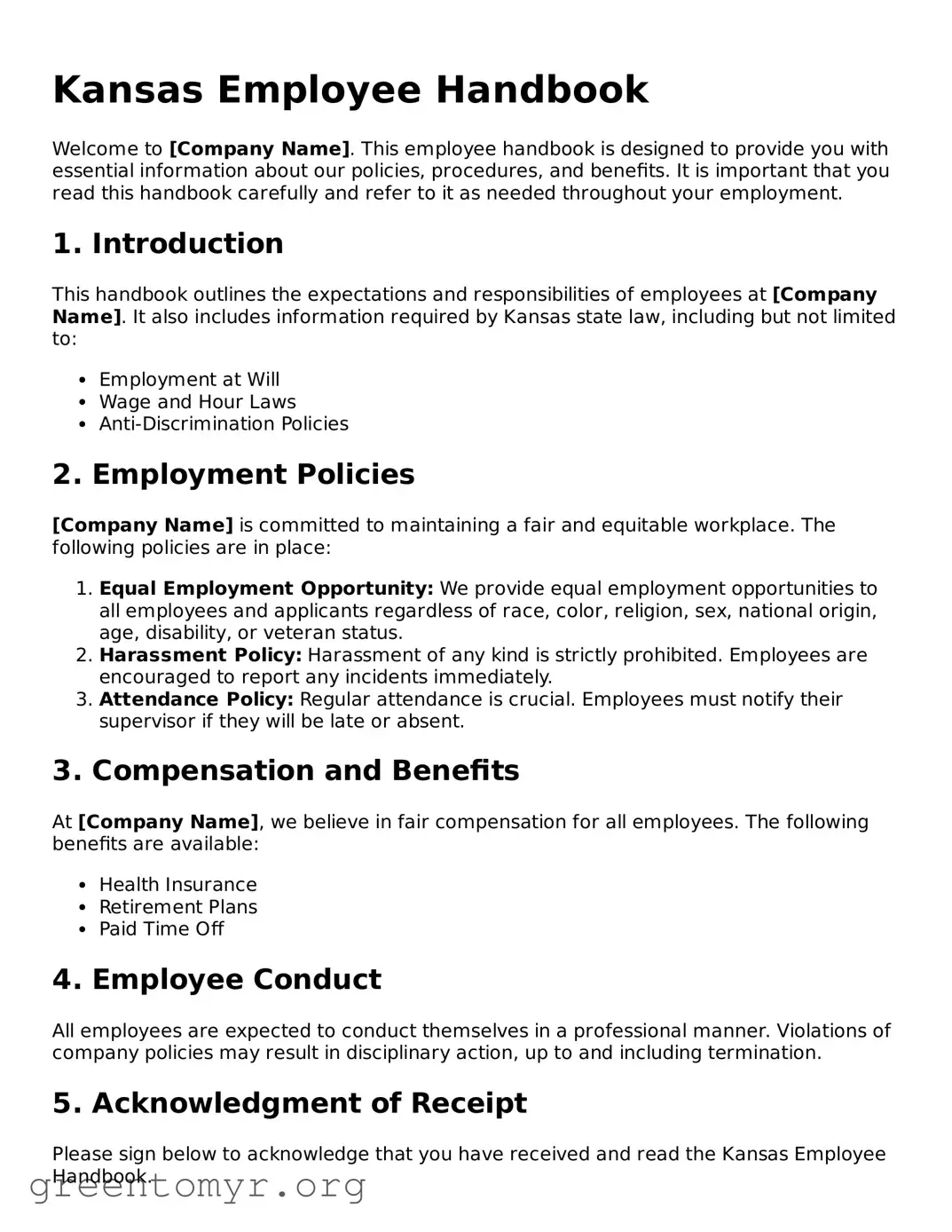
The Kansas Employee Handbook form serves as a crucial document for both employers and employees, outlining essential policies, procedures, and expectations within the workplace. This comprehensive guide typically includes sections on workplace conduct, attendance policies, and disciplinary procedures, providing a framework that promotes a positive work environment. Additionally, it addresses employee benefits, including health insurance, vacation time, and leave policies, ensuring that employees are well-informed about their entitlements. The form may also cover safety protocols and compliance with state and federal laws, reflecting the organization's commitment to maintaining a safe and equitable workplace. By clearly articulating the rights and responsibilities of all parties involved, the Kansas Employee Handbook form fosters transparency and accountability, ultimately contributing to a harmonious and productive work atmosphere.
Kansas Employee Handbook
Welcome to [Company Name]. This employee handbook is designed to provide you with essential information about our policies, procedures, and benefits. It is important that you read this handbook carefully and refer to it as needed throughout your employment.
1. Introduction
This handbook outlines the expectations and responsibilities of employees at [Company Name]. It also includes information required by Kansas state law, including but not limited to:
2. Employment Policies
[Company Name] is committed to maintaining a fair and equitable workplace. The following policies are in place:
3. Compensation and Benefits
At [Company Name], we believe in fair compensation for all employees. The following benefits are available:
4. Employee Conduct
All employees are expected to conduct themselves in a professional manner. Violations of company policies may result in disciplinary action, up to and including termination.
5. Acknowledgment of Receipt
Please sign below to acknowledge that you have received and read the Kansas Employee Handbook.
Employee Name: ___________________________
Date: ___________________________
Company Representative: ___________________________
Date: ___________________________
6. Contact Information
If you have any questions regarding the policies outlined in this handbook, please contact:
HR Department: [HR Contact Name]
Email: [HR Email]
Phone: [HR Phone Number]
| Fact Name | Description |
|---|---|
| Purpose | The Kansas Employee Handbook serves as a guide for employees regarding company policies, procedures, and expectations. |
| Legal Requirement | There is no specific legal requirement for employers in Kansas to provide an employee handbook, but it is recommended. |
| Governing Law | Handbooks in Kansas should comply with state and federal labor laws, including the Kansas Wage Payment Act and the Fair Labor Standards Act. |
| Content Recommendations | Common sections include employee rights, workplace conduct, benefits, and grievance procedures. |
| At-Will Employment | Most Kansas employees are considered at-will, meaning they can be terminated for any lawful reason unless otherwise specified in the handbook. |
| Updates | Employers should regularly update the handbook to reflect changes in laws and company policies. |
| Distribution | Handbooks should be distributed to all employees, and receipt acknowledgment is advisable to ensure understanding. |
| Training | Employers may provide training sessions to explain handbook policies and answer employee questions. |
| Non-Discrimination Policies | Handbooks should include clear non-discrimination and harassment policies to promote a safe workplace. |
| Legal Review | It is advisable for employers to have the handbook reviewed by legal counsel to ensure compliance with applicable laws. |
Filling out the Kansas Employee Handbook form is a straightforward process. Follow these steps carefully to ensure all necessary information is provided accurately. Once completed, you will submit the form to your employer for review.
The Kansas Employee Handbook form is a document designed to outline the policies, procedures, and expectations within a workplace in Kansas. It serves as a guide for employees, detailing their rights and responsibilities, as well as the company's rules and regulations. This form is essential for ensuring that both employers and employees understand the workplace environment and legal obligations.
An Employee Handbook is crucial for several reasons:
Every employee should receive a copy of the Employee Handbook. This includes full-time, part-time, and temporary workers. It is also advisable to provide a copy to new hires during their orientation. In addition, employers should ensure that employees acknowledge receipt of the handbook, which can be documented through a signed acknowledgment form.
The Employee Handbook should be reviewed and updated regularly, ideally at least once a year. Changes in laws, company policies, or organizational structure may necessitate updates. Additionally, if significant incidents occur that highlight gaps in the handbook, it should be revised to address those issues. Keeping the handbook current ensures that employees are informed of the latest policies and helps the company remain compliant with legal requirements.
Filling out the Kansas Employee Handbook form can seem straightforward, but many individuals make common mistakes that can lead to confusion or even complications later on. One frequent error is neglecting to read the instructions thoroughly. Each section of the form has specific requirements, and skipping this step can result in incomplete or incorrect submissions.
Another common mistake is failing to provide accurate personal information. This includes not only your name but also your contact details and social security number. Inaccuracies can delay processing and create unnecessary complications in your employment records.
Many people also overlook the importance of signatures. Some sections of the form require a signature to confirm that you have read and understood the policies outlined in the handbook. Omitting a signature can render the form invalid.
Additionally, individuals often forget to update their forms when there are changes in their circumstances. If you move, change your name, or experience a significant life event, it’s crucial to update your information. Failing to do so can lead to issues with benefits or communication.
Another mistake is not asking questions when unsure about the content. If a section is unclear, reaching out for clarification can prevent misunderstandings. Ignoring uncertainties can lead to incorrect assumptions and potentially harmful errors.
Some employees rush through the form, treating it as a mere formality. This approach can lead to overlooked details that may seem minor but are actually significant. Taking the time to carefully fill out the form ensures that all necessary information is included.
In some cases, individuals may not keep a copy of the completed form for their records. This can be problematic if there are disputes or questions about what was submitted. Keeping a personal copy is a simple way to safeguard against future issues.
Another mistake is not being aware of the company’s policies outlined in the handbook. Filling out the form without understanding the policies can lead to confusion about rights and responsibilities as an employee. It’s essential to familiarize yourself with these policies to ensure compliance.
Moreover, individuals sometimes fail to double-check for typos or errors before submitting the form. Simple mistakes can undermine the professionalism of the submission and may lead to misunderstandings. A quick review can catch these errors.
Lastly, some people may assume that the form is optional or not important. This misconception can lead to significant problems down the line. Completing the form accurately and promptly is crucial for ensuring a smooth employment experience.
When managing a workplace, having a comprehensive Kansas Employee Handbook is essential. However, several other documents and forms often complement the handbook, ensuring that both employers and employees have a clear understanding of policies, rights, and responsibilities. Below is a list of commonly used documents that can enhance the effectiveness of an employee handbook.
Each of these documents plays a significant role in fostering a transparent and organized work environment. By utilizing them alongside the Kansas Employee Handbook, employers can create a more comprehensive framework that supports both employee engagement and compliance with labor laws.
The Employee Handbook form shares similarities with several other documents commonly used in workplace settings. Each document serves a specific purpose but often overlaps in terms of content and intent. Below is a list of documents that are similar to the Employee Handbook form:
When filling out the Kansas Employee Handbook form, it is important to approach the task with care. Here are some guidelines to consider:
By adhering to these guidelines, individuals can contribute to a smoother onboarding experience and foster a better understanding of workplace policies.
When it comes to the Kansas Employee Handbook, there are several misconceptions that can lead to confusion for both employers and employees. Understanding these misconceptions can help clarify the purpose and importance of the handbook.
While it is true that Kansas law does not mandate an employee handbook, having one can significantly benefit employers by outlining workplace policies and expectations.
Each employee handbook should be tailored to fit the specific needs of a business. Factors like company culture, size, and industry will influence the content and structure of the handbook.
Policies and laws change over time. Regularly reviewing and updating the handbook ensures that it remains relevant and compliant with current regulations.
While the handbook serves as a reference, it does not eliminate the need for ongoing communication between management and employees. Clear dialogue is essential for a healthy workplace.
Employers should encourage employees to read the handbook. Acknowledging receipt of the handbook can help ensure that employees understand the policies and procedures that govern their employment.
When filling out and using the Kansas Employee Handbook form, keep these key takeaways in mind: