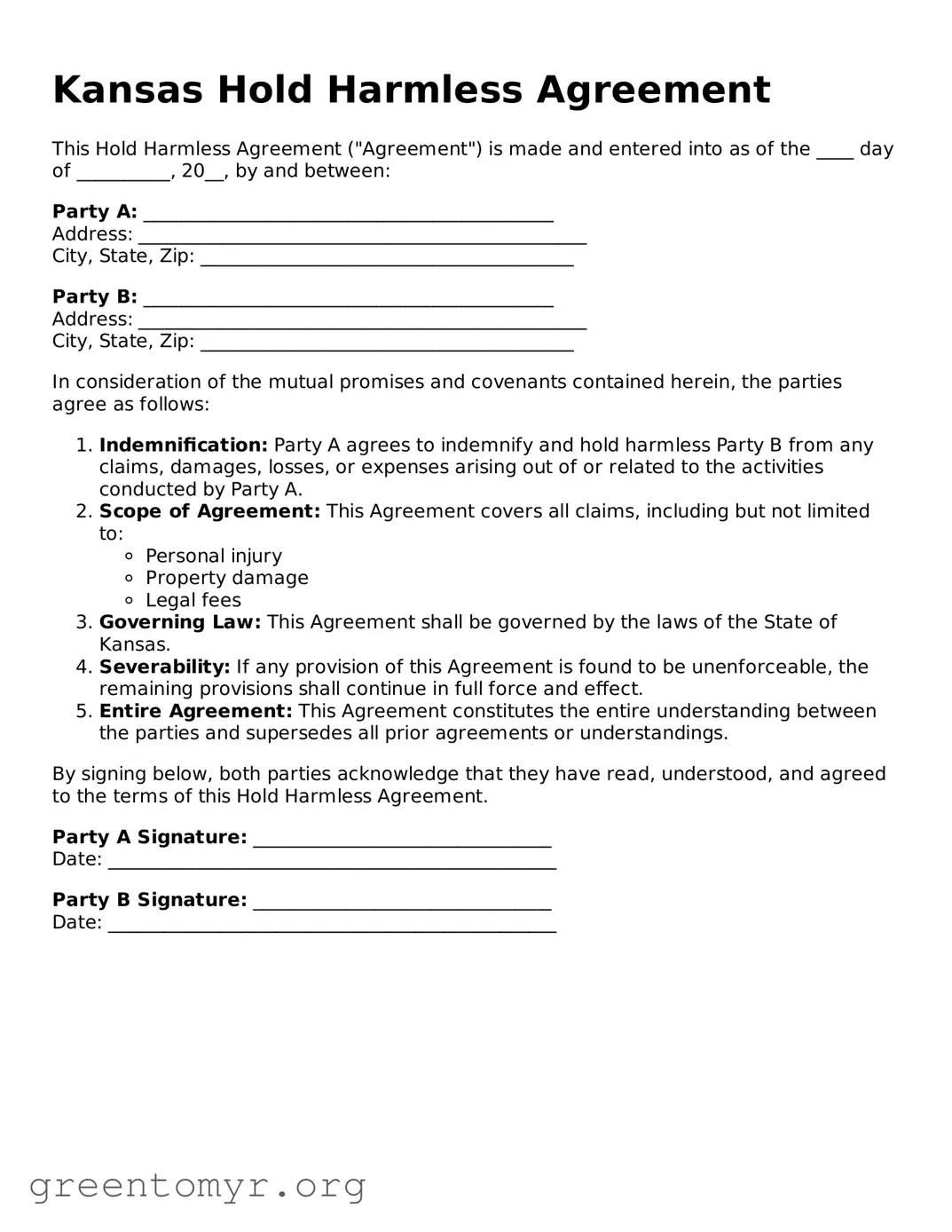
The Kansas Hold Harmless Agreement form serves as a crucial legal document designed to protect one party from liability for any damages or injuries that may occur during a specified activity or event. Often utilized in various contexts, such as rental agreements, construction projects, or recreational activities, this form establishes a clear understanding between the involved parties regarding the assumption of risk. By signing the agreement, one party agrees to indemnify and hold harmless the other from any claims, losses, or damages that may arise, effectively shifting the responsibility for potential legal repercussions. This arrangement not only fosters transparency and trust but also encourages individuals and organizations to engage in activities with a clearer understanding of their rights and responsibilities. Additionally, the form typically outlines the specific conditions under which the indemnification applies, ensuring that both parties are aware of the scope of the agreement. Overall, the Kansas Hold Harmless Agreement is an essential tool for managing risk and liability in a variety of situations, providing peace of mind for those involved.
Kansas Hold Harmless Agreement
This Hold Harmless Agreement ("Agreement") is made and entered into as of the ____ day of __________, 20__, by and between:
Party A: ____________________________________________
Address: ________________________________________________
City, State, Zip: ________________________________________
Party B: ____________________________________________
Address: ________________________________________________
City, State, Zip: ________________________________________
In consideration of the mutual promises and covenants contained herein, the parties agree as follows:
By signing below, both parties acknowledge that they have read, understood, and agreed to the terms of this Hold Harmless Agreement.
Party A Signature: ________________________________
Date: ________________________________________________
Party B Signature: ________________________________
Date: ________________________________________________
| Fact Name | Description |
|---|---|
| Purpose | The Kansas Hold Harmless Agreement is designed to protect one party from legal liability for damages or injuries incurred by another party during specific activities. |
| Governing Law | This agreement is governed by the laws of the State of Kansas, ensuring compliance with local regulations. |
| Parties Involved | Typically, the agreement involves at least two parties: the indemnitor (the party providing the hold harmless clause) and the indemnitee (the party being protected). |
| Scope of Liability | The agreement can limit liability for various situations, including negligence, but does not usually cover willful misconduct. |
| Written Agreement | A Hold Harmless Agreement must be in writing to be enforceable, clearly stating the terms agreed upon by both parties. |
| Mutual vs. Unilateral | These agreements can be mutual, where both parties agree to hold each other harmless, or unilateral, where only one party is protected. |
| Importance for Events | Event organizers often use this agreement to mitigate risks associated with hosting activities, ensuring participants understand their responsibilities. |
| Legal Advice Recommended | While the form can be straightforward, seeking legal advice is recommended to ensure that the agreement meets specific needs and complies with Kansas law. |
After obtaining the Kansas Hold Harmless Agreement form, the next step involves completing it accurately. This process ensures that all necessary information is provided and clearly stated. Following the steps below will help in filling out the form correctly.
A Kansas Hold Harmless Agreement is a legal document that protects one party from liability for any injuries or damages that may occur during a specific activity or event. This agreement is often used in various contexts, such as rental agreements, events, or construction projects.
Individuals and organizations frequently use Hold Harmless Agreements. Common users include:
A typical Hold Harmless Agreement includes several essential elements:
Yes, a Hold Harmless Agreement can be legally binding in Kansas, provided it meets certain requirements. The agreement must be clear, specific, and voluntarily signed by all parties involved. However, courts may not enforce agreements that attempt to waive liability for gross negligence or willful misconduct.
No, a Hold Harmless Agreement does not provide blanket protection against all types of liability. It typically protects against ordinary negligence but may not cover instances of gross negligence, intentional harm, or violations of public policy.
To create a Hold Harmless Agreement in Kansas, follow these steps:
While there are no specific laws solely governing Hold Harmless Agreements in Kansas, general contract law applies. Additionally, courts may interpret these agreements based on principles of fairness and public policy.
If you are asked to sign a Hold Harmless Agreement, consider the following actions:
Yes, a Hold Harmless Agreement can be revoked or modified if all parties agree to the changes. This should be done in writing to ensure clarity and avoid future disputes.
Without a Hold Harmless Agreement, individuals and organizations may face significant liability risks. If an injury or damage occurs, the responsible party may be held liable for medical expenses, legal fees, and other damages. This can lead to financial strain and potential legal action.
When filling out the Kansas Hold Harmless Agreement form, many individuals unknowingly make mistakes that can lead to misunderstandings or legal complications. One common error is failing to provide accurate information. This includes not fully identifying all parties involved, which can create confusion about who is protected under the agreement. Ensuring that names, addresses, and other relevant details are correct is essential for the agreement to hold up in a legal context.
Another frequent mistake is overlooking the importance of specific language. The Hold Harmless Agreement should clearly outline the scope of the agreement. If the language is vague or ambiguous, it may not offer the intended protection. It’s crucial to be clear about what liabilities are being waived and under what circumstances. This clarity helps prevent disputes later on.
Many people also neglect to consider the implications of signing the agreement. They may not fully understand what they are agreeing to, which can lead to unintended consequences. Before signing, it’s wise to read the document thoroughly and, if necessary, seek legal advice. This step can help ensure that the individual is fully aware of their rights and responsibilities.
Another common pitfall is not having the agreement properly witnessed or notarized when required. Some agreements may need a witness or notarization to be legally binding. Failing to include this step can render the agreement invalid, which defeats its purpose. Always check the specific requirements for your situation to ensure that the form is executed correctly.
Lastly, individuals sometimes forget to keep a copy of the signed agreement for their records. After all parties have signed, it’s important to retain a copy for future reference. This document serves as proof of the agreement and can be crucial if any disputes arise later. Keeping organized records can save time and stress down the road.
A Kansas Hold Harmless Agreement is a legal document that protects one party from liability for certain actions or events. While this agreement serves a specific purpose, several other forms and documents are often used in conjunction with it. Each of these documents plays a role in clarifying responsibilities, ensuring safety, and outlining agreements between parties. Below is a list of some commonly associated documents.
Understanding these documents can help individuals and organizations navigate legal responsibilities and protect themselves from potential liabilities. Each form serves a unique function and contributes to a comprehensive risk management strategy.
A Hold Harmless Agreement is a useful tool in various situations, protecting one party from liability for certain actions or events. Several other documents serve similar purposes, offering varying degrees of protection and clarity in agreements. Here are eight documents that share similarities with a Hold Harmless Agreement:
Understanding these documents can help individuals and businesses navigate their responsibilities and protections more effectively. Each serves a unique purpose but shares the common goal of mitigating risk and liability.
When filling out the Kansas Hold Harmless Agreement form, it’s essential to ensure accuracy and clarity. Here are some important dos and don’ts to keep in mind:
By following these guidelines, you can help ensure that your Hold Harmless Agreement is filled out correctly and effectively protects your interests.
Understanding the Kansas Hold Harmless Agreement form is essential for anyone involved in legal or contractual matters. However, several misconceptions exist about this document. Below is a list of common misunderstandings, along with clarifications to provide a clearer picture.
Addressing these misconceptions can help individuals and businesses better understand the importance and function of the Kansas Hold Harmless Agreement form. Proper knowledge ensures that all parties are adequately protected and informed.
When filling out and using the Kansas Hold Harmless Agreement form, it is essential to understand its implications and requirements. Here are key takeaways to keep in mind:
By keeping these points in mind, you can effectively navigate the process of completing and utilizing the Kansas Hold Harmless Agreement form.