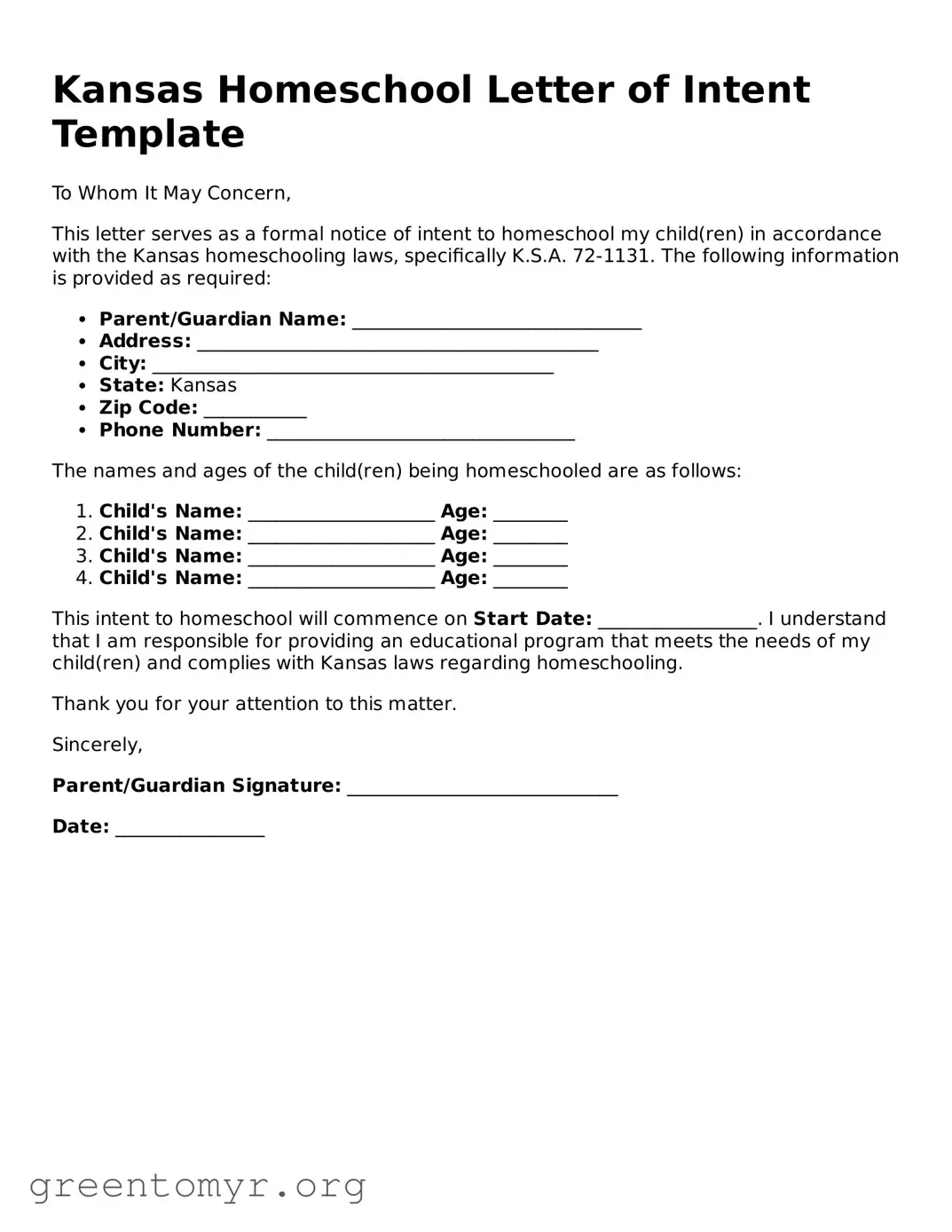
In Kansas, parents who choose to homeschool their children must navigate a few essential steps to ensure compliance with state regulations. One of the first and most crucial requirements is the submission of a Homeschool Letter of Intent. This form serves as a formal notification to the local school district of the family's intention to educate their child at home. It typically includes vital information such as the names and ages of the children being homeschooled, as well as the educational approach the family plans to adopt. Parents are encouraged to provide details about their instructional methods and the curriculum they intend to use, although the state does not mandate a specific curriculum. Additionally, the form may require a signature from the parent or guardian, affirming their commitment to fulfilling educational responsibilities. By completing and submitting this letter, families take an important step in establishing a legal framework for their homeschooling journey, ensuring that they meet the state's educational requirements while fostering an enriching learning environment tailored to their children's needs.
Kansas Homeschool Letter of Intent Template
To Whom It May Concern,
This letter serves as a formal notice of intent to homeschool my child(ren) in accordance with the Kansas homeschooling laws, specifically K.S.A. 72-1131. The following information is provided as required:
The names and ages of the child(ren) being homeschooled are as follows:
This intent to homeschool will commence on Start Date: _________________. I understand that I am responsible for providing an educational program that meets the needs of my child(ren) and complies with Kansas laws regarding homeschooling.
Thank you for your attention to this matter.
Sincerely,
Parent/Guardian Signature: _____________________________
Date: ________________
| Fact Name | Description |
|---|---|
| Governing Law | The Kansas Homeschool Letter of Intent is governed by K.S.A. 72-977. |
| Purpose | This form notifies the local school district of a parent's intent to homeschool their child. |
| Submission Deadline | The letter must be submitted within 14 days of beginning homeschooling. |
| Required Information | Parents must include the child's name, age, and address in the letter. |
| Annual Requirement | Parents must submit a new Letter of Intent each year for each child being homeschooled. |
| Record Keeping | While the form itself does not need to be submitted annually, parents should keep a copy for their records. |
| Educational Plan | Although not required, it is advisable for parents to outline their educational plan in the letter. |
| Notification Process | The local school district must acknowledge receipt of the Letter of Intent. |
| Eligibility | Any child between the ages of 7 and 18 is eligible for homeschooling under Kansas law. |
| Resources Available | Parents can access resources and support through local homeschooling organizations and online communities. |
Once you have decided to homeschool your child in Kansas, you'll need to complete the Homeschool Letter of Intent form. This form is essential for officially notifying the state of your intent to provide home education. After submitting the form, you can begin planning your educational journey.
The Kansas Homeschool Letter of Intent form is a document that parents or guardians must submit to formally notify their local school district of their intention to homeschool their children. This form is essential for establishing a homeschooling program and ensuring compliance with state regulations.
Any parent or guardian who wishes to homeschool their child in Kansas must complete the Letter of Intent. This requirement applies to children of compulsory school age, which is typically between 7 and 18 years old. If you are starting to homeschool for the first time, this form is crucial.
The Letter of Intent should be submitted at the beginning of your homeschooling journey. Ideally, you should file it before the start of the school year. However, if you decide to withdraw your child from public school to begin homeschooling mid-year, you can submit the form at that time. Timely submission helps avoid any potential legal issues.
The Letter of Intent typically requires the following information:
Make sure to check with your local school district for any additional requirements or specific formatting they may have.
While the state of Kansas does not mandate a specific format for the Letter of Intent, it should be clear and concise. You can often find templates online or create your own. The key is to ensure all required information is included and that the document is signed by the parent or guardian.
In Kansas, you do not need to submit the Letter of Intent annually. Once you have submitted the form to your local school district, you are not required to file it again unless you decide to change your homeschooling status or if you are enrolling a new child in the program.
After submitting the Letter of Intent, your local school district will typically acknowledge receipt of the form. You may not receive a formal approval, but it is essential to keep a copy for your records. Once your intent is registered, you can proceed with your homeschooling plan, ensuring that you meet all educational requirements set forth by the state.
Filling out the Kansas Homeschool Letter of Intent form can be a straightforward process, but many families encounter pitfalls that can lead to delays or complications. One common mistake is failing to provide complete information. The form requires specific details about the student, including their name, age, and grade level. Omitting any of this information can result in the form being rejected or returned for clarification.
Another frequent error is not submitting the form on time. Kansas law requires that the Letter of Intent be filed within 14 days of beginning homeschooling. Families sometimes underestimate this timeline, leading to rushed submissions or missed deadlines. It’s essential to keep track of when you start homeschooling to ensure compliance with state regulations.
In addition to timing, some parents overlook the importance of accurate contact information. If the school district cannot reach you for any reason, it could create unnecessary complications. Always double-check that your phone number and address are correct. This small detail can prevent potential issues down the line.
Moreover, individuals often neglect to keep a copy of the submitted form. This oversight can be problematic if there are any questions or disputes regarding your homeschooling status later. Retaining a copy not only provides a reference for you but also serves as proof of compliance if needed.
Lastly, misunderstanding the requirements for educational plans can lead to confusion. While the Letter of Intent itself does not require a detailed curriculum plan, some parents mistakenly believe they need to include one. It's vital to understand what the form requires and what it does not. Being clear about these distinctions can save time and effort.
When you decide to homeschool in Kansas, submitting the Homeschool Letter of Intent is just the beginning. Several other forms and documents can support your homeschooling journey and ensure compliance with state regulations. Here’s a brief overview of some essential documents you may need.
By preparing these documents alongside the Homeschool Letter of Intent, you can create a well-rounded educational experience for your child. Staying organized and maintaining clear records will not only help you comply with state regulations but also enhance your homeschooling journey.
When filling out the Kansas Homeschool Letter of Intent form, it’s important to follow certain guidelines to ensure a smooth process. Here’s a list of things you should and shouldn’t do:
By following these guidelines, you can help ensure that your homeschooling journey starts on the right foot.
Misconceptions about the Kansas Homeschool Letter of Intent form can lead to confusion for families considering homeschooling. Below are six common misunderstandings, clarified for better understanding.
Understanding these misconceptions can help families navigate the homeschooling process more effectively and confidently.
Filling out and using the Kansas Homeschool Letter of Intent form is an important step for families choosing to homeschool their children. Here are some key takeaways to keep in mind:
Understanding these points can help ensure a smooth start to your homeschooling journey in Kansas.