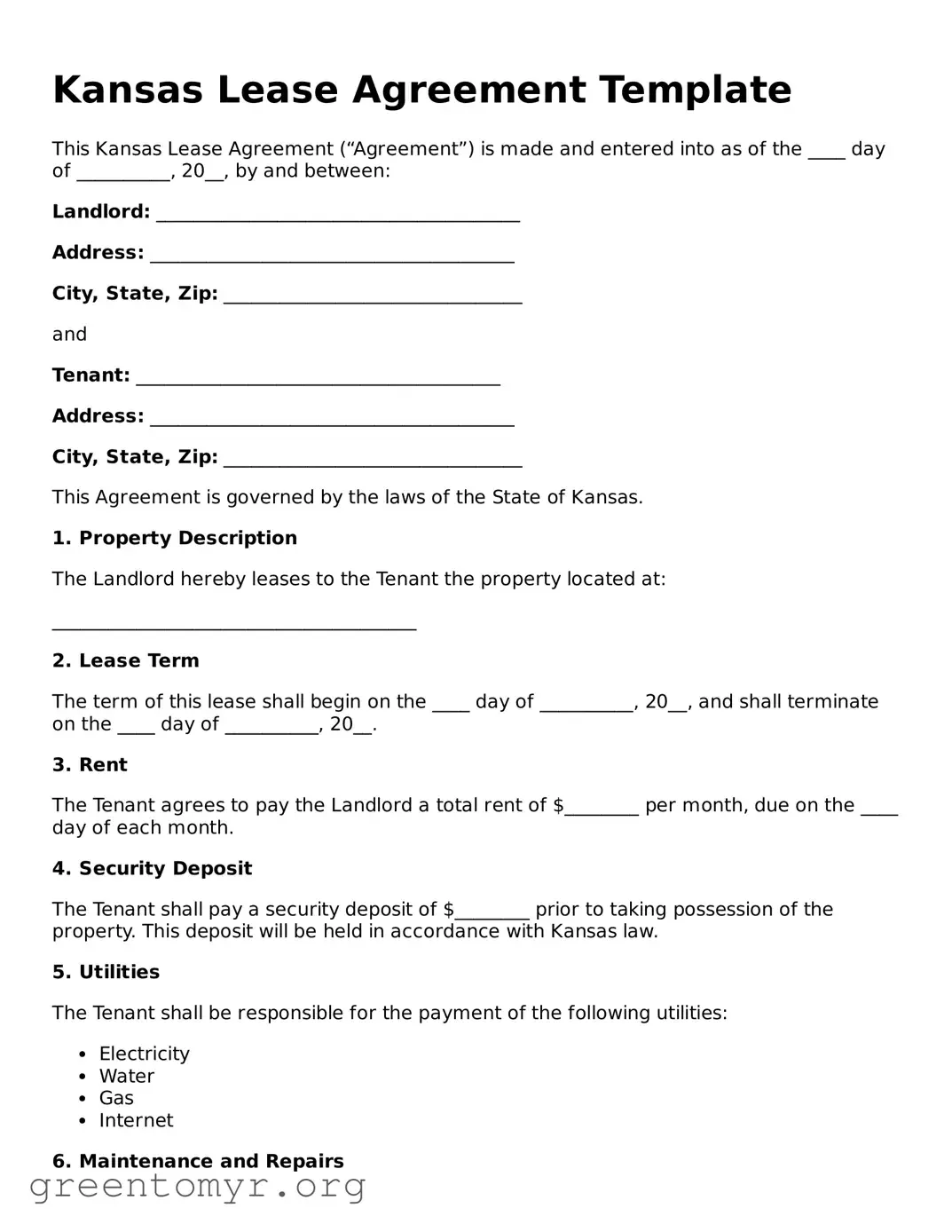
When entering into a rental arrangement in Kansas, understanding the Lease Agreement form is essential for both landlords and tenants. This document serves as a legally binding contract that outlines the rights and responsibilities of each party involved. Key aspects of the form include the duration of the lease, rental payment terms, security deposits, and maintenance responsibilities. It also addresses important issues such as termination conditions and rules regarding property use. By clearly defining these elements, the Lease Agreement helps to prevent misunderstandings and disputes, ensuring a smoother rental experience. Whether you are a first-time renter or an experienced landlord, familiarizing yourself with the details of the Kansas Lease Agreement form can empower you to make informed decisions and protect your interests.
Kansas Lease Agreement Template
This Kansas Lease Agreement (“Agreement”) is made and entered into as of the ____ day of __________, 20__, by and between:
Landlord: _______________________________________
Address: _______________________________________
City, State, Zip: ________________________________
and
Tenant: _______________________________________
Address: _______________________________________
City, State, Zip: ________________________________
This Agreement is governed by the laws of the State of Kansas.
1. Property Description
The Landlord hereby leases to the Tenant the property located at:
_______________________________________
2. Lease Term
The term of this lease shall begin on the ____ day of __________, 20__, and shall terminate on the ____ day of __________, 20__.
3. Rent
The Tenant agrees to pay the Landlord a total rent of $________ per month, due on the ____ day of each month.
4. Security Deposit
The Tenant shall pay a security deposit of $________ prior to taking possession of the property. This deposit will be held in accordance with Kansas law.
5. Utilities
The Tenant shall be responsible for the payment of the following utilities:
6. Maintenance and Repairs
The Tenant agrees to maintain the property in good condition. The Landlord shall be responsible for major repairs unless damage is caused by the Tenant's negligence.
7. Termination
Either party may terminate this Agreement by providing written notice at least ____ days in advance.
8. Governing Law
This Agreement shall be governed by the laws of the State of Kansas.
9. Signatures
By signing below, both parties agree to the terms outlined in this Lease Agreement.
Landlord Signature: ____________________________ Date: _______________
Tenant Signature: _____________________________ Date: _______________
| Fact Name | Description |
|---|---|
| Purpose | The Kansas Lease Agreement form is used to outline the terms and conditions between a landlord and tenant for the rental of residential or commercial property. |
| Governing Laws | This form is governed by the Kansas Statutes Annotated, specifically Chapter 58, which addresses landlord-tenant relationships. |
| Security Deposit | In Kansas, landlords may require a security deposit, which cannot exceed one month's rent for residential leases. |
| Termination Notice | For month-to-month leases, either party must provide a 30-day written notice to terminate the agreement. |
Filling out the Kansas Lease Agreement form is a straightforward process that requires attention to detail. Once completed, this document will serve as a binding contract between the landlord and tenant, outlining the terms of the rental arrangement. Below are the steps to guide you through filling out the form accurately.
A Kansas Lease Agreement is a legal document that outlines the terms and conditions under which a landlord rents property to a tenant in the state of Kansas. This agreement includes details such as the rental amount, duration of the lease, responsibilities of both parties, and any specific rules regarding the property.
A comprehensive Kansas Lease Agreement typically includes the following elements:
In Kansas, lease agreements can vary in length. The most common terms are:
Yes, a landlord can terminate a lease early under certain circumstances. Common reasons include:
However, landlords must follow proper legal procedures to terminate the lease, which may include providing written notice to the tenant.
If a tenant wishes to break the lease early, they should review the lease agreement for specific terms regarding early termination. Generally, tenants may need to:
Open communication with the landlord can often lead to a mutual agreement.
Filling out a Kansas Lease Agreement can seem straightforward, but many people make common mistakes that can lead to confusion or even legal issues. One frequent error is not including all necessary information. It’s important to provide complete details about the property, the landlord, and the tenant. Missing information can cause problems later on.
Another mistake is failing to read the entire document before signing. Many individuals skim through the lease and overlook important clauses. This can lead to misunderstandings about responsibilities, such as maintenance or payment terms. Taking the time to read the lease thoroughly can prevent future disputes.
Some people also forget to specify the lease term. It’s crucial to clearly state whether the lease is for a fixed period or month-to-month. Without this information, both parties may have different expectations about the length of the tenancy.
Additionally, not documenting any agreed-upon changes can create issues. If the landlord and tenant agree to modify certain terms, such as the rent amount or pet policies, these changes should be written into the lease. Verbal agreements are often not enforceable.
Many tenants neglect to check the rent payment details. It’s essential to confirm how much rent is due, when it is due, and the acceptable payment methods. Misunderstanding these details can lead to late fees or eviction notices.
Another common error is not understanding the security deposit terms. The lease should clearly outline the amount of the deposit, how it will be held, and the conditions for its return. Failing to address these points can lead to disputes when the lease ends.
Some individuals overlook the importance of including maintenance responsibilities. The lease should state who is responsible for repairs and upkeep. Without this clarity, tenants may assume the landlord will handle everything, while landlords may expect tenants to take care of certain issues.
People sometimes forget to include contact information. It’s important for both parties to provide current phone numbers and email addresses. This ensures clear communication throughout the lease term.
Additionally, many tenants do not check local laws regarding lease agreements. Kansas has specific regulations that may affect the lease terms. Being aware of these laws can help avoid potential legal issues.
Lastly, a common mistake is not keeping a copy of the signed lease. After signing, both the landlord and tenant should keep a copy for their records. This can be invaluable if any disputes arise during or after the lease term.
When entering into a lease agreement in Kansas, several additional forms and documents may be required to ensure clarity and compliance. These documents help both landlords and tenants understand their rights and responsibilities, making the leasing process smoother.
Having these forms ready can streamline the leasing process and protect the interests of both landlords and tenants. Understanding these documents ensures a better experience for everyone involved.
Rental Agreement: Similar to a lease agreement, a rental agreement outlines the terms under which a tenant can occupy a property. However, rental agreements are often for shorter terms, typically month-to-month, allowing for more flexibility.
Sublease Agreement: This document allows a tenant to rent out their leased space to another person. It includes terms similar to a lease agreement but also specifies the relationship between the original tenant and the subtenant.
Commercial Lease Agreement: This is used for renting commercial properties. Like residential leases, it details the rights and responsibilities of both parties but often includes additional clauses related to business operations.
Tenancy Agreement: This term is often used interchangeably with a lease agreement. It outlines the terms of occupancy and can include details about rent, duration, and responsibilities of both parties.
Roommate Agreement: When multiple tenants share a rental property, a roommate agreement can clarify responsibilities and expectations among them. It addresses issues like rent division, shared spaces, and utilities.
Property Management Agreement: This document is between a property owner and a management company. It outlines the management company's responsibilities, similar to how a lease defines the landlord's obligations to the tenant.
Option to Purchase Agreement: This document allows a tenant the option to buy the property they are renting after a certain period. It includes terms that resemble a lease agreement but adds conditions for a potential sale.
Lease Extension Agreement: When tenants wish to continue their stay beyond the original lease term, a lease extension agreement can be created. This document modifies the existing lease and keeps the same terms in place for a longer period.
When filling out the Kansas Lease Agreement form, it’s important to approach the task with care. Here’s a list of what you should and shouldn’t do to ensure the process goes smoothly.
When it comes to the Kansas Lease Agreement form, several misconceptions can lead to confusion for both landlords and tenants. Understanding these misconceptions can help you navigate the leasing process more effectively.
By clearing up these misconceptions, both landlords and tenants can engage in a more informed leasing process, ensuring a smoother experience for everyone involved.
When filling out and using the Kansas Lease Agreement form, it’s important to keep several key points in mind.
Following these guidelines will help ensure a smoother leasing experience for everyone involved.