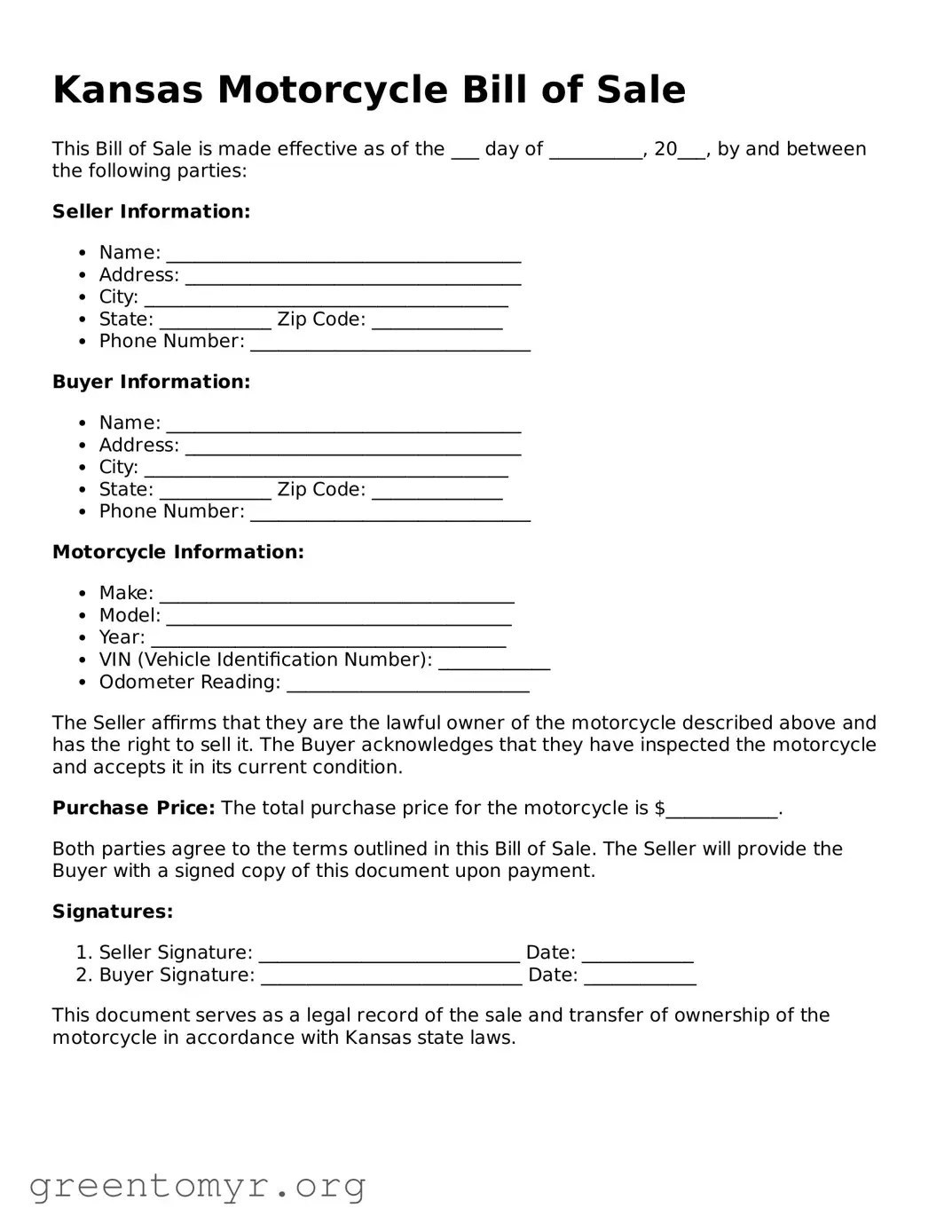
When it comes to buying or selling a motorcycle in Kansas, having the right documentation is crucial for a smooth transaction. The Kansas Motorcycle Bill of Sale form serves as an essential tool in this process, providing both parties with a written record of the sale. This document typically includes important details such as the names and addresses of the buyer and seller, a description of the motorcycle—including its make, model, year, and Vehicle Identification Number (VIN)—as well as the sale price and date of the transaction. Additionally, the form may require signatures from both parties, which not only formalizes the agreement but also helps protect against potential disputes in the future. While it may seem straightforward, understanding the nuances of this form can greatly enhance your experience, ensuring that all legal bases are covered and that the transfer of ownership is seamless. Whether you're a seasoned rider or a first-time buyer, familiarizing yourself with the Kansas Motorcycle Bill of Sale form can empower you to navigate the process with confidence.
Kansas Motorcycle Bill of Sale
This Bill of Sale is made effective as of the ___ day of __________, 20___, by and between the following parties:
Seller Information:
Buyer Information:
Motorcycle Information:
The Seller affirms that they are the lawful owner of the motorcycle described above and has the right to sell it. The Buyer acknowledges that they have inspected the motorcycle and accepts it in its current condition.
Purchase Price: The total purchase price for the motorcycle is $____________.
Both parties agree to the terms outlined in this Bill of Sale. The Seller will provide the Buyer with a signed copy of this document upon payment.
Signatures:
This document serves as a legal record of the sale and transfer of ownership of the motorcycle in accordance with Kansas state laws.
| Fact Name | Description |
|---|---|
| Purpose | The Kansas Motorcycle Bill of Sale form is used to document the sale of a motorcycle between a buyer and a seller. |
| Legal Requirement | While not legally required, having a bill of sale can protect both parties in the transaction. |
| Governing Law | The sale of motorcycles in Kansas is governed by the Kansas Statutes Annotated, specifically K.S.A. 8-135. |
| Information Included | The form typically includes details such as the motorcycle's make, model, year, VIN, and the sale price. |
| Signatures Required | Both the buyer and seller must sign the form to validate the transaction. |
| Notarization | Notarization is not required for the bill of sale in Kansas, but it can add an extra layer of authenticity. |
| Record Keeping | It is advisable for both parties to keep a copy of the bill of sale for their records. |
| Use for Registration | The bill of sale may be required when registering the motorcycle with the Kansas Department of Revenue. |
| Transfer of Ownership | Completion of the bill of sale signifies the transfer of ownership from the seller to the buyer. |
Once you have the Kansas Motorcycle Bill of Sale form in hand, you'll need to provide accurate information to ensure a smooth transaction. This document serves as proof of the sale and includes essential details about the motorcycle and the parties involved. Follow these steps carefully to complete the form correctly.
A Kansas Motorcycle Bill of Sale is a legal document that records the sale and transfer of ownership of a motorcycle from one party to another. This document serves as proof of the transaction and includes important details such as the names of the buyer and seller, the motorcycle's identification number (VIN), and the sale price. Having a bill of sale is crucial for both parties, as it helps protect their rights and provides a clear record of the transaction.
While a bill of sale is not legally required for motorcycle sales in Kansas, it is highly recommended. Having a bill of sale can help prevent disputes over ownership and provides evidence of the sale for registration purposes. Additionally, if the motorcycle has a lien, the bill of sale can clarify that the seller has the right to sell the vehicle. It also aids in establishing the purchase price for tax purposes.
When creating a Kansas Motorcycle Bill of Sale, it is important to include the following information:
Including all this information helps ensure that the document is complete and serves its purpose effectively.
Completing a Kansas Motorcycle Bill of Sale is a straightforward process. Start by gathering all necessary information, such as the details of the motorcycle and the identities of the buyer and seller. Next, fill out the form clearly and accurately. Both parties should review the document to ensure all information is correct. Finally, both the buyer and seller should sign and date the bill of sale. It is advisable for both parties to keep a copy for their records.
Yes, you can use a generic bill of sale template for your motorcycle sale, as long as it includes all necessary information specific to the transaction. However, it is important to ensure that the template complies with Kansas laws and includes all required details. Customizing the template to reflect the specifics of your sale will help protect both parties and provide a clear record of the transaction.
After completing the bill of sale, the buyer should take the document to their local Department of Motor Vehicles (DMV) to register the motorcycle in their name. The seller should also keep a copy for their records. If applicable, the seller should inform their insurance company about the sale. This helps ensure that the seller is no longer liable for the motorcycle and that the buyer can obtain insurance coverage for their new vehicle.
Filling out the Kansas Motorcycle Bill of Sale form can seem straightforward, but many people make common mistakes that can lead to complications down the road. One frequent error is failing to provide accurate vehicle information. This includes the motorcycle's Vehicle Identification Number (VIN), make, model, and year. Inaccurate details can create confusion and may even result in legal issues when transferring ownership.
Another common mistake involves the omission of signatures. Both the seller and the buyer must sign the document for it to be valid. Without these signatures, the bill of sale lacks the necessary legal weight. It’s essential to ensure that both parties are present and that they sign the form in the appropriate places.
People often overlook the importance of including the sale price. Leaving this field blank or entering an incorrect amount can lead to disputes later. The sale price is not only crucial for the transaction but also for tax purposes. Accurate documentation helps avoid potential issues with local tax authorities.
Additionally, individuals sometimes forget to include the date of the transaction. This date is important for record-keeping and can affect the timeline for transferring the title. Without a clear date, the transaction may be questioned, leading to delays or complications in registration.
Lastly, many people fail to keep a copy of the completed bill of sale. Retaining a copy is vital for both parties as it serves as proof of the transaction. In case of any disputes or questions in the future, having a record can provide clarity and protect the interests of both the buyer and the seller.
When buying or selling a motorcycle in Kansas, several important documents accompany the Motorcycle Bill of Sale. These forms help ensure a smooth transaction and provide necessary information for registration and title transfer. Below is a list of commonly used documents.
These documents are essential for a successful motorcycle transaction in Kansas. Having them prepared in advance can save time and reduce complications during the buying or selling process.
When filling out the Kansas Motorcycle Bill of Sale form, it's essential to follow certain guidelines to ensure the document is valid and protects both the buyer and seller. Here’s a list of things you should and shouldn't do:
When it comes to the Kansas Motorcycle Bill of Sale form, there are several misconceptions that can lead to confusion. Understanding these misconceptions can help ensure a smoother transaction process. Here are eight common misunderstandings:
Many people believe that a bill of sale is optional, but it is actually an important document for proving ownership and facilitating the transfer of a motorcycle.
Some think that only the seller's signature is required. In reality, both the buyer and the seller should sign the document to validate the transaction.
While notarization can provide additional assurance, it is not a legal requirement for the bill of sale in Kansas.
While a simple note may suffice in some cases, using a specific bill of sale form ensures that all necessary information is included and legally recognized.
Many believe that the bill of sale is only necessary for new purchases. However, it is equally important for used motorcycles to document the transfer of ownership.
Including the purchase price is essential, as it establishes the value of the transaction and may be required for tax purposes.
Even if a motorcycle is given as a gift, a bill of sale is recommended to provide proof of ownership transfer and to avoid future disputes.
Completing the bill of sale is just one step. The buyer must also register the motorcycle with the Kansas Department of Revenue to ensure legal ownership.
By understanding these misconceptions, both buyers and sellers can navigate the process of transferring motorcycle ownership more effectively and with greater confidence.
When filling out and using the Kansas Motorcycle Bill of Sale form, there are several important points to keep in mind. Understanding these key takeaways can help ensure a smooth transaction.
By following these guidelines, you can ensure that the motorcycle sale process is efficient and legally sound.