In the competitive landscape of the modern workforce, many employers in Kansas utilize non-compete agreements to protect their business interests and proprietary information. These agreements serve as a legal tool designed to restrict employees from engaging in similar work with competing companies for a specified period after leaving their current employer. The Kansas Non-compete Agreement form outlines essential details such as the duration of the restriction, the geographic area covered, and the specific activities that are prohibited. It is crucial for both employers and employees to understand the implications of these agreements, as they can significantly impact future job opportunities and business operations. In Kansas, the enforceability of non-compete agreements hinges on their reasonableness in scope and duration, making it essential to carefully craft these documents to ensure they comply with state laws. By navigating the complexities of non-compete agreements, both parties can better safeguard their interests while fostering a fair employment environment.
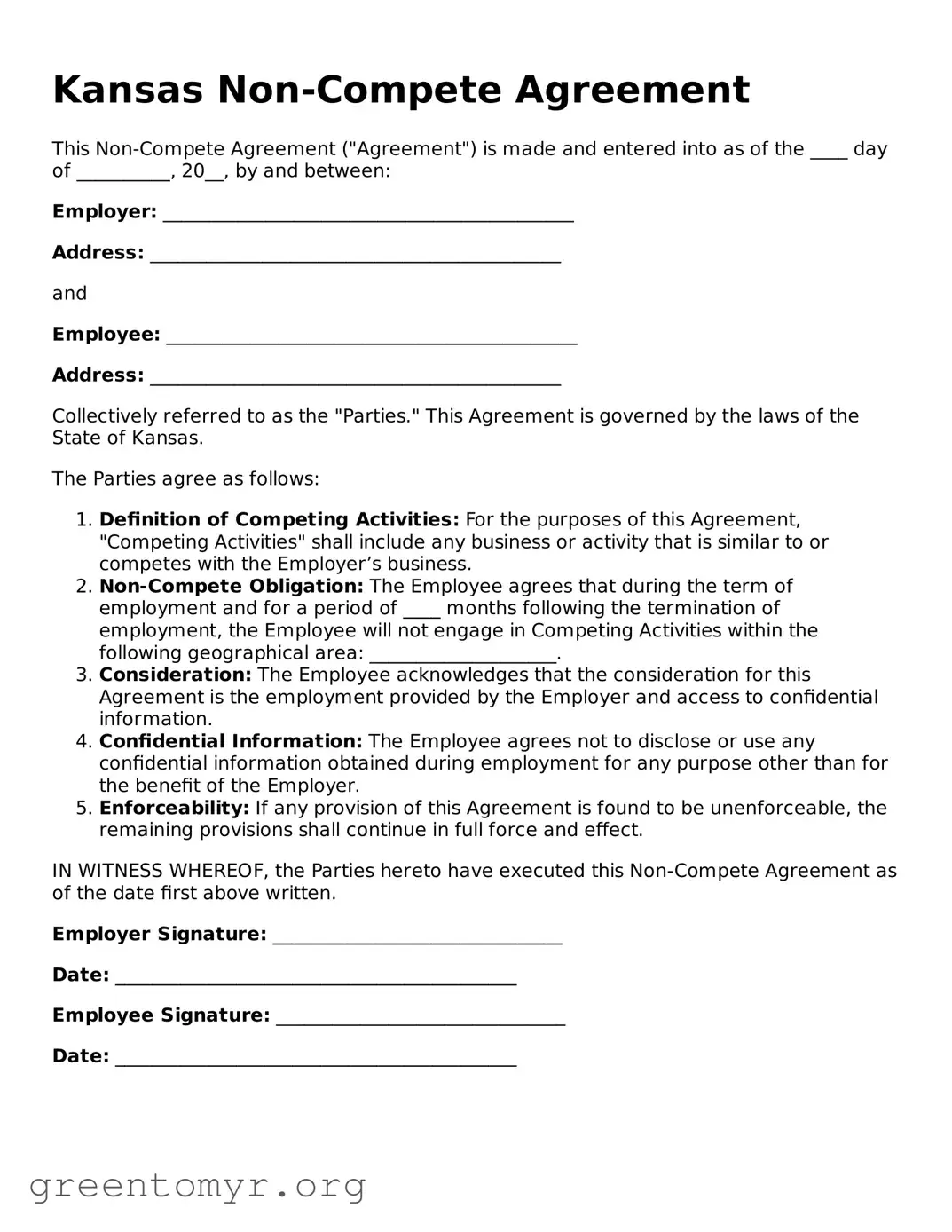
Kansas Non-Compete Agreement
This Non-Compete Agreement ("Agreement") is made and entered into as of the ____ day of __________, 20__, by and between:
Employer: ____________________________________________
Address: ____________________________________________
and
Employee: ____________________________________________
Address: ____________________________________________
Collectively referred to as the "Parties." This Agreement is governed by the laws of the State of Kansas.
The Parties agree as follows:
IN WITNESS WHEREOF, the Parties hereto have executed this Non-Compete Agreement as of the date first above written.
Employer Signature: _______________________________
Date: ___________________________________________
Employee Signature: _______________________________
Date: ___________________________________________
| Fact Name | Description |
|---|---|
| Governing Law | Kansas law governs non-compete agreements. |
| Enforceability | Non-compete agreements are enforceable in Kansas if reasonable in scope. |
| Duration | Agreements should have a specified duration, typically not exceeding two years. |
| Geographic Scope | The geographic area must be clearly defined and reasonable. |
| Consideration | There must be adequate consideration, such as employment or access to trade secrets. |
| Public Policy | Kansas courts may invalidate agreements that restrain trade excessively. |
| Employee Rights | Employees have the right to challenge overly broad non-compete agreements. |
| Industry Specifics | Certain industries may have additional regulations regarding non-compete agreements. |
After obtaining the Kansas Non-compete Agreement form, you will need to fill it out accurately. This process ensures that all necessary information is provided, making the agreement legally binding and enforceable. Follow the steps below to complete the form correctly.
Once the form is filled out, make copies for your records and provide a signed copy to the other party involved. This will ensure that both sides have access to the same information and terms agreed upon.
A Kansas Non-compete Agreement is a legal document that restricts an employee from working for a competitor or starting a competing business for a specified period after leaving their current employer. This agreement aims to protect the employer's business interests, including trade secrets, client relationships, and proprietary information.
For a Non-compete Agreement to be enforceable in Kansas, it must meet certain criteria:
The duration of a Non-compete Agreement in Kansas varies depending on the specific circumstances of the employment and the nature of the business. Typically, agreements range from six months to two years. Courts will assess the reasonableness of the duration based on the industry and the employee's role within the company.
Yes, a Non-compete Agreement can be enforced in Kansas, provided it meets the necessary legal standards. However, enforcement is not guaranteed. Courts will evaluate the reasonableness of the agreement and its impact on the employee's ability to work. If deemed overly restrictive, a court may refuse to enforce the agreement or modify its terms.
Filling out the Kansas Non-compete Agreement form can be straightforward, but many people make common mistakes that can lead to complications. One frequent error is not clearly defining the scope of the non-compete. If the agreement does not specify the types of activities that are restricted, it may be unenforceable. Clarity is key. Vague language can create confusion and lead to disputes.
Another mistake is overlooking the duration of the agreement. It’s crucial to set a reasonable time frame for the non-compete clause. If the duration is too long, a court may find it unreasonable. Striking a balance between protecting business interests and allowing former employees to work is essential.
Many individuals also fail to consider geographical limitations. The agreement should specify where the restrictions apply. If the geographic area is too broad, it may not hold up in court. Defining a specific region can help ensure the agreement is enforceable.
People often neglect to include consideration in the agreement. This means that there must be something of value exchanged for the employee’s agreement to the non-compete. Without this, the agreement may not be legally binding. Ensure that there is a clear benefit for both parties.
Another common error is not having the agreement reviewed by a legal professional. While it may seem like an extra step, consulting with an attorney can help identify potential issues. This can save time and money down the road. Don’t skip this important step.
Some individuals forget to update the agreement when circumstances change. If a business expands or changes its focus, the non-compete should reflect those changes. Regularly reviewing and updating the agreement can prevent future conflicts.
Inadequate signatures can also invalidate the agreement. Both parties must sign the document for it to be enforceable. Ensure that all required signatures are present and that they are dated appropriately.
Failing to communicate the agreement clearly to employees is another mistake. Employees should fully understand what they are agreeing to. Providing a thorough explanation can help avoid misunderstandings and potential disputes later on.
Many people also make the mistake of not keeping a copy of the signed agreement. It’s essential to have a record of the agreement for future reference. Without a copy, it can be difficult to enforce the terms if a dispute arises.
Lastly, some individuals assume that all non-compete agreements are the same. Each agreement should be tailored to fit the specific needs of the business and the employee. Generic templates may not address unique circumstances and could lead to legal challenges. Personalization is vital.
When entering into a Kansas Non-compete Agreement, it is often beneficial to consider additional documents that may support or clarify the terms of the agreement. These forms can help ensure that both parties understand their rights and responsibilities. Below is a list of commonly used documents that accompany a Non-compete Agreement.
Each of these documents plays a vital role in establishing clear expectations and protecting the interests of both parties involved. By understanding and utilizing these forms, individuals can create a more comprehensive framework for their professional relationships.
The Non-compete Agreement form shares similarities with several other legal documents. Here are four examples:
When filling out the Kansas Non-compete Agreement form, it is essential to approach the process thoughtfully. Here are ten important dos and don'ts to consider:
Non-compete agreements are often misunderstood. Here are four common misconceptions about the Kansas Non-compete Agreement form.
Understanding these misconceptions can help both employers and employees navigate the complexities of non-compete agreements more effectively.
When dealing with a Kansas Non-compete Agreement, it's essential to understand its purpose and implications. Here are some key takeaways to keep in mind:
Understanding these key points can help both employers and employees navigate the complexities of non-compete agreements in Kansas effectively.