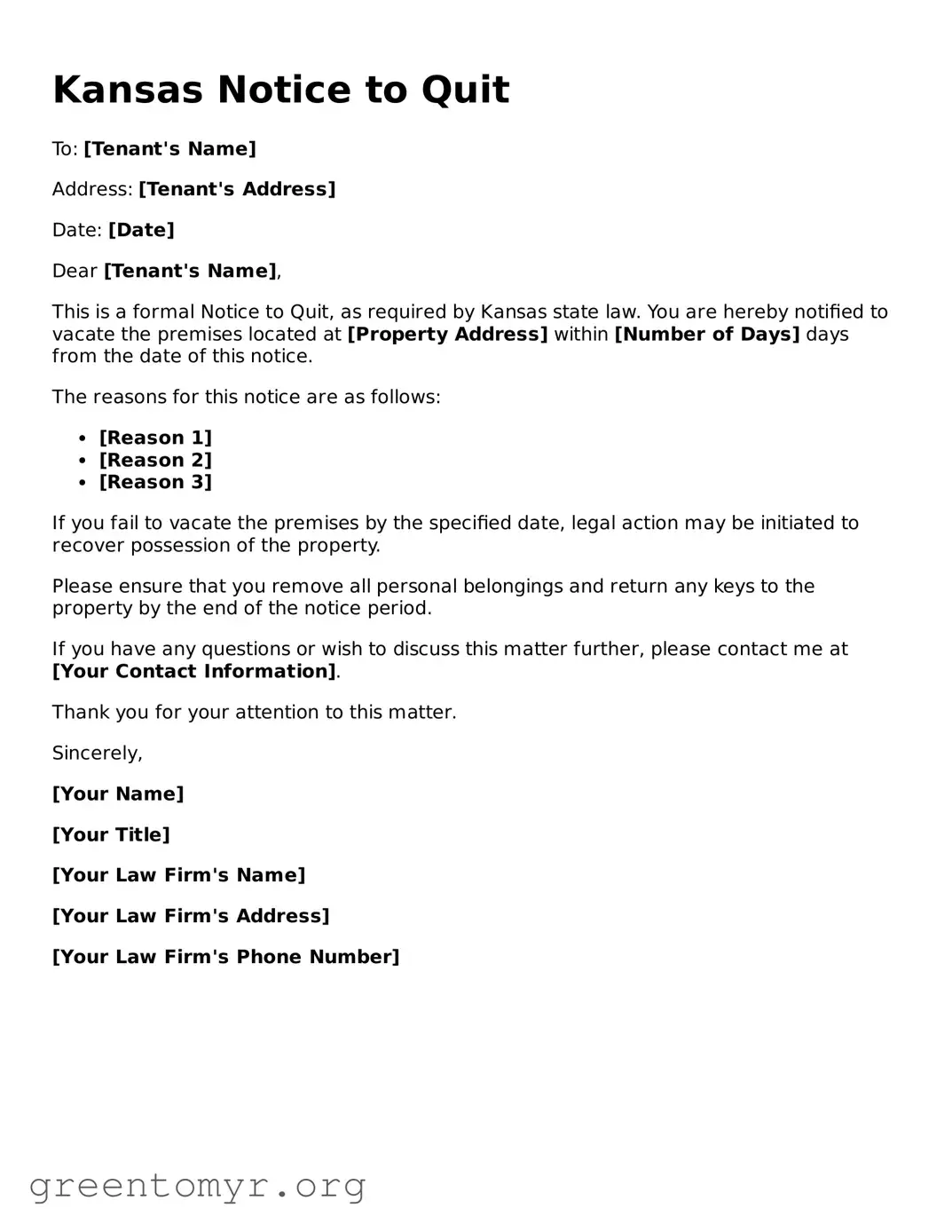
The Kansas Notice to Quit form is an essential document in the landlord-tenant relationship, serving as a formal notification that a tenant must vacate the rental property. This notice is typically issued when a tenant has violated the terms of the lease agreement or has failed to pay rent on time. It outlines the reasons for the eviction and specifies the time frame in which the tenant must leave the premises. Understanding this form is crucial for both landlords and tenants, as it provides clarity on the eviction process and helps ensure that all parties are aware of their rights and responsibilities. By adhering to the guidelines set forth in the Notice to Quit, landlords can navigate the eviction process more smoothly, while tenants are afforded the opportunity to address any issues before facing potential legal action. Knowing how to properly complete and serve this form can make a significant difference in the outcome of an eviction scenario, fostering a more respectful and transparent rental experience.
Kansas Notice to Quit
To: [Tenant's Name]
Address: [Tenant's Address]
Date: [Date]
Dear [Tenant's Name],
This is a formal Notice to Quit, as required by Kansas state law. You are hereby notified to vacate the premises located at [Property Address] within [Number of Days] days from the date of this notice.
The reasons for this notice are as follows:
If you fail to vacate the premises by the specified date, legal action may be initiated to recover possession of the property.
Please ensure that you remove all personal belongings and return any keys to the property by the end of the notice period.
If you have any questions or wish to discuss this matter further, please contact me at [Your Contact Information].
Thank you for your attention to this matter.
Sincerely,
[Your Name]
[Your Title]
[Your Law Firm's Name]
[Your Law Firm's Address]
[Your Law Firm's Phone Number]
| Fact Name | Details |
|---|---|
| Purpose | The Kansas Notice to Quit form is used by landlords to notify tenants of the need to vacate the rental property. |
| Governing Law | This form is governed by Kansas Statutes Annotated (K.S.A.) 58-2570 and 58-2571. |
| Delivery Method | The notice can be delivered in person, by mail, or by posting it on the property. |
| Notice Period | The notice period typically varies based on the reason for eviction, usually ranging from 14 to 30 days. |
| Contents Required | The form must include the tenant's name, address of the rental property, and the reason for termination. |
| Tenant's Rights | Tenants have the right to contest the notice in court if they believe it is unjustified. |
| Legal Action | If the tenant does not vacate, the landlord may file for eviction in court after the notice period expires. |
After obtaining the Kansas Notice to Quit form, the next steps involve carefully filling out the required information. This process ensures that the document is completed accurately, which is essential for it to be effective. Follow these steps to ensure that the form is filled out correctly.
Once the form is filled out, it should be delivered to the tenant according to the legal requirements. This may involve personal delivery, mailing, or posting the notice on the property, depending on the situation. Following these steps will help ensure that the notice is valid and enforceable.
The Kansas Notice to Quit form is a legal document that a landlord uses to inform a tenant that they must vacate the rental property. This notice is typically given when a tenant has violated the lease agreement or has not paid rent. It serves as a formal request for the tenant to leave the premises within a specified timeframe.
A Notice to Quit should be used in situations such as:
Using this form helps to ensure that the eviction process follows legal protocols.
In Kansas, the notice period can vary depending on the reason for the eviction:
It’s essential to check the specific circumstances and local laws, as they can influence the required notice period.
Yes, a tenant can contest a Notice to Quit. If they believe the notice was issued unfairly or incorrectly, they can respond to the landlord and provide their reasons. If the situation escalates, the tenant may choose to defend their case in court during the eviction process.
If the tenant does not vacate the property by the deadline specified in the Notice to Quit, the landlord may proceed with legal action to evict the tenant. This typically involves filing an eviction lawsuit in the local court, where both parties will have the opportunity to present their cases.
While a Notice to Quit is often a precursor to an eviction notice, they are not the same. The Notice to Quit is a warning that gives the tenant a chance to remedy the situation or vacate the property. An eviction notice, on the other hand, is a legal document that follows if the tenant fails to comply with the Notice to Quit.
Yes, it is important to provide a reason for issuing a Notice to Quit. Clear communication helps the tenant understand why they are being asked to leave. This can also be critical if the case goes to court, as the reason must align with state laws governing tenant rights.
A Kansas Notice to Quit form can be obtained from various sources, including:
Make sure to use a form that complies with Kansas laws to ensure its validity.
Filling out the Kansas Notice to Quit form can be a straightforward process, but many people make common mistakes that can lead to confusion or delays. One frequent error is not providing the correct tenant information. It's essential to ensure that the names of all tenants are listed accurately. Missing a name or misspelling it can complicate the legal process and may even render the notice ineffective.
Another mistake often seen is failing to include the correct address of the rental property. The address should be complete and precise, as any discrepancies can lead to disputes. Landlords should double-check the address to avoid any issues in the future.
Some individuals overlook the importance of specifying the reason for the notice. While it might seem unnecessary, clearly stating the reason can help clarify the situation for both parties. This can also prevent misunderstandings that may arise later on.
Additionally, people sometimes forget to sign and date the form. A signature is crucial because it validates the notice. Without a signature, the document may not hold up in court, leading to wasted time and effort.
Another common oversight is not providing adequate notice. Kansas law requires landlords to give tenants a specific amount of time to vacate, depending on the situation. Failing to adhere to these timelines can result in legal complications.
Some landlords may also neglect to keep a copy of the notice for their records. This is an important step, as having documentation can be vital if disputes arise later. Keeping a record helps ensure that all parties are on the same page.
Moreover, people sometimes use outdated forms. Laws and regulations can change, so it’s essential to ensure you are using the most current version of the Notice to Quit form. Using an outdated form may not comply with current legal standards.
Lastly, many individuals do not follow up after sending the notice. It’s important to confirm that the tenant received it. Following up can help prevent any potential misunderstandings and ensure a smoother transition.
When dealing with rental agreements and potential evictions in Kansas, the Notice to Quit form is just one of several important documents that may be required. Understanding these documents can help both landlords and tenants navigate the process more smoothly. Below is a list of other forms and documents that are often used alongside the Kansas Notice to Quit form.
Each of these documents plays a crucial role in the rental process and can significantly impact the outcome of any disputes or issues that arise. Familiarity with them can empower both landlords and tenants to act knowledgeably and responsibly in their rental relationships.
When filling out the Kansas Notice to Quit form, it's essential to approach the process with care. Here are some important do's and don'ts to keep in mind.
By following these guidelines, you can help ensure that the process goes smoothly and that you comply with the necessary legal requirements.
The Kansas Notice to Quit form is an important document in the landlord-tenant relationship. However, several misconceptions surround its use and implications. Below are some common misunderstandings.
Understanding these misconceptions can help both landlords and tenants navigate the process more effectively. Being informed is crucial for protecting one's rights and responsibilities.
When dealing with the Kansas Notice to Quit form, it’s important to understand its purpose and how to use it effectively. Here are six key takeaways:
Using the Kansas Notice to Quit form correctly can streamline the eviction process and protect your rights as a landlord.