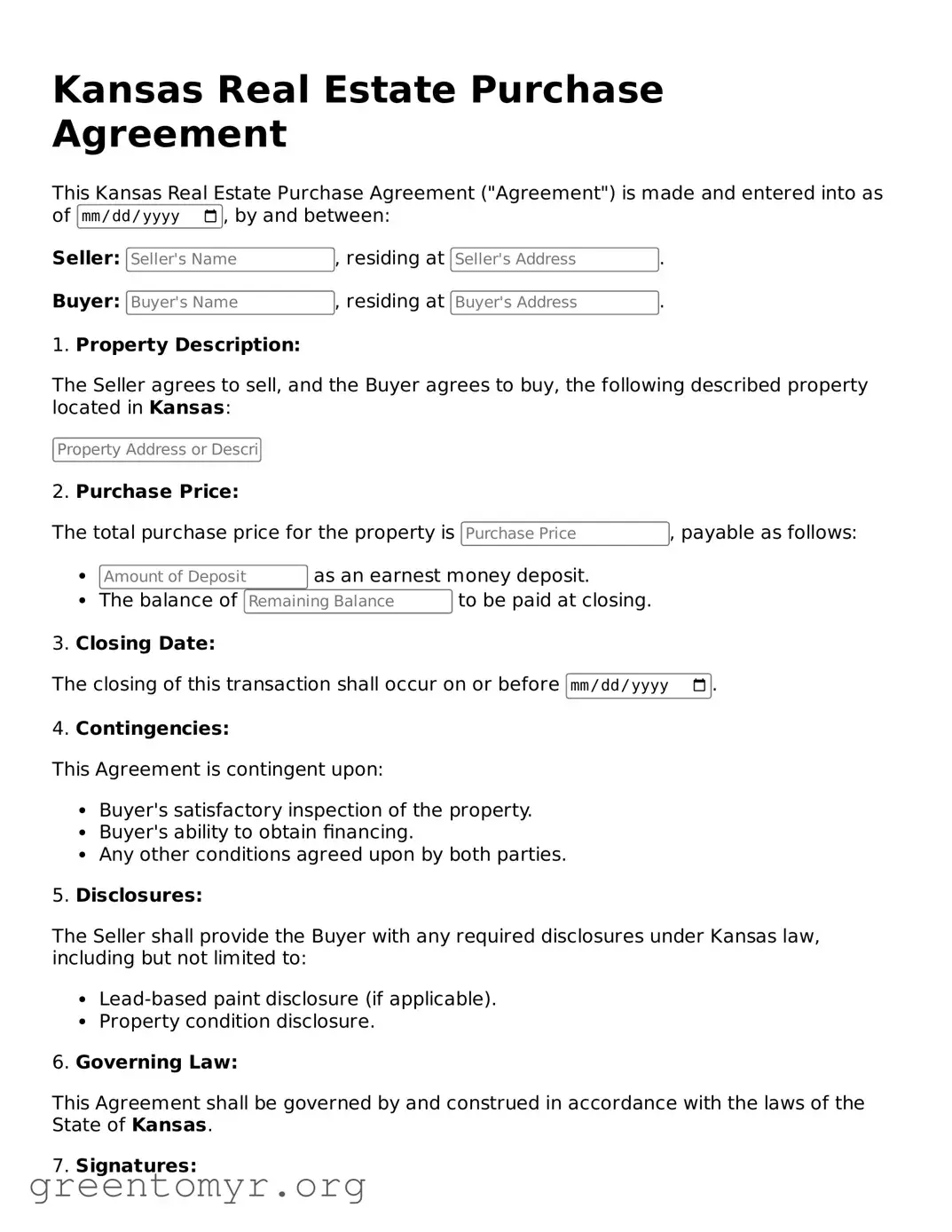
The Kansas Real Estate Purchase Agreement form serves as a crucial document in the home-buying process, outlining the terms and conditions under which a buyer agrees to purchase a property from a seller. This agreement typically includes essential elements such as the purchase price, the legal description of the property, and the closing date. Additionally, it addresses contingencies, which may include financing, inspections, and other conditions that must be met before the sale can be finalized. Both parties must also consider earnest money, which demonstrates the buyer's commitment to the transaction. The form provides a framework for negotiating repairs, disclosures, and any other stipulations that may arise during the sale. By clearly defining the rights and obligations of both the buyer and seller, the Kansas Real Estate Purchase Agreement helps to minimize misunderstandings and disputes, ultimately facilitating a smoother transaction. Understanding this document is vital for anyone looking to navigate the complexities of real estate in Kansas.
Kansas Real Estate Purchase Agreement
This Kansas Real Estate Purchase Agreement ("Agreement") is made and entered into as of , by and between:
Seller: , residing at .
Buyer: , residing at .
1. Property Description:
The Seller agrees to sell, and the Buyer agrees to buy, the following described property located in Kansas:
2. Purchase Price:
The total purchase price for the property is , payable as follows:
3. Closing Date:
The closing of this transaction shall occur on or before .
4. Contingencies:
This Agreement is contingent upon:
5. Disclosures:
The Seller shall provide the Buyer with any required disclosures under Kansas law, including but not limited to:
6. Governing Law:
This Agreement shall be governed by and construed in accordance with the laws of the State of Kansas.
7. Signatures:
By signing below, both parties agree to the terms and conditions set forth in this Agreement.
______________________________
Seller's Signature
______________________________
Buyer's Signature
______________________________
Date
| Fact Name | Description |
|---|---|
| Governing Law | The Kansas Real Estate Purchase Agreement is governed by the laws of the State of Kansas. |
| Parties Involved | The agreement typically involves a buyer and a seller, both of whom must be legally capable of entering into a contract. |
| Property Description | A detailed description of the property being sold, including its address and legal description, is required. |
| Purchase Price | The agreement must clearly state the purchase price, including any earnest money deposits. |
| Contingencies | Common contingencies may include financing, inspections, and the sale of the buyer's current home. |
| Closing Date | The agreement specifies a closing date, which is the date when the property transfer is finalized. |
| Disclosures | Sellers are required to provide certain disclosures about the property, including known defects or issues. |
| Signatures | Both parties must sign the agreement for it to be legally binding, indicating their acceptance of the terms. |
After obtaining the Kansas Real Estate Purchase Agreement form, the next step involves accurately completing each section of the document. This process ensures that all necessary information is provided for the transaction to proceed smoothly.
Once the form is filled out, it should be reviewed for accuracy before being submitted to the appropriate parties involved in the real estate transaction.
A Kansas Real Estate Purchase Agreement is a legally binding document used to outline the terms and conditions of a real estate transaction in Kansas. It serves as a contract between the buyer and seller, detailing the sale of a property, including the purchase price, closing date, and any contingencies that may apply.
The agreement typically includes the following key elements:
If either party fails to fulfill their obligations under the agreement, it may be considered a breach of contract. The non-breaching party may have several options, including:
Yes, the Kansas Real Estate Purchase Agreement can be amended after it is signed, but both parties must agree to the changes. Any amendments should be documented in writing and signed by both parties to ensure clarity and legal enforceability.
Earnest money is a deposit made by the buyer to demonstrate their commitment to purchasing the property. It is typically held in escrow until the transaction is completed. If the sale goes through, the earnest money is usually applied to the purchase price. If the buyer backs out without a valid reason, the seller may keep the earnest money as compensation for the breach.
While there are standard forms available, the agreement can be customized to fit the specific needs of the buyer and seller. It is important to ensure that any modifications comply with Kansas law and accurately reflect the intentions of both parties.
Filling out the Kansas Real Estate Purchase Agreement can be a daunting task, and mistakes are more common than one might think. One frequent error occurs when buyers fail to provide accurate property descriptions. A vague or incorrect description can lead to confusion or disputes later on. It is crucial to include the complete address, lot number, and any other identifying information to ensure clarity.
Another common mistake is neglecting to specify the purchase price clearly. While it may seem straightforward, ambiguity in the price section can create complications during negotiations. Buyers should write the price in both numerical and written form to avoid misunderstandings.
Many individuals overlook the importance of including contingencies in the agreement. Contingencies serve as protective measures for buyers, allowing them to back out of the deal under specific circumstances, such as failing to secure financing or discovering significant issues during a home inspection. Without these clauses, buyers may find themselves locked into an agreement that does not serve their best interests.
Additionally, some buyers forget to check the closing date. This date is essential for both parties, as it marks when the transaction is finalized. If left blank or inaccurately filled, it can lead to delays and frustration. It is advisable to discuss and agree on a realistic closing timeline with all parties involved.
Another area where mistakes often occur is in the signatures section. Both the buyer and seller must sign the agreement for it to be legally binding. Failing to obtain all necessary signatures can render the contract void, leading to potential legal issues. It is wise to review the document thoroughly to ensure that every required signature is present.
In some cases, individuals may not fully understand or appreciate the implications of the terms they are agreeing to. This lack of understanding can lead to agreeing to unfavorable terms, such as limited repair allowances or strict timelines. Taking the time to read and comprehend each section of the agreement can prevent future disputes and protect one’s interests.
Finally, many buyers neglect to consult with a real estate professional or attorney before submitting the agreement. Professional guidance can help identify potential pitfalls and ensure that all aspects of the agreement are in order. Seeking advice can make a significant difference in the outcome of the transaction, providing peace of mind throughout the process.
When engaging in real estate transactions in Kansas, several documents complement the Real Estate Purchase Agreement. These forms help clarify terms, protect the interests of both parties, and ensure a smooth transaction process. Here’s a brief overview of some commonly used documents.
Understanding these documents can enhance your real estate experience in Kansas. Each plays a vital role in ensuring that the transaction is clear and legally sound. Always consider consulting with a professional if you have questions about any of these forms.
Lease Agreement: This document outlines the terms under which a tenant can occupy a property. Like a purchase agreement, it specifies the parties involved, property details, and payment terms.
Option Agreement: An option agreement gives a buyer the right to purchase a property at a predetermined price within a specified time frame. Similar to a purchase agreement, it includes terms and conditions for the potential sale.
Purchase and Sale Agreement: This document serves a similar purpose to the Real Estate Purchase Agreement but may include additional clauses regarding the sale of multiple properties or specific contingencies.
Real Estate Listing Agreement: This agreement is between a seller and a real estate agent, detailing the agent's responsibilities in marketing the property. It shares similarities in defining the property and terms of sale.
Escrow Agreement: This document establishes the terms under which a third party holds funds or documents until the completion of a transaction. Like a purchase agreement, it ensures that all parties fulfill their obligations.
Joint Venture Agreement: When two or more parties collaborate on a real estate project, this agreement outlines each party's contributions and responsibilities, similar to how a purchase agreement delineates buyer and seller obligations.
Real Estate Development Agreement: This document defines the terms for developing a property, including financing and timelines. It shares the focus on property and financial terms found in a purchase agreement.
Seller Financing Agreement: This agreement allows the seller to finance the buyer's purchase, detailing payment terms and interest rates, akin to the financial aspects outlined in a purchase agreement.
Title Transfer Document: This document is used to officially transfer ownership of a property from one party to another. It is similar to a purchase agreement in that it formalizes the change of ownership and includes necessary details about the property.
When filling out the Kansas Real Estate Purchase Agreement form, it is important to be thorough and accurate. Here are six key actions to take and avoid:
When it comes to the Kansas Real Estate Purchase Agreement, many people hold misconceptions that can lead to confusion or mistakes during the buying or selling process. Here are seven common misconceptions explained:
Many believe that the Kansas Real Estate Purchase Agreement is exclusively for residential transactions. In reality, it can be used for various types of real estate, including commercial properties.
While signing the agreement does indicate intent, it becomes legally binding only after all parties have signed and any necessary conditions have been met.
While many terms can be negotiated, some aspects, such as certain state laws or regulations, may impose restrictions that cannot be altered.
Although it is possible to complete the form without an agent, having professional assistance can help ensure that all necessary details are correctly addressed.
Each purchase agreement can vary based on the specific details of the transaction, including property type, location, and buyer-seller negotiations.
Changes can be made to the agreement if both parties agree to the modifications. It’s essential to document any changes properly.
While it’s best to include as many contingencies as possible initially, additional contingencies can be added later if both parties consent.
Understanding these misconceptions can help buyers and sellers navigate the real estate process more effectively. Clarity on these points ensures a smoother transaction and better outcomes for everyone involved.
When filling out and using the Kansas Real Estate Purchase Agreement form, keep the following key takeaways in mind:
By following these takeaways, you can navigate the Kansas Real Estate Purchase Agreement with greater confidence and clarity.