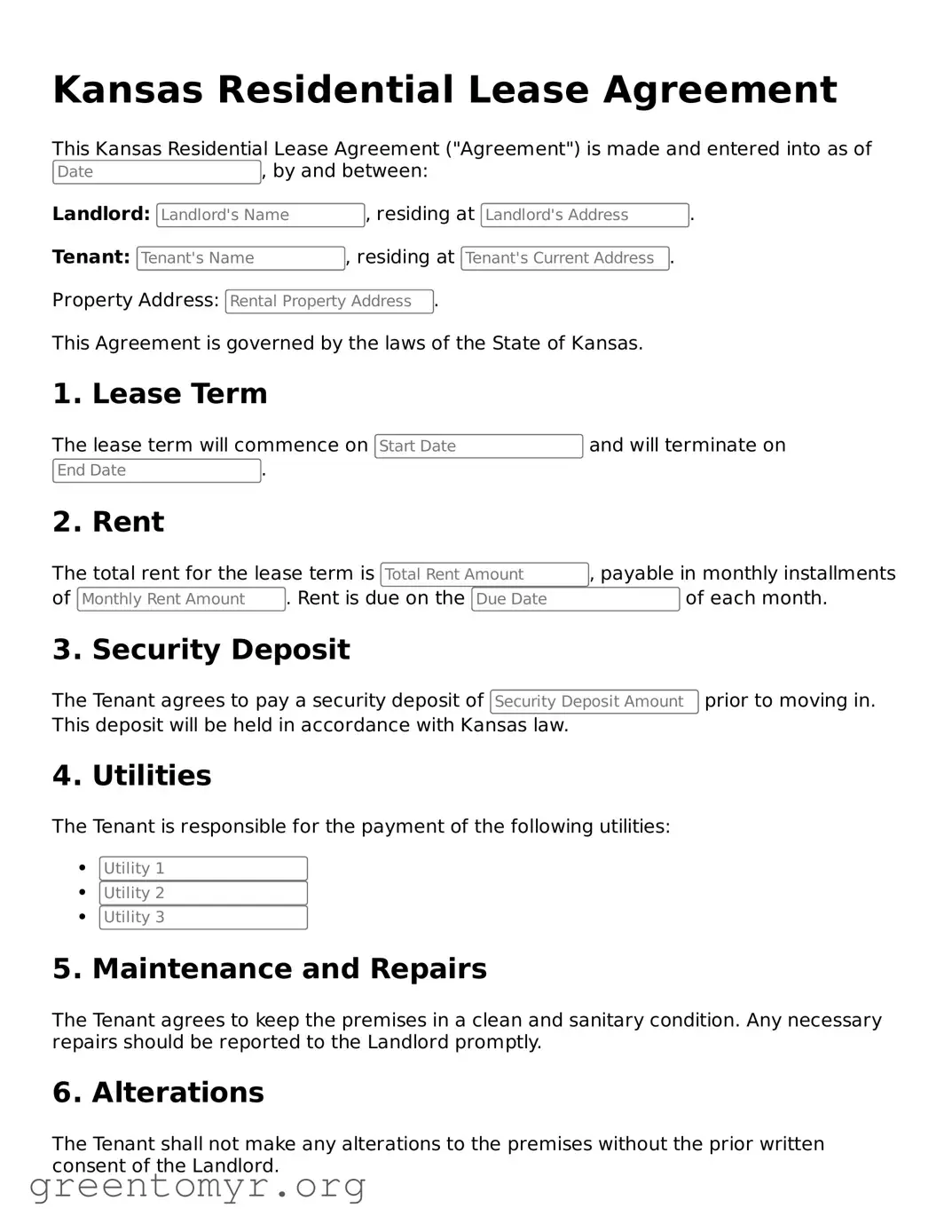
The Kansas Residential Lease Agreement form serves as a crucial document for both landlords and tenants, outlining the terms and conditions of a rental arrangement. This legally binding agreement typically includes essential details such as the names of the parties involved, the rental property’s address, and the duration of the lease. Additionally, it specifies the monthly rent amount, payment due dates, and any security deposit requirements. Important clauses regarding maintenance responsibilities, utilities, and rules regarding pets are often included to ensure clarity and prevent disputes. Furthermore, the form may address the procedures for lease termination and renewal, providing both parties with a clear understanding of their rights and obligations. By establishing a comprehensive framework, the Kansas Residential Lease Agreement fosters a transparent relationship between landlords and tenants, ultimately promoting a harmonious living environment.
Kansas Residential Lease Agreement
This Kansas Residential Lease Agreement ("Agreement") is made and entered into as of , by and between:
Landlord: , residing at .
Tenant: , residing at .
Property Address: .
This Agreement is governed by the laws of the State of Kansas.
1. Lease Term
The lease term will commence on and will terminate on .
2. Rent
The total rent for the lease term is , payable in monthly installments of . Rent is due on the of each month.
3. Security Deposit
The Tenant agrees to pay a security deposit of prior to moving in. This deposit will be held in accordance with Kansas law.
4. Utilities
The Tenant is responsible for the payment of the following utilities:
5. Maintenance and Repairs
The Tenant agrees to keep the premises in a clean and sanitary condition. Any necessary repairs should be reported to the Landlord promptly.
6. Alterations
The Tenant shall not make any alterations to the premises without the prior written consent of the Landlord.
7. Termination
Either party may terminate this Agreement by providing written notice at least days in advance.
8. Governing Law
This Agreement shall be governed by and construed in accordance with the laws of the State of Kansas.
By signing below, both parties agree to the terms and conditions outlined in this Kansas Residential Lease Agreement.
Landlord Signature: ___________________________ Date: ________________
Tenant Signature: ___________________________ Date: ________________
| Fact Name | Description |
|---|---|
| Purpose | The Kansas Residential Lease Agreement is a legal document that outlines the terms and conditions between a landlord and tenant for renting a residential property. |
| Duration | This agreement typically specifies the length of the lease, which can be a fixed term (like one year) or month-to-month. |
| Governing Laws | The lease is governed by Kansas state laws, particularly the Kansas Residential Landlord and Tenant Act. |
| Security Deposit | The agreement usually requires a security deposit, which is held by the landlord to cover potential damages or unpaid rent. |
| Termination Clause | A termination clause outlines the process for ending the lease, including notice periods and conditions under which the lease can be terminated early. |
Filling out the Kansas Residential Lease Agreement form is straightforward. By following these steps, you will ensure that all necessary information is accurately provided, setting the stage for a successful lease arrangement.
Once the form is completed, review it carefully for accuracy. Make copies for all parties involved, and keep them in a safe place for future reference.
A Kansas Residential Lease Agreement is a legally binding document between a landlord and a tenant. It outlines the terms and conditions under which a tenant can occupy a residential property. This agreement covers aspects such as rent amount, duration of the lease, security deposits, and responsibilities of both parties.
Essential components of the agreement typically include:
Lease terms in Kansas can vary widely. Most residential leases are for a period of one year, but shorter or longer terms are also common. Month-to-month leases are another option, providing flexibility for both landlords and tenants.
Generally, a landlord cannot increase rent during the lease term unless the lease specifically allows for such an increase. Once the lease expires, the landlord may propose a new rent amount for a renewed lease or a month-to-month agreement.
If a tenant needs to break the lease early, they should review the lease terms for any clauses regarding early termination. Often, tenants may be required to give notice, pay a fee, or find a replacement tenant. Open communication with the landlord can sometimes lead to an amicable resolution.
Yes, Kansas has specific laws that govern residential leases. These laws cover various aspects, including security deposits, eviction processes, and tenant rights. It’s important for both landlords and tenants to be familiar with these regulations to ensure compliance and protect their interests.
If a tenant faces issues with their landlord, such as failure to make necessary repairs or unlawful eviction, they should first attempt to communicate directly with the landlord. If the issue remains unresolved, tenants can seek assistance from local housing authorities or legal aid organizations. Documenting all communications and keeping records of any issues is advisable.
Filling out a Kansas Residential Lease Agreement form can seem straightforward, but many people stumble over common pitfalls. One frequent mistake is neglecting to read the entire document carefully. Skimming through the lease can lead to misunderstandings about important terms, such as the length of the lease, rent due dates, and maintenance responsibilities. Taking the time to read each section ensures that both landlords and tenants are on the same page.
Another common error is failing to provide accurate personal information. This includes names, addresses, and contact information. Inaccurate details can lead to confusion or disputes down the line. It’s essential to double-check that all information is correct before submitting the lease.
Some individuals forget to specify the rent amount clearly. While it may seem obvious, writing it down explicitly can prevent misunderstandings later. Additionally, it’s important to outline how and when the rent should be paid. This clarity helps both parties avoid any potential conflicts regarding payment methods or timing.
People often overlook the importance of documenting any agreed-upon repairs or modifications to the property. If a landlord promises to fix something before a tenant moves in, that agreement should be included in the lease. This documentation protects both parties and ensures that expectations are clear.
Another mistake is not understanding the lease duration. Some tenants may assume that a lease automatically converts to a month-to-month agreement after its expiration. However, if the lease does not specify this, tenants could find themselves in a difficult situation. Clarifying the lease terms can save a lot of hassle later on.
Additionally, many individuals fail to read or understand the pet policy. If a tenant plans to have pets, it’s crucial to ensure that the lease explicitly allows for them. Not adhering to these policies can result in penalties or even eviction. Understanding the rules around pets can help maintain a good landlord-tenant relationship.
Another common mistake is not addressing security deposits properly. The lease should clearly state the amount of the security deposit and the conditions under which it will be returned. Without this information, disputes may arise when the lease ends. Both parties should be aware of their rights and responsibilities regarding security deposits.
Finally, many people forget to sign and date the lease. A lease is not legally binding until both parties have signed it. This step is crucial to ensure that all terms are agreed upon. A missing signature can render the entire document void, leaving both parties without the protections a lease typically provides.
When entering into a rental agreement, it's essential to have a clear understanding of the various documents that may accompany the Kansas Residential Lease Agreement. These forms help protect the rights of both landlords and tenants, ensuring a smooth rental experience. Below are some commonly used documents that you may encounter alongside the lease agreement.
Understanding these documents can empower both landlords and tenants to navigate the rental process with confidence. By being informed, you can ensure that all parties involved are on the same page, fostering a positive rental relationship.
When filling out the Kansas Residential Lease Agreement form, it is essential to approach the task with care. Here are some important dos and don'ts to keep in mind.
Misconceptions about the Kansas Residential Lease Agreement form can lead to confusion for both landlords and tenants. Below is a list of seven common misconceptions along with clarifications.
This is not true. Lease agreements can vary significantly in terms of terms, conditions, and legal requirements. The Kansas Residential Lease Agreement is specifically tailored to comply with Kansas state laws.
Many believe that a verbal agreement is enough to establish a lease. However, written agreements provide clarity and legal protection for both parties. The Kansas Residential Lease Agreement serves as a formal record of the agreement.
Some people think that landlords can charge any amount for a security deposit. In Kansas, there are specific regulations governing the amount and return of security deposits, which are outlined in the lease agreement.
This misconception suggests that landlords have unrestricted access to the rental property. In reality, Kansas law requires landlords to provide notice before entering a tenant's home, except in emergencies.
Some tenants believe that lease terms can be modified at any time. Changes typically require mutual consent and must be documented in writing to be enforceable.
While breaking a lease can have consequences, tenants do have options. Kansas law provides specific circumstances under which a tenant may legally terminate a lease without penalty.
This is often assumed, but the lease agreement should clearly specify which utilities are included. Tenants should review the agreement to understand their responsibilities regarding utility payments.
When dealing with the Kansas Residential Lease Agreement form, there are several important points to keep in mind. These takeaways will help ensure a smooth process for both landlords and tenants.
By keeping these takeaways in mind, you can navigate the Kansas Residential Lease Agreement process more effectively, ensuring that both landlords and tenants are on the same page.