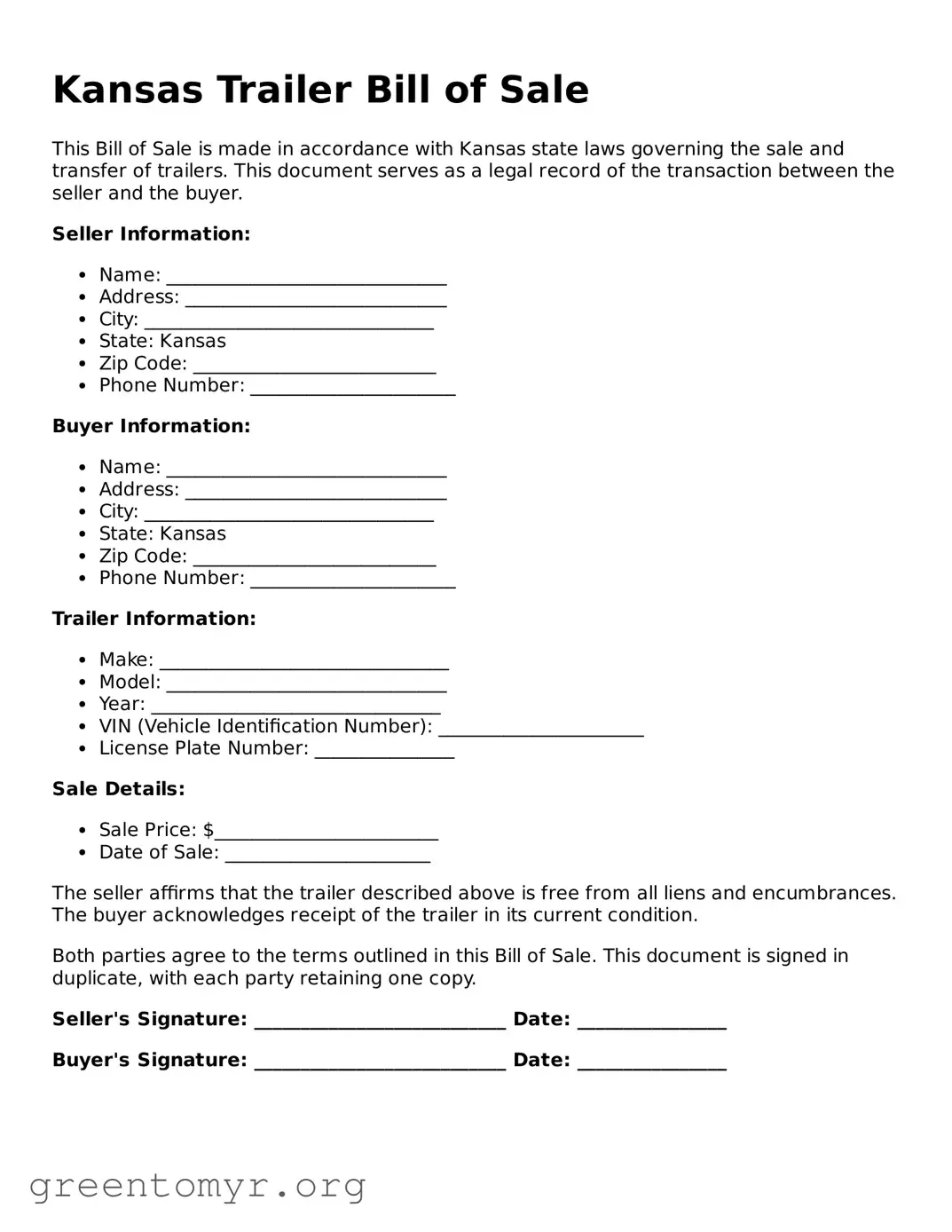
When buying or selling a trailer in Kansas, having the right documentation is essential to ensure a smooth transaction. The Kansas Trailer Bill of Sale form serves as a critical piece of this process, providing both parties with a clear record of the sale. This form captures important details such as the names and addresses of the buyer and seller, a description of the trailer, including its make, model, year, and Vehicle Identification Number (VIN). Additionally, it includes the sale price and the date of the transaction, helping to establish ownership transfer and protect both parties' interests. By completing this form, sellers can confirm that they are legally transferring ownership, while buyers gain assurance that they are purchasing a legitimate vehicle. Understanding the nuances of this document can save you time and prevent potential disputes down the line, making it a vital tool for anyone involved in a trailer sale in Kansas.
Kansas Trailer Bill of Sale
This Bill of Sale is made in accordance with Kansas state laws governing the sale and transfer of trailers. This document serves as a legal record of the transaction between the seller and the buyer.
Seller Information:
Buyer Information:
Trailer Information:
Sale Details:
The seller affirms that the trailer described above is free from all liens and encumbrances. The buyer acknowledges receipt of the trailer in its current condition.
Both parties agree to the terms outlined in this Bill of Sale. This document is signed in duplicate, with each party retaining one copy.
Seller's Signature: ___________________________ Date: ________________
Buyer's Signature: ___________________________ Date: ________________
| Fact Name | Description |
|---|---|
| Purpose | The Kansas Trailer Bill of Sale form is used to document the sale of a trailer between a buyer and a seller. |
| Governing Law | This form is governed by Kansas state law, specifically under the Kansas Uniform Commercial Code. |
| Required Information | The form requires details such as the names and addresses of both the buyer and seller, trailer description, and sale price. |
| Signature Requirement | Both the buyer and seller must sign the form to validate the transaction. |
| Notarization | Notarization is not required for the Kansas Trailer Bill of Sale, but it can provide additional legal protection. |
| Use for Registration | This form is often used to facilitate the registration of the trailer with the Kansas Department of Revenue. |
| Record Keeping | It is advisable for both parties to keep a copy of the completed bill of sale for their records. |
| Transfer of Ownership | Completing this form effectively transfers ownership of the trailer from the seller to the buyer. |
| Legal Protection | The bill of sale serves as a legal document that can help resolve disputes regarding the sale. |
Once you have the Kansas Trailer Bill of Sale form ready, it's time to fill it out accurately. This document is essential for transferring ownership of a trailer. Make sure to have all necessary information at hand to complete the form without delays.
A Kansas Trailer Bill of Sale is a legal document that records the sale and transfer of ownership of a trailer in the state of Kansas. This form includes essential details about the trailer, the buyer, and the seller, ensuring that both parties have a clear understanding of the transaction.
A Bill of Sale serves several important purposes:
The form typically includes the following information:
In Kansas, notarization is not a requirement for the Bill of Sale to be valid. However, having it notarized can add an extra layer of authenticity and may be beneficial if there are any disputes in the future.
To complete the Bill of Sale, follow these steps:
While you can use a generic Bill of Sale, it is advisable to use the Kansas-specific form. This ensures that all necessary information is included and complies with state regulations, making the transfer of ownership smoother.
After completing the Bill of Sale, both the buyer and seller should keep a copy for their records. The buyer will need to present this document when registering the trailer with the Kansas Department of Revenue.
There is no fee for creating or filing a Bill of Sale in Kansas. However, when registering the trailer or obtaining a title, there may be fees associated with those processes. It’s important to check with the Kansas Department of Revenue for specific fee information.
You can obtain a Kansas Trailer Bill of Sale form from various sources, including:
Filling out the Kansas Trailer Bill of Sale form can be a straightforward process, but many people make common mistakes that can lead to complications down the line. One frequent error is failing to provide complete information about the trailer. Buyers and sellers must include details such as the trailer's make, model, year, and Vehicle Identification Number (VIN). Omitting any of this information can result in difficulties when registering the trailer or transferring ownership.
Another mistake involves not properly identifying the parties involved in the transaction. Both the buyer and seller must provide their full names, addresses, and signatures. If any of this information is missing or incorrect, it can create confusion regarding ownership and liability. It is essential to double-check that all names are spelled correctly and that the addresses are accurate.
Many individuals also overlook the importance of including the sale price. The Kansas Trailer Bill of Sale requires the sale price to be documented clearly. Not specifying the amount can lead to issues with tax assessments or future disputes between the buyer and seller. It is advisable to write the amount in both numerical and written form to avoid any misunderstandings.
Additionally, some people forget to date the bill of sale. The date is crucial as it marks the official transfer of ownership. Without a date, there may be questions about when the transaction occurred, which can complicate legal matters later on. Always ensure that the date is clearly written on the form.
Another common error is not providing a clear description of the trailer's condition. Buyers need to understand what they are purchasing. Sellers should accurately describe any damages or repairs made to the trailer. Failure to do so may lead to disputes and dissatisfaction after the sale is completed. Honesty and transparency are vital in this aspect.
Some individuals neglect to keep a copy of the completed bill of sale. After signing and submitting the document, both parties should retain a copy for their records. This serves as proof of the transaction and can be helpful if any issues arise in the future. It is wise to make copies before finalizing the sale.
Lastly, people sometimes forget to check for any local regulations regarding trailer sales. Different counties or municipalities may have specific requirements that need to be met. It is essential to research and ensure compliance with local laws to avoid potential fines or complications. By being thorough and attentive to these details, individuals can ensure a smooth and successful transaction.
When purchasing or selling a trailer in Kansas, the Trailer Bill of Sale form is a crucial document. However, it is often accompanied by other forms and documents that help ensure a smooth transaction. Here’s a list of commonly used documents that can support the process.
Having these documents ready can streamline the buying or selling process, making it more efficient and less stressful. It’s always wise to ensure all paperwork is in order before finalizing any transaction. This will help protect everyone involved and provide peace of mind.
The Trailer Bill of Sale form shares similarities with several other documents used in the transfer of ownership for vehicles and trailers. Here are five documents that are comparable:
When filling out the Kansas Trailer Bill of Sale form, it’s important to approach the task with care. Here’s a list of what you should and shouldn’t do to ensure the process goes smoothly.
By following these guidelines, you can help ensure a smooth transaction when buying or selling a trailer in Kansas.
The Kansas Trailer Bill of Sale form is an important document for anyone buying or selling a trailer in the state. However, there are several misconceptions surrounding its use. Here are four common misunderstandings:
Understanding these misconceptions can help ensure a smoother transaction when buying or selling a trailer in Kansas.
When filling out and using the Kansas Trailer Bill of Sale form, consider the following key points: