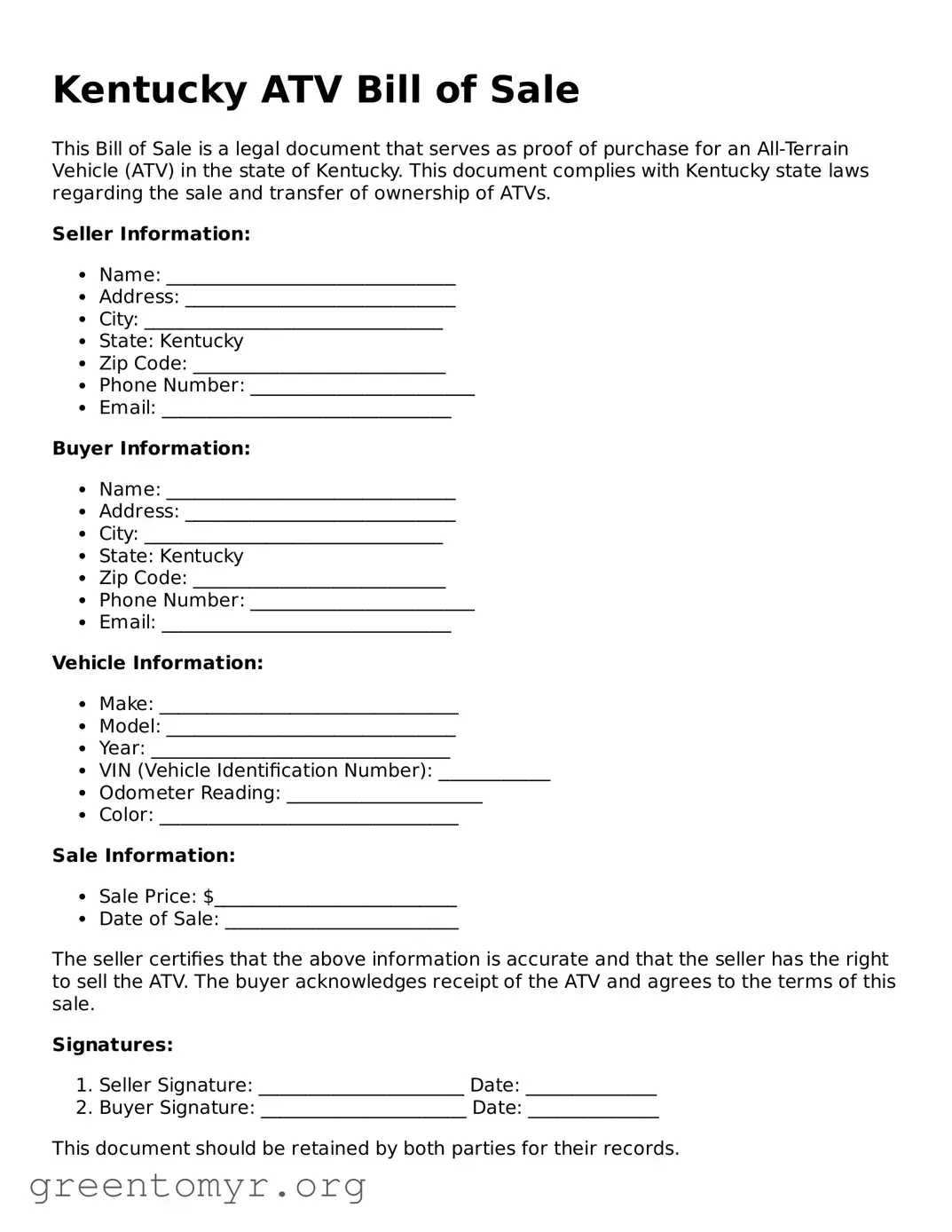
When it comes to buying or selling an all-terrain vehicle (ATV) in Kentucky, having the right documentation is essential for a smooth transaction. The Kentucky ATV Bill of Sale form serves as a vital record that not only captures the details of the sale but also protects both the buyer and the seller. This form typically includes key information such as the names and addresses of both parties, a description of the ATV—including its make, model, year, and Vehicle Identification Number (VIN)—and the sale price. Additionally, it often requires the signatures of both the buyer and the seller, signifying their agreement to the terms of the sale. This document can also serve as proof of ownership and is crucial for registering the ATV with the state. Understanding the importance of this form can help ensure that all legal requirements are met, making the process of transferring ownership both efficient and secure.
Kentucky ATV Bill of Sale
This Bill of Sale is a legal document that serves as proof of purchase for an All-Terrain Vehicle (ATV) in the state of Kentucky. This document complies with Kentucky state laws regarding the sale and transfer of ownership of ATVs.
Seller Information:
Buyer Information:
Vehicle Information:
Sale Information:
The seller certifies that the above information is accurate and that the seller has the right to sell the ATV. The buyer acknowledges receipt of the ATV and agrees to the terms of this sale.
Signatures:
This document should be retained by both parties for their records.
| Fact Name | Details |
|---|---|
| Purpose | The Kentucky ATV Bill of Sale form is used to document the sale and transfer of ownership of an all-terrain vehicle (ATV). |
| Governing Law | This form is governed by Kentucky Revised Statutes (KRS) Chapter 186A, which covers vehicle registration and transfer. |
| Required Information | The form requires details such as the buyer's and seller's names, addresses, and signatures, along with the ATV's description. |
| Vehicle Identification Number (VIN) | Including the ATV's VIN is essential for proper identification and to prevent fraud. |
| Notarization | While notarization is not mandatory, it is recommended to add an extra layer of authenticity to the transaction. |
| Sales Tax | Sales tax may apply to the purchase of an ATV in Kentucky, and it is the buyer's responsibility to pay it during registration. |
| Record Keeping | Both parties should keep a copy of the completed Bill of Sale for their records, as it serves as proof of the transaction. |
| Transfer of Title | After completing the Bill of Sale, the seller must provide the buyer with the title to the ATV for the transfer to be valid. |
After obtaining the Kentucky ATV Bill of Sale form, you will need to complete it accurately to ensure a smooth transaction. This document serves as proof of sale between the buyer and seller and contains important information about the ATV being sold.
Once you have completed the form, ensure that both parties retain a copy for their records. This will help prevent disputes and provide proof of ownership transfer in the future.
The Kentucky ATV Bill of Sale form is a legal document that records the sale or transfer of an all-terrain vehicle (ATV) in the state of Kentucky. This form serves as proof of ownership for the buyer and provides essential details about the transaction, including the vehicle's identification number, make, model, and the names of both the seller and the buyer.
A Bill of Sale is crucial for several reasons:
The form should include the following information:
You can obtain a Kentucky ATV Bill of Sale form from various sources, including:
Yes, you can create your own Bill of Sale for an ATV. However, it is important to ensure that it includes all necessary information and complies with Kentucky state laws. Using a template can help ensure that you do not miss any critical details.
Filling out the Kentucky ATV Bill of Sale form can seem straightforward, but many people make common mistakes that can lead to complications later. One frequent error is not providing complete information about the ATV. Details such as the Vehicle Identification Number (VIN), make, model, and year are essential. Omitting any of these can cause issues when registering the vehicle.
Another mistake is failing to include the correct names and addresses of both the buyer and seller. This information is crucial for establishing ownership. If any of these details are inaccurate, it may lead to disputes or difficulties in future transactions.
People often forget to date the document. A date is important as it establishes when the sale occurred. Without a date, it can be challenging to prove the timeline of ownership, which could affect registration and insurance claims.
Many individuals overlook the need for signatures. Both the buyer and seller must sign the Bill of Sale for it to be legally binding. A missing signature can render the document ineffective, leading to potential legal issues down the line.
Some individuals mistakenly think that a Bill of Sale is unnecessary if they have a title. While a title is important, the Bill of Sale serves as additional proof of the transaction. It can provide clarity in case of disputes or questions about the sale.
Another common error is not including the sale price. The Bill of Sale should clearly state the amount paid for the ATV. This information is not only important for record-keeping but may also be required for tax purposes.
People sometimes use vague language when describing the ATV. Instead of providing a clear description, they might write something like “a four-wheeler.” Instead, a detailed description helps avoid misunderstandings regarding the vehicle being sold.
Some sellers fail to disclose any liens or encumbrances on the ATV. If there are outstanding loans or claims against the vehicle, this information should be clearly stated. Not doing so can lead to legal repercussions for the seller.
Another mistake involves not keeping a copy of the completed Bill of Sale. Both parties should retain a copy for their records. This can be vital if any disputes arise in the future.
Lastly, many people neglect to check the form for errors before submitting it. Simple typos or inaccuracies can lead to significant problems later on. Taking the time to review the document can save a lot of hassle down the line.
When purchasing or selling an ATV in Kentucky, several additional forms and documents may be necessary to ensure a smooth transaction. These documents help establish ownership, provide proof of sale, and meet state requirements. Below is a list of commonly used forms that accompany the Kentucky ATV Bill of Sale.
Having these documents ready can facilitate the transaction process and help avoid any potential legal issues. It is advisable to review each form carefully and ensure all necessary information is provided before finalizing the sale.
The ATV Bill of Sale form serves a specific purpose in documenting the sale of an all-terrain vehicle. However, several other documents share similarities in their function and structure. Below is a list of nine such documents, each with a brief explanation of how they relate to the ATV Bill of Sale.
When filling out the Kentucky ATV Bill of Sale form, it's important to follow certain guidelines to ensure the document is valid and clear. Here’s a list of things to do and avoid:
The Kentucky ATV Bill of Sale form is an important document for anyone buying or selling an all-terrain vehicle in the state. However, there are several misconceptions surrounding this form that can lead to confusion. Here are seven common misconceptions:
Understanding these misconceptions can help buyers and sellers navigate the process more smoothly and ensure that all legal requirements are met.
When dealing with the Kentucky ATV Bill of Sale form, it is essential to understand its importance and the details involved. Here are some key takeaways to guide you through the process:
Understanding these points will help ensure a smooth transaction and protect both parties involved in the sale of an ATV in Kentucky.