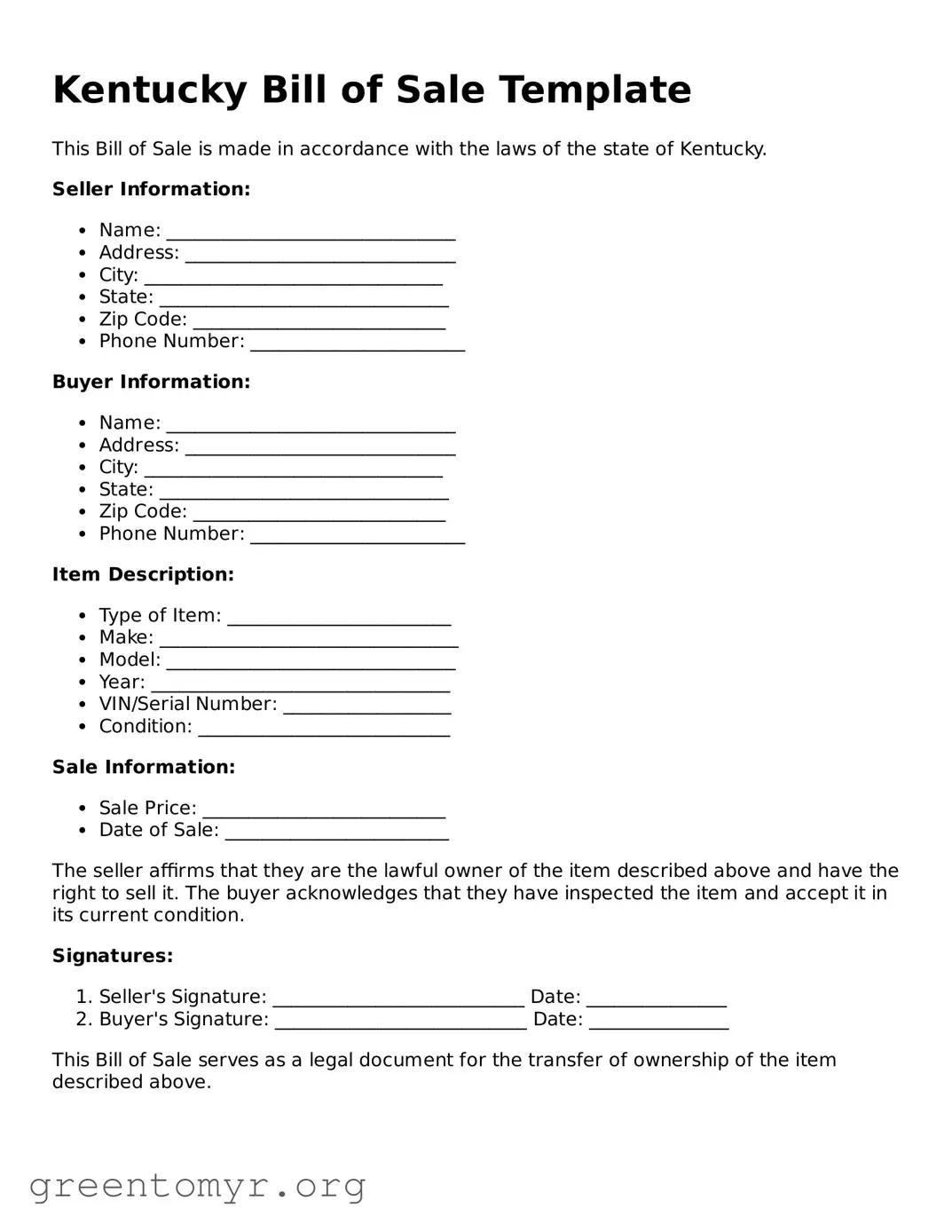
The Kentucky Bill of Sale form serves as a vital document for anyone involved in the buying or selling of personal property within the state. This form provides a clear record of the transaction, detailing essential information such as the buyer's and seller's names, addresses, and contact information. It specifies the item being sold, including its description, condition, and any identifying numbers, such as a Vehicle Identification Number (VIN) for automobiles. Additionally, the form outlines the sale price and payment method, ensuring that both parties are on the same page regarding the financial aspects of the deal. Notably, it may also include any warranties or guarantees offered by the seller, which can protect the buyer's interests. By having this document properly filled out and signed, both parties create a legally binding agreement that can help prevent disputes in the future. Understanding the importance and components of the Kentucky Bill of Sale is essential for anyone looking to engage in a property transaction in the state.
Kentucky Bill of Sale Template
This Bill of Sale is made in accordance with the laws of the state of Kentucky.
Seller Information:
Buyer Information:
Item Description:
Sale Information:
The seller affirms that they are the lawful owner of the item described above and have the right to sell it. The buyer acknowledges that they have inspected the item and accept it in its current condition.
Signatures:
This Bill of Sale serves as a legal document for the transfer of ownership of the item described above.
| Fact Name | Description |
|---|---|
| Purpose | The Kentucky Bill of Sale form is used to document the transfer of ownership of personal property from one party to another. |
| Governing Law | This form is governed by Kentucky Revised Statutes, specifically KRS Chapter 371. |
| Types of Property | The form can be used for various types of personal property, including vehicles, equipment, and household items. |
| Requirements | Both the buyer and seller must sign the Bill of Sale for it to be legally binding. |
| Notarization | While notarization is not mandatory in Kentucky, it is recommended for added legal protection. |
| Record Keeping | It is advisable for both parties to keep a copy of the Bill of Sale for their records, as it serves as proof of the transaction. |
After obtaining the Kentucky Bill of Sale form, it is important to complete it accurately to ensure a smooth transaction. The form requires specific information about the buyer, seller, and the item being sold. Once filled out, both parties should retain a copy for their records.
A Kentucky Bill of Sale form is a legal document that records the transfer of ownership of personal property from one party to another within the state of Kentucky. This form typically includes details such as the names and addresses of the buyer and seller, a description of the item being sold, the sale price, and the date of the transaction. It serves as proof of the transaction and can be used for various types of personal property, including vehicles, boats, and equipment.
While a Bill of Sale is not legally required for all transactions in Kentucky, it is highly recommended for the sale of personal property, especially for vehicles and boats. Having a Bill of Sale provides legal protection for both the buyer and the seller by documenting the terms of the sale and the transfer of ownership. For vehicle transactions, the Kentucky Transportation Cabinet requires a Bill of Sale when registering the vehicle.
A comprehensive Kentucky Bill of Sale should include the following information:
Including this information helps ensure that the document is complete and legally valid.
Yes, a Bill of Sale can be used for various types of personal property beyond vehicles. Common items include boats, trailers, equipment, and furniture. The form can be tailored to fit the specific item being sold, ensuring that all relevant details are included.
In Kentucky, notarization of a Bill of Sale is not required by law. However, having the document notarized can provide an additional layer of authenticity and may be beneficial in case of disputes. It is advisable to check with local regulations or specific requirements related to the type of property being sold.
A Kentucky Bill of Sale form can be obtained from various sources, including:
It is important to ensure that the form complies with Kentucky state laws and includes all necessary information for the specific transaction.
When filling out the Kentucky Bill of Sale form, many individuals inadvertently make mistakes that can lead to complications down the line. One common error is failing to provide complete information about the buyer and seller. It’s essential to include full names, addresses, and contact details. Missing even one piece of information can create confusion and potentially invalidate the document.
Another frequent mistake is neglecting to accurately describe the item being sold. A vague description can lead to disputes about what was actually sold. It’s important to include details such as the make, model, year, and any identifying numbers, like a Vehicle Identification Number (VIN) for vehicles. This ensures clarity and protects both parties.
People often overlook the need for signatures. Both the buyer and seller must sign the Bill of Sale for it to be legally binding. If either party forgets to sign, the document may not hold up in court, should any issues arise later. Additionally, it’s wise to have the signatures notarized, as this adds an extra layer of legitimacy.
Many individuals also fail to include the date of the transaction. This detail is crucial, as it establishes when the sale took place. Without a date, there can be disputes about the timeline of ownership, especially if issues arise later regarding the item sold.
Another mistake is not keeping a copy of the completed Bill of Sale. After the form is filled out and signed, both parties should retain a copy for their records. This serves as proof of the transaction and can be vital in case of future disputes or legal issues.
People sometimes forget to check local laws regarding the Bill of Sale. While Kentucky has its own requirements, other states may have different regulations. Failing to comply with these can lead to problems, especially if the item is registered in a different state.
Additionally, not specifying the payment method can lead to misunderstandings. Clearly stating whether the transaction was completed via cash, check, or another method helps clarify the terms of the sale. This can prevent disputes about whether payment was made in full.
Finally, some individuals might not realize the importance of including any warranties or guarantees associated with the sale. If the item comes with a warranty, detailing this in the Bill of Sale can protect both parties. It ensures that the buyer knows what to expect regarding repairs or replacements, while the seller is clear about their obligations.
The Kentucky Bill of Sale form is an essential document for transferring ownership of personal property, particularly vehicles. However, several other forms and documents often accompany it to ensure a smooth transaction. Below is a list of these documents, each serving a unique purpose.
By understanding these additional forms and documents, you can ensure a comprehensive and legally sound transaction when transferring ownership in Kentucky. Each document plays a vital role in protecting both the buyer and seller, making the process smoother and more secure.
The Bill of Sale form shares similarities with several other documents. Each of these documents serves a specific purpose in transactions and ownership transfers. Here is a list of documents that are similar to the Bill of Sale:
When filling out the Kentucky Bill of Sale form, certain practices can help ensure the document is accurate and legally valid. Here are five things to do and five things to avoid.
The Kentucky Bill of Sale form is an important document used in transactions involving the sale of personal property. However, there are several misconceptions surrounding its use and requirements. Here are five common misunderstandings:
Many people believe that a Bill of Sale is only needed when buying or selling a vehicle. In reality, this document can be used for a variety of personal property transactions, including boats, trailers, and even valuable items like art or jewelry.
While a Bill of Sale can serve as proof of purchase, it is not the same as transferring a title. For vehicles, a title transfer is required to officially change ownership, and the Bill of Sale acts as supporting documentation.
Some individuals think that a Bill of Sale does not need to be notarized to be valid. In Kentucky, notarization is not a requirement for most transactions, but having a notary can provide an extra layer of protection and authenticity.
Another misconception is that any written agreement can serve as a Bill of Sale. While a simple handwritten note may suffice in some cases, using a standardized form helps ensure that all necessary information is included and reduces the risk of disputes.
Some believe that the Bill of Sale only benefits the seller in a transaction. However, it also protects the buyer by providing proof of ownership and details about the transaction, which can be important for future reference or resale.
Understanding these misconceptions can help individuals navigate the process of buying and selling personal property in Kentucky more effectively. A well-prepared Bill of Sale can facilitate a smooth transaction and provide peace of mind for both parties involved.
When filling out and using the Kentucky Bill of Sale form, it's crucial to understand the following key points:
Completing the Bill of Sale accurately and thoroughly can prevent complications down the line. Take the time to ensure all information is correct and that both parties understand their rights and obligations.