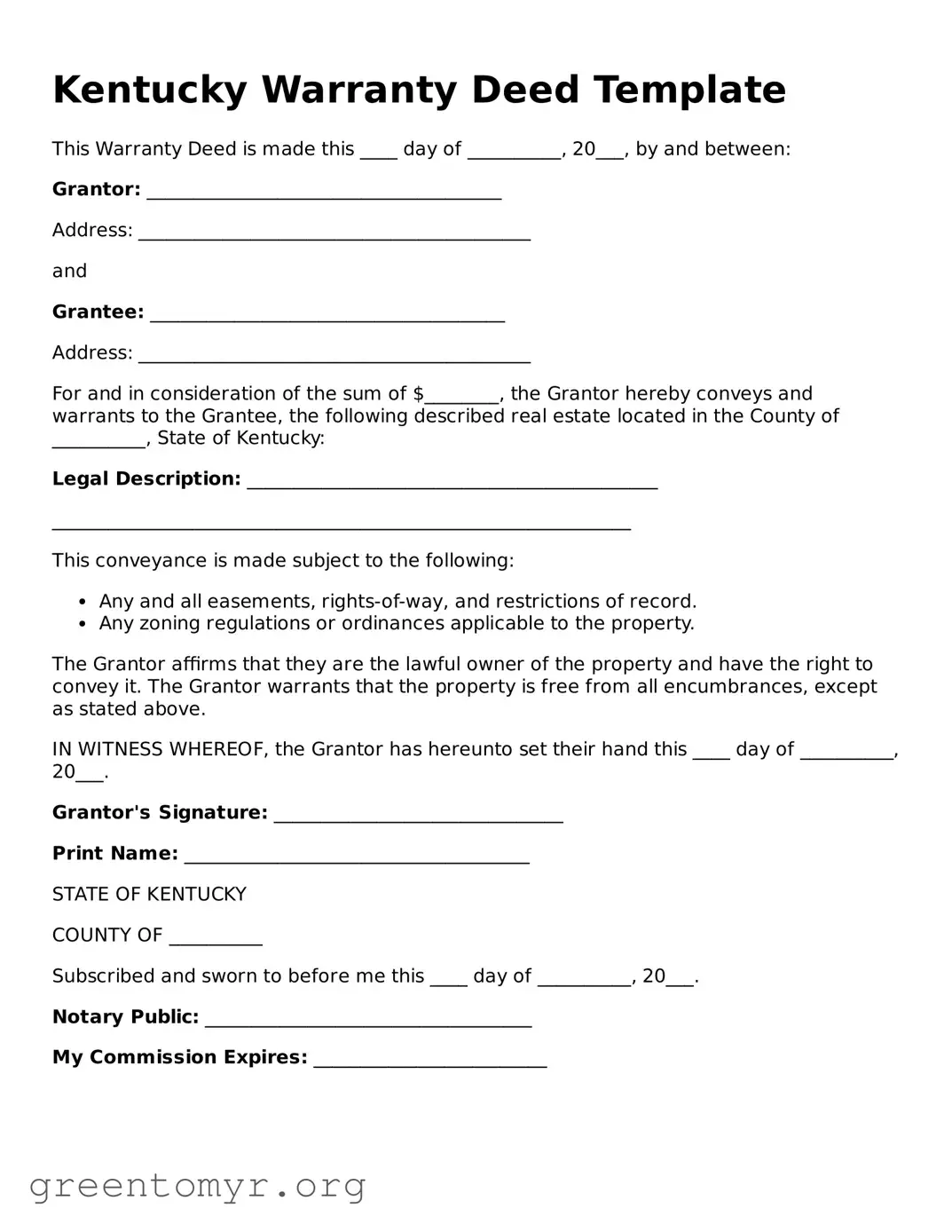
In the realm of real estate transactions, understanding the Kentucky Deed form is essential for both buyers and sellers. This document serves as a critical instrument for transferring property ownership, ensuring that the rights and responsibilities associated with the property are clearly outlined. Typically, the form includes vital information such as the names of the parties involved, a detailed description of the property, and any specific terms or conditions that may apply to the transfer. Additionally, it is important to note that the Kentucky Deed form may vary depending on the type of deed being executed, whether it be a warranty deed, quitclaim deed, or special warranty deed. Each type carries its own implications regarding the level of protection afforded to the buyer. Furthermore, proper execution of the deed, which involves signatures and notarization, is crucial to validate the transfer. Familiarity with this form not only streamlines the process of property transfer but also safeguards the interests of all parties involved, making it a cornerstone of real estate dealings in Kentucky.
Kentucky Warranty Deed Template
This Warranty Deed is made this ____ day of __________, 20___, by and between:
Grantor: ______________________________________
Address: __________________________________________
and
Grantee: ______________________________________
Address: __________________________________________
For and in consideration of the sum of $________, the Grantor hereby conveys and warrants to the Grantee, the following described real estate located in the County of __________, State of Kentucky:
Legal Description: ____________________________________________
______________________________________________________________
This conveyance is made subject to the following:
The Grantor affirms that they are the lawful owner of the property and have the right to convey it. The Grantor warrants that the property is free from all encumbrances, except as stated above.
IN WITNESS WHEREOF, the Grantor has hereunto set their hand this ____ day of __________, 20___.
Grantor's Signature: _______________________________
Print Name: _____________________________________
STATE OF KENTUCKY
COUNTY OF __________
Subscribed and sworn to before me this ____ day of __________, 20___.
Notary Public: ___________________________________
My Commission Expires: _________________________
| Fact Name | Description |
|---|---|
| Purpose | The Kentucky Deed form is used to transfer real property ownership from one party to another. |
| Types of Deeds | Common types include Warranty Deeds, Quitclaim Deeds, and Special Warranty Deeds. |
| Governing Law | The form is governed by Kentucky Revised Statutes (KRS) Chapter 381. |
| Requirements | It must be signed by the grantor and notarized to be legally valid. |
| Recording | To protect the interests of the new owner, the deed should be recorded with the local county clerk. |
| Consideration | The form typically requires a statement of consideration, which is the value exchanged for the property. |
| Tax Implications | Transfer taxes may apply, and both parties should be aware of potential tax consequences. |
After obtaining the Kentucky Deed form, it is essential to fill it out accurately to ensure a smooth transfer of property ownership. Follow the steps below to complete the form correctly.
A Kentucky Deed form is a legal document used to transfer ownership of real property from one party to another in the state of Kentucky. It outlines the details of the transaction, including the names of the parties involved, a description of the property, and the terms of the transfer. This document must be properly executed and recorded to be legally binding.
In Kentucky, there are several types of deeds, each serving different purposes. The most common include:
Completing a Kentucky Deed form involves several steps:
Once completed, the deed must be filed with the local county clerk's office to be effective.
Yes, notarization is required for a Kentucky Deed. The signature of the grantor (the person transferring the property) must be acknowledged by a notary public. This step helps to verify the identity of the signer and ensures that the deed is executed voluntarily.
After filing the Kentucky Deed with the county clerk's office, the deed becomes part of the public record. This means that anyone can access it to verify ownership. It is advisable to keep a copy of the filed deed for personal records. Additionally, the new owner should ensure that property taxes and any other obligations are updated to reflect the change in ownership.
Yes, there are typically fees associated with filing a Kentucky Deed. These fees can vary by county and may include recording fees, transfer taxes, and other administrative costs. It is recommended to check with the local county clerk's office for specific fee schedules and payment methods.
While it is possible to create your own Kentucky Deed form, it is important to ensure that it meets all legal requirements. Using a template or consulting with a legal professional can help ensure that the deed is properly formatted and includes all necessary information. Errors or omissions can lead to complications in the transfer of property.
Filling out a Kentucky Deed form can be a straightforward process, but many individuals make common mistakes that can lead to complications. One prevalent error is failing to provide accurate legal descriptions of the property. The legal description must be precise and detailed, often including lot numbers or metes and bounds. Omitting or inaccurately describing this information can create confusion and may result in disputes over property boundaries.
Another frequent mistake involves not including all necessary parties in the deed. When transferring property, both the grantor (the person selling or transferring the property) and the grantee (the person receiving the property) must be clearly identified. Missing a party's name or using incorrect names can invalidate the deed or lead to legal challenges later on.
People often overlook the importance of signatures. The deed must be signed by the grantor, and in some cases, witnesses may also be required. Neglecting to obtain a signature or failing to have the deed notarized can render the document unenforceable. This step is crucial for ensuring that the transfer of property is legally recognized.
Additionally, individuals sometimes forget to check for any outstanding liens or encumbrances on the property before completing the deed. A deed that does not address existing debts or claims against the property can lead to significant issues for the new owner. It is vital to conduct a thorough title search to ensure that the property is free of such encumbrances.
Lastly, many people do not file the deed with the appropriate county clerk’s office after it has been completed. Filing the deed is essential for public record and provides legal protection for the new owner. Without this step, the transfer may not be recognized by third parties, which can lead to difficulties in asserting ownership rights in the future.
When transferring property in Kentucky, several important documents often accompany the deed form. Each of these documents serves a specific purpose in ensuring that the transaction is clear and legally binding. Understanding these forms can help facilitate a smoother property transfer process.
Being aware of these documents and their roles can significantly ease the process of property transfer. Each form contributes to a clear understanding of the transaction, helping both buyers and sellers navigate their responsibilities effectively.
The Deed form is a crucial legal document used in property transactions. Several other documents share similarities with the Deed form in terms of purpose and function. Here are nine documents that are comparable to the Deed form:
When filling out the Kentucky Deed form, it is important to follow certain guidelines to ensure accuracy and compliance. Here are five things you should and shouldn't do:
By following these guidelines, you can help ensure that the deed is completed correctly and is legally binding.
Understanding the Kentucky Deed form is essential for anyone involved in real estate transactions in the state. However, several misconceptions can lead to confusion. Below is a list of common misunderstandings about the Kentucky Deed form, along with clarifications.
Many people believe that all deed forms are interchangeable. In reality, there are different types of deeds, such as warranty deeds and quitclaim deeds, each serving a unique purpose.
While notarization adds an extra layer of authenticity, a deed can still be valid without it, provided it meets certain legal requirements.
Though it is advisable to consult an attorney, individuals can prepare their own deeds as long as they follow the necessary guidelines and requirements.
Many confuse a deed with a title. A deed transfers ownership, while a title represents the legal right to own property.
While it is true that changing a recorded deed is complex, it is possible to amend or correct a deed under certain circumstances.
This is a common belief, but in some cases, the deed can be valid even if the seller is unable to sign, such as in cases of legal incapacity.
Not every property transaction necessitates a deed. For example, certain transfers, like those between spouses or through inheritance, may not require a formal deed.
While verbal agreements may hold weight in some contexts, a deed must be in writing to be legally enforceable.
Although signing a deed is a critical step, the deed must also be properly recorded to ensure that ownership is recognized publicly.
While deeds generally convey permanent ownership, there are legal avenues available to contest or reverse a deed under specific circumstances.
Addressing these misconceptions can help individuals navigate the complexities of property ownership in Kentucky more effectively. Understanding the nuances of the Kentucky Deed form is vital for making informed decisions in real estate transactions.
When filling out and using the Kentucky Deed form, it’s important to keep several key points in mind. Here are the essential takeaways:
By following these guidelines, you can navigate the Kentucky Deed form process more effectively and ensure a smooth property transfer.