When navigating the emotional and often complex process of divorce, a Kentucky Divorce Settlement Agreement form plays a crucial role in outlining the terms of the separation between spouses. This document serves as a comprehensive blueprint for how various aspects of the marriage will be resolved, including the division of assets, child custody arrangements, and spousal support obligations. By clearly detailing agreements on property distribution and financial responsibilities, the form helps to minimize potential conflicts and misunderstandings in the future. Additionally, it addresses important considerations such as child visitation schedules and the responsibilities of each parent, ensuring that the best interests of any children involved are prioritized. Completing this form accurately is essential, as it not only reflects the mutual decisions made by both parties but also becomes a legally binding contract once approved by the court. Understanding the components of this agreement can empower individuals to approach their divorce with clarity and confidence, paving the way for a smoother transition into the next chapter of their lives.
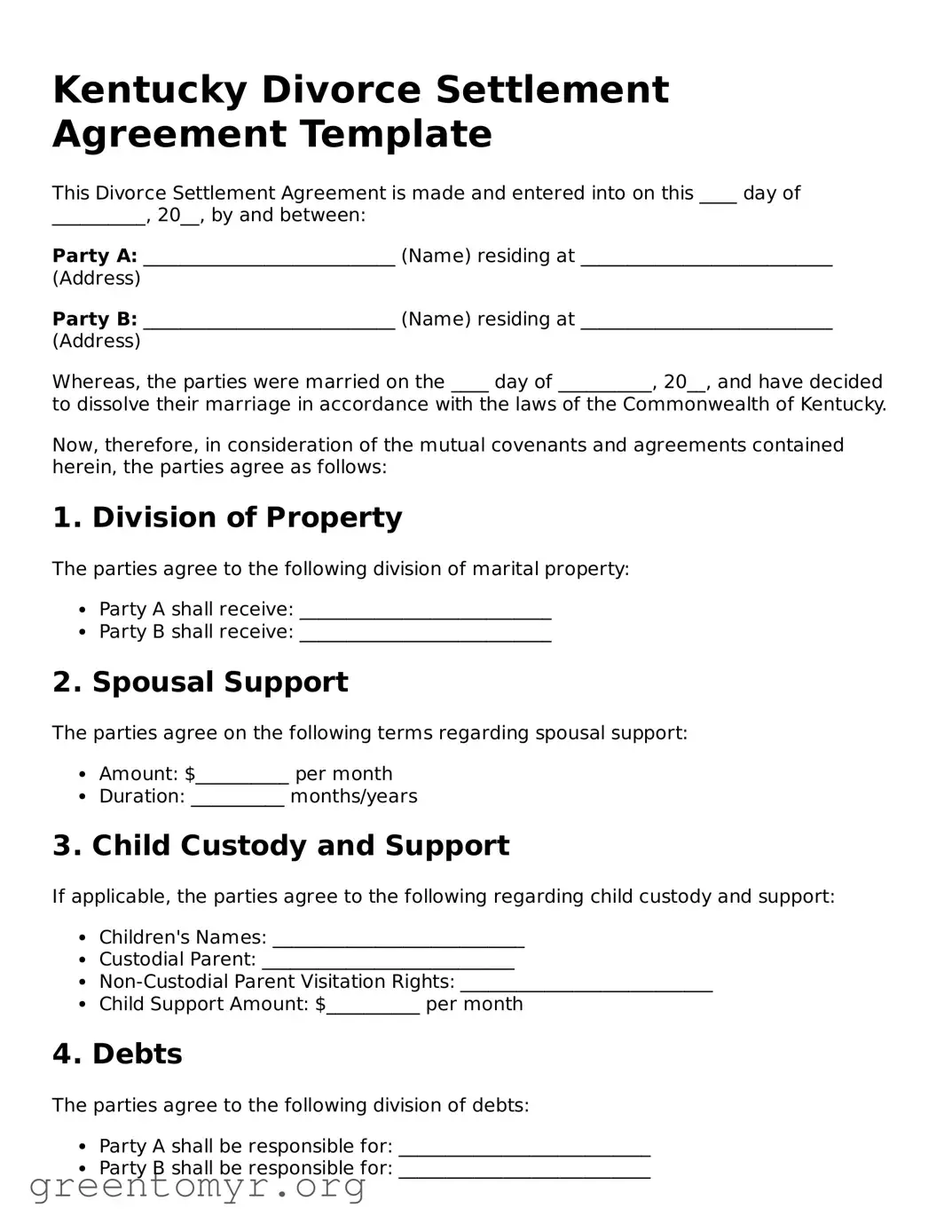
Kentucky Divorce Settlement Agreement Template
This Divorce Settlement Agreement is made and entered into on this ____ day of __________, 20__, by and between:
Party A: ___________________________ (Name) residing at ___________________________ (Address)
Party B: ___________________________ (Name) residing at ___________________________ (Address)
Whereas, the parties were married on the ____ day of __________, 20__, and have decided to dissolve their marriage in accordance with the laws of the Commonwealth of Kentucky.
Now, therefore, in consideration of the mutual covenants and agreements contained herein, the parties agree as follows:
1. Division of Property
The parties agree to the following division of marital property:
2. Spousal Support
The parties agree on the following terms regarding spousal support:
3. Child Custody and Support
If applicable, the parties agree to the following regarding child custody and support:
4. Debts
The parties agree to the following division of debts:
5. Miscellaneous
The parties agree to the following additional terms:
This Agreement shall be governed by the laws of the Commonwealth of Kentucky. Each party acknowledges that they have had the opportunity to consult with independent legal counsel prior to signing this Agreement.
IN WITNESS WHEREOF, the parties hereto have executed this Divorce Settlement Agreement as of the date first above written.
_____________________________ (Party A Signature) Date: __________
_____________________________ (Party B Signature) Date: __________
_____________________________ (Witness Signature) Date: __________
| Fact Name | Description |
|---|---|
| Governing Law | The Kentucky Divorce Settlement Agreement is governed by Kentucky Revised Statutes, Chapter 403. |
| Purpose | This form outlines the terms of a divorce settlement between spouses, addressing issues such as property division and child custody. |
| Mutual Agreement | Both parties must agree to the terms outlined in the settlement for it to be valid. |
| Filing Requirement | The completed agreement must be filed with the court as part of the divorce proceedings. |
| Child Support | If applicable, the agreement must specify the amount and duration of child support payments. |
| Property Division | The form should detail how marital property and debts will be divided between the spouses. |
| Legal Representation | While not required, it is advisable for each party to seek independent legal advice before signing the agreement. |
| Modification Clause | The agreement may include provisions for future modifications, should circumstances change. |
After gathering all necessary information and documents, you are ready to fill out the Kentucky Divorce Settlement Agreement form. Completing this form accurately is essential for ensuring that all parties involved understand the terms of the divorce. Follow the steps below to fill out the form correctly.
Once the form is completed and signed, it will need to be filed with the court along with any other required documents. This step is essential for the divorce proceedings to move forward smoothly.
A Kentucky Divorce Settlement Agreement is a legal document that outlines the terms and conditions agreed upon by both spouses during a divorce. This agreement typically addresses key issues such as property division, child custody, visitation rights, and spousal support. By having a clear settlement agreement, both parties can avoid future disputes and ensure that their rights and responsibilities are defined.
To complete the Divorce Settlement Agreement form, follow these steps:
Yes, a Divorce Settlement Agreement is legally binding once it has been signed by both parties and approved by the court. This means that both spouses are required to adhere to the terms outlined in the agreement. If one party fails to comply, the other party can seek enforcement through the court. It's essential to ensure that the agreement is fair and reasonable, as this will help prevent potential legal issues in the future.
If you and your spouse cannot agree on the terms of the divorce, you may need to consider mediation or other dispute resolution methods. Mediation involves a neutral third party who helps facilitate discussions and negotiations between both spouses. If mediation fails, you may need to go to court, where a judge will make the final decisions regarding the divorce terms. It's often beneficial to seek legal advice to understand your options and rights during this process.
Filling out the Kentucky Divorce Settlement Agreement form can be a complex process. Many individuals make mistakes that can delay their divorce or lead to unfavorable outcomes. Here are ten common errors to avoid.
One frequent mistake is not providing complete information. Each section of the form must be filled out accurately. Leaving out details can lead to misunderstandings or disputes later on. Ensure that all required fields are completed to avoid complications.
Another common error involves failing to specify assets and debts clearly. Both parties should list all marital property and liabilities. This includes bank accounts, real estate, vehicles, and credit card debts. Omitting any assets can result in a loss of rights to those properties.
Many people also forget to include provisions for child support and custody arrangements. These aspects are crucial for families with children. Clearly outlining responsibilities can prevent future conflicts and ensure the well-being of the children involved.
Inaccurate calculations of support payments are another issue. It's essential to base these figures on current income and expenses. Double-checking these calculations can help avoid disputes and ensure that both parties are treated fairly.
Some individuals neglect to consider tax implications. Divorce can significantly affect one’s tax situation. Understanding how assets and support payments will be taxed can help in making informed decisions during the settlement process.
Not having a witness or notary present during the signing of the agreement can invalidate the document. Ensure that the form is properly witnessed or notarized as required by Kentucky law to avoid any issues down the line.
Another mistake is overlooking the importance of reviewing the agreement with legal counsel. Consulting with an attorney can provide valuable insights and help ensure that your rights are protected. A lawyer can identify potential pitfalls that you might miss.
People often rush through the process, leading to careless mistakes. Taking the time to review the entire agreement thoroughly can prevent errors. Consider setting it aside for a day or two and revisiting it with fresh eyes.
Lastly, failing to keep copies of the signed agreement is a mistake that can lead to confusion later. Always maintain a copy for your records. This will provide a reference point if disputes arise in the future.
By being aware of these common mistakes, individuals can navigate the Kentucky Divorce Settlement Agreement process more smoothly. Taking the time to ensure accuracy and clarity can lead to a more favorable outcome for all parties involved.
When navigating a divorce in Kentucky, several important documents may accompany the Divorce Settlement Agreement. Each of these documents plays a crucial role in ensuring that the divorce process is thorough and legally sound. Understanding these forms can help individuals feel more prepared and informed as they move forward.
Each of these documents serves a specific purpose in the divorce process. Familiarity with them can help individuals approach their divorce with greater confidence and clarity. Seeking guidance from legal professionals is always advisable to navigate these matters effectively.
When completing the Kentucky Divorce Settlement Agreement form, it is essential to follow specific guidelines to ensure accuracy and compliance with legal requirements. Below are some important dos and don’ts to consider.
By adhering to these guidelines, you can help facilitate a smoother divorce process and minimize potential complications.
Understanding the Kentucky Divorce Settlement Agreement form is crucial for individuals going through a divorce. However, several misconceptions can lead to confusion. Below is a list of common misunderstandings about this form.
Being informed about these misconceptions can help individuals navigate the divorce process more effectively. It is essential to approach the Divorce Settlement Agreement with accurate information and a clear understanding of its implications.
When filling out and using the Kentucky Divorce Settlement Agreement form, there are several important points to consider.
Taking these steps can help streamline the divorce process and minimize potential conflicts.