The Kentucky Do Not Resuscitate (DNR) Order form serves as a critical tool for individuals who wish to make their healthcare preferences known in the event of a medical emergency. This legally recognized document allows patients to express their desire to forgo cardiopulmonary resuscitation (CPR) and other life-sustaining treatments when faced with terminal conditions or severe medical situations. It is essential for patients to understand that the DNR Order must be completed and signed by a licensed physician, ensuring that the directive is both valid and enforceable. Additionally, the form requires the signature of the patient or their legally authorized representative, which affirms that the decision is made voluntarily and with full understanding of its implications. The Kentucky DNR Order is designed to be easily accessible, providing a clear and concise way for healthcare providers to honor the patient's wishes during critical moments. Furthermore, it is important for individuals to discuss their choices with family members and healthcare professionals to ensure that their preferences are respected and understood. This article will delve into the specifics of the Kentucky DNR Order form, its legal significance, and the process for obtaining and utilizing it effectively.
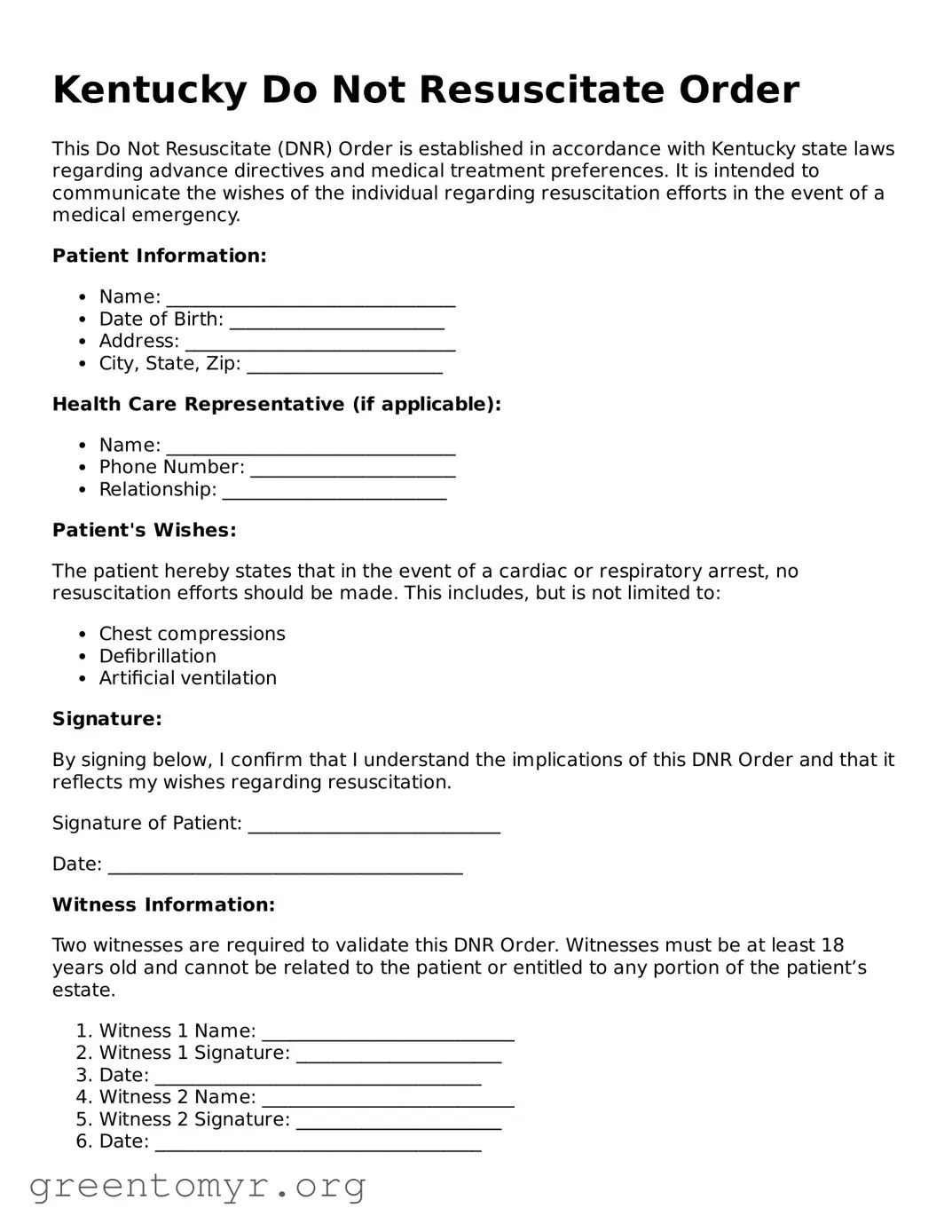
Kentucky Do Not Resuscitate Order
This Do Not Resuscitate (DNR) Order is established in accordance with Kentucky state laws regarding advance directives and medical treatment preferences. It is intended to communicate the wishes of the individual regarding resuscitation efforts in the event of a medical emergency.
Patient Information:
Health Care Representative (if applicable):
Patient's Wishes:
The patient hereby states that in the event of a cardiac or respiratory arrest, no resuscitation efforts should be made. This includes, but is not limited to:
Signature:
By signing below, I confirm that I understand the implications of this DNR Order and that it reflects my wishes regarding resuscitation.
Signature of Patient: ___________________________
Date: ______________________________________
Witness Information:
Two witnesses are required to validate this DNR Order. Witnesses must be at least 18 years old and cannot be related to the patient or entitled to any portion of the patient’s estate.
This Do Not Resuscitate Order is effective immediately upon signing and remains in effect until revoked by the patient or their authorized representative.
| Fact Name | Description |
|---|---|
| Governing Law | The Kentucky Do Not Resuscitate Order is governed by KRS 311.623. |
| Purpose | This form allows individuals to express their wishes regarding resuscitation in case of a medical emergency. |
| Eligibility | Any adult can complete a Do Not Resuscitate Order, provided they are of sound mind. |
| Signature Requirements | The form must be signed by the patient and a physician to be valid. |
| Notification | Patients should inform their healthcare providers and family members about the order. |
| Revocation | The order can be revoked at any time by the patient or their legal representative. |
| Form Availability | The Kentucky Do Not Resuscitate Order form is available through healthcare facilities and online resources. |
Filling out the Kentucky Do Not Resuscitate Order form is an important step in ensuring your healthcare wishes are respected. After completing the form, you will need to keep it in an accessible place and share copies with your healthcare providers and family members. This way, everyone is informed about your preferences regarding resuscitation in case of a medical emergency.
By following these steps, you can ensure that your wishes are documented and communicated effectively. It’s always a good idea to revisit your decisions periodically and update the form if necessary.
A Do Not Resuscitate Order (DNR) is a legal document that allows a person to refuse resuscitation efforts in the event of a cardiac or respiratory arrest. In Kentucky, this order is recognized by healthcare providers and ensures that your wishes regarding end-of-life care are respected.
Any adult who is capable of making informed decisions about their healthcare can create a DNR Order. This includes individuals who are facing terminal illness, severe medical conditions, or simply wish to express their preferences regarding resuscitation.
To complete a DNR Order in Kentucky, follow these steps:
Once your DNR Order is completed, make sure to share it with your healthcare providers and family members. Keep a copy in a place that is easily accessible, such as on your refrigerator or with your medical records. This way, emergency personnel can quickly find it if needed.
Yes, you can revoke a DNR Order at any time. To do so, simply destroy the original document and inform your healthcare providers and family members about your decision. It’s important that everyone involved understands your current wishes.
No, a DNR Order only pertains to resuscitation efforts. It does not affect other aspects of your medical care. You will continue to receive appropriate treatment for your medical conditions, including pain management and comfort care.
No, a DNR Order and a living will are different documents. A living will outlines your preferences for medical treatment in situations where you cannot communicate your wishes, while a DNR specifically addresses resuscitation efforts. It’s advisable to have both documents to ensure your wishes are fully expressed.
No, you do not need a lawyer to create a DNR Order in Kentucky. The process is straightforward and can be completed by following the guidelines provided by the state. However, consulting with a healthcare professional or an advocate may help clarify your choices.
In general, a DNR Order should be respected as long as it is valid and properly executed. However, family members may have concerns or disagreements about the order. It’s essential to communicate openly with your loved ones about your wishes to avoid confusion and ensure everyone is on the same page.
For more information about DNR Orders in Kentucky, you can visit the Kentucky Department for Public Health’s website or consult with your healthcare provider. They can provide resources and answer any additional questions you may have.
When individuals or their loved ones decide to fill out the Kentucky Do Not Resuscitate (DNR) Order form, it is crucial to approach the task with care and attention. Unfortunately, many make mistakes that can lead to confusion or unintended consequences. Understanding these common errors can help ensure that the form accurately reflects the individual's wishes regarding resuscitation efforts.
One frequent mistake is not discussing the decision with family members or healthcare providers before completing the form. Open communication is essential. Without it, family members may be unaware of the individual's wishes, leading to distress during critical moments. Engaging in these conversations can foster understanding and support for the decision made.
Another common error is failing to complete the form in its entirety. The Kentucky DNR Order requires specific information, including the patient's name, date of birth, and signature. Omitting any of these details can render the document invalid. It is important to double-check that all required fields are filled out completely to avoid complications later.
Some individuals mistakenly believe that a verbal agreement suffices. However, for a DNR order to be legally recognized, it must be documented in writing. Relying on a conversation without formalizing it can lead to confusion and may result in unwanted resuscitation efforts during emergencies.
Another pitfall is using outdated forms. The Kentucky DNR Order may undergo updates or changes over time. Using an old version can create issues, as healthcare providers might not recognize the document. Always ensure that the most current form is being utilized to reflect the latest legal standards.
Moreover, individuals sometimes neglect to inform their healthcare providers about the completed DNR order. Even if the form is filled out correctly, it must be accessible to those who may be involved in the patient's care. Providing a copy to the healthcare team ensures that everyone is aware of the patient's wishes and can act accordingly in a medical emergency.
Lastly, some people fail to review the DNR order periodically. Life circumstances and health conditions can change, and so too can one’s wishes regarding resuscitation. Regularly revisiting the document can help ensure that it still aligns with the individual’s current preferences. This practice also allows for updates to be made if necessary.
By being aware of these common mistakes, individuals can take proactive steps to ensure that their Kentucky Do Not Resuscitate Order accurately reflects their wishes and is respected by healthcare providers. Proper preparation and communication are key to navigating this important aspect of healthcare planning.
When considering end-of-life care options in Kentucky, the Do Not Resuscitate (DNR) Order form is just one important document. Several other forms and documents can complement a DNR Order, ensuring that your healthcare wishes are clearly communicated and respected. Here’s a list of some common documents that may be used alongside the DNR Order.
Having these documents in place can help ensure that your healthcare preferences are respected. It’s essential to discuss your wishes with your loved ones and healthcare providers to make sure everyone understands your choices. This proactive approach can provide peace of mind for both you and your family during challenging times.
When filling out the Kentucky Do Not Resuscitate (DNR) Order form, it’s essential to approach the task with care. Here are nine important dos and don’ts to consider:
Understanding the Kentucky Do Not Resuscitate (DNR) Order form is crucial for individuals and families making healthcare decisions. However, several misconceptions often arise regarding this important document. Below are five common misconceptions, along with explanations to clarify the facts.
This is not true. A DNR order specifically addresses resuscitation efforts in the event of cardiac arrest or respiratory failure. It does not prevent other types of medical care or treatment from being administered. Patients will still receive necessary medical attention, including pain management and comfort care.
This misconception can lead to confusion. While many people with terminal illnesses choose to have a DNR order, it is not limited to them. Anyone can request a DNR order, regardless of their health status, based on their personal wishes regarding end-of-life care.
In reality, a DNR order can be revoked or modified at any time by the patient or their legal representative. It is essential to communicate any changes to healthcare providers to ensure that the patient’s wishes are accurately reflected in their medical care.
This belief is a misunderstanding of the purpose of a DNR order. It is not about giving up; rather, it is about making informed choices regarding the type of care one wishes to receive. Many individuals choose a DNR to avoid unwanted interventions that may not align with their values or quality of life preferences.
This is a critical misconception. It is the responsibility of the patient or their family to ensure that the DNR order is communicated to all healthcare providers involved in the patient’s care. Keeping a copy of the DNR order readily accessible can help avoid confusion in emergency situations.
When considering a Do Not Resuscitate (DNR) Order in Kentucky, it's important to understand the implications and proper procedures involved. Here are some key takeaways to keep in mind:
By keeping these points in mind, you can navigate the process of creating and using a DNR Order in Kentucky with greater confidence and clarity.