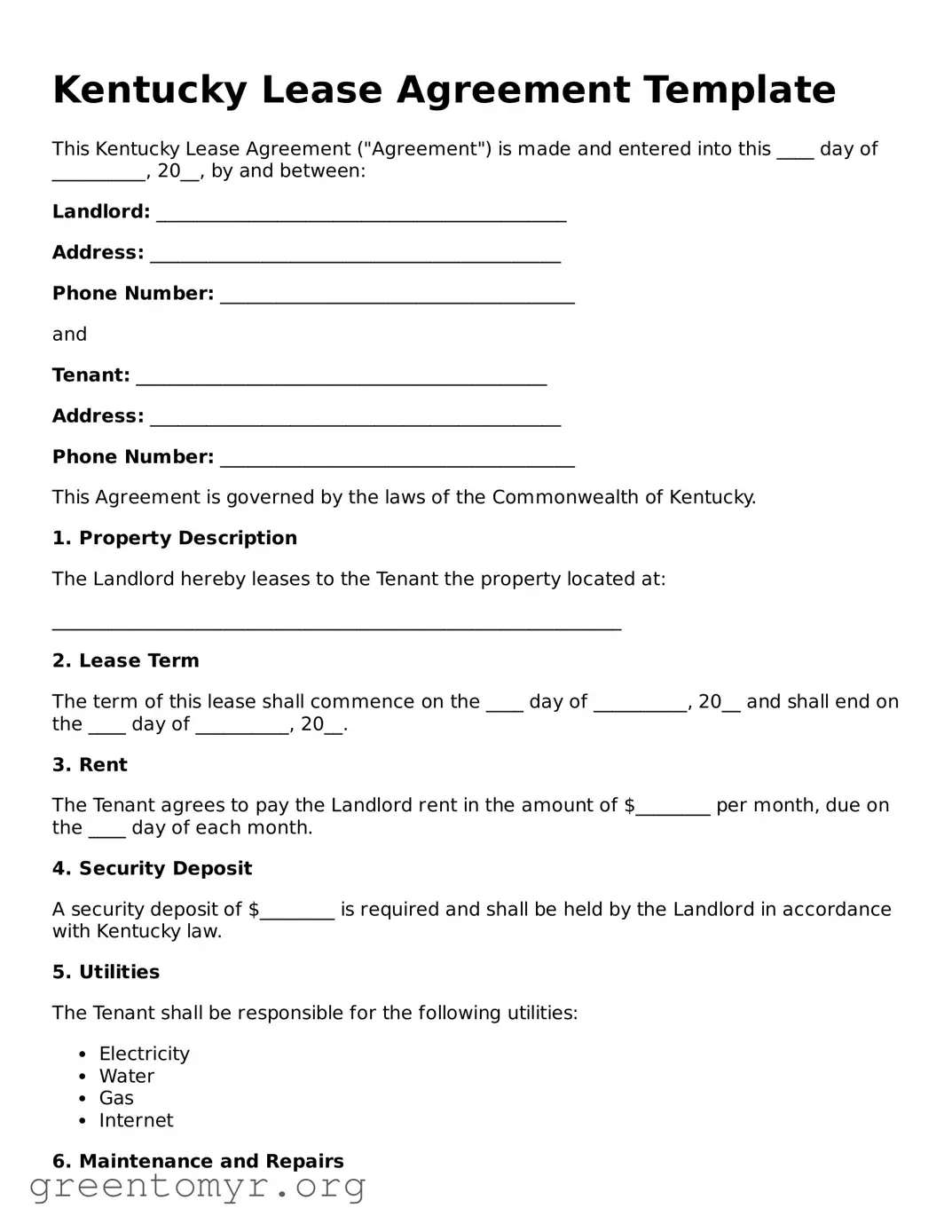
When entering into a rental arrangement in Kentucky, understanding the lease agreement form is crucial for both landlords and tenants. This document serves as a binding contract that outlines the terms and conditions of the rental relationship, ensuring that both parties are on the same page. Key components typically include the duration of the lease, the amount of rent due, and the responsibilities of each party regarding property maintenance. Additionally, the agreement may address security deposits, late payment penalties, and rules concerning pets or alterations to the property. By clearly defining these aspects, the lease agreement helps to prevent misunderstandings and disputes, fostering a more harmonious living situation. Whether you are a seasoned property owner or a first-time renter, familiarizing yourself with the Kentucky lease agreement form can provide essential protection and peace of mind.
Kentucky Lease Agreement Template
This Kentucky Lease Agreement ("Agreement") is made and entered into this ____ day of __________, 20__, by and between:
Landlord: ____________________________________________
Address: ____________________________________________
Phone Number: ______________________________________
and
Tenant: ____________________________________________
Address: ____________________________________________
Phone Number: ______________________________________
This Agreement is governed by the laws of the Commonwealth of Kentucky.
1. Property Description
The Landlord hereby leases to the Tenant the property located at:
_____________________________________________________________
2. Lease Term
The term of this lease shall commence on the ____ day of __________, 20__ and shall end on the ____ day of __________, 20__.
3. Rent
The Tenant agrees to pay the Landlord rent in the amount of $________ per month, due on the ____ day of each month.
4. Security Deposit
A security deposit of $________ is required and shall be held by the Landlord in accordance with Kentucky law.
5. Utilities
The Tenant shall be responsible for the following utilities:
6. Maintenance and Repairs
The Tenant shall keep the premises in a clean and sanitary condition. The Landlord is responsible for major repairs unless caused by Tenant negligence.
7. Termination
Either party may terminate this Agreement by providing written notice at least ____ days prior to the intended termination date.
8. Governing Law
This Agreement shall be governed by and construed in accordance with the laws of the Commonwealth of Kentucky.
9. Signatures
In witness whereof, the parties hereto have executed this Lease Agreement as of the date first above written.
Landlord Signature: _______________________________
Date: ___________________________________________
Tenant Signature: ________________________________
Date: ___________________________________________
| Fact Name | Description |
|---|---|
| Governing Law | The Kentucky Lease Agreement is governed by Kentucky state law, specifically KRS Chapter 383. |
| Parties Involved | The lease agreement typically involves two parties: the landlord and the tenant. |
| Property Description | A clear description of the rental property must be included, detailing the address and type of property. |
| Lease Term | The duration of the lease should be specified, whether it is a fixed term or month-to-month arrangement. |
| Rent Payment | The agreement must outline the amount of rent due, payment methods, and the due date each month. |
| Security Deposit | Details regarding the security deposit, including the amount and conditions for its return, should be included. |
| Maintenance Responsibilities | The lease should define the responsibilities of both the landlord and tenant regarding property maintenance. |
| Termination Conditions | Conditions under which either party may terminate the lease should be clearly stated, including notice requirements. |
Completing the Kentucky Lease Agreement form is an important step in establishing a rental relationship. Following the steps below will help ensure that all necessary information is accurately recorded, which can help prevent misunderstandings later on.
Once the form is completed, both parties should keep a copy for their records. This ensures that everyone is aware of their rights and responsibilities throughout the lease period.
A Kentucky Lease Agreement form is a legal document that outlines the terms and conditions under which a landlord allows a tenant to occupy a rental property. This agreement specifies important details such as the duration of the lease, the amount of rent, and the responsibilities of both parties. It serves to protect the rights of both the landlord and the tenant by clearly defining expectations and obligations.
When creating a Kentucky Lease Agreement, several key elements should be included to ensure clarity and legal compliance. These elements typically consist of:
The duration of a Kentucky Lease Agreement can vary based on the needs of the landlord and tenant. Common lease terms include:
It’s important to clearly specify the lease duration in the agreement to avoid confusion later on.
Yes, a Kentucky Lease Agreement can be modified, but any changes should be made in writing and signed by both the landlord and tenant. Common reasons for modifications include changes in rent, lease duration, or specific rules regarding the property. It’s essential to ensure that both parties agree to any amendments to maintain a good relationship and prevent disputes.
When completing the Kentucky Lease Agreement form, individuals often overlook critical details that can lead to misunderstandings or disputes later on. One common mistake is failing to accurately fill in the tenant's information. This includes the full names of all tenants who will reside in the rental property. Incomplete or incorrect names can create confusion and may complicate the enforcement of the lease.
Another frequent error is neglecting to specify the lease term. The lease term outlines how long the tenant will occupy the property, whether it is a month-to-month agreement or a fixed-term lease. Without this information, both parties may have different expectations regarding the duration of the tenancy, leading to potential conflicts.
Additionally, people often forget to include the rent amount and payment details. It is essential to clearly state how much rent is due, when it is due, and the acceptable methods of payment. Omitting these details can result in late payments or disputes over rent amounts, which can strain the landlord-tenant relationship.
Lastly, many individuals fail to review the terms and conditions section thoroughly. This section outlines the rights and responsibilities of both the landlord and the tenant. Misunderstandings about rules regarding pets, maintenance responsibilities, or termination procedures can arise if this section is not read carefully. Taking the time to understand and agree on these terms is crucial for a harmonious rental experience.
When entering into a lease agreement in Kentucky, several additional forms and documents can support the leasing process. These documents ensure clarity and protect the rights of both landlords and tenants. Below is a list of commonly used forms alongside the Kentucky Lease Agreement.
Using these documents alongside the Kentucky Lease Agreement can streamline the leasing process and help avoid misunderstandings. Each form plays a vital role in establishing clear expectations and protecting the interests of both landlords and tenants.
Rental Agreement: Similar to a lease agreement, a rental agreement outlines the terms of renting a property, usually for a shorter duration. Both documents specify the responsibilities of the landlord and tenant.
Sublease Agreement: A sublease agreement allows a tenant to rent out their leased space to another party. It shares similarities with a lease agreement in terms of outlining terms and conditions.
Commercial Lease: This document is used for renting commercial properties. Like a residential lease agreement, it details rental terms, payment schedules, and property use.
Property Management Agreement: This outlines the relationship between a property owner and a management company. It includes terms similar to those found in a lease, focusing on property maintenance and tenant relations.
Tenancy Agreement: A tenancy agreement defines the terms under which a tenant occupies a property. It is closely related to a lease agreement, detailing rights and obligations.
Room Rental Agreement: This is used when renting a single room in a shared property. It covers similar aspects as a lease agreement but is tailored for individual room rentals.
Lease Option Agreement: This document allows a tenant to lease a property with the option to purchase it later. It combines elements of a lease agreement and a purchase agreement.
Co-Ownership Agreement: This outlines the terms between multiple owners of a property. It shares similarities with lease agreements in defining usage rights and responsibilities.
Real Estate Purchase Agreement: While primarily for buying property, it includes terms similar to a lease agreement, such as payment terms and property conditions.
When filling out the Kentucky Lease Agreement form, it’s essential to follow specific guidelines to ensure accuracy and compliance. Here’s a list of what to do and what to avoid:
By following these guidelines, you can help ensure a smooth leasing process in Kentucky.
When it comes to the Kentucky Lease Agreement form, there are several misconceptions that can lead to confusion for both landlords and tenants. Understanding these myths can help parties navigate their rental agreements more effectively.
While it is always advisable to have a written lease for clarity and legal protection, verbal agreements can also be enforceable under certain circumstances. However, having a written document helps avoid misunderstandings and provides clear evidence of the terms agreed upon.
Lease agreements can vary significantly depending on the specific terms negotiated between the landlord and tenant. Factors such as the length of the lease, rent amount, and specific rules can differ widely, making it crucial for both parties to review and understand their unique agreement.
Many tenants believe they cannot alter their living space at all. In reality, minor changes, like painting walls or hanging pictures, are often acceptable, provided the lease allows for it. Tenants should always seek permission from the landlord before making significant alterations.
Some tenants assume that their lease will continue indefinitely without any action required. However, most leases specify whether they will automatically renew and under what conditions. It's essential for tenants to be aware of these terms to avoid unexpected changes in their rental situation.
Filling out and using the Kentucky Lease Agreement form is a crucial step for both landlords and tenants. Understanding the key components of this document can help ensure a smooth rental experience. Here are some important takeaways:
By keeping these key points in mind, both landlords and tenants can navigate the leasing process more effectively. A well-prepared lease agreement can lead to a positive rental experience for everyone involved.