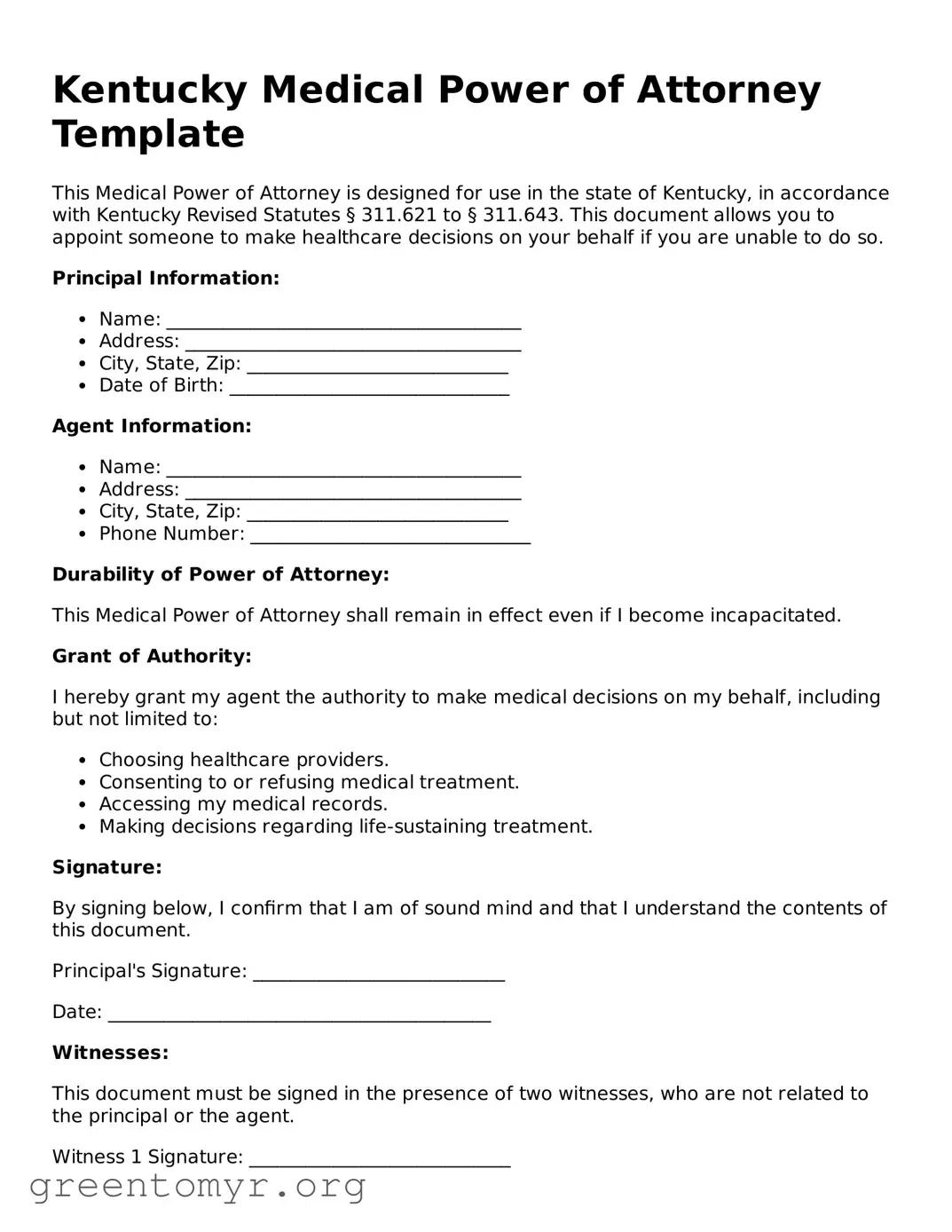
In the realm of healthcare decisions, the Kentucky Medical Power of Attorney form serves as a crucial tool for individuals seeking to designate a trusted person to make medical decisions on their behalf in the event of incapacitation. This legal document empowers a chosen agent to communicate with healthcare providers, ensuring that the individual's medical preferences and values are honored when they cannot advocate for themselves. The form outlines specific powers granted to the agent, which may include decisions about treatment options, end-of-life care, and the ability to access medical records. Importantly, the Kentucky Medical Power of Attorney also requires the principal to be of sound mind at the time of its execution, emphasizing the importance of thoughtful planning. By understanding the nuances of this form, individuals can take proactive steps to safeguard their health care wishes and ensure that their voices are heard, even when they are unable to speak for themselves.
Kentucky Medical Power of Attorney Template
This Medical Power of Attorney is designed for use in the state of Kentucky, in accordance with Kentucky Revised Statutes § 311.621 to § 311.643. This document allows you to appoint someone to make healthcare decisions on your behalf if you are unable to do so.
Principal Information:
Agent Information:
Durability of Power of Attorney:
This Medical Power of Attorney shall remain in effect even if I become incapacitated.
Grant of Authority:
I hereby grant my agent the authority to make medical decisions on my behalf, including but not limited to:
Signature:
By signing below, I confirm that I am of sound mind and that I understand the contents of this document.
Principal's Signature: ___________________________
Date: _________________________________________
Witnesses:
This document must be signed in the presence of two witnesses, who are not related to the principal or the agent.
Witness 1 Signature: ____________________________
Date: _________________________________________
Witness 2 Signature: ____________________________
Date: _________________________________________
Notarization:
State of Kentucky, County of ____________________
Subscribed and sworn to before me this _____ day of __________, 20__.
Notary Public: _________________________________
My Commission Expires: ________________________
| Fact Name | Description |
|---|---|
| Governing Law | The Kentucky Medical Power of Attorney is governed by KRS 311.621 to KRS 311.643. |
| Purpose | This form allows an individual to designate another person to make medical decisions on their behalf if they become unable to do so. |
| Principal | The individual who creates the Medical Power of Attorney is known as the principal. |
| Agent | The person designated to make decisions is referred to as the agent or attorney-in-fact. |
| Durability | This power of attorney remains effective even if the principal becomes incapacitated. |
| Revocation | The principal can revoke the Medical Power of Attorney at any time, as long as they are competent to do so. |
| Witness Requirements | The form must be signed by the principal in the presence of two witnesses or a notary public. |
| Scope of Authority | The agent can make a wide range of medical decisions, including consent to treatment and end-of-life care. |
| Limitations | The principal can specify limitations on the agent's authority within the document. |
Filling out the Kentucky Medical Power of Attorney form is an important step in ensuring that your healthcare wishes are respected. This document allows you to designate someone to make medical decisions on your behalf if you become unable to do so. Below are the steps to guide you through the process of completing this form.
A Kentucky Medical Power of Attorney is a legal document that allows you to appoint someone to make healthcare decisions on your behalf if you become unable to do so. This person, known as your agent or attorney-in-fact, can make decisions about your medical treatment, including surgeries, medications, and end-of-life care.
You can choose any adult to be your agent, but it is advisable to select someone you trust to make decisions that align with your values and wishes. Common choices include family members, close friends, or trusted advisors. However, certain individuals, such as your healthcare provider or employees of your healthcare facility, may not be eligible to serve as your agent.
To create a Medical Power of Attorney in Kentucky, follow these steps:
Once completed, provide copies to your agent, healthcare providers, and keep one for your records.
Yes, you can revoke your Medical Power of Attorney at any time as long as you are mentally competent. To revoke, you should notify your agent and any healthcare providers who have a copy of the document. It is advisable to do this in writing and to create a new Medical Power of Attorney if you wish to appoint a different agent.
If you do not have a Medical Power of Attorney and become unable to make healthcare decisions, your family members or friends may need to go to court to obtain guardianship or conservatorship. This process can be lengthy and may not reflect your personal wishes. Having a Medical Power of Attorney ensures that your preferences are honored and can help avoid unnecessary legal complications.
Filling out a Kentucky Medical Power of Attorney form can be a daunting task, and it's crucial to get it right. Unfortunately, many people make common mistakes that can lead to complications down the line. Awareness of these pitfalls is the first step toward ensuring your medical wishes are honored.
One frequent error is not choosing the right agent. Your agent should be someone you trust implicitly, as they will make critical healthcare decisions on your behalf. Failing to discuss your wishes with this person can lead to confusion and decisions that do not reflect your values.
Another mistake is neglecting to specify your preferences. While the form allows for general authority, detailing your wishes regarding specific medical treatments can prevent misunderstandings. Without clear instructions, your agent might make choices that you would not have approved.
Many individuals forget to sign and date the document. A Medical Power of Attorney form is not valid unless it is properly executed. Ensure that you sign in the presence of a witness or a notary, as required by Kentucky law. This step is essential for the form to hold legal weight.
Some people overlook the importance of updating the form. Life circumstances change, and so might your preferences. Regularly reviewing and revising your Medical Power of Attorney ensures that it aligns with your current wishes and situation.
Additionally, failing to inform family members about the existence of the document can lead to conflicts and confusion. If your loved ones are unaware of your agent or your medical preferences, they may not honor your wishes when the time comes.
Another common mistake is using outdated forms. Always ensure that you are using the most current version of the Kentucky Medical Power of Attorney form. Laws can change, and using an old version may lead to complications or invalidation of your document.
People often forget to consider alternate agents. Life is unpredictable, and your first choice may not always be available to act on your behalf. Designating a backup agent ensures that someone can step in if your primary agent is unable to fulfill their duties.
Moreover, some individuals fail to discuss their Medical Power of Attorney with healthcare providers. Sharing this document with your doctors ensures they are aware of your wishes and can act accordingly. It is essential for your healthcare team to have this information readily available.
Finally, many people underestimate the importance of clarity in language. Ambiguous terms can lead to misinterpretation. Use straightforward language to express your desires clearly, leaving little room for doubt about your intentions.
By avoiding these common mistakes, you can create a Kentucky Medical Power of Attorney that accurately reflects your wishes and provides peace of mind for you and your loved ones. Taking the time to fill out this important document correctly is an investment in your future healthcare decisions.
When creating a Kentucky Medical Power of Attorney, it's helpful to consider additional documents that can support your healthcare decisions. These forms work together to ensure your wishes are respected and provide clear guidance to your healthcare providers and loved ones.
Having these documents in place can provide peace of mind. They ensure that your healthcare preferences are clear and respected, even if you cannot voice them yourself.
A Medical Power of Attorney (MPOA) form allows individuals to designate someone to make healthcare decisions on their behalf if they become unable to do so. This document shares similarities with several other legal documents that also involve decision-making authority or health-related matters. Below is a list of nine such documents:
Understanding these documents can help you make informed choices about your healthcare and legal preferences. Each serves a unique purpose but shares the common goal of ensuring your wishes are respected when you cannot voice them yourself.
When filling out the Kentucky Medical Power of Attorney form, it is essential to follow specific guidelines to ensure your document is valid and effective. Here are five things you should and shouldn't do:
Understanding the Kentucky Medical Power of Attorney form is essential for making informed healthcare decisions. However, several misconceptions can cloud this important topic. Here are seven common misconceptions:
Addressing these misconceptions can lead to better preparedness and peace of mind regarding healthcare decisions.
When filling out and using the Kentucky Medical Power of Attorney form, consider the following key points: